
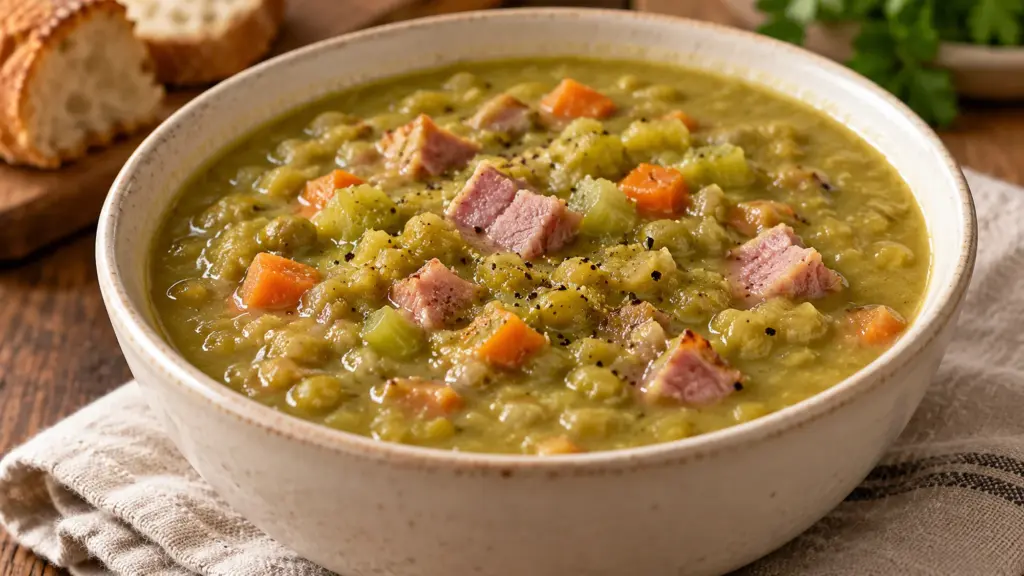
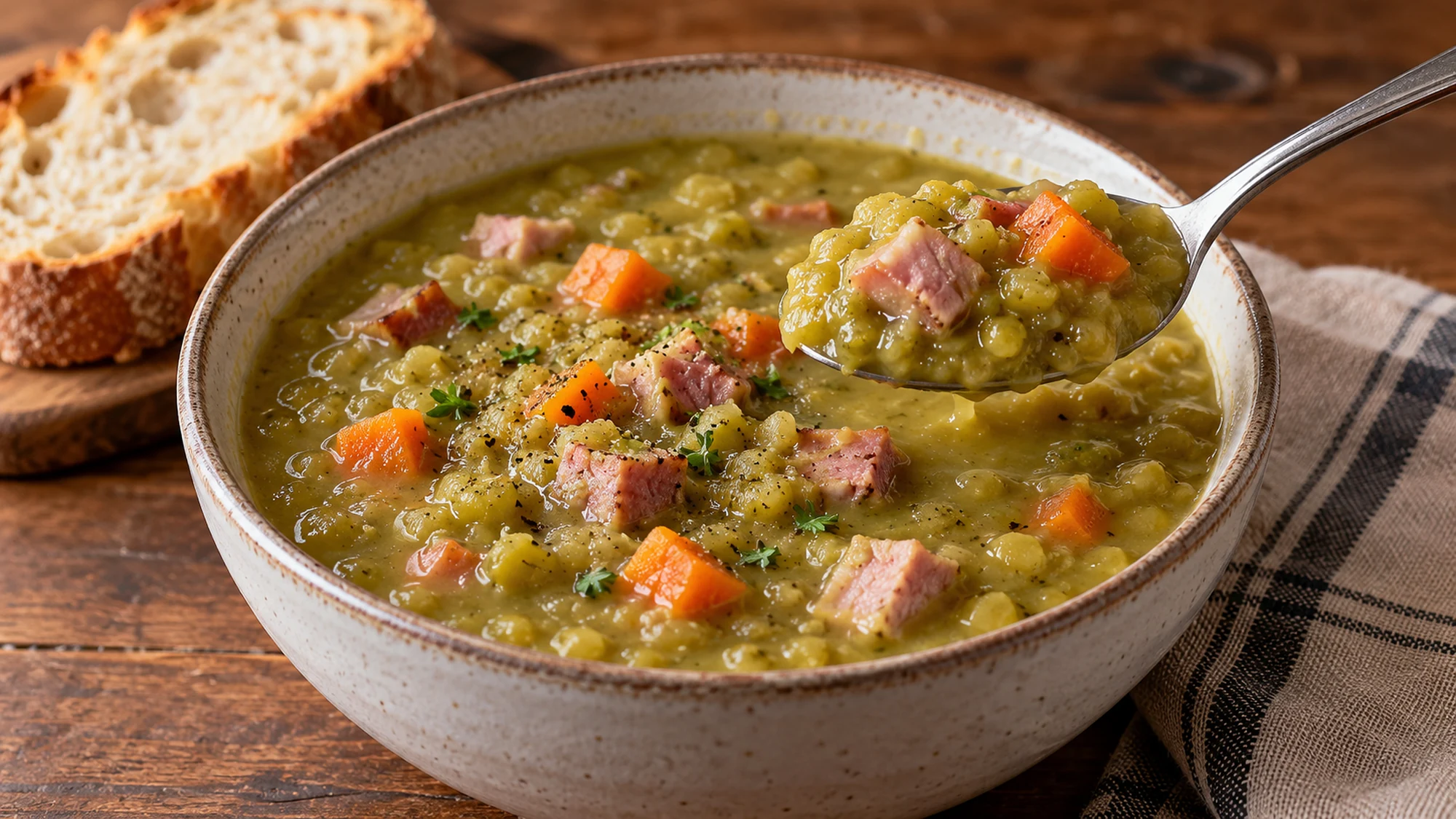
This pea and ham soup recipe turns dried green split peas, cooked ham and a handful of vegetables into a thick, savory pot without cream. The peas soften as they simmer, creating a spoonable base that holds little pieces of carrot and smoky ham.
Let the peas set the pace, and taste before adding salt.
I prefer diced cooked ham here because it makes the preparation straightforward: no bone to retrieve and no raw hock to manage. Water keeps the starting liquid simple, while onion, celery, thyme and the ham build flavor during the gentle simmer.
Serving suggestions for pea and ham soup
Divide the finished pot into eight equal bowls rather than guessing a fixed cup measure; evaporation changes the final volume. Stir before ladling so everyone gets vegetables and ham. If it stands thick enough to mound, loosen the pot with a little hot water first.
A slice of bread is welcome for dipping, but the soup is substantial on its own. For something crisp alongside, try a small chickpea cucumber salad or simply dress greens with lemon. Keep additional salty toppings modest until you have tasted your ham.
For a larger gathering, offer black pepper and lemon wedges at the table rather than seasoning every bowl identically. A few drops of lemon can brighten a rich spoonful without making the whole pot sour. I would keep the garnish light so the split-pea texture stays central.
Stir, check the thickness, then divide the pot evenly among the bowls.
Variations and texture fixes
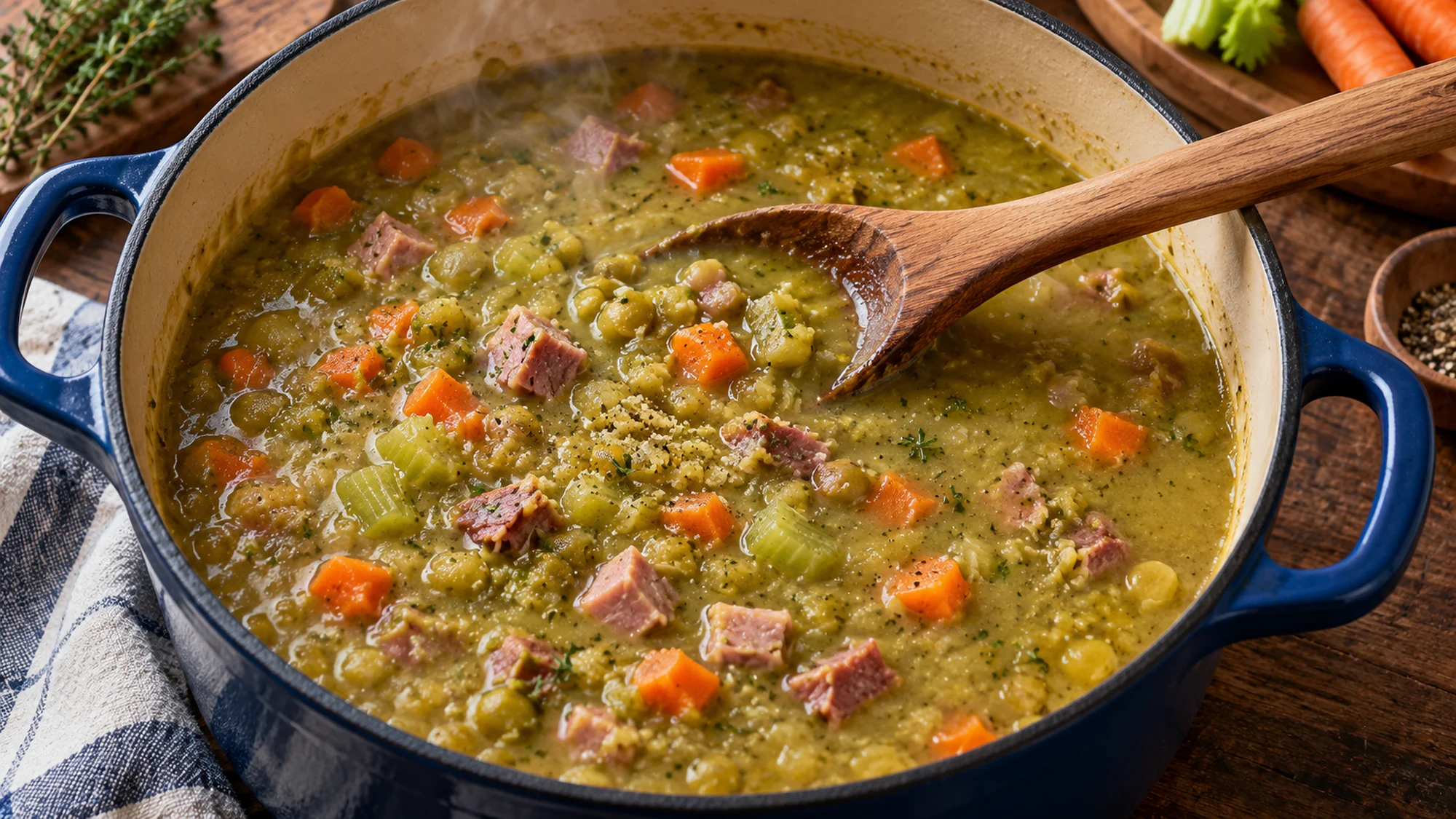
Use dried green split peas, not frozen garden peas: they behave differently and cannot be swapped into the same timing. Sorting and rinsing are enough preparation; soaking is unnecessary. The cooking window is a guide, and older peas may need extra time before they soften.
Leftover fully cooked ham works if it has been stored safely and is still within its refrigerator window. Avoid substituting a raw ham hock directly into this method. It needs a different cooking plan, and this recipe is designed around small pieces of ready-to-eat ham.
| Soup texture | Practical adjustment |
|---|---|
| Peas remain firm | Continue a gentle simmer; add hot water if liquid is low. |
| Soup catches underneath | Lower the heat and stir along the bottom more often. |
| Finished soup is too thick | Stir in hot water a little at a time. |
For a less meaty bowl, reduce the ham and accept that the nutrition and salt level will change. Yellow split peas can work, with a different color and slightly different flavor. Do not add flour to thicken this soup; soft peas supply plenty of body naturally.
Use tenderness, not the clock alone, to decide when the peas are ready.
Health benefits and ingredient balance
Split peas contribute fiber and plant protein. The Bob’s Red Mill dry split-pea label provides the basis for the card estimate, scaled to the actual weight used. That is more useful than borrowing nutrition from an unrelated bowl of soup.
Ham adds protein as well as sodium, and brands differ considerably. The estimate uses a cooked diced-ham label, not a claim that every package is identical. Starting with water and postponing extra salt gives you more control over the finished flavor.
One-eighth of this recipe is estimated at 282 calories, about 19 grams of protein and 8 grams of fiber, excluding bread and added salt. Those figures describe a portion, not a promise of any health outcome. The vegetables also add variety without requiring another cooking pan.
Keep the fiber-rich peas central, and let the ham season rather than dominate.
Bottom Line
A heavy pot, a patient simmer and an occasional stir are the useful habits here. Scrape gently across the bottom as the soup thickens, and remove the bay leaf before serving. For another make-ahead option with a different texture, consider our mushroom barley soup.
Refrigerate in shallow containers within two hours and use within three to four days. Following USDA guidance, reheat leftovers to 165°F and bring soup to a rolling boil. Add water while stirring because refrigerated split-pea soup becomes noticeably thicker.
Make the pot gently, cool leftovers promptly, and loosen each reheated portion as needed. Keep bread separate until the bowl reaches the table.
Pea and Ham Soup Recipe

Ingredients
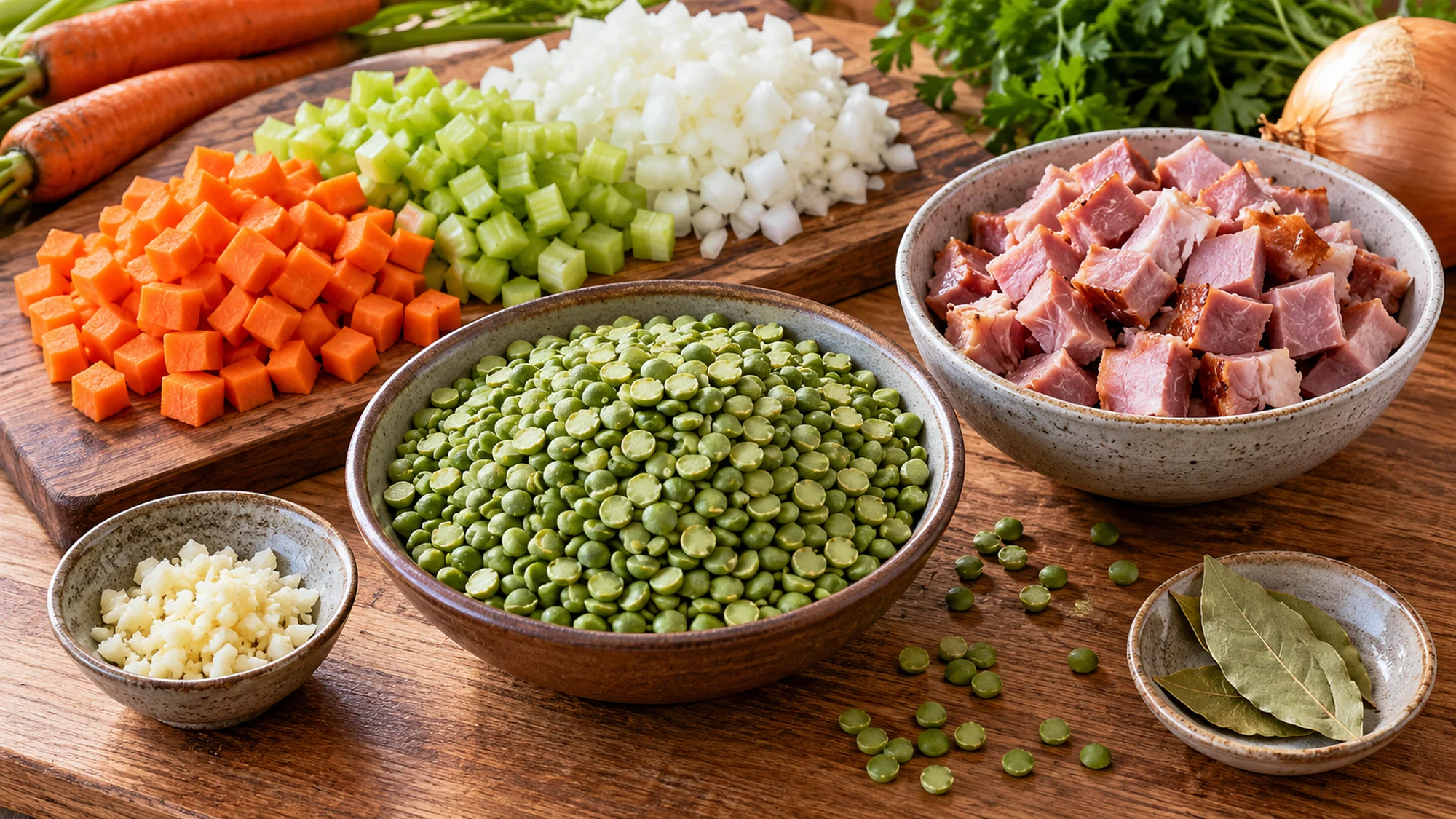
- 454 g dried green split peas 1 lb, sorted and rinsed
- 300 g fully cooked diced ham about 10.5 oz; not a raw ham hock
- 1 tablespoon olive oil
- 150 g onion chopped, about 1 medium
- 150 g carrots small dice, about 2 medium
- 100 g celery small dice, about 2 stalks
- 2 cloves garlic minced, about 6 g
- 8 cups water about 1.9 liters, plus more as needed
- 1 bay leaf
- 1/2 teaspoon dried thyme
- 1/4 teaspoon black pepper plus more to taste
- salt optional, only after tasting the finished soup
Equipment
- Heavy 5–6 quart pot with lid
- Colander
- Wooden spoon
- Kitchen scale and measuring cups
Instructions
- Spread the split peas on a tray and discard any stones or damaged peas. Rinse in a colander. No soaking is needed.
- Heat olive oil in a heavy 5–6 quart pot over medium heat. Add onion, carrot and celery and cook for 8 minutes, stirring, until the onion is soft. Stir in garlic for 30 seconds.
- Add rinsed peas, fully cooked diced ham, water, bay leaf, thyme and pepper. Bring just to a boil, then reduce to a gentle simmer. Partially cover the pot.
- Simmer for 60–75 minutes, stirring along the bottom every 10–15 minutes and more frequently as the soup thickens. Add hot water in 1/2-cup increments if needed to keep the peas submerged and prevent sticking. Older peas may take longer; cook until they crush easily and the soup becomes creamy.
- Remove the bay leaf. Stir well to break down soft peas, adding a little hot water if the soup is too thick. Taste before adding optional salt because ham varies in saltiness. Divide the finished pot into 8 equal bowls.
Nutrition
Video
Notes
Tried this recipe?
Let us know how it turned out!Hi, I’m Emily Pocker! I share recipes and food guides here at Recipes360 to help you find everyday meal inspiration and feel more confident in the kitchen. My goal is to make cooking approachable, enjoyable, and full of flavor.