
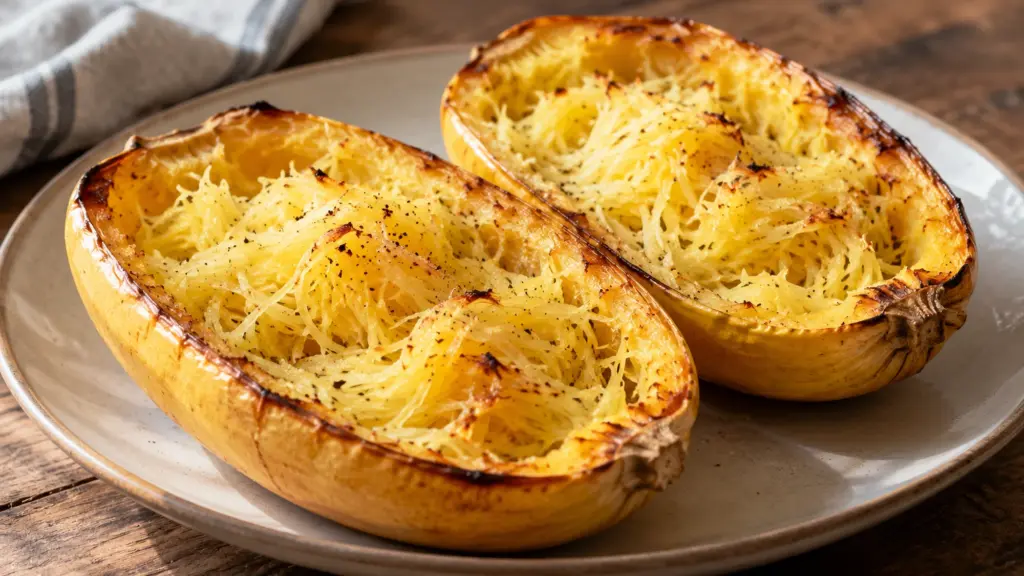
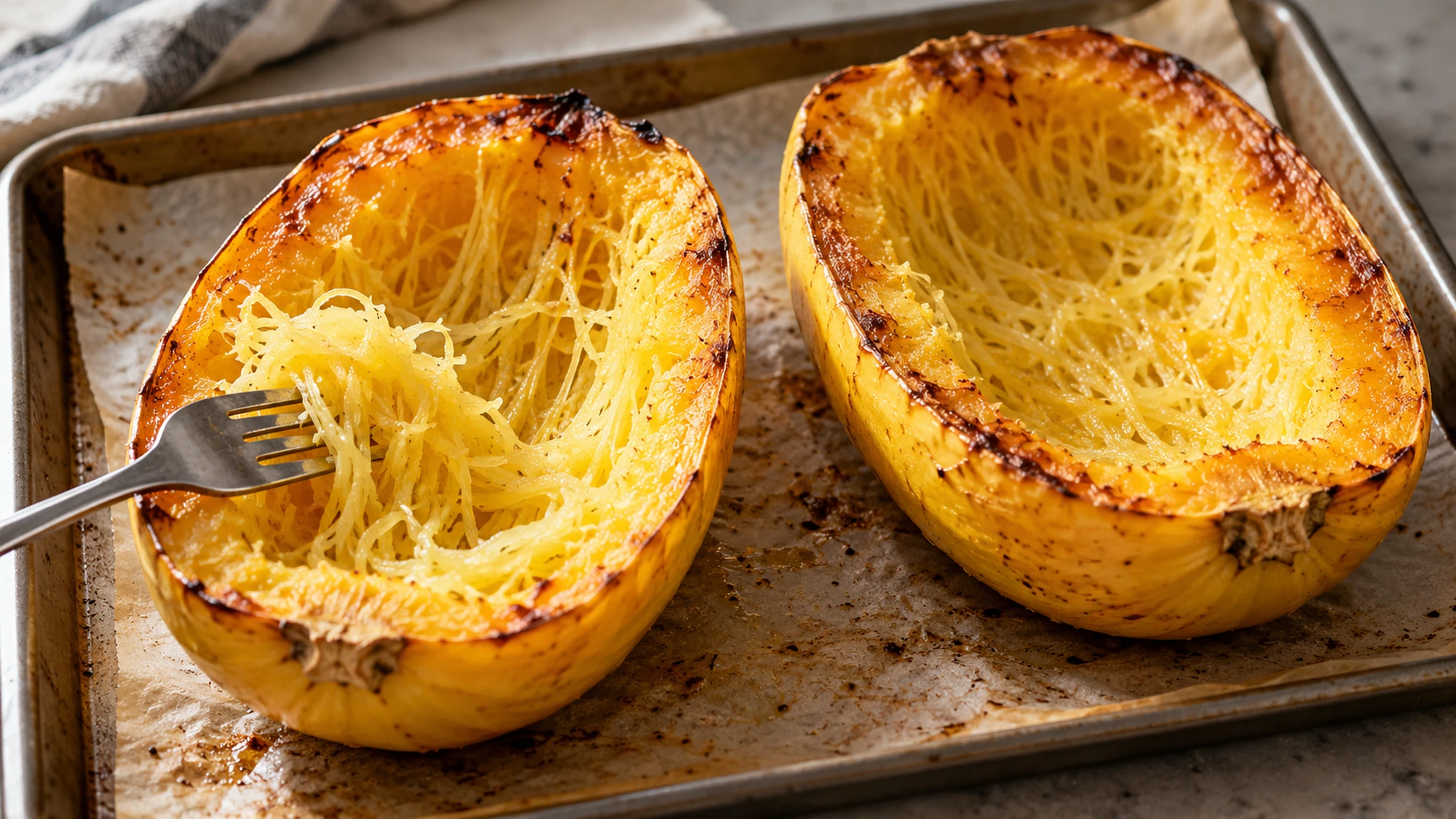
The shell looks like an ordinary winter squash, but a fork reveals the surprise: the cooked flesh separates into slender strands. Knowing how to cook spaghetti squash means stopping before those strands collapse into a wet mash. This version roasts lengthwise halves cut-side down, with a light coating of olive oil and enough space on the tray for the edges to color.
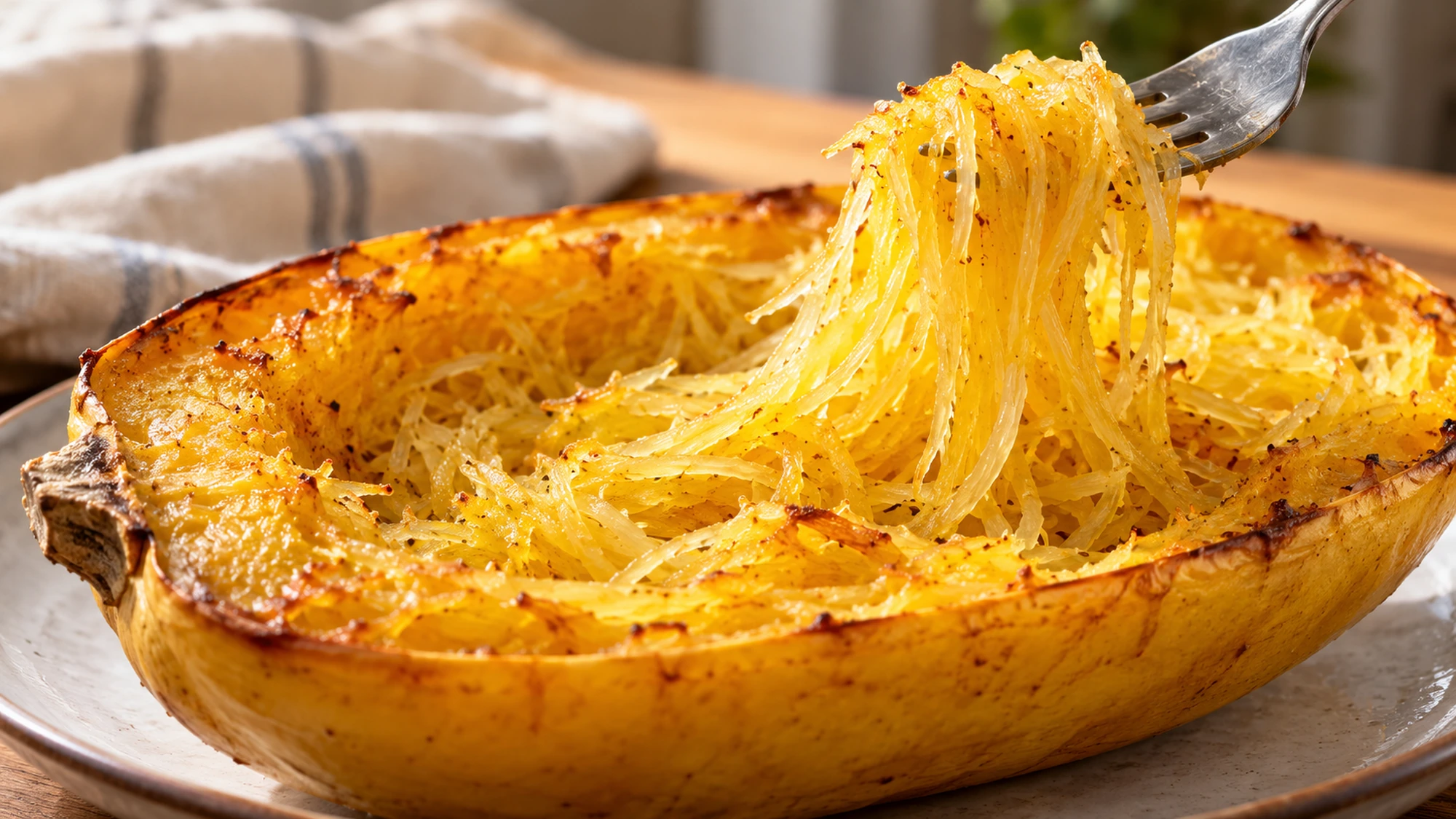
Roast until the shell yields to a fork and the flesh pulls apart easily, then let the halves cool enough to handle before scraping. Size changes the timing, so use the oven clock as a reminder to check rather than as a guarantee. The finished strands should be tender with a little definition, not crunchy or soupy.
Serving Suggestions for Roasted Spaghetti Squash
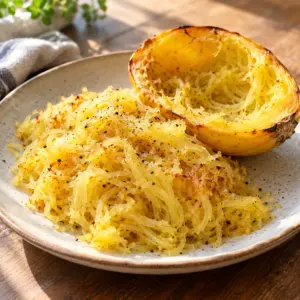
Serve the squash as a vegetable side, lightly loosened in its shell or transferred to a warm dish. Keep sauce modest so you can still notice the strands. A little olive oil, salt and pepper may be enough beside a main dish that already has a rich sauce or plenty of seasoning.
I’d pair it with black bean burgers and a crisp salad for a meal with different textures. That burger recipe contains egg, so the complete plate is vegetarian rather than vegan as written. If you add cheese or pesto to the squash, count those additions separately from this plain preparation.
- Use a fork gently so the tender strands keep their shape.
- Add sauce at the table if people prefer different amounts.
- A squash half can be a serving dish, but use a separate plate underneath.
Let cooked squash cool briefly for handling, then portion any leftovers into shallow containers promptly. MedlinePlus’s squash preparation guidance recommends refrigerating within two hours. Store the strands separately from watery sauces when possible, and do not leave the heavy shells sitting on the counter for the rest of the evening.
How to Cook Spaghetti Squash for Different Finishes
A small squash can finish sooner than a large one, even when both are cut in half. Start checking before the estimated finishing time and test the thickest flesh. If it still resists the fork, return it to the oven; if strands are already separating easily, more roasting will mainly soften them further.
I prefer a light film of oil rather than a glossy puddle in the cavity. The goal is a roasted vegetable, and extra oil does not solve excess moisture. The oven and microwave options described by MedlinePlus also make clear that different methods produce different finishes; this card uses uncovered oven roasting.
Lengthwise halves are practical to place on a tray and scrape, while crosswise rings can preserve longer strands because of how the fibers run around the squash. Rings require more cuts through a hard shell. Choose the shape you can prepare safely, and expect a change in cooking time rather than treating every cut as interchangeable.
| Finish | What changes | Best approach |
|---|---|---|
| Plain roasted strands | Squash flavor stays clear | Season lightly after scraping |
| Tomato sauce | More moisture and acidity | Use a thick sauce in a modest amount |
| Cheese topping | Richness and a milk allergen | Add separately; nutrition changes |
| Microwave cooking | Softer, less browned surface | Use a microwave-specific method |
Health Benefits and Portion Balance
Spaghetti squash is a vegetable with some carbohydrate and fiber. Its pasta-like appearance does not give it the same nutritional role, texture or energy content as a portion of wheat pasta. If you make it the center of dinner, include a protein food and other foods that suit your appetite rather than expecting the squash alone to make a complete meal.
The card’s estimate assumes about four cups of cooked flesh from the squash, divided into four side portions, plus the measured oil. Actual yield varies with the size of the seed cavity and moisture lost during roasting. This makes the number a useful approximation, not a precise reading for every half you might buy.
Follow clean produce handling and prompt refrigeration: wash the shell before cutting and keep cooked food at 40°F (4°C) or below. Use refrigerated leftovers within three to four days and reheat to 165°F (74°C). Cutting safely matters too; if the shell feels unstable, stop and choose prepared halves.
Bottom Line
Let tenderness decide when the squash leaves the oven, and give it a few minutes before bringing in the fork. I’d keep the first serving lightly dressed so the roasted edges and fine strands remain noticeable. Once you know the texture you like, sauces and toppings become choices around a well-cooked vegetable rather than a way to cover a watery result.
How to Cook Spaghetti Squash Recipe

Ingredients
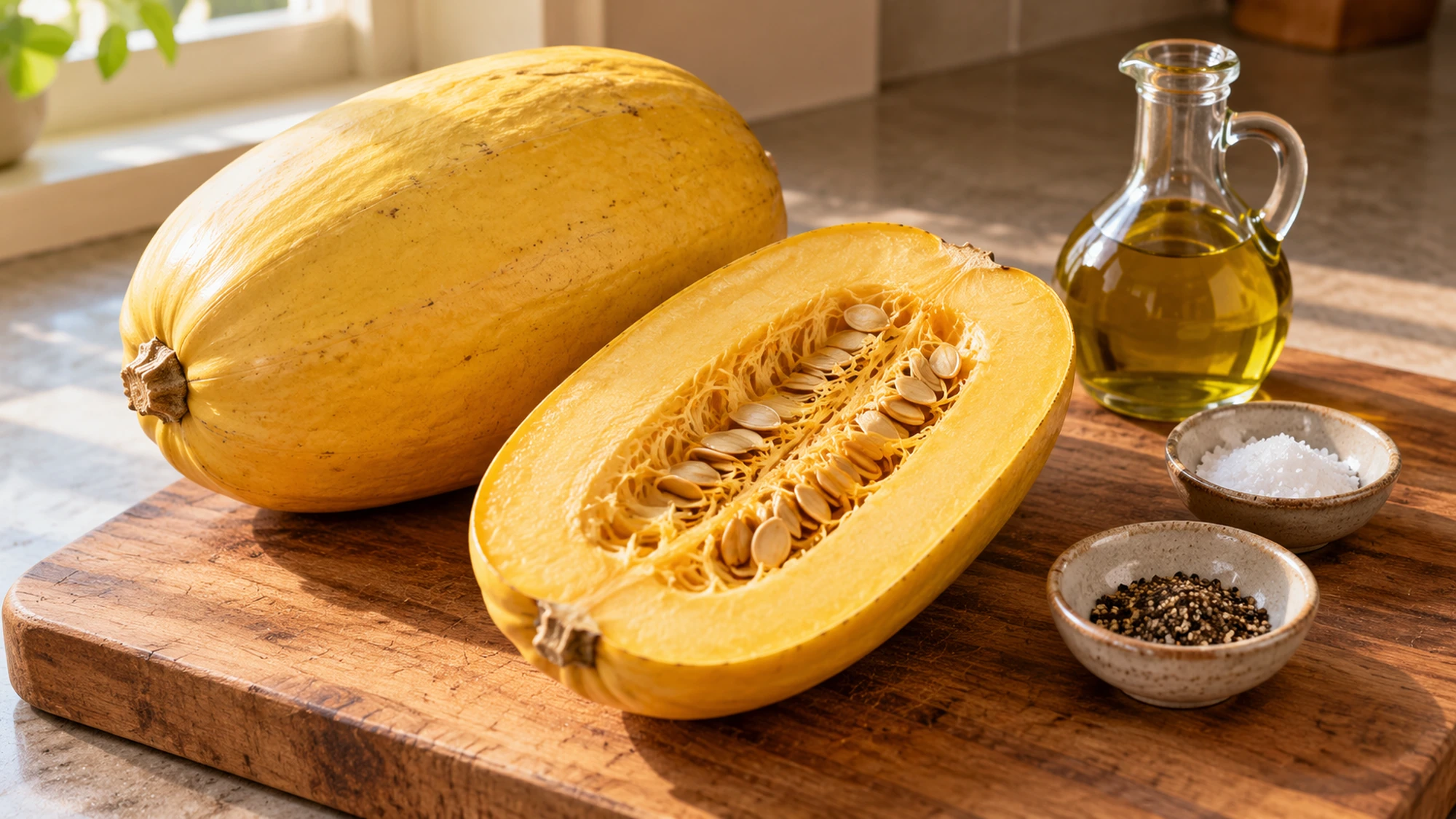
- 1 spaghetti squash about 2 1/2–3 lb (1.1–1.4 kg), washed and dried
- 1 tbsp olive oil
- 1/4 tsp fine salt
- 1/8 tsp black pepper
Equipment
- Rimmed baking sheet
- Baking parchment
- Sturdy cutting board
- Sharp chef’s knife
- Spoon and fork
Instructions
- Heat the oven to 400°F (200°C). Line a rimmed baking sheet with parchment. Stabilize the board with a damp towel underneath. Carefully halve the squash lengthwise using a sharp knife and a stable flat surface; do not force a slipping knife. Choose store-prepared halves if you cannot cut it safely.
- Scoop out the seeds and loose stringy center with a spoon. Brush the cut flesh and edges with the measured oil, then season with salt and pepper.
- Place the halves cut-side down on the tray. Roast for about 35–50 minutes, checking from 30 minutes for smaller squash. It is ready when the shell can be pierced with a fork and the flesh separates into strands without hard patches.
- Let stand for about 10 minutes, until safe to handle. Turn the halves over and gently draw a fork across the flesh to loosen the strands. Stop scraping at the shell. Serve plain or with optional toppings, which are not included in the estimate.
- Refrigerate leftovers in shallow containers within two hours, or within one hour above 90°F (32°C). Use within three to four days and reheat the portion needed to 165°F (74°C).
Nutrition
Video
Notes
Tried this recipe?
Let us know how it turned out!Hi, I’m Emily Pocker! I share recipes and food guides here at Recipes360 to help you find everyday meal inspiration and feel more confident in the kitchen. My goal is to make cooking approachable, enjoyable, and full of flavor.