
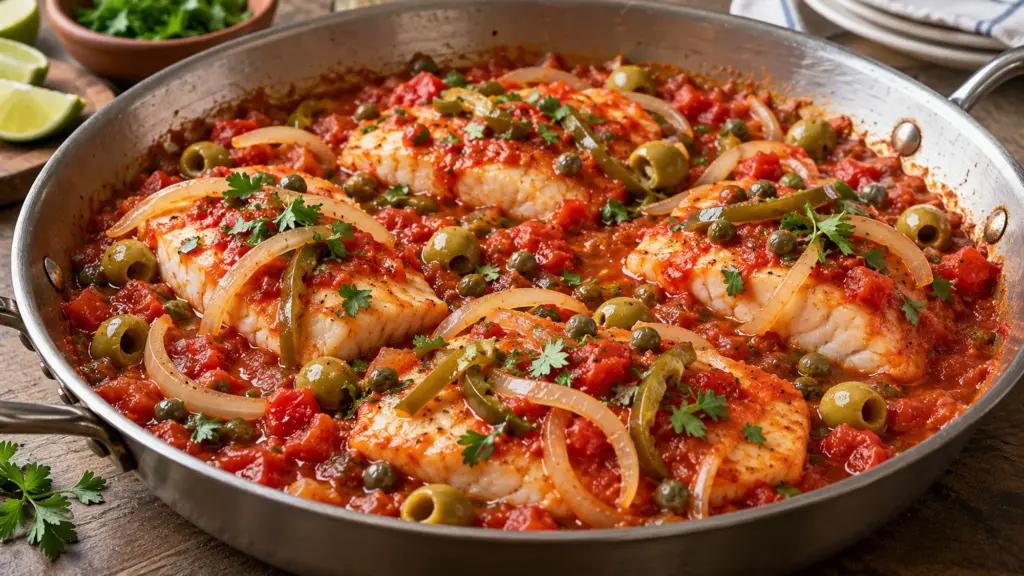
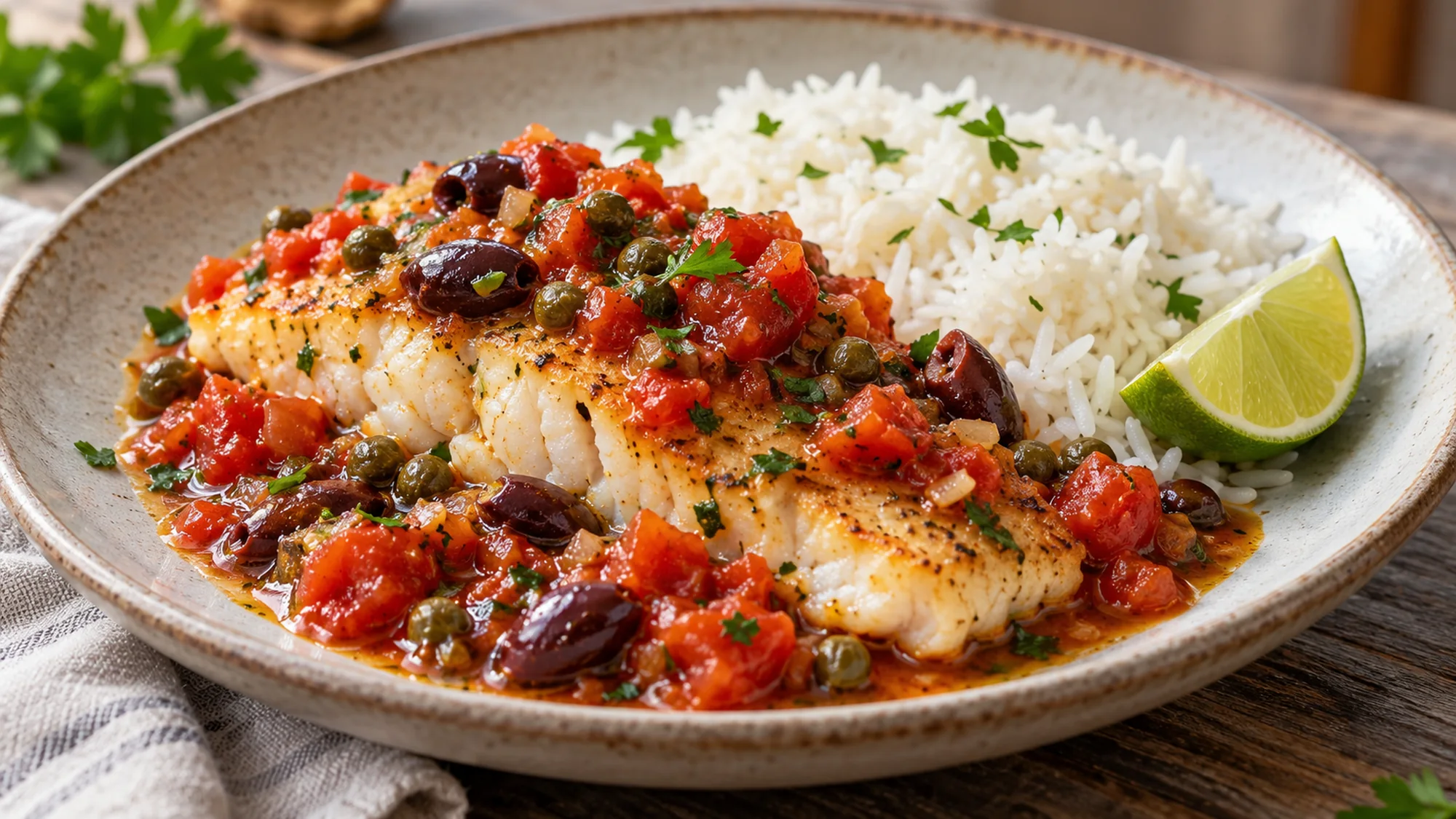
A skillet of tomato sauce can turn mild white fish into a dinner with plenty of character. Pescado a la veracruzana combines tender fillets with onion, garlic, olives, and capers, so every forkful has something bright and briny alongside the fish. The sauce is chunky rather than smooth, with juices worth catching on the plate.
For pescado a la veracruzana, soften the tomato sauce first, then gently cook the fish in it until the thickest part reaches 145°F.
This version uses individual snapper fillets instead of a whole fish. That makes serving straightforward and keeps the cooking time manageable, though thickness still matters more than the clock. I would choose similarly sized fillets so one piece does not finish while another still needs several minutes.
Serving Suggestions for Pescado a la Veracruzana
Rice is a practical partner because it catches the tomato juices without competing with the olives. Warm corn tortillas also work well; put them on the table separately rather than leaving them under the sauce to soften. A simple cucumber salad adds cool crunch to a plate that is otherwise tender and saucy.
Lift each fillet with a wide spatula and spoon the sauce around it. Stirring the skillet vigorously after the fish goes in can break the pieces apart. I prefer a shallow bowl for serving because it keeps the sauce with the fish, where it belongs, instead of sending it toward the tablecloth.
| Accompaniment | Why it fits |
|---|---|
| Plain rice | Absorbs the tomato juices |
| Warm corn tortillas | Adds a soft, mild side |
| Cucumber and lime salad | Provides a crisp contrast |
Put lime wedges alongside rather than squeezing every wedge over the skillet. Tomatoes, capers, and olives already bring acidity and salt, so people may want different amounts. For another way to serve firm white fish, this mahi mahi with lemon-garlic butter takes a drier, pan-seared direction.
Choose one mild starch and something crisp, then let the tomato-olive sauce carry the plate.
Pescado a la Veracruzana Variations
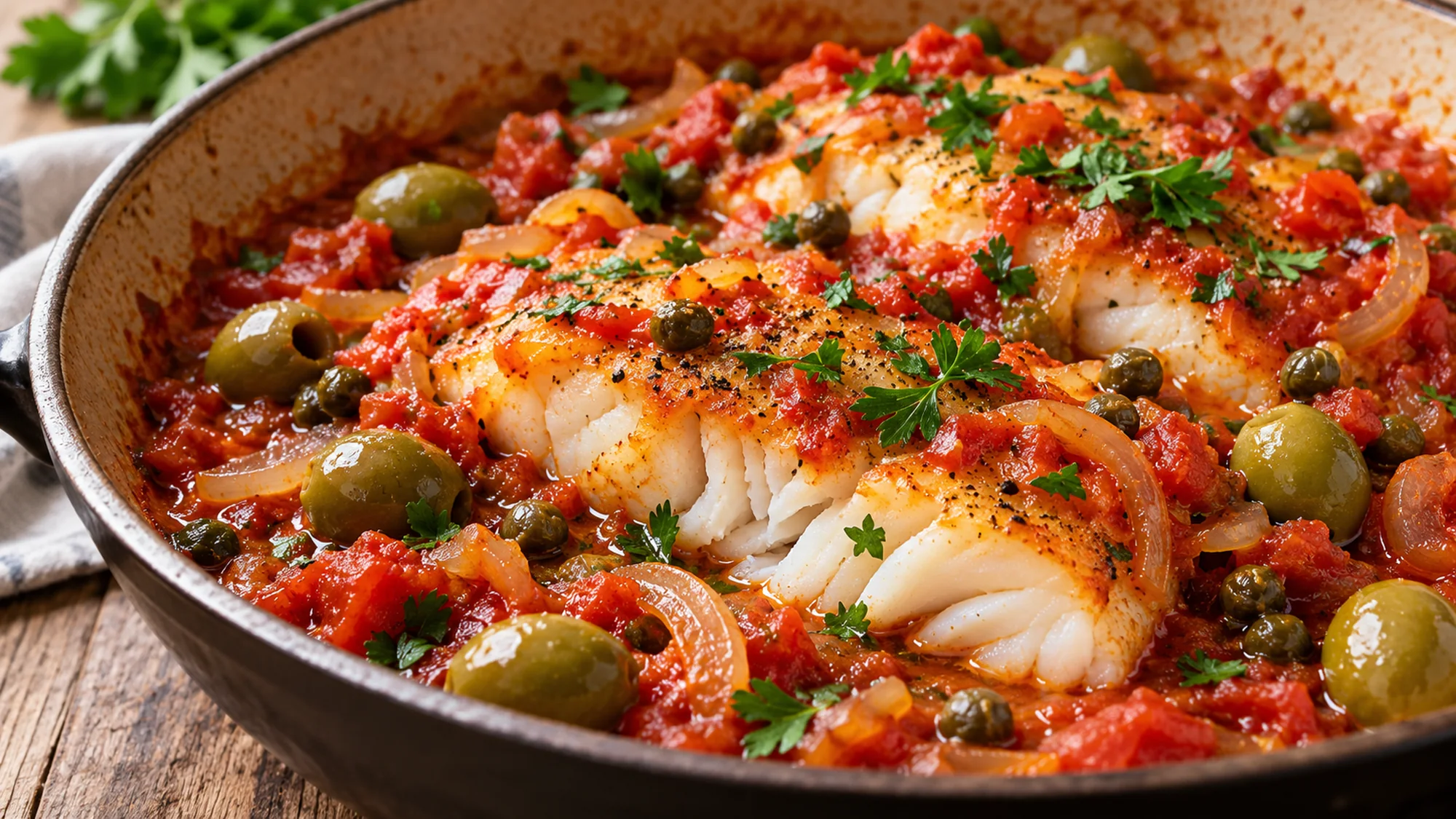
Cod or another firm white fillet can stand in for snapper. Thin pieces cook sooner, while thick portions need longer; use the temperature check rather than transferring the timing without adjustment. Frozen fish is useful here, provided it is thawed safely and patted dry so excess water does not dilute the sauce.
Green olives give a lively, salty flavor, while a mixture of green and dark olives adds a gentler contrast. Use pitted olives and drain the capers. If you prefer heat, the optional jalapeño belongs in the sauce while it simmers; serve it on the side instead when the table includes people who prefer a mild dinner.
Ripe fresh tomatoes give this version its texture. Their moisture varies, so allow the sauce to thicken before adding fish, or loosen an overly dry pan with a splash of water. Resist adding a large amount at once. The finished sauce should spoon easily without becoming a soup.
Adjust heat and olive preference freely, but match the cooking time to the actual thickness of your fish.
Health Benefits and Nutrition
Snapper supplies protein without requiring a breaded coating. NOAA’s red snapper information provides the fish composition used in the card’s estimate. Tomatoes and onion add vegetables to the sauce, while the olive oil contributes fat. These ingredients can fit into varied meals without turning this dinner into a treatment or a promise.
Olives, capers, and added salt all affect sodium. Taste the sauce before adding extra salt, especially when switching brands. The nutrition estimate covers one fillet and one-quarter of the sauce, not rice, tortillas, or optional accompaniments. Different fish and drained weights will change the numbers.
The FDA recommends cooking seafood to 145°F. Check the thickest part without touching the pan. Refrigerate leftovers promptly in a shallow container, use within three to four days, and reheat to 165°F; gentle heat helps keep the fish from drying out.
Enjoy the protein and vegetables, account for the salty additions, and use temperature to check the fish safely.
Bottom Line
This is a sauce-first dinner: build the tomato flavor, settle the fillets into the pan, and handle them gently. There is no need to keep flipping or stirring once the fish is cooking. A wide spatula and a little restraint preserve those attractive flakes.
Let the sauce do the flavor work, and stop cooking when the fish is safely done rather than when it falls apart.
Pescado a la Veracruzana Recipe

Ingredients
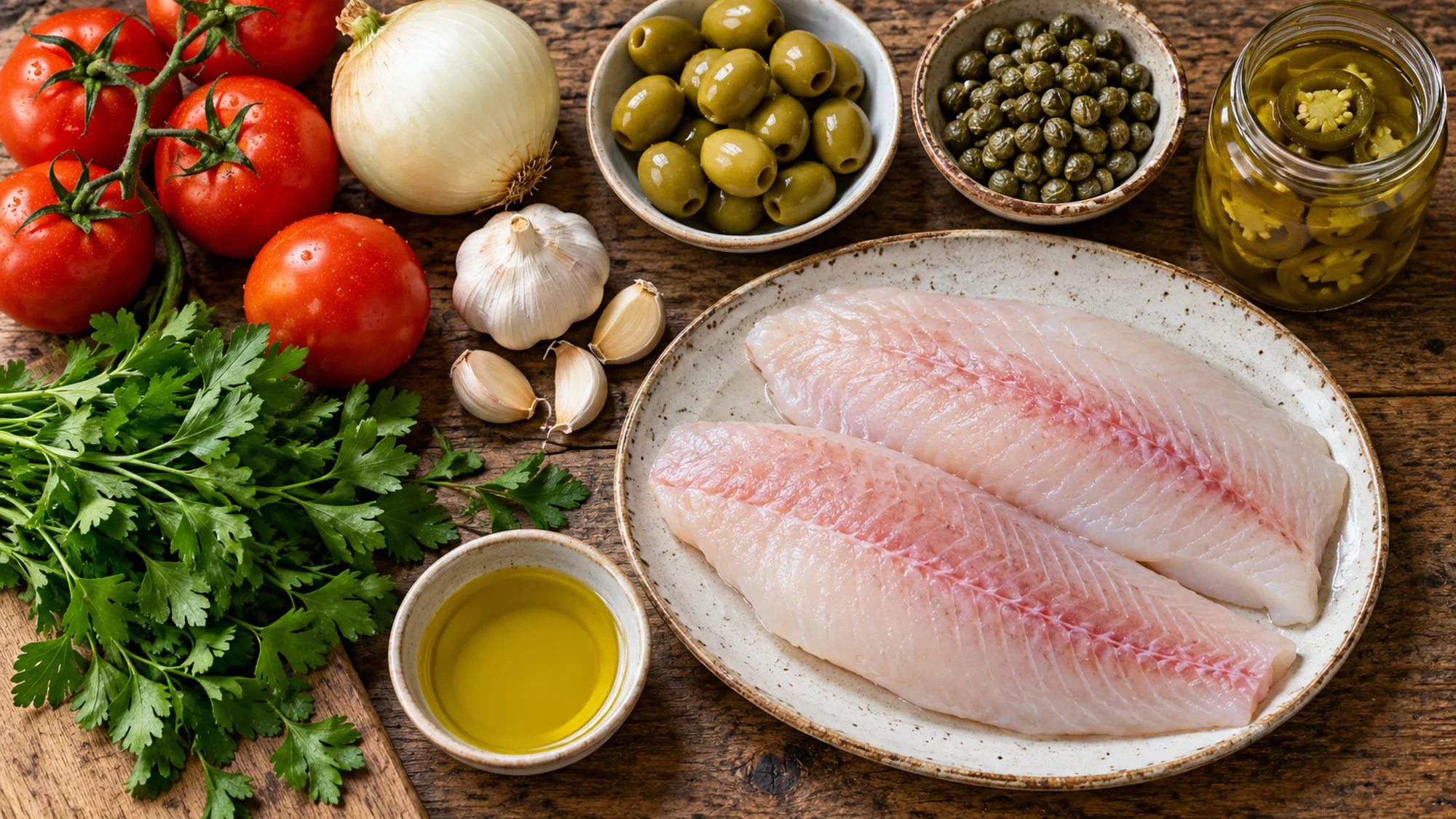
- 4 skinless snapper fillets 6 oz (170 g) each; 1 1/2 lb (680 g) total, pin bones removed
- 2 tablespoons olive oil 27 g
- 1 medium onion 150 g, thinly sliced
- 3 garlic cloves 9 g, minced
- 1 1/2 pounds ripe tomatoes 680 g, cored and chopped
- 1/2 cup pitted green or mixed olives 60 g, drained and halved
- 2 tablespoons capers 17 g, drained
- 1/2 teaspoon dried oregano
- 1 bay leaf
- 1/4 teaspoon fine salt
- 1/4 teaspoon ground black pepper
- 1 jalapeño optional, sliced
- 1 lime optional, cut into serving wedges
Equipment
- 12-inch deep skillet with lid
- Cutting board and knife
- Wide spatula
- Instant-read thermometer
Instructions
- Pat the thawed fish dry and check for pin bones. Keep it refrigerated while preparing the sauce. Slice the onion, mince the garlic and chop the tomatoes.
- Warm the olive oil in a 12-inch deep skillet over medium heat. Add the onion and cook for 5–6 minutes until softened without dark browning. Stir in the garlic for 30 seconds.
- Add the tomatoes, olives, capers, oregano, bay leaf, salt, pepper and optional jalapeño. Simmer uncovered for 12–15 minutes, stirring occasionally, until the tomatoes soften into a chunky sauce. Add a tablespoon or two of water only if the pan becomes dry.
- Nestle the fillets into the sauce and spoon some sauce over them. Cover, reduce the heat to medium-low, and cook gently for about 8–12 minutes, depending on thickness. Avoid stirring or repeatedly flipping the fish.
- Check the thickest part of each fillet with a thermometer; it should reach 145°F (63°C). Remove finished pieces rather than overcooking them while thicker ones finish. Discard the bay leaf and serve the fish and sauce with optional lime wedges.
- Refrigerate leftovers in a shallow covered container within 2 hours, or 1 hour above 90°F (32°C). Store at 40°F (4°C) or colder for 3–4 days. Reheat to 165°F (74°C), adding a little water if the sauce has thickened.
Nutrition
Video
Notes
Tried this recipe?
Let us know how it turned out!Hi, I’m Emily Pocker! I share recipes and food guides here at Recipes360 to help you find everyday meal inspiration and feel more confident in the kitchen. My goal is to make cooking approachable, enjoyable, and full of flavor.