
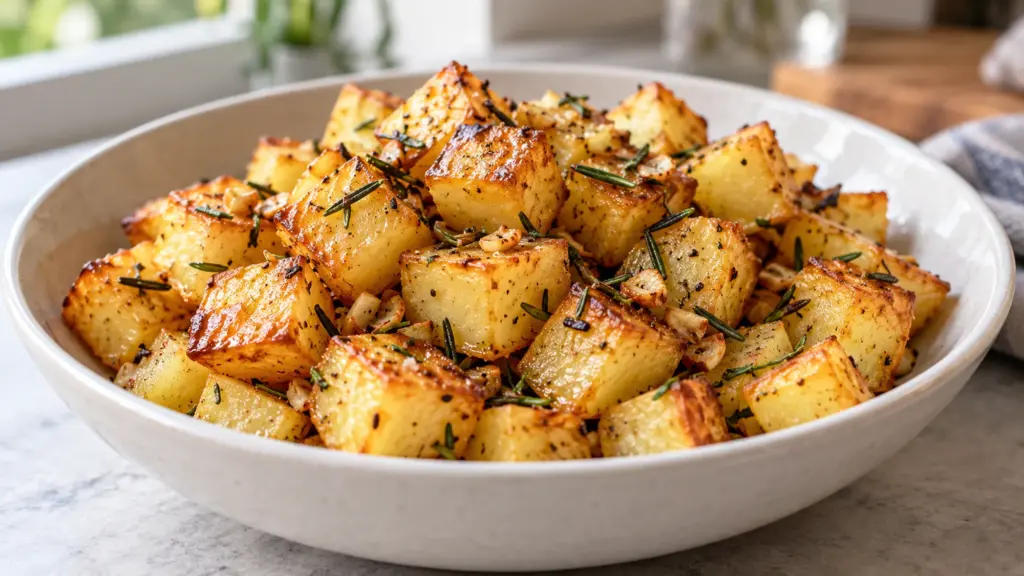
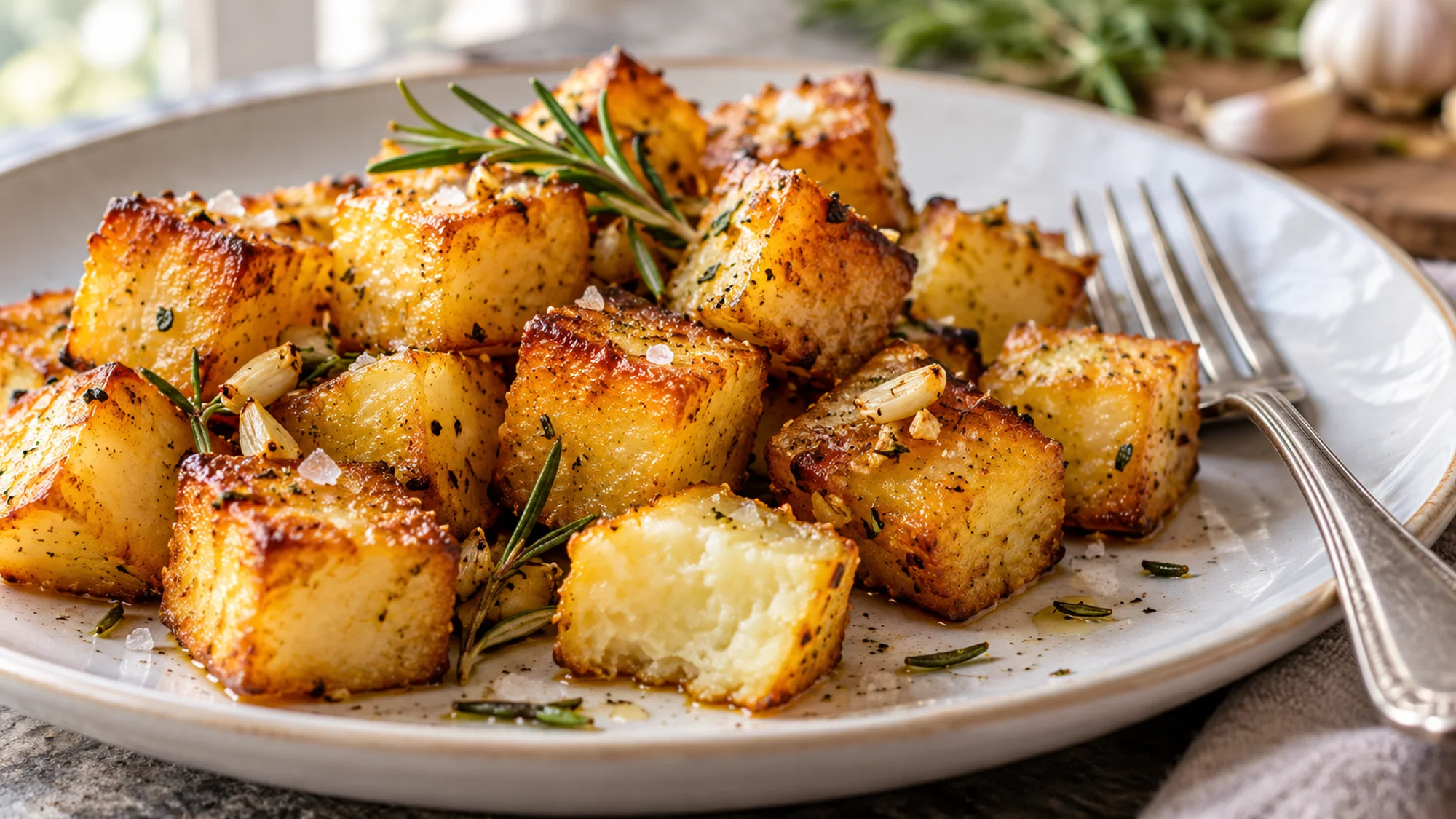
Parmentier potatoes turn an ordinary bag of potatoes into small golden cubes with soft centers and plenty of crisp edges. Rosemary and garlic make them smell wonderful, but the real work happens before roasting: cut evenly, drain thoroughly, and give every piece room on the tray.
A short simmer softens the outside; a few minutes of steam-drying help the oil coat the cubes instead of sliding off wet surfaces. Add the garlic near the end so its flavor stays mellow rather than scorched.
What makes these little potatoes different
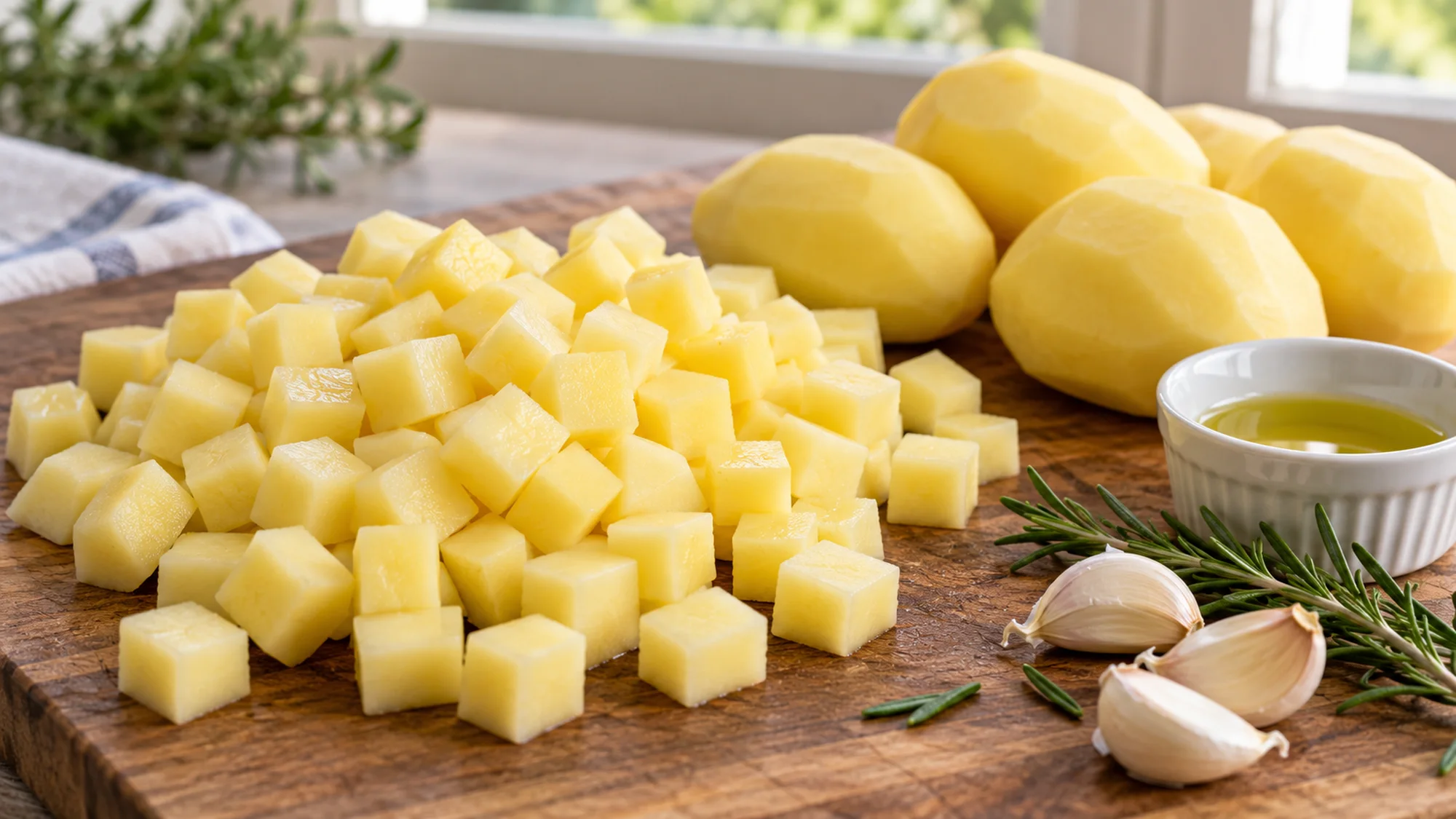
This version uses peeled potatoes cut into roughly half-inch cubes, not the larger chunks usually served with a roast. That smaller shape gives you more browned surface in each bite. Yukon Gold potatoes keep a creamy middle, while russets make slightly fluffier, more delicate cubes.
Keep the pieces similar in size rather than chasing perfect geometry. Tiny scraps can burn before the bigger cubes soften, so reserve unusually small pieces for another meal. A large rimmed metal sheet pan gives the potatoes better contact with heat than a crowded, deep baking dish.
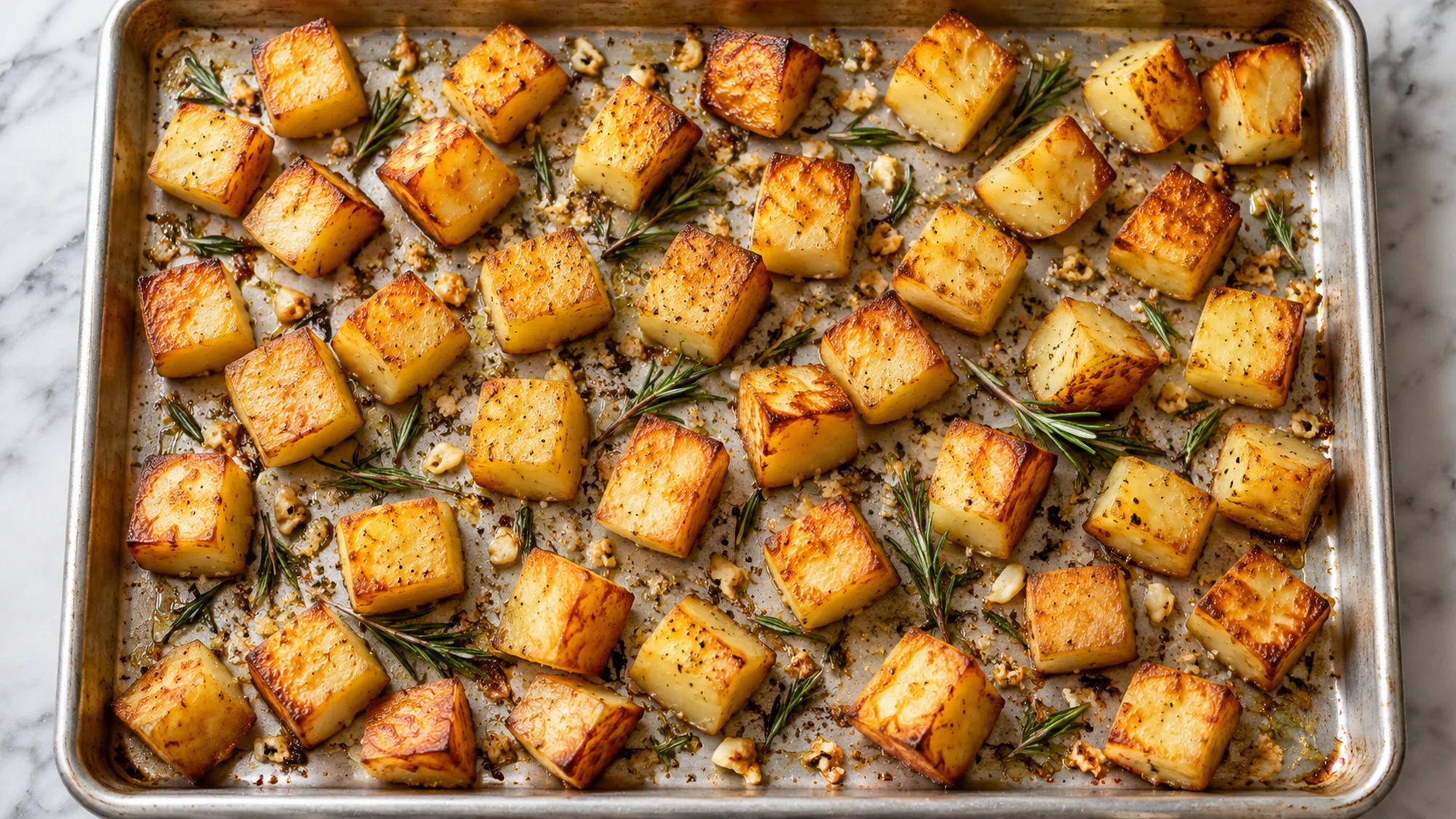
The goal is a tray of separate golden cubes, not a pile of potatoes steaming together.
Ingredients and a useful order of work
For four side servings, use 900 grams of peeled potatoes, three tablespoons of olive oil, three garlic cloves, two teaspoons of chopped fresh rosemary, half a teaspoon of fine salt, and a quarter teaspoon of black pepper. Measure the potatoes after peeling so the card’s yield stays consistent.
- Heat the oven to 425°F while cutting the potatoes into half-inch cubes.
- Simmer the cubes in unsalted water for four to five minutes. Their outer edges should soften while their centers remain firm.
- Drain carefully and leave them in the colander for five minutes, until visible surface moisture has evaporated.
- Toss with two and a half tablespoons of oil, salt, and pepper; spread in one layer.
Roast for color, then add the aromatics
Roast for twenty minutes before turning the cubes with a thin spatula. Combine the remaining half-tablespoon of oil with the minced garlic and rosemary, then fold that mixture through the potatoes. Roast another ten to fifteen minutes, until browned and easily pierced with a fork.
If the bottoms stick, give them another minute before lifting. A formed crust often releases more easily. Ovens and pans differ, so use the browned edges and tender centers as your final checks rather than treating the timer as a guarantee.
Garlic goes in after the first roast, not at the beginning; those small pieces need much less time than potatoes.
Serving suggestions
Serve the potatoes promptly alongside whole chicken, baked fish, or a skillet of eggs. Their crisp edges also make a pleasant contrast to beans and a simple green salad. Add any sauce at the table rather than tossing the whole batch before serving.
For a creamy, dairy-free accompaniment, spoon lemon tahini sauce alongside them. Start with a little: the potatoes already carry garlic and rosemary, and a heavy coating hides their best texture.
Variations
| Change | How to use it |
|---|---|
| Thyme instead of rosemary | Use two teaspoons of fresh thyme leaves with the late garlic mixture. |
| Smoky seasoning | Add half a teaspoon of smoked paprika with the oil before roasting. |
| Dairy-free finish | Keep the olive oil as written; no butter or cheese is needed. |
Dried rosemary is more concentrated and firmer than fresh. If that is what you have, crush half a teaspoon finely before adding it. Avoid extra handfuls of herbs that may burn on exposed corners.
Health benefits
Potatoes contribute carbohydrate and potassium; they are not simply a vehicle for butter. The FDA vegetable nutrition table lists these nutrients in plain potatoes. Here, measured oil supplies richness, while portion size determines how the side fits the rest of your meal.
Nutrition values in the card are estimates for one quarter of the batch. Potato variety, peeling, and cooking losses change the final numbers. An illustrative ingredient budget is about $3.75 for the batch, not a live local price quote.
Storage and reheating
Refrigerate leftovers within two hours in a shallow covered container. Use within three to four days and reheat to 165°F, following University of Illinois Extension guidance. An oven or air fryer helps restore some crust; a microwave warms the centers but leaves softer edges.
Bottom Line
Even cubes, dry surfaces, and a roomy tray do more for parmentier potatoes than a long seasoning list. Keep the garlic for the second part of roasting, taste a cube for tenderness, and bring the tray straight to the table.
Parmentier potatoes recipe
Parmentier Potatoes Recipe

Ingredients
- 900 g peeled potatoes about 2 lb; Yukon Gold or russet, cut into 1/2-inch cubes
- 3 tablespoons olive oil divided
- 3 cloves garlic minced
- 2 teaspoons fresh rosemary finely chopped
- 1/2 teaspoon fine salt
- 1/4 teaspoon black pepper
Equipment
- 1 Large rimmed baking sheet
- 1 Saucepan
- 1 Colander
- 1 Thin spatula
Instructions
- Heat the oven to 425°F (220°C). Cut the peeled potatoes into even 1/2-inch cubes. Bring a saucepan of unsalted water to a boil.
- Add the potatoes, return to a gentle simmer and cook for 4–5 minutes. The outer edges should soften but the centers should still be firm. Drain carefully and steam-dry in the colander for 5 minutes.
- Toss with 2 1/2 tablespoons olive oil, salt and pepper. Spread in one uncrowded layer on a large rimmed metal baking sheet. Roast for 20 minutes.
- Turn the potatoes with a thin spatula. Mix the remaining 1/2 tablespoon olive oil with garlic and rosemary and fold through the cubes. Roast for another 10–15 minutes, until golden and fork-tender. Small pieces may finish first; remove them if needed.
- Serve promptly. Refrigerate leftovers within 2 hours, or 1 hour above 90°F. Use within 3–4 days and reheat to 165°F.
Nutrition
Video
Notes
Tried this recipe?
Let us know how it turned out!Hi, I’m Emily Pocker! I share recipes and food guides here at Recipes360 to help you find everyday meal inspiration and feel more confident in the kitchen. My goal is to make cooking approachable, enjoyable, and full of flavor.