
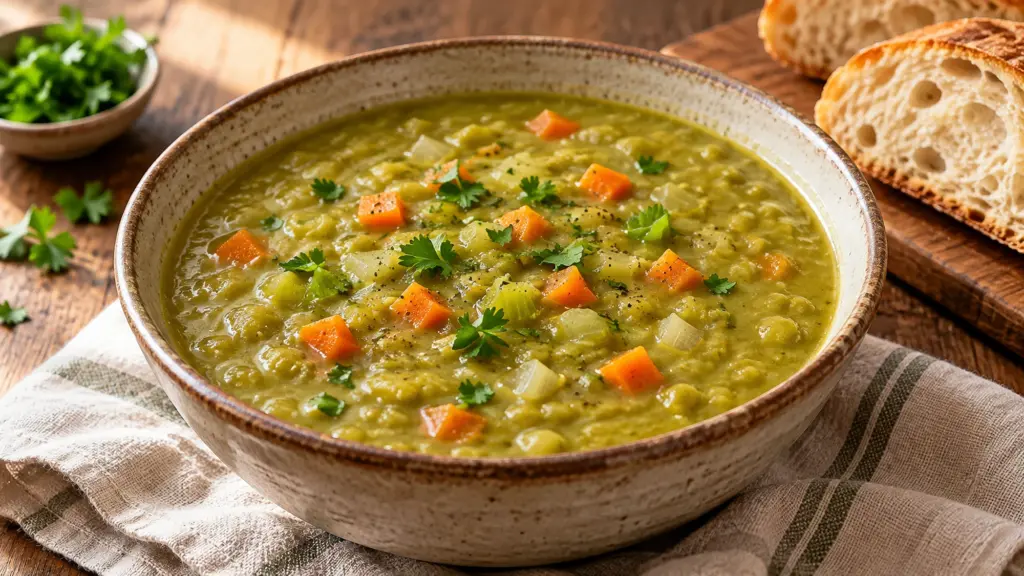
A split pea soup recipe needs patience more than complicated equipment. The dried peas gradually soften into the broth, turning a pot of small green halves into a thick, spoonable soup. Carrot, celery, onion, garlic, and thyme give this version its savory base without ham, cream, or a separate thickener.
Check that the peas are soft before deciding whether the soup needs blending; time at a gentle simmer does most of the texture work.
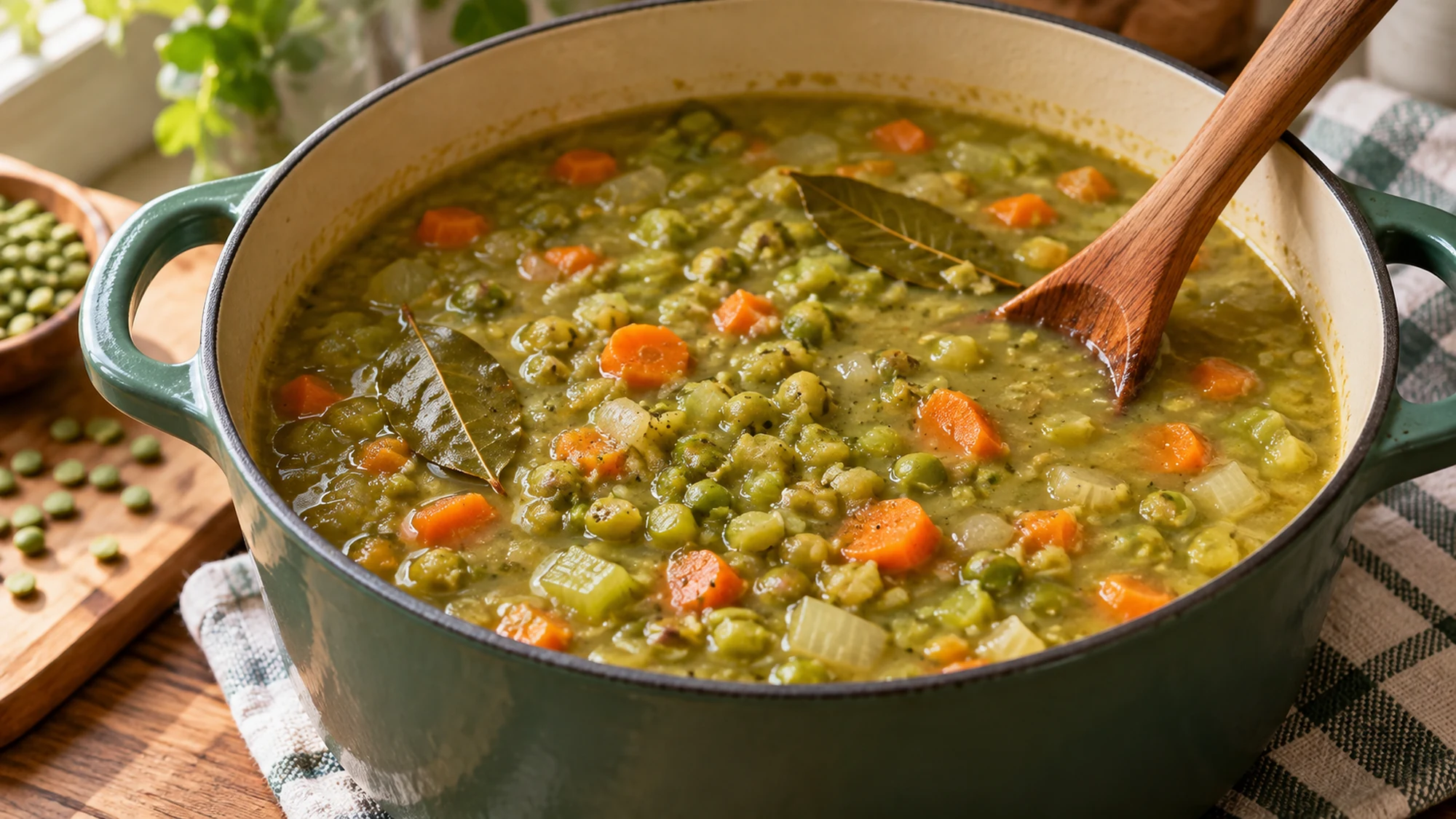
This batch starts with dry green split peas, not frozen garden peas. Sort and rinse them first, then let the pot cook steadily while you stir now and again. I’d choose a roomy, heavy pot: thickening soup needs space for a comfortable stir, and the bottom becomes easier to scorch as the peas break down.
Serving this split pea soup recipe
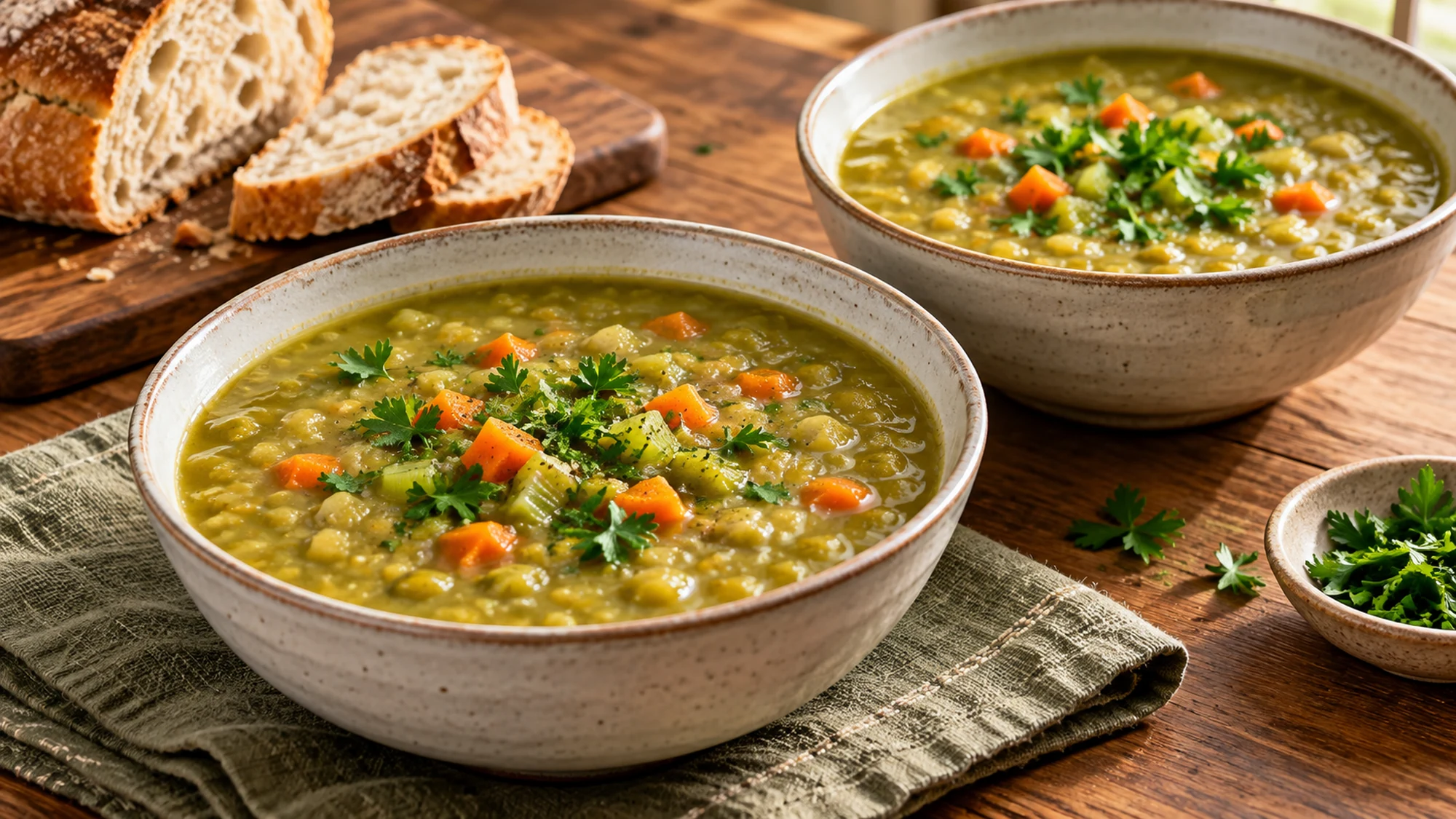
The pot makes six generous portions, measured as one-sixth of the finished batch rather than an exact cup volume. Evaporation varies with the pot and lid. Serve the soup with a little chopped parsley and bread on the side; the blog’s same-day baguette adds a crisp contrast to its soft texture.
A wide bowl lets the soup cool to a comfortable eating temperature without needing extra liquid. If it has thickened while standing, stir in hot water a little at a time before portioning. The aim is a soup that falls from the ladle rather than holding the shape of the ladle. I’d taste it before adding salt because evaporation concentrates the broth.
| Choice | What to expect |
|---|---|
| Straight from the pot | Stir well before dividing into six portions. |
| Next-day lunch | Add water during reheating because the chilled soup becomes much thicker. |
| Freezer portion | Use a freezer-safe container with room for expansion and label the date. |
Adjust thickness with water first, then taste for seasoning; otherwise a concentrated soup can lead you to season the wrong texture.
Variations and texture adjustments
Split peas do not require an overnight soak. University of Missouri Extension recommends sorting, rinsing, and simmering them in water or broth. The same guidance notes that cooking time depends on the texture wanted. Here, the target is a soft, partly dissolved pea rather than a firm salad ingredient.
- Yellow split peas can replace green split peas by weight, but the color and flavor will change.
- For a smoother soup, use an immersion blender briefly after the peas are tender; remove the bay leaves first.
- Keep the soup chunkier by mashing a little against the pot with a spoon instead of blending the whole batch.
If a pea still has a firm, chalky center, keep simmering and add water as needed. More blending is not a substitute for cooking it through. If the bottom starts catching, lower the heat and stir more often; a hard boil makes splattering and scorching more likely once the soup is thick.
Use the pea’s center as the doneness test, then choose how much texture to leave in the finished pot.
Health benefits and practical portions
A sixth of this recipe is estimated at about 330 calories, with 21 grams of protein and 22 grams of fiber. Those rounded figures count the dry peas, vegetables, measured oil, and broth divided by six. Actual brands and portion sizes change the result; extra bread and toppings are excluded.
The peas supply most of that protein and fiber. They also make this a substantial portion of legumes, so a smaller bowl may suit you better if you are increasing fiber gradually. Choose a vegetable broth that fits your dietary needs, and check the label rather than assuming every stock is low in sodium or free of allergens.
- Cool large amounts in shallow containers rather than leaving the full pot on the counter.
- Refrigerate within two hours, use within three to four days, and reheat to 165°F/74°C, following Illinois Extension’s leftover guidance.
- Allow an estimated US$5.40 for the pot, about US$0.90 per portion, based on the amounts of peas, broth, vegetables, oil, and herbs used.
The budget and nutrition estimates describe one-sixth of the pot; a larger bowl or a generous topping changes both.
Bottom Line
This split pea soup recipe keeps the ingredient list modest and lets a gentle simmer build the body. Sort the peas, give them enough liquid and time, and adjust the thickness again before serving leftovers.
Split Pea Soup Recipe

Ingredients
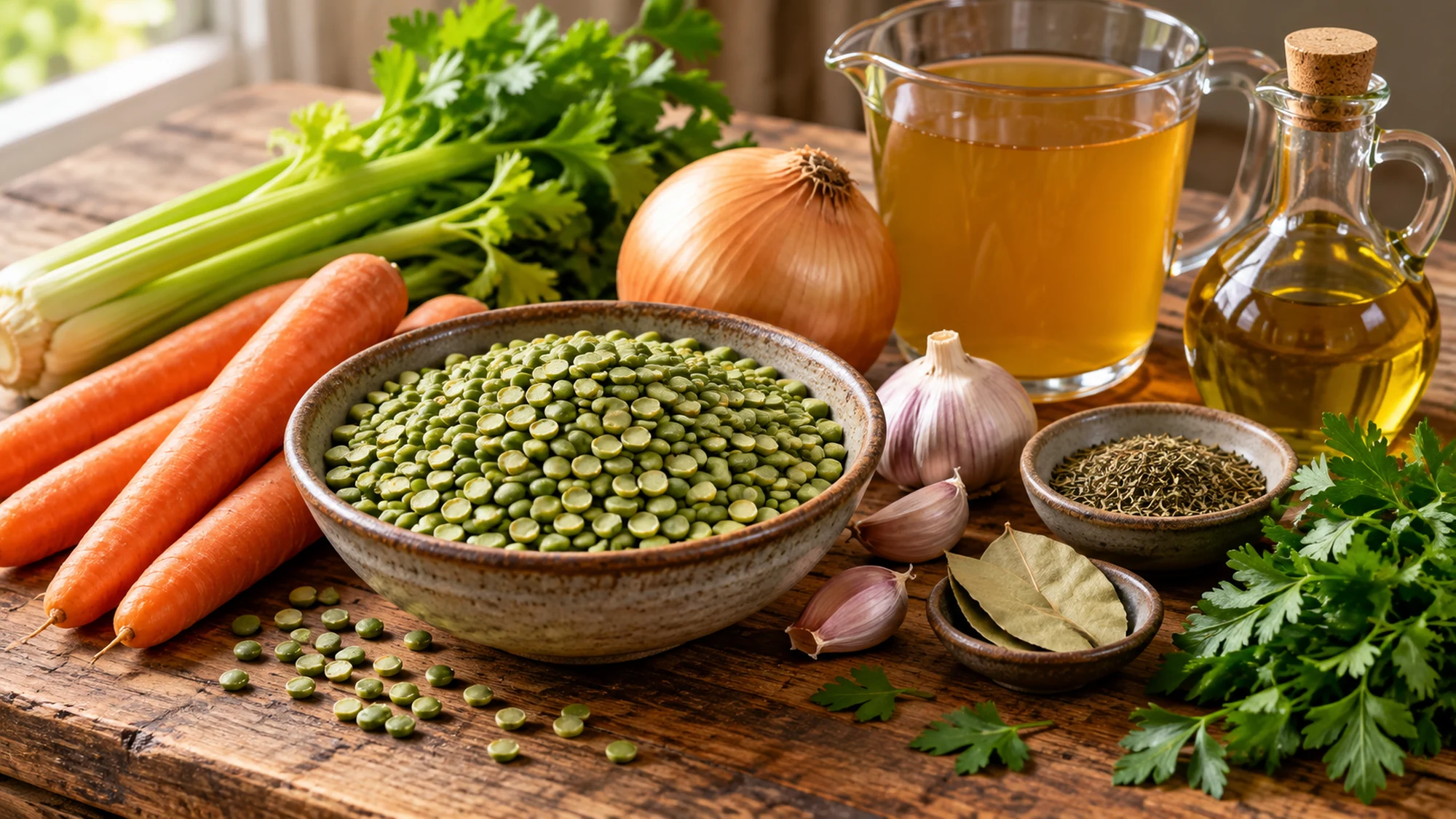
- 500 g dry green split peas sorted and rinsed; not fresh or frozen peas
- 1 tbsp olive oil 14 g
- 150 g yellow onion finely chopped
- 150 g carrots small dice
- 100 g celery small dice
- 3 garlic cloves about 9 g, minced
- 2 L low-sodium vegetable broth check the label for dietary needs
- 500 mL water plus more as needed during simmering or reheating
- 1 tsp dried thyme about 1 g
- 2 bay leaves
- 1/2 tsp fine salt about 3 g; reduce if broth is salty
- 1/4 tsp black pepper
- 2 tbsp chopped fresh parsley about 8 g, for serving
Equipment
- 1 Large heavy soup pot, at least 5 liters
- 1 Colander
- 1 Ladle
Instructions
- Spread the dry peas on a tray and remove stones or debris. Rinse under cool running water. Chop the onion, carrot, celery, and garlic.
- Warm oil in a large heavy pot over medium heat. Cook onion, carrot, and celery for 7–8 minutes, stirring, until beginning to soften. Add garlic and thyme and stir for 30 seconds.
- Add peas, broth, 500 mL water, bay leaves, and pepper. Bring to a boil, then reduce to a gentle simmer with the lid partly covering the pot. Cook for about 60–80 minutes, stirring regularly and more often as it thickens. Add water if the peas become exposed or the bottom begins catching.
- Test several peas. They must be soft through the center with no chalky bite. Continue simmering as needed; the age of the peas and the heat affect timing. Remove the bay leaves. Mash a little with the spoon, or briefly use an immersion blender only after the peas are tender if a smoother texture is wanted.
- Stir in the salt, reducing it if the broth already tastes salty. Adjust with hot water until the soup falls comfortably from the ladle. Divide into six equal portions and add the measured parsley.
Nutrition
Video
Notes
Tried this recipe?
Let us know how it turned out!Hi, I’m Emily Pocker! I share recipes and food guides here at Recipes360 to help you find everyday meal inspiration and feel more confident in the kitchen. My goal is to make cooking approachable, enjoyable, and full of flavor.