
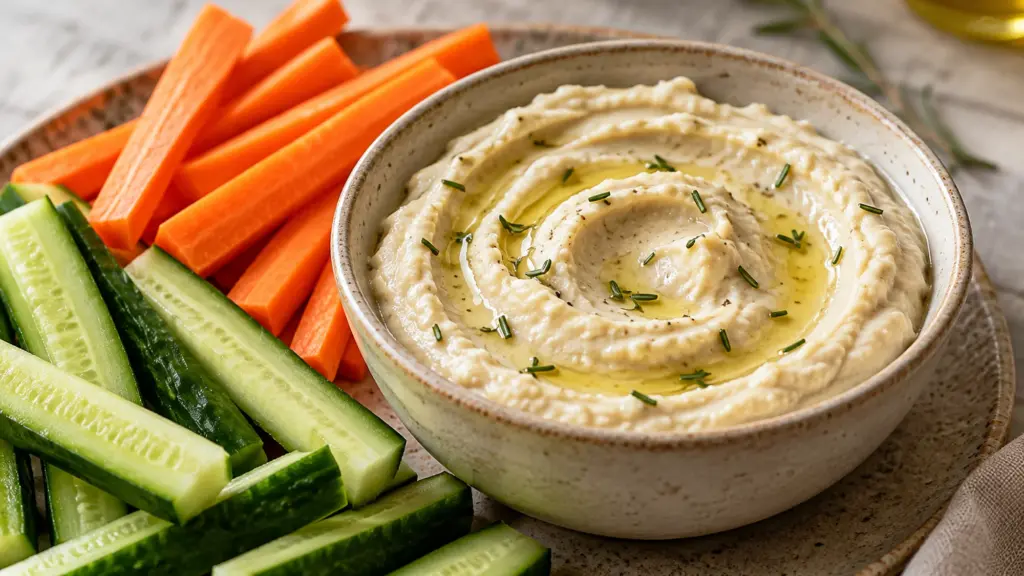
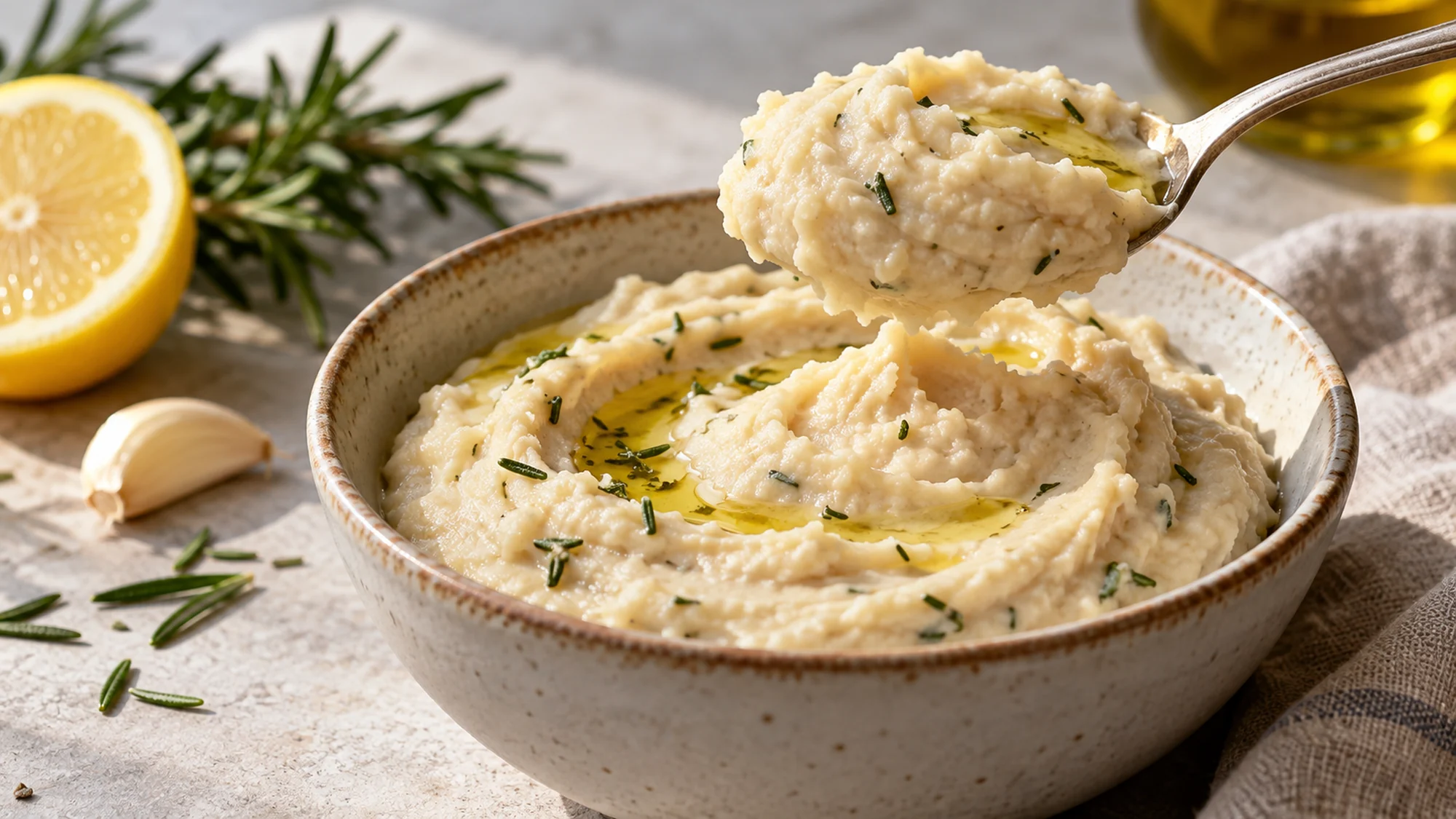
White bean dip turns canned cannellini beans into a smooth, savory bowl with very little cooking. Lemon keeps the flavor bright, while rosemary and a small amount of gently warmed garlic add depth. The texture should be thick enough to scoop with a vegetable stick but soft enough to spread without tearing bread.
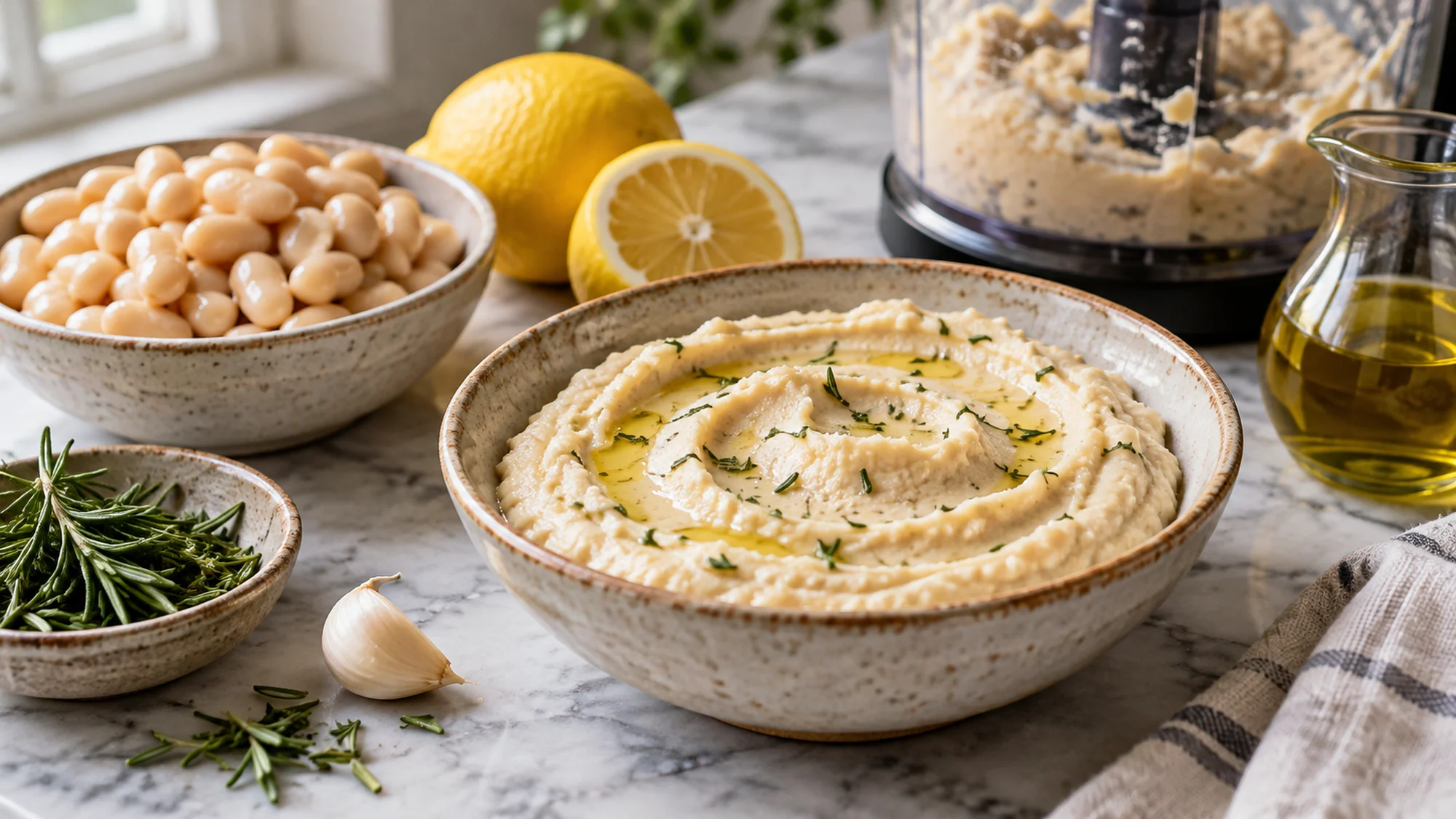
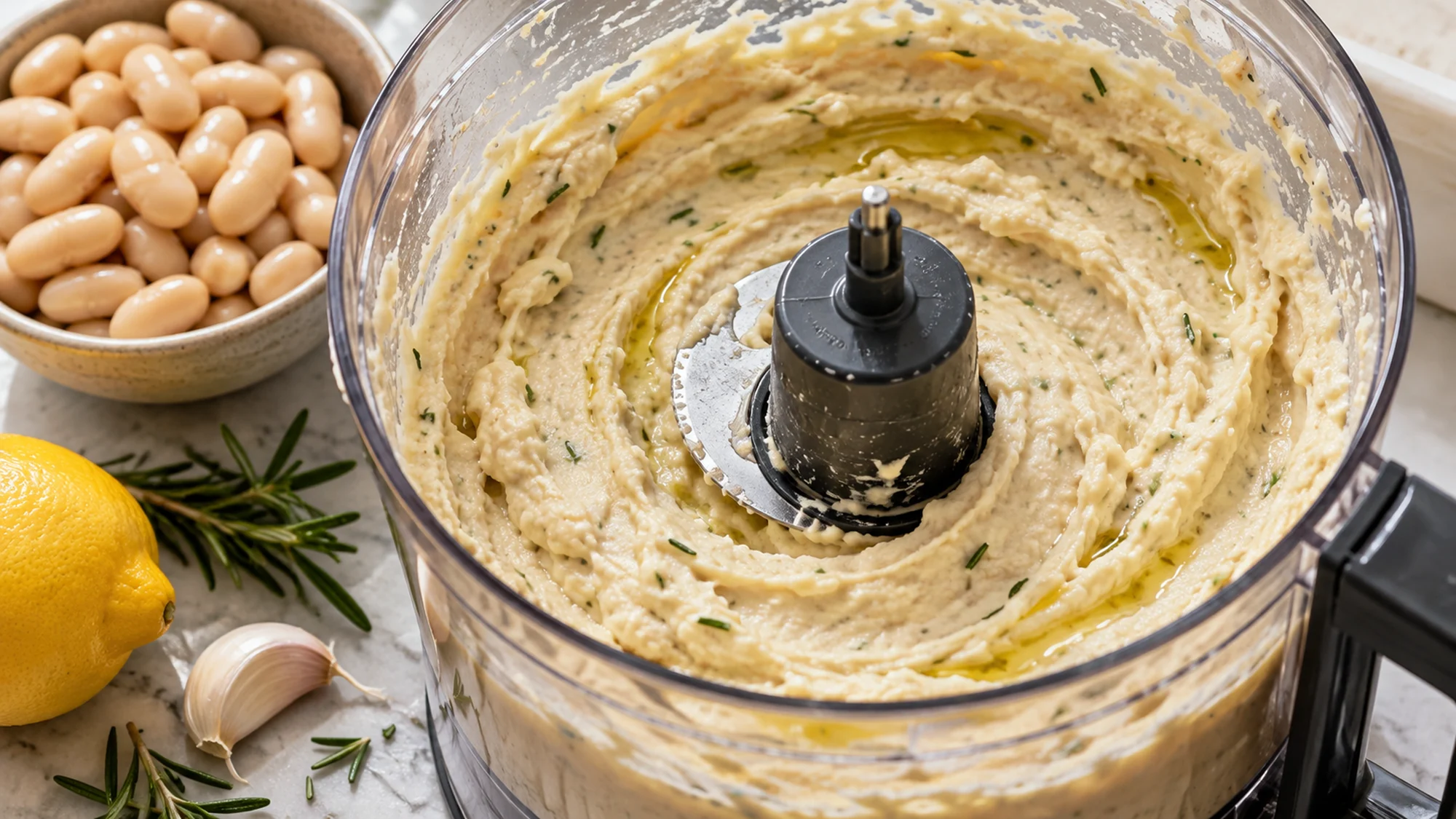
For a smooth white bean dip, blend drained beans with lemon and the measured rosemary-garlic oil, then add water gradually. Scrape the processor bowl so the edges become as creamy as the center.
I like a restrained hand with rosemary here: its flavor can easily hide the beans. Warming it briefly in the oil draws out its aroma without making a separate garnish or adding more fat. This is a dairy-free, tahini-free formulation, with the complete ingredient amounts and method kept in the recipe card.
Serving Suggestions for White Bean Dip
Put the dip in a shallow bowl so the spoon can travel across the surface easily. Crisp carrot batons, cucumber spears and lightly toasted bread all make useful accompaniments. Keep wet vegetables separate until serving; a puddle of vegetable juice quickly loosens the dip at the rim.
If you want beans in a different texture for the same table, consider dense bean salad. Serve the two in separate bowls so guests can choose creamy or crunchy. I prefer the dip barely cool rather than ice-cold because the rosemary and lemon are easier to notice.
| Use | Texture to aim for |
|---|---|
| Vegetable dip | A scoop that holds a soft ridge |
| Toast spread | Creamy enough to glide across bread |
| Bowl dressing | Loosen only the portion being served |
- For a light lunch, spread a portion onto toast and add roasted vegetables or sliced tomatoes. The dip supplies beans, but a small snack portion is not a whole meal on its own.
- Add a satisfying amount of bread, vegetables and another food you enjoy rather than relying on a decorative spoonful.
Keep the main bowl thick and adjust smaller portions for spreading or drizzling.
Variations
Great northern beans are a practical alternative to cannellini, although their skins and moisture may give a slightly different finish. Use the drained weight in the card rather than assuming every can yields the same amount. Home-cooked beans also work when fully tender; firm centers will stay grainy after blending.
The card includes Show Me MO Vegan’s instructional bean-dip video. Its white-bean segment uses za’atar, mustard and vinegar. This recipe instead uses cannellini, lemon, rosemary and measured olive oil; the shared lesson is blending cooked beans and adjusting their consistency.
- For a different herb direction, use a little fresh thyme in place of rosemary. Parsley is better stirred in after blending if you want a fresher green note.
- Adding more raw garlic is a stronger change than it sounds, especially after refrigeration, so taste cautiously rather than doubling it automatically.
- A stubbornly coarse texture usually needs more processing or a small splash of water. Stop the machine before scraping, then blend again.
- Too much lemon cannot be removed afterward; balance acidity with additional beans if necessary. Extra oil is not the only way to make the processor run smoothly.
Choose substitutions for their flavor, then judge the finished dip by texture rather than by can size.
Health Benefits
Beans bring fiber and plant protein to this dip, while olive oil adds richness. A serving is still only one eighth of the batch, so its contribution is modest. The MyPlate protein-foods guidance includes beans among useful choices within a varied eating pattern.
Refrigerate the dip in a covered container and use clean utensils. The FDA recommends cold storage at 40°F/4°C or below. Lemon provides flavor, not a preservation guarantee.
- Using no-salt-added beans gives more control over seasoning. Rinsing ordinary canned beans is useful, but it does not make their sodium identical to an unsalted product.
- The card’s nutrition is an estimate based on the specified drained weight, and the amount actually served matters more than an attractive bowl size.
- Use within three days, and discard a portion that has been left out beyond safe holding time.
A bean-based snack can add useful variety; portion size, sodium and safe storage still matter.
Bottom Line
White bean dip needs a smooth bean base, enough lemon to brighten it and enough water to make it comfortable to scoop. Keep the rosemary restrained, warm the garlic gently, and use the measured card below as the starting point.
White Bean Dip Recipe

Ingredients
- 480 g no-salt-added canned cannellini beans drained and rinsed weight; about two 15-ounce cans
- 2 tablespoons olive oil 30 ml, about 28 g; divided
- 2 teaspoons finely chopped fresh rosemary about 2 g; divided
- 1 small clove garlic about 3 g, finely grated
- 30 ml fresh lemon juice 2 tablespoons
- 60 ml cold water 1/4 US cup; add gradually
- 1/4 teaspoon fine salt
- 1/8 teaspoon ground black pepper
Equipment
- Food processor
- Small saucepan
- Spatula
- Kitchen scale and measuring spoons
Instructions
- Drain, rinse and weigh the beans. Reserve 1 teaspoon of the measured oil and 1/2 teaspoon of the measured rosemary for the finish. Put the remaining oil and rosemary into a small saucepan.
- Warm over low heat for about 1 minute, just until the rosemary smells fragrant. Add the garlic and stir for about 30 seconds without browning. Take off the heat and cool for 3 minutes; do not put hot oil into a closed processor.
- Put the beans, lemon juice, salt, pepper, cooled rosemary-garlic oil and half the water in the food processor. Blend until creamy, stopping the motor before scraping the sides. Add the remaining water gradually, using only what is needed for a thick, scoopable dip.
- Transfer to a shallow bowl. Drizzle with the reserved measured oil and scatter over the reserved rosemary. Divide into eight equal snack portions. Bread and raw vegetables are optional serving suggestions and are not included in the estimates.
Nutrition
Video
Notes
Tried this recipe?
Let us know how it turned out!Hi, I’m Emily Pocker! I share recipes and food guides here at Recipes360 to help you find everyday meal inspiration and feel more confident in the kitchen. My goal is to make cooking approachable, enjoyable, and full of flavor.