
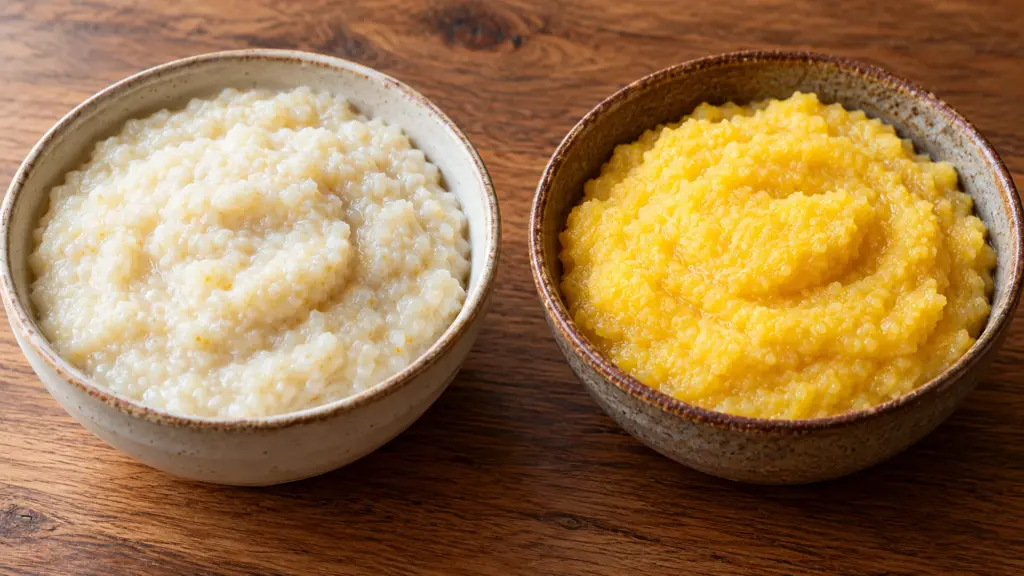
Two bowls of creamy cooked corn can look like easy substitutes until the package names get involved. In a hominy grits vs polenta comparison, the important difference is how the corn has been processed. True hominy grits come from alkali-treated corn; ordinary corn grits and corn polenta do not automatically share that treatment.
Hominy grits use corn processed into hominy through nixtamalization. Corn polenta generally uses untreated ground corn. Ordinary corn grits are a separate case, so check the actual product rather than deciding by color or the word grits alone.
Hominy grits vs polenta: start with the corn
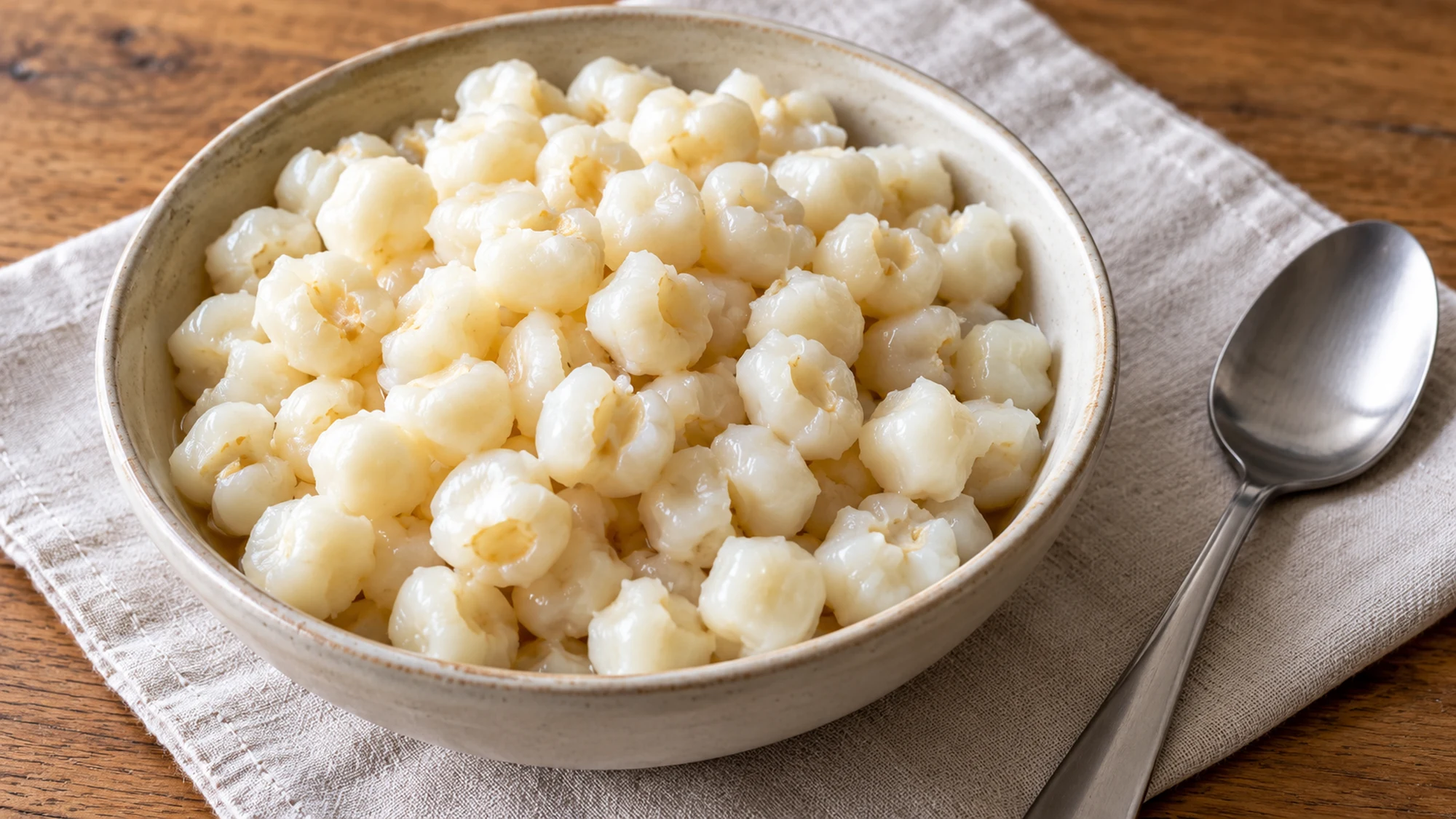
Hominy begins as dried corn treated with an alkaline solution. University of Illinois Extension explains that nixtamalization removes the hull and softens the kernel. Hominy grits are a ground form associated with that treated corn, rather than a synonym for every package of milled corn.
Corn polenta is an Italian preparation and also the familiar name on cornmeal sold for making it. The treatment distinction is more useful than a blanket white-versus-yellow rule. I’d start with the ingredient description, because a photograph of a creamy bowl cannot tell you how its corn was processed.
- Whole hominy: Kernels, often sold canned or dried; not a bag of dry ground grits.
- Hominy grits: Ground hominy; verify what the producer means by the name.
- Corn polenta: Ground corn for polenta, with grind and precooking varying by product.
Ordinary corn grits make the names confusing
Not all grits are hominy grits. Bob’s Red Mill explicitly distinguishes its Corn Grits/Polenta from hominy. That product illustrates why a bag labeled with both grits and polenta does not prove that the corn has been nixtamalized.
Anson Mills describes traditional Southern grits as commonly using dent corn and Italian corn polenta as commonly using flint corn, while also explaining exceptions and regional uses of the word hominy. Corn variety and milling affect the result, but neither color nor a regional nickname settles the processing question.
| Product | Corn treatment | What to check |
|---|---|---|
| True hominy grits | Nixtamalized corn | Producer’s description and grind |
| Ordinary corn grits | Not necessarily nixtamalized | Do not infer treatment from grits |
| Corn polenta | Generally untreated ground corn | Fine/coarse and instant/traditional |
| Whole hominy | Nixtamalized whole kernels | Canned, dried or already cooked |
Can you substitute one for the other?
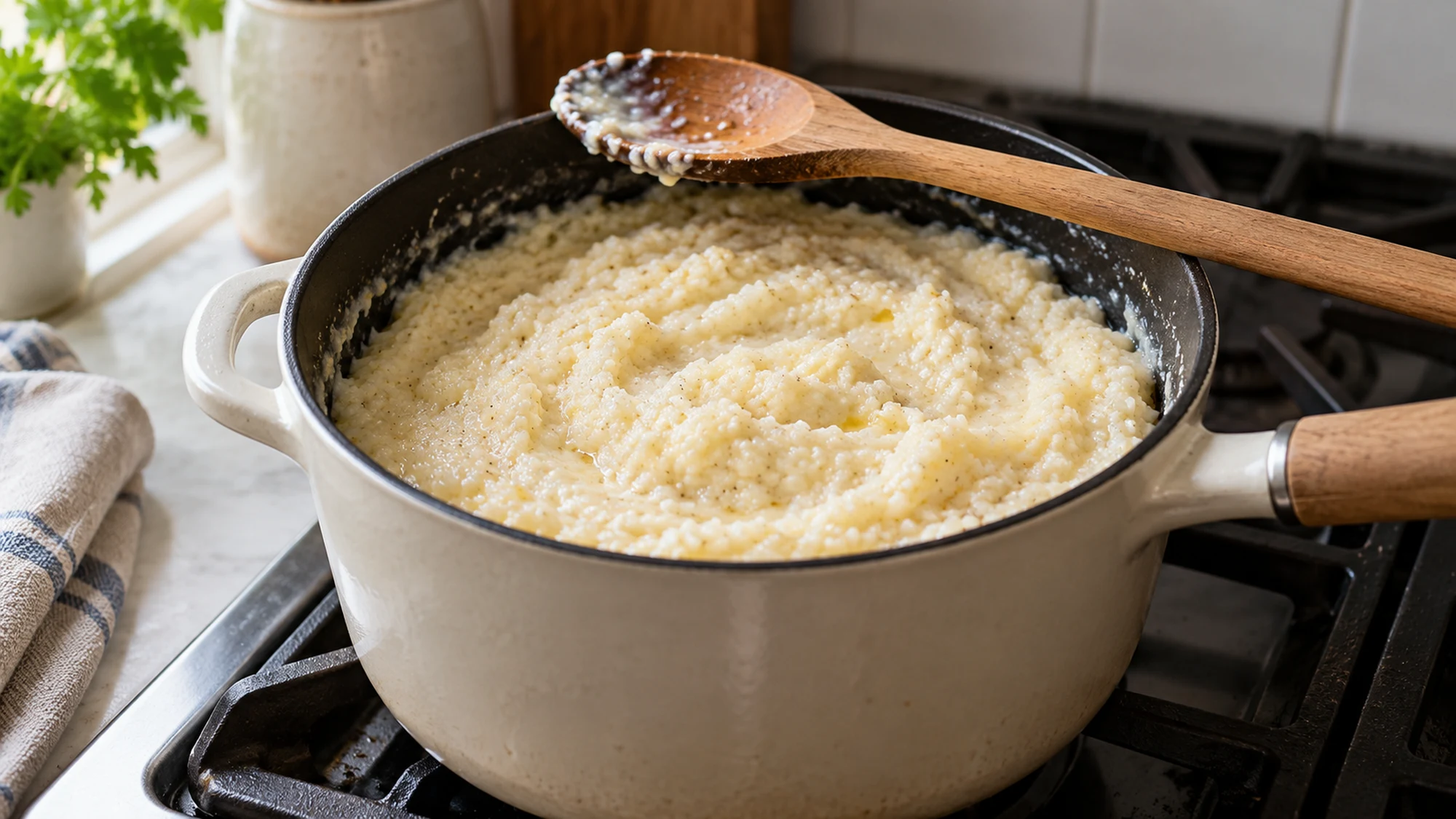
Sometimes a different ground-corn product can make a pleasant bowl, but the result will not necessarily match the original dish. Compare particle size, whether it is precooked and the package’s liquid instructions before making a swap. Do not transfer a quick-cooking product’s timing to a coarse traditional one.
The Bob’s Red Mill video below discusses its ordinary corn grits/polenta, not proof that all hominy grits are the same product. For a direct hominy example, Anson Mills’ fresh hominy grits method starts with prepared whole hominy and breaks it down before cooking. That is a different starting point from dry cornmeal.
- For a familiar recipe: Buy the named product when the texture is central to the dish.
- For a flexible side: Follow the substitute’s own directions and accept a different consistency.
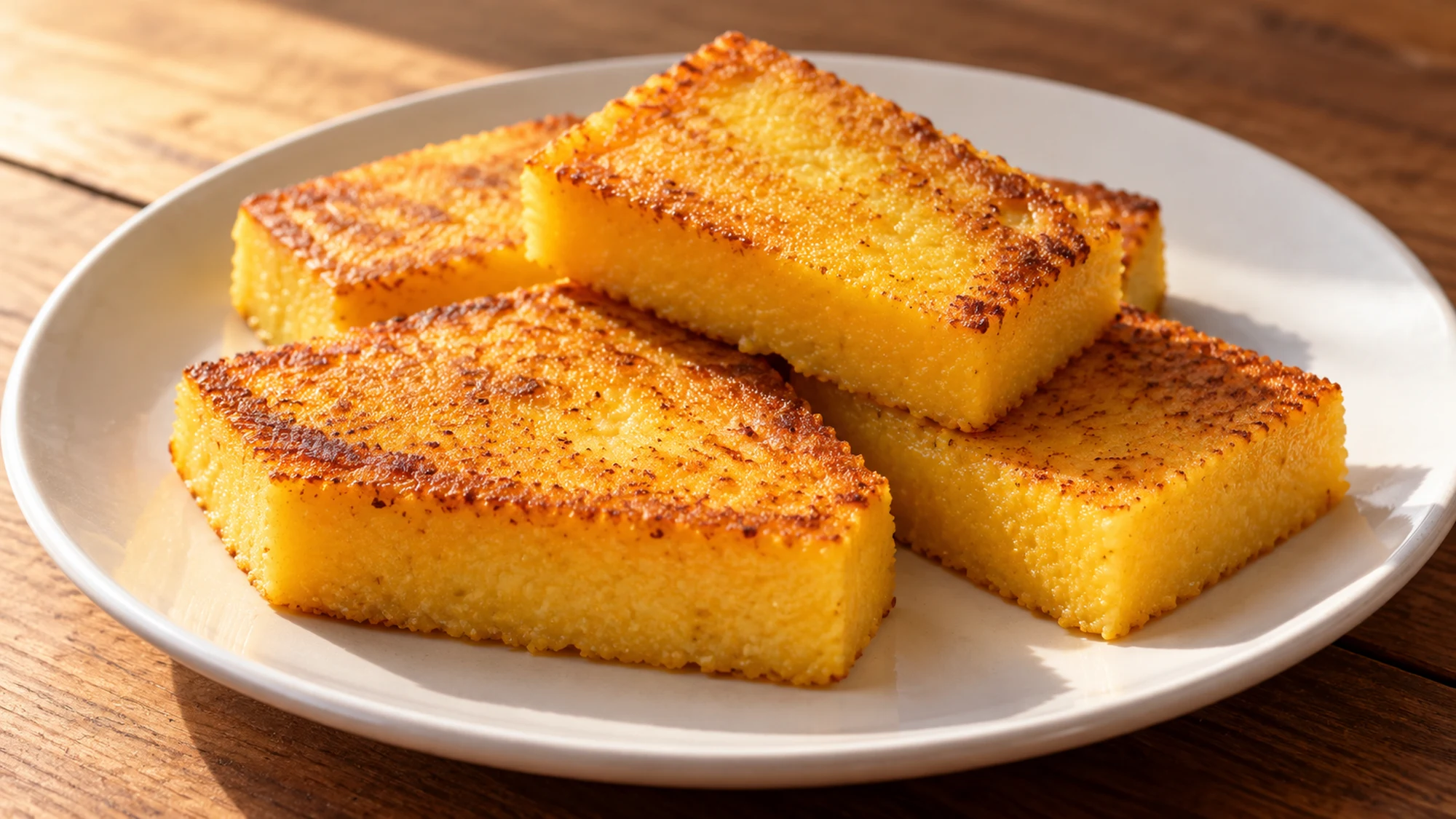
- For a set-and-slice dish: Use a method written for the actual product; a spoonable porridge is not automatically ready to cut.
- For whole hominy: Do not replace dry ground corn with canned kernels using the same cup measure and cooking time.
Shopping and cooking decisions that help
Read the front and back of the package together. Look for a clear corn ingredient, a statement about hominy or alkali treatment when that matters, and whether the product is instant, quick or traditional. If the producer does not explain its terminology, ask rather than assign a process from the product name.
For texture, cook according to the product instructions and taste for tenderness once safely prepared. I’d keep the topping simple on a first comparison so a strongly flavored sauce does not hide the corn itself. There is no need to turn dinner into a laboratory exercise.
- Dietary needs: Check the current gluten-free label when needed, including flavorings and cross-contact information. FDA explains the gluten-free labeling standard; corn as an ingredient is not a complete product guarantee.
- Added ingredients: Cheese, butter, milk, stock and toppings can change allergens and seasoning.
- Dry storage: Follow the producer’s storage directions and keep the package closed.
- Cooked leftovers: Treat them as cooked food. FSA guidance advises cooling in smaller portions and refrigerating within one to two hours, then eating within 48 hours or freezing.
Bottom Line
For hominy grits vs polenta, ask whether the corn was nixtamalized, then check grind and cooking instructions. Ordinary corn grits can overlap with products sold for polenta, but that does not erase the distinction between untreated corn and true hominy.
Sources
- University of Illinois Extension: Cooking with hominy
- Bob’s Red Mill: Corn grits, polenta and hominy distinctions
- Anson Mills: Corn varieties, milling and hominy terminology
- Anson Mills: Fresh hominy grits
- Food Standards Agency: Chilling cooked food
- FDA: Gluten and food labeling

Hi, I’m Emily Pocker! I share recipes and food guides here at Recipes360 to help you find everyday meal inspiration and feel more confident in the kitchen. My goal is to make cooking approachable, enjoyable, and full of flavor.