
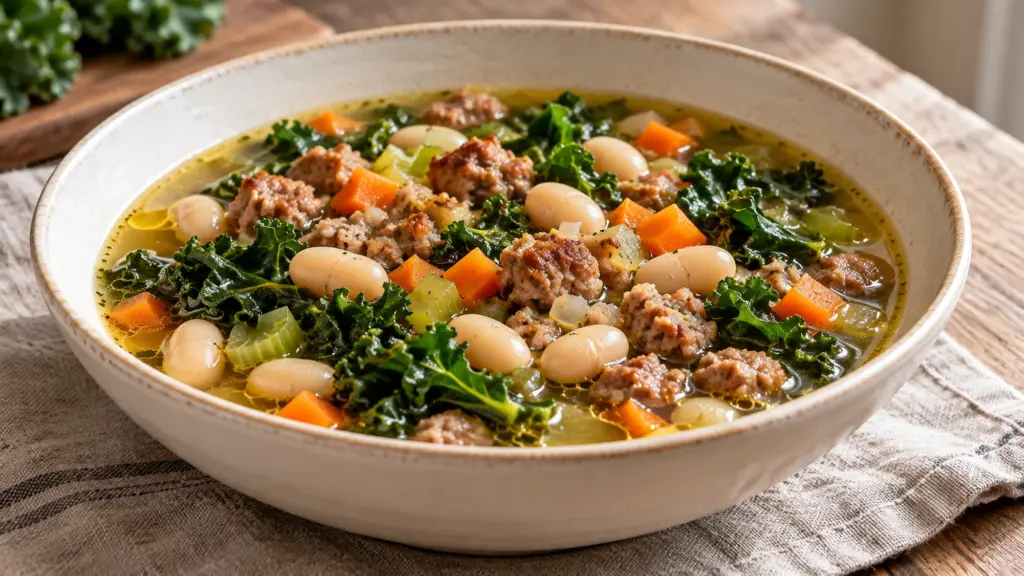
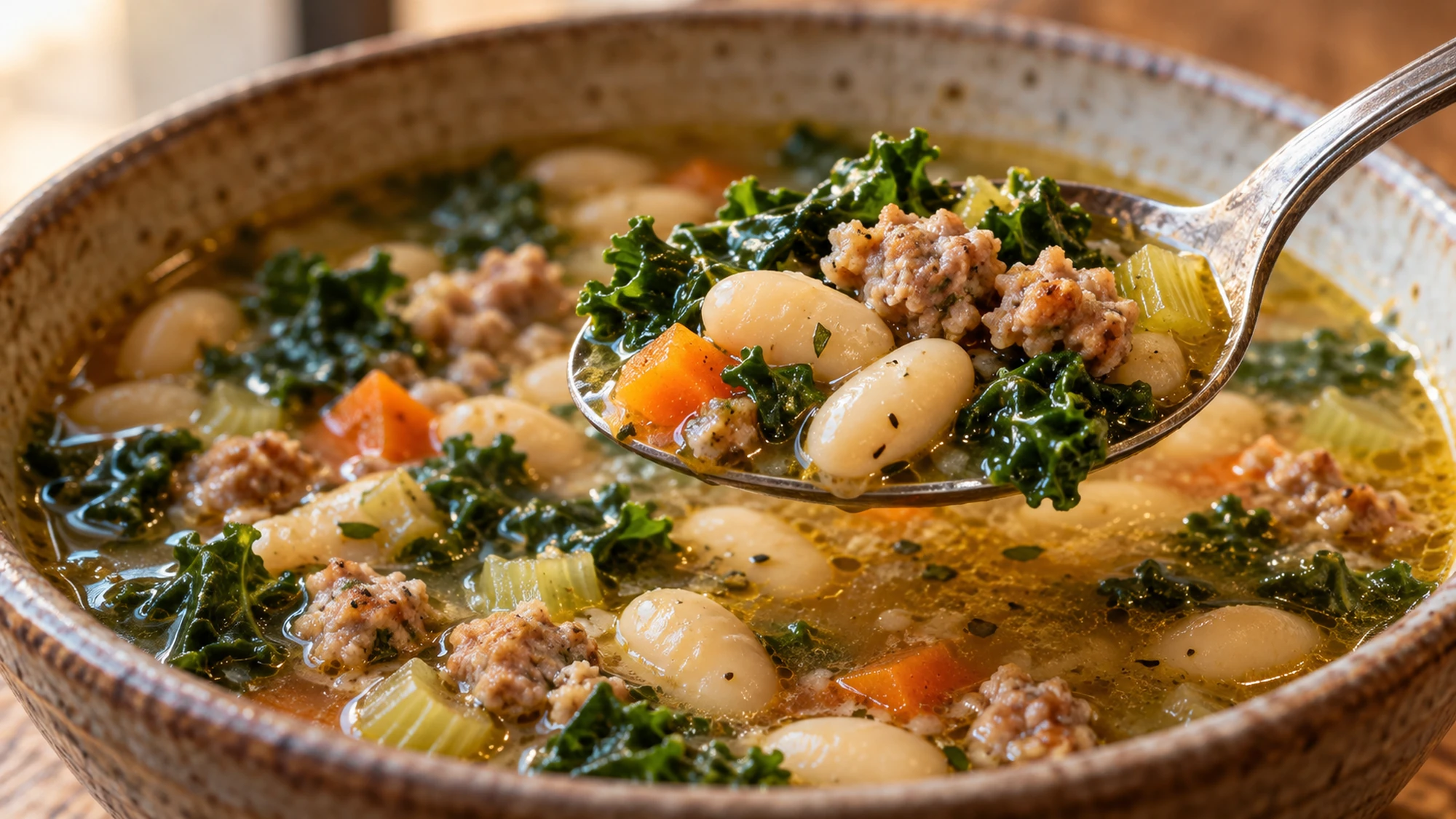
A pot of soup can look generous and still leave you fishing around for the good bits. This sausage white bean kale soup keeps beans, greens and browned sausage in every ladle, with enough golden broth for a piece of bread. The texture stays brothy rather than creamy, and lemon sharpens the savory finish.
Brown the sausage for flavor, keep the beans at a gentle simmer, and add the kale near the end. You get tender greens and intact beans without cream or a long afternoon at the stove.
I’d choose cannellini beans here because their creamy centers contrast with the crumbled sausage. Canned beans make this an approachable weeknight pot; dry beans need their own cooking time and cannot go straight into this method. Removing the kale’s tough stems matters more than choosing a fancy variety. Keep the leaves bite-sized so each spoonful is comfortable to eat.
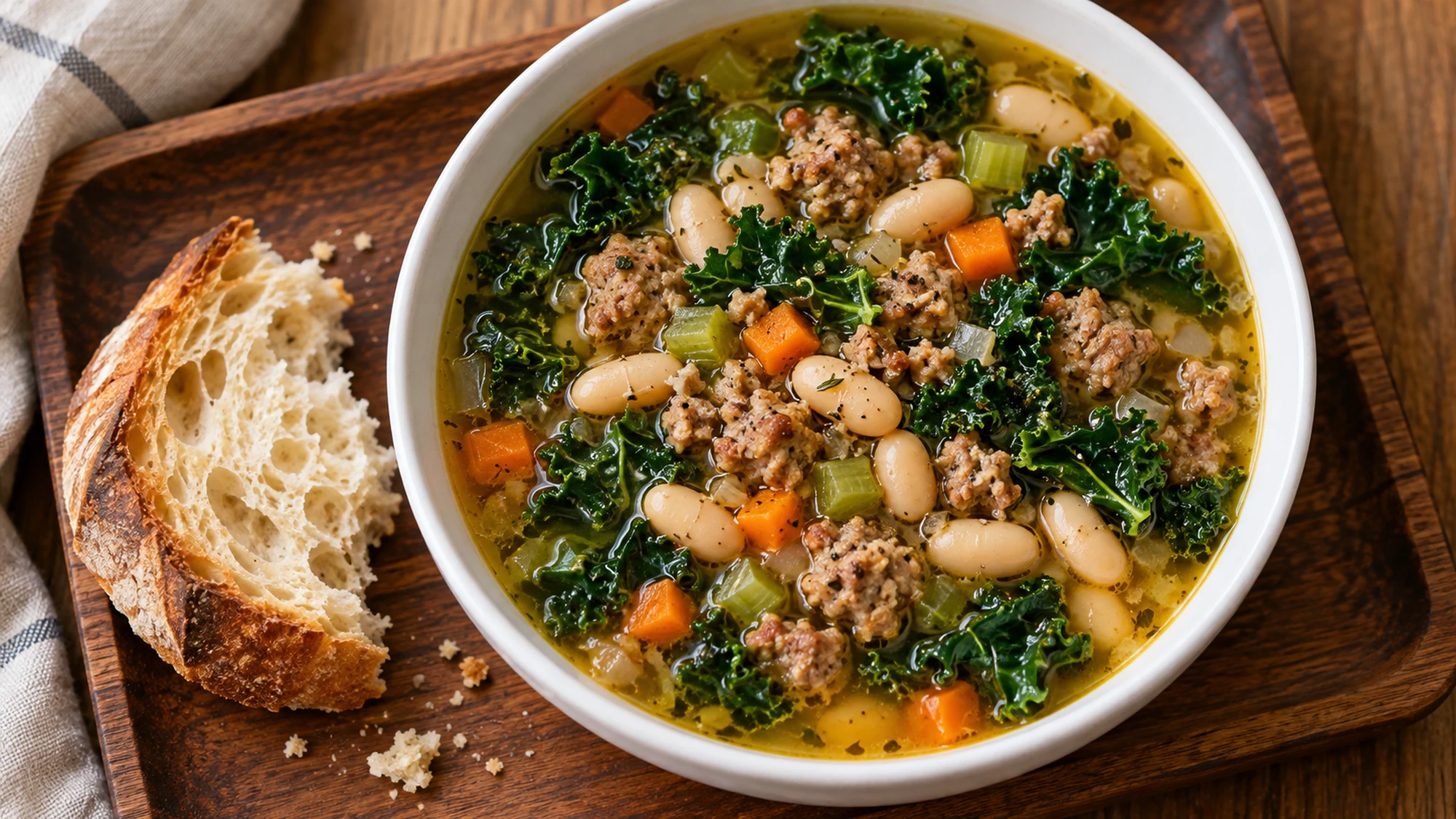
Serving Suggestions for Sausage White Bean Kale Soup
Serve the soup in broad bowls so the beans and sausage settle evenly rather than disappearing under a deep layer of broth. Give the pot a stir before each ladleful. A little lemon at the table lets everyone adjust the brightness without making the whole batch sharply acidic.
Crusty bread is the obvious companion, but the rest of the meal can go several directions. I’d keep side dishes simple: the soup already brings plenty of texture, and another rich sauce can overwhelm its clean broth. These pairings change the meal without changing the pot.
- With toast: Rub warm bread lightly with a cut garlic clove, then serve it alongside rather than leaving it to dissolve in the bowl.
- With a fresh side: Choose sliced cucumber, radishes or a small green salad with a mild vinaigrette for crunch.
- For a fuller meal: Add a separate serving of cooked rice or roasted potatoes. Keep starches separate when storing leftovers so they do not absorb all the broth.
Let the soup remain the savory center of the meal; use bread, vegetables or a separate starch to suit the appetite.
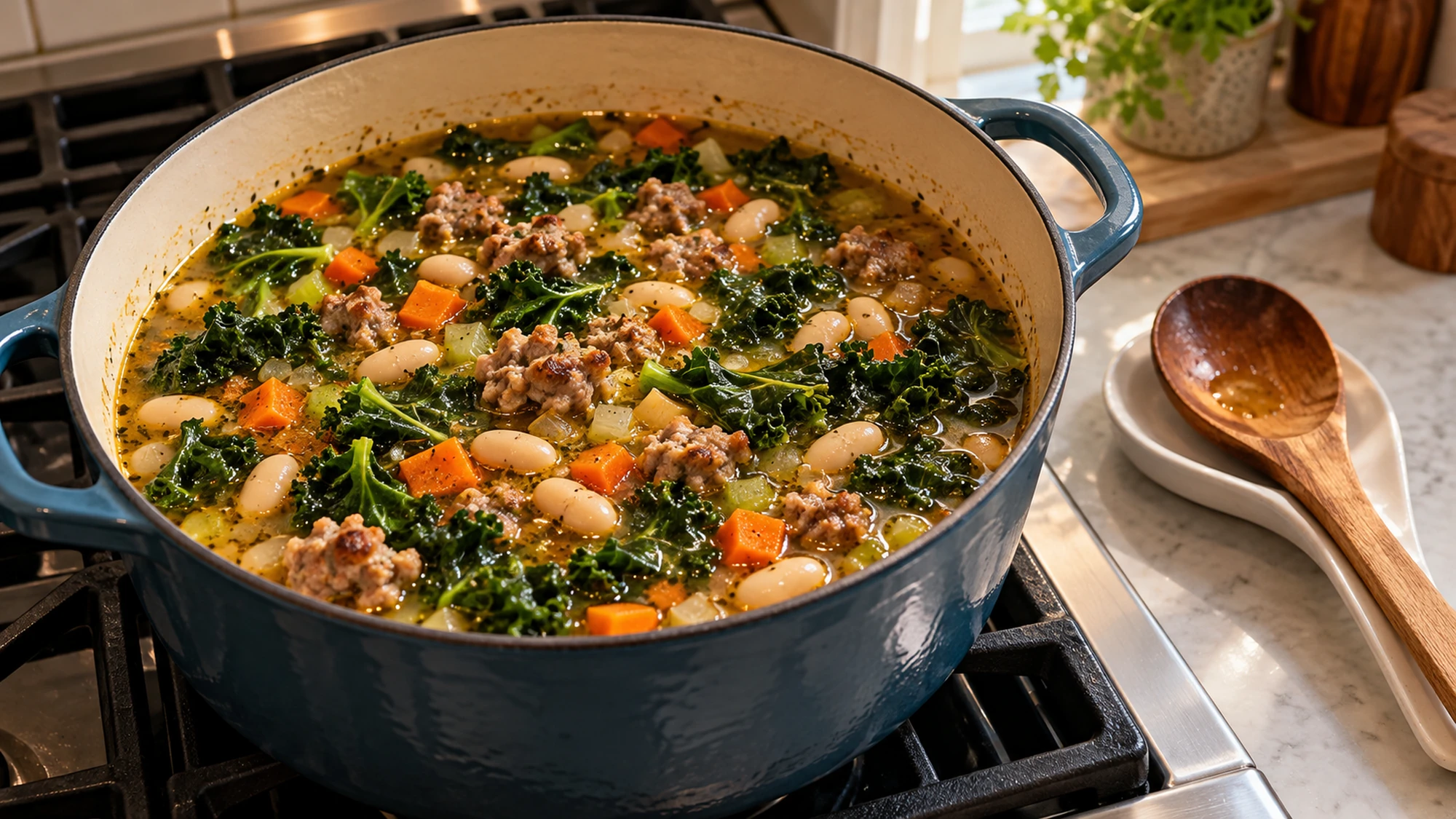
Variations That Keep the Broth Balanced
Several swaps work, but each changes how the soup behaves. Great northern beans are a useful alternative to cannellini. Softer navy beans can break down more readily, so stir them gently. A cloudy broth from a few split beans is harmless; vigorous boiling is what turns the pot muddy.
The following choices keep adjustments deliberate. If you use turkey sausage, check the package and cook it to the poultry temperature of 165°F (74°C). For pork sausage, use 160°F (71°C). A browned surface alone does not establish doneness.
| Change | What to expect | Useful adjustment |
|---|---|---|
| Spinach for kale | Softer, more delicate greens | Stir in near the very end |
| Hot Italian sausage | More chile heat | Skip extra pepper flakes at first |
| Great northern beans | Similar creamy texture | Drain and rinse; simmer gently |
| Less broth | A thicker, spoonable bowl | Add more liquid when reheating |
Change one major ingredient at a time, then adjust the broth and seasoning after it has warmed through.
Health Benefits and Practical Trade-Offs
The beans contribute fiber and plant protein, while kale and the other vegetables add variety. USDA’s guidance on beans, peas and lentils explains their place among both vegetables and protein foods. This is a balanced ingredient combination, not a promise that one bowl prevents illness.
Sausage and broth can contribute substantial sodium, and pork sausage adds saturated fat. Compare package labels, choose lower-sodium broth, and taste before adding salt. The nutrition in the card is an estimate for the stated ingredients and six servings; bread, cheese and other extras change the total.
Cool leftovers in shallow containers and refrigerate promptly instead of leaving the Dutch oven on the counter. Follow USDA’s reheating guidance and bring leftovers to 165°F (74°C), stirring so the center heats evenly. Use refrigerated soup within three to four days.
More beans and vegetables are useful, but portion size and the sodium in packaged ingredients still deserve attention.
Bottom Line
This soup works because its ingredients have different jobs: sausage seasons the broth, beans supply body, and kale keeps a little bite. The practical priorities are simple—brown well, simmer gently and finish with lemon. There is no need to add cream to make the bowl feel complete.
Keep the broth lively and the beans intact, and you have a flexible dinner that reheats with a small splash of water or broth.
Sausage White Bean Kale Soup Recipe

Ingredients
- 1 tablespoon olive oil
- 12 ounces raw mild Italian pork sausage 340 g; casings removed
- 1 medium yellow onion 150 g, diced
- 2 medium carrots 150 g, diced
- 2 celery stalks 100 g, diced
- 3 garlic cloves minced
- 1 teaspoon dried thyme
- 6 cups lower-sodium chicken broth 1.4 L
- 2 15-ounce cans cannellini beans drained and rinsed; about 500 g drained
- 5 cups chopped kale leaves 150 g after removing tough stems
- 1/4 teaspoon black pepper
- 1/4 teaspoon fine salt or less depending on broth
- 1 tablespoon fresh lemon juice
Equipment
- 1 5-quart Dutch oven or large soup pot
- 1 Wooden spoon
- 1 Colander
- 1 Food thermometer
Instructions
- Heat oil in the Dutch oven over medium-high heat. Add sausage and break it into small pieces. Cook 6–8 minutes until browned and cooked through; pork sausage must reach 160°F (71°C).
- Add onion, carrots and celery. Cook over medium heat for 6–8 minutes, stirring, until onion softens. Add garlic and thyme; stir for 30 seconds without scorching.
- Pour in broth and scrape up the browned bits. Add drained beans. Bring to a simmer, reduce heat and cook gently for 10 minutes, until carrots are tender.
- Stir in kale and black pepper. Simmer 5–7 minutes until leaves are tender but still hold their shape. Add the measured salt only as needed after tasting.
- Remove from heat and stir in lemon juice. Stir before dividing between six bowls. Serve with optional bread separately.
Nutrition
Video
Notes
Tried this recipe?
Let us know how it turned out!Hi, I’m Emily Pocker! I share recipes and food guides here at Recipes360 to help you find everyday meal inspiration and feel more confident in the kitchen. My goal is to make cooking approachable, enjoyable, and full of flavor.