
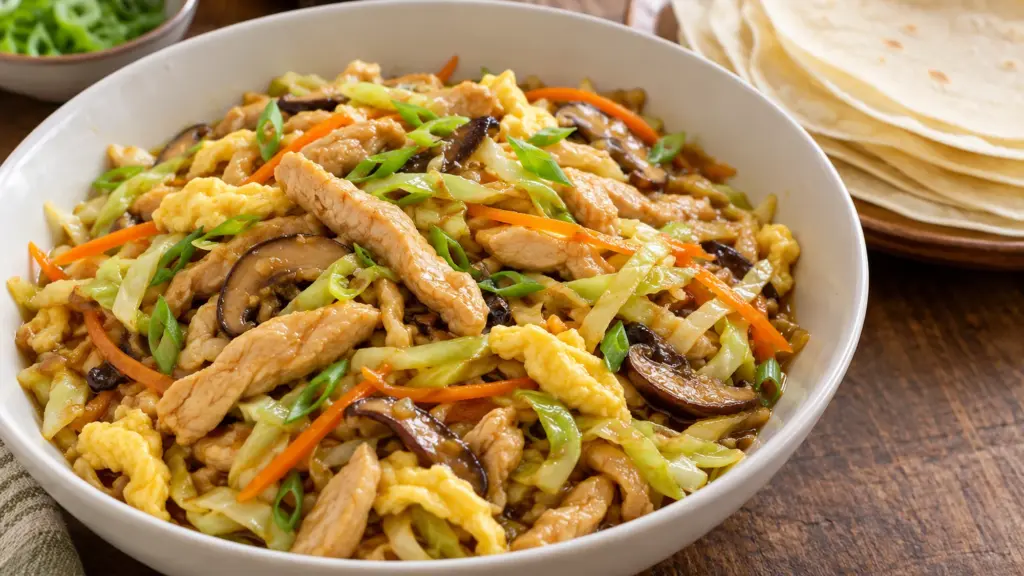
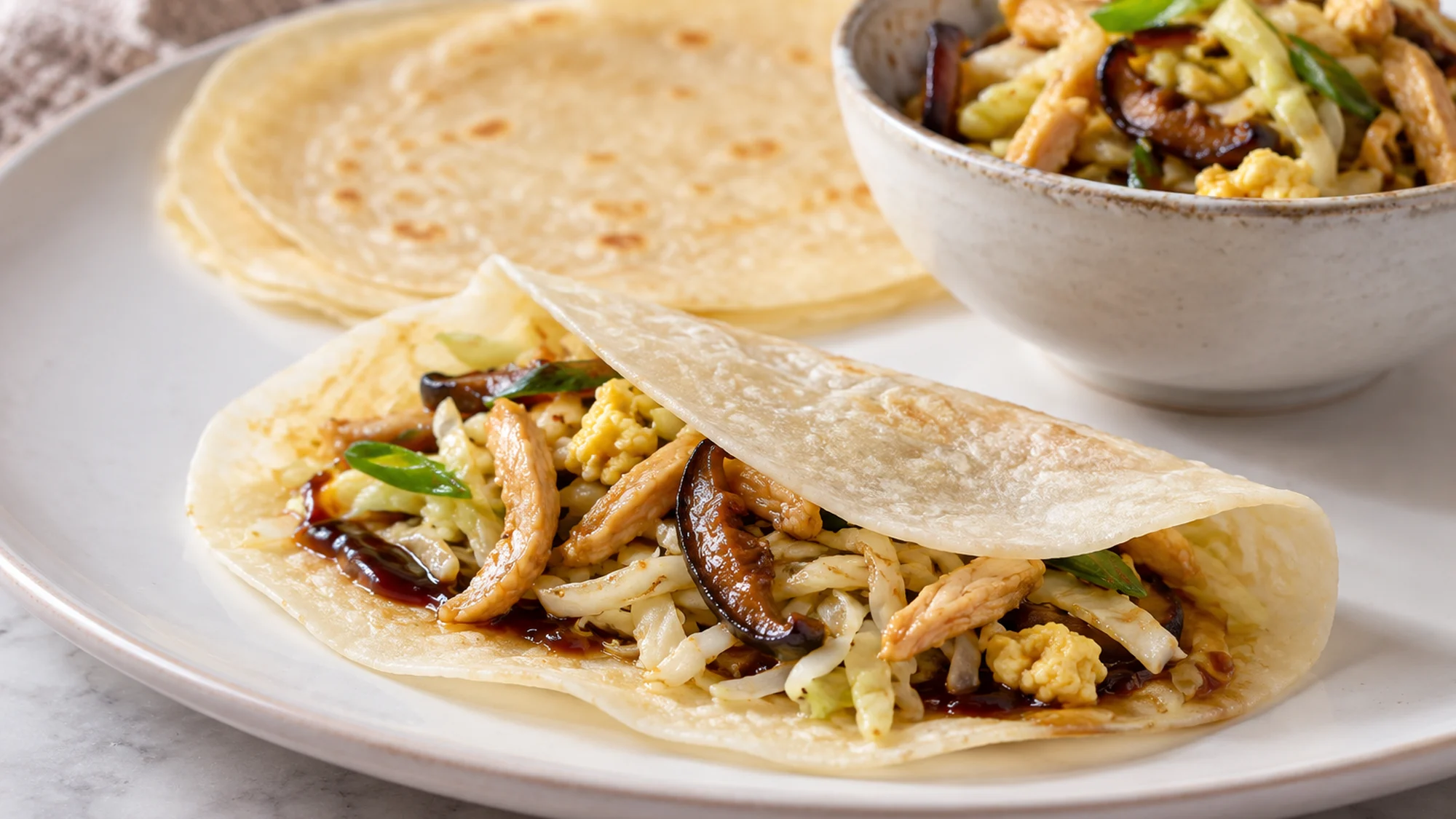
A crowded skillet can turn a promising stir-fry into a puddle. Moo shu chicken works better when the chicken, eggs and vegetables each get their own brief turn at the heat, then meet again at the end. Thin strips of chicken, cabbage, mushrooms and carrot make a lively filling for warm Mandarin pancakes.
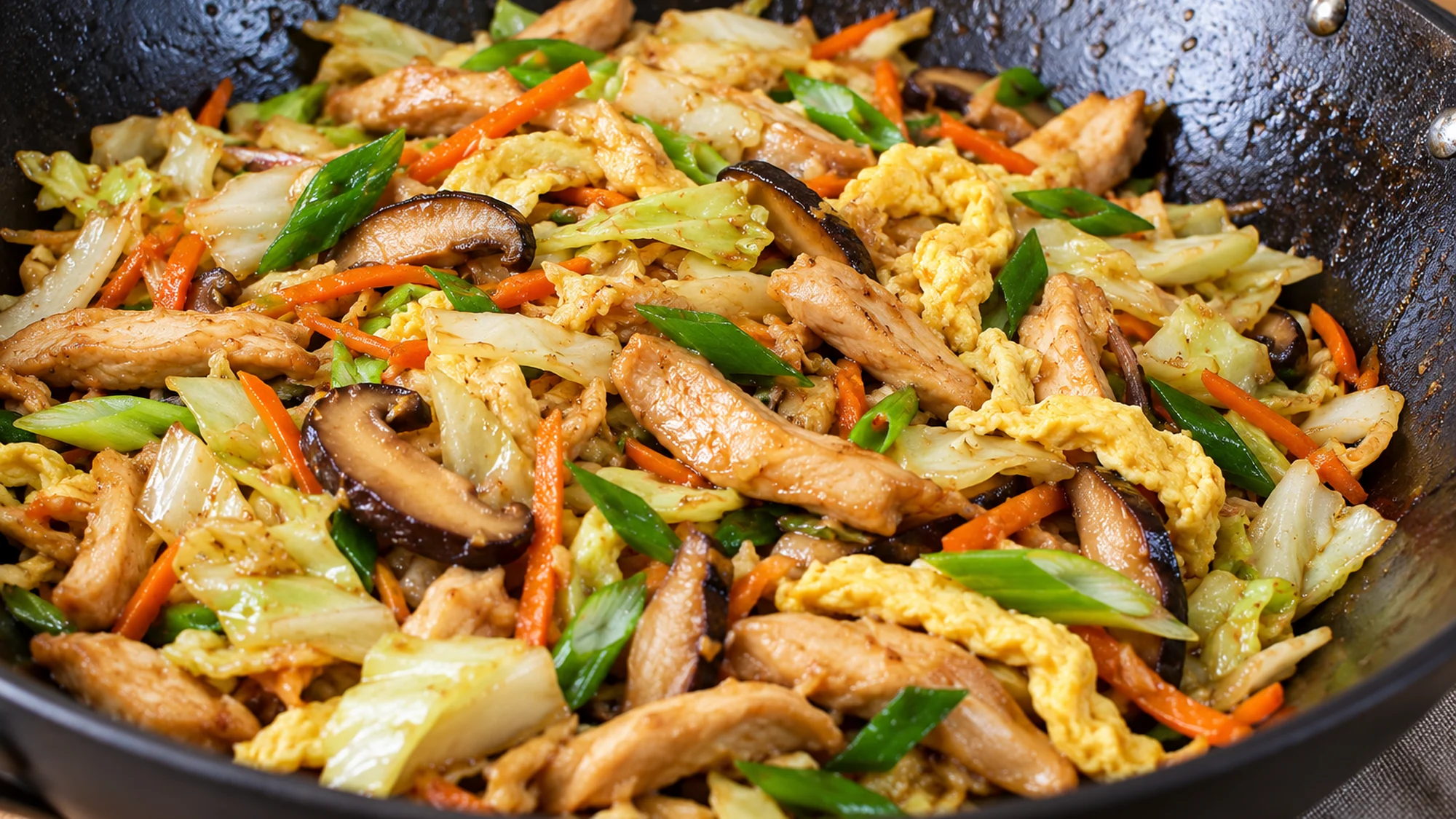
Cook in stages, keep the cabbage pleasantly crisp, and add the sauce only after the vegetables have released their excess moisture. The chicken must reach 165°F; the quick cooking time is an estimate, not the safety test.
This is an approachable American-Chinese version with fresh mushrooms and everyday green cabbage. It is not presented as the one definitive regional preparation. I like the contrast between tender egg ribbons and vegetables that still have a little bite, with hoisin offered at the table rather than poured over everything.
Serving moo shu chicken without soggy pancakes
Warm the pancakes according to their package directions and keep them covered with a clean towel while the filling finishes. Spread a little hoisin on one pancake, add a modest line of filling, then fold it around the center. Overfilling is tempting, but the first bite should not require an engineering degree.
- Put the filling, pancakes and hoisin in separate dishes so everyone can control the amount of sauce.
- If Mandarin pancakes are unavailable, small flour tortillas are a practical substitute, though thicker and less delicate.
- For a bowl, serve the filling over rice and add crisp cucumber alongside.
The quinoa salad can be served separately if you want a make-ahead grain option, although it changes the character of the meal. I would keep the stir-fry itself focused on its cabbage, chicken and mushroom combination.
Keep the wrappers warm and the filling separate until serving. A light layer of hoisin and a smaller scoop make a neater, better-balanced wrap.
Moo shu chicken variations and practical swaps
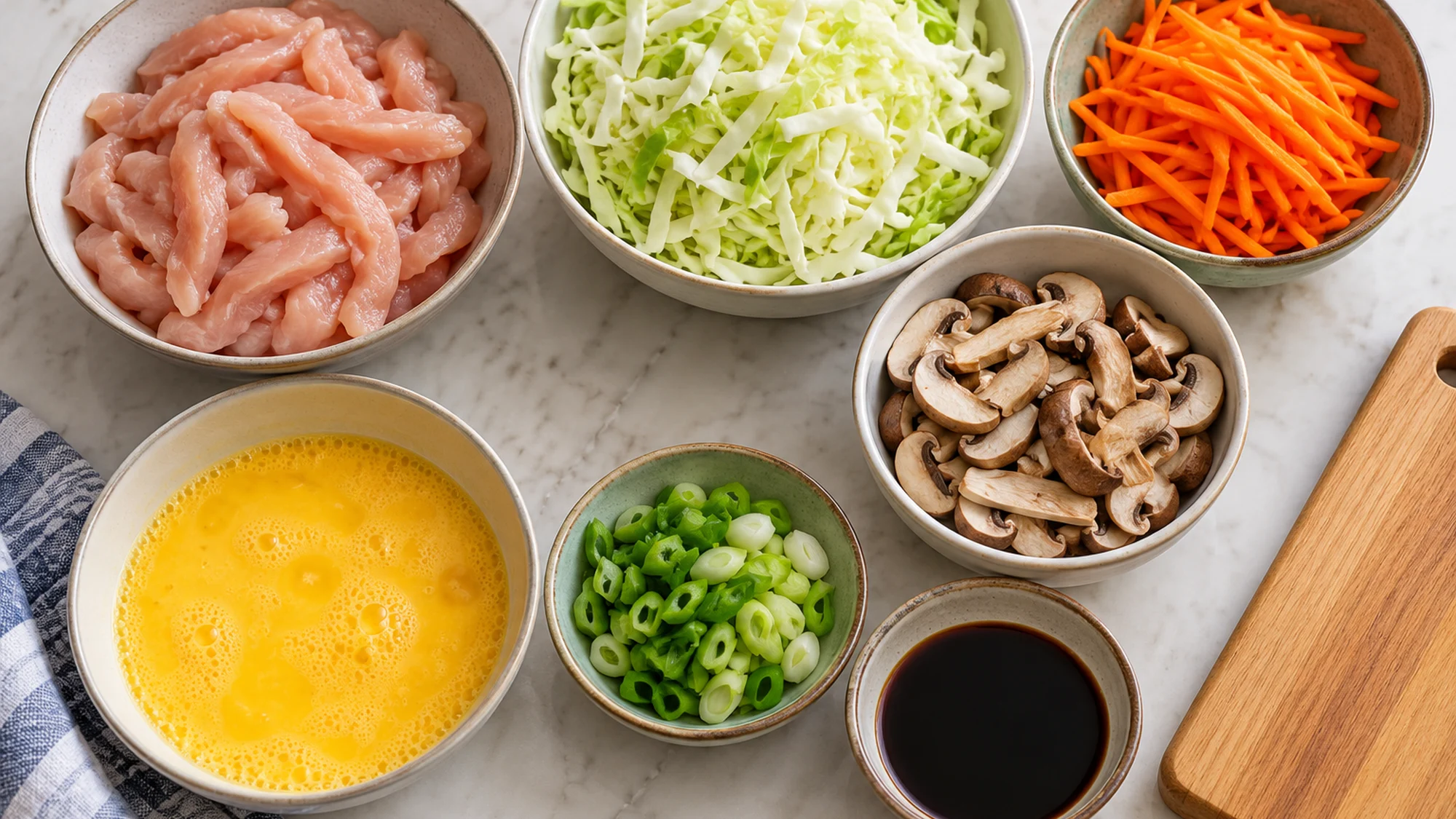
The biggest decision is texture, not the brand of wok. A wide, heavy skillet works well because moisture can escape. Cut the chicken across the grain into narrow strips and make the vegetables similarly slender. Have every bowl ready before heating the pan; searching for soy sauce halfway through is how vegetables lose their crispness.
| Choice | What changes | Useful approach |
|---|---|---|
| Fresh shiitakes | More pronounced mushroom flavor | Remove tough stems and slice the caps. |
| Cremini mushrooms | Mild, easy-to-find option | Cook until their visible moisture evaporates. |
| Bagged cabbage-carrot slaw | Less cutting | Use a plain mix without dressing. |
| Chicken thighs | Richer filling | Trim and slice thinly; still cook to 165°F. |
- For less sweetness, serve a smaller amount of hoisin rather than replacing it with extra soy sauce.
- For more heat, add a little chili crisp to individual portions after cooking; check its ingredients for allergens.
- Do not call the dish gluten-free just because it contains rice vinegar. Soy sauce, hoisin and pancakes may contain wheat.
Avoid adding a large splash of water when the cabbage goes in. It already carries moisture, and the goal is a quick sauté rather than a covered steam. If your pan is small, split the vegetable stage into two batches.
Prepare first and cook in roomy batches. A drier vegetable mixture keeps the sauce flavorful and the finished pancake from turning limp.
Health benefits with the sauces in perspective
Chicken and eggs supply protein, while cabbage, carrots and mushrooms add variety to the plate. That does not make every restaurant-style sauce interchangeable. Reduced-sodium soy sauce still contains sodium, and hoisin contributes both sweetness and salt. Read the labels if either is important to your meal planning rather than assuming a homemade version is automatically low in either.
- The nutrition estimate covers one-quarter of the filling, including the measured hoisin, but excludes pancakes or rice because brands and portions differ.
- Keep raw chicken separate from ready-to-eat ingredients. The CDC recommends cooking chicken to 165°F and not washing it.
- Refrigerate leftovers promptly in shallow containers. FoodSafety.gov lists 3–4 refrigerated days for cooked poultry leftovers; reheat thoroughly to 165°F.
I would describe the advantage here as flexibility: you can see how much vegetable, oil and sauce goes into the pan. It is still worth considering the whole meal, the wrappers and your portion, rather than attaching a broad health promise to one dish.
Use the visible ingredients and measured sauces to make informed choices. Safe chicken handling and proper leftover storage matter just as much as a colorful plate.
Bottom Line
Moo shu chicken is most satisfying when the filling stays lively rather than wet. Prepare the ingredients before heating the pan, cook the eggs and chicken separately, then bring everything together briefly. Warm pancakes, a small spoonful of hoisin and a properly cooked filling complete the meal.
Recipe Card
Moo Shu Chicken Recipe

Ingredients
- 1 lb boneless skinless chicken breast 454 g, sliced across the grain into thin strips
- 2 large eggs beaten
- 2 tablespoons neutral cooking oil divided
- 4 cups shredded green cabbage about 400 g
- 1 medium carrot about 100 g, julienned
- 5 oz cremini mushrooms about 150 g, sliced
- 3 scallions thinly sliced
- 2 garlic cloves minced
- 2 teaspoons fresh ginger minced
- 2 tablespoons reduced-sodium soy sauce
- 1 tablespoon unseasoned rice vinegar
- 1 teaspoon toasted sesame oil
- 1 teaspoon cornstarch
- 2 tablespoons water
- 1/4 cup hoisin sauce 60 g, for serving
- 8 Mandarin pancakes optional, warmed; excluded from nutrition
Equipment
- 1 Large wok or wide heavy skillet
- 1 Cutting board and sharp knife
- 1 Instant-read thermometer
- 1 Small sauce bowl
Instructions
- Slice the chicken on a board reserved for raw meat, then wash hands and clean contacted surfaces. Prepare the vegetables. Whisk soy sauce, rice vinegar, sesame oil, cornstarch and water in a bowl.
- Heat 1 teaspoon of the neutral oil in the wok over medium-high heat. Add beaten eggs and stir gently until just set. Transfer to a clean plate and break into ribbons.
- Add 2 teaspoons oil and the chicken in an even layer, cooking in batches if needed. Stir-fry for about 4–6 minutes until the thickest pieces reach 165°F (74°C), checking with a thermometer. Transfer to a clean plate, never the raw-chicken plate.
- Add the remaining tablespoon oil. Stir-fry mushrooms for 2–3 minutes until their released moisture evaporates. Add cabbage and carrot and cook for 2–3 minutes until crisp-tender. Add garlic, ginger and scallions and stir for about 30 seconds.
- Return chicken and eggs to the pan. Stir the sauce again to redistribute the cornstarch, then pour it around the hot pan. Toss for 1–2 minutes until lightly glossy and everything is hot. Avoid cooking the cabbage until limp.
- Serve immediately with warmed Mandarin pancakes and measured hoisin on the side. Spread a little hoisin on each pancake and add a small scoop of filling before folding. Refrigerate leftovers in shallow containers within 2 hours, or 1 hour above 90°F (32°C).
Nutrition
Video
Notes
Tried this recipe?
Let us know how it turned out!Hi, I’m Emily Pocker! I share recipes and food guides here at Recipes360 to help you find everyday meal inspiration and feel more confident in the kitchen. My goal is to make cooking approachable, enjoyable, and full of flavor.