
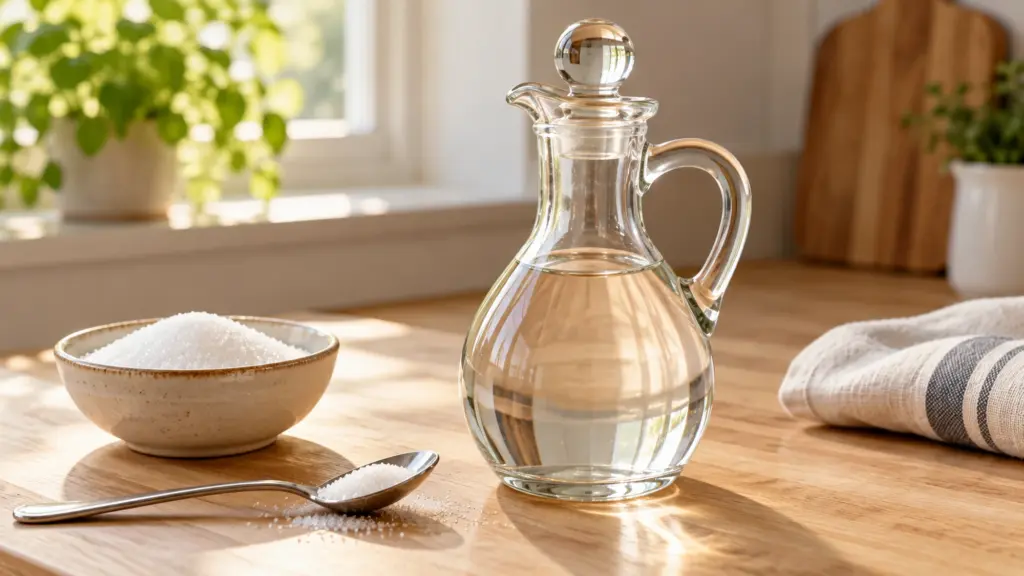
A spoonful of sugar can spend a surprisingly long time at the bottom of an iced drink. This simple syrup recipe solves that small annoyance by dissolving the crystals before they reach the glass. The result is clear, pourable sweetness that blends into cold tea, coffee, lemonade, and cocktails without leaving a gritty last sip.
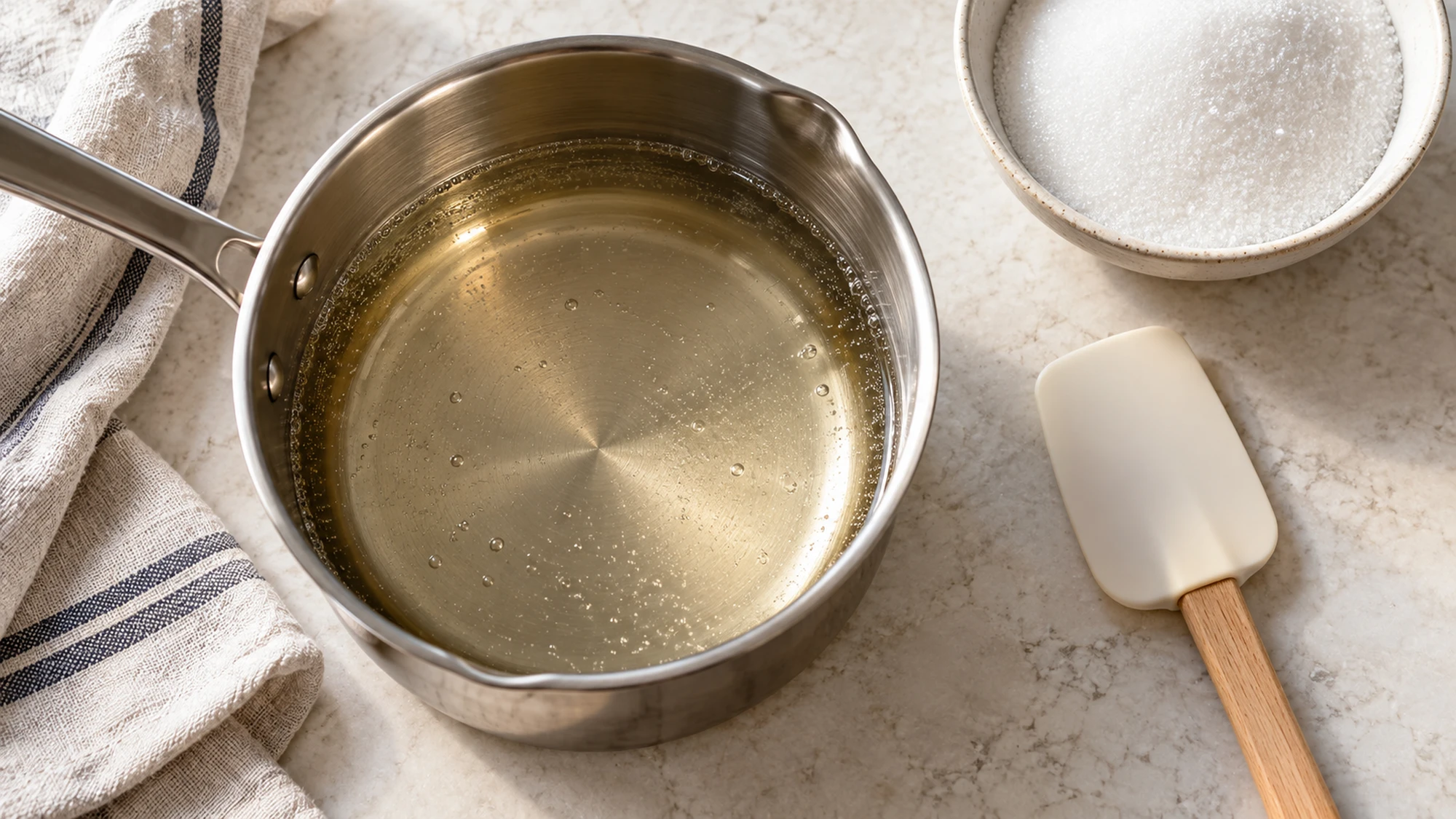
Warm equal weights of white sugar and water just until the sugar dissolves, then cool and refrigerate. Stop before the mixture reduces: simple syrup should stay easy to pour, rather than becoming a thick dessert sauce.
I’d choose a small batch for a home kitchen. It takes little effort to make another, and a modest jar is easier to finish while its flavor stays neutral. Use a scale if possible; a cup of sugar and a cup of water look equal but do not weigh the same. The card uses weight for a consistent, equal-weight mixture.
Serving Suggestions for Simple Syrup Recipe
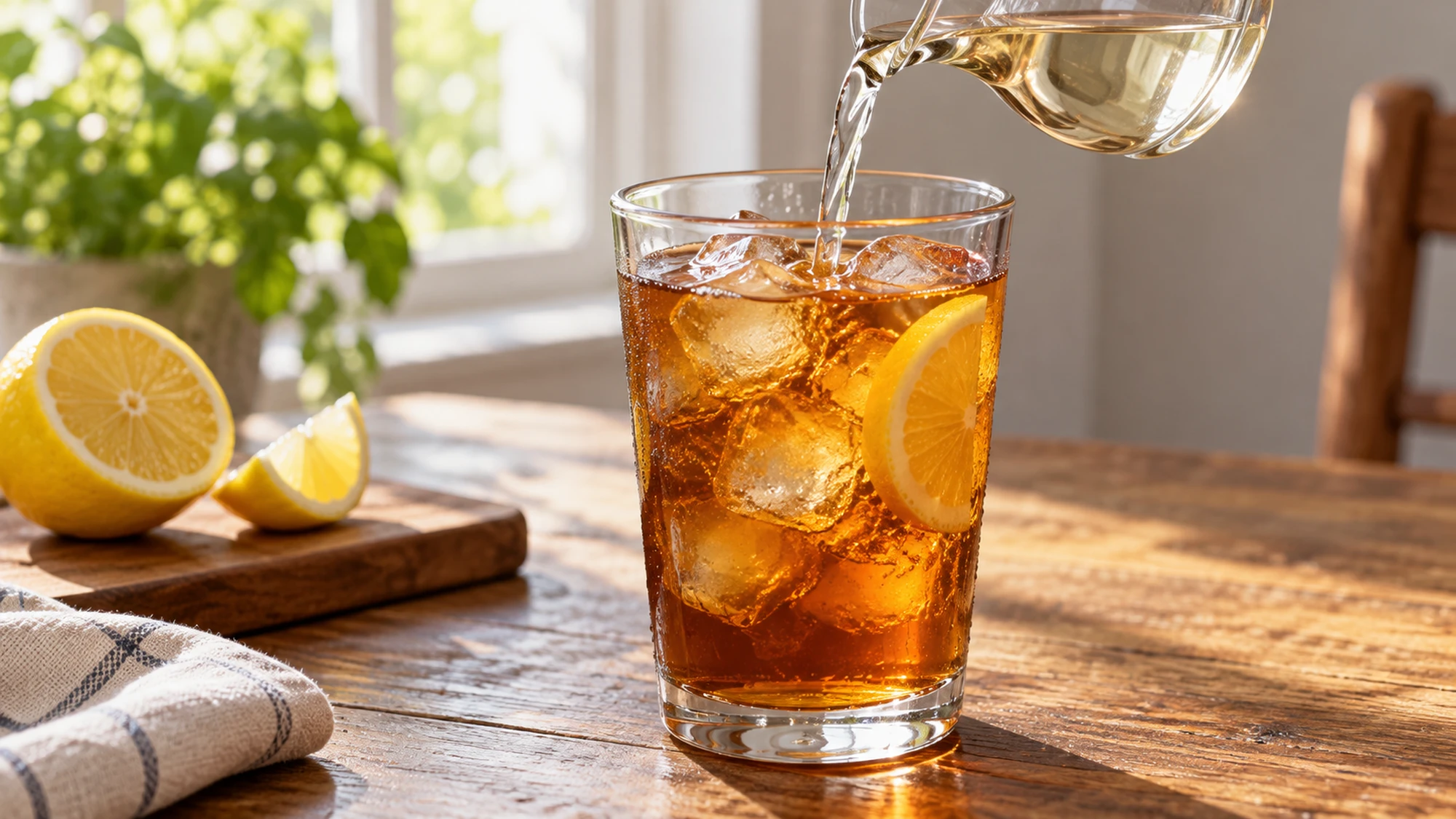
Start with a little syrup, stir thoroughly, and taste before adding more. The right amount depends on the drink’s acidity, bitterness, temperature, and other sweet ingredients. Lemonade and unsweetened tea leave more room for adjustment than bottled juice or a sweetened coffee drink.
For a pitcher, sweeten the liquid before adding the ice. That makes tasting more useful because you can judge sweetness before substantial dilution. For a single glass, a measuring spoon keeps the adjustment deliberate; a generous freehand pour can turn an afternoon drink into dessert surprisingly quickly.
| Drink | What to watch |
|---|---|
| Iced tea | Sweeten gradually; tea bitterness varies. |
| Lemonade | Balance sweetness against the fresh lemon juice. |
| Iced coffee | Add milk first if it changes your preferred sweetness. |
| Sparkling water | Stir gently to retain the bubbles. |
One useful distinction is between sweetening a finished drink and replacing an ingredient inside a balanced recipe. Our margarita recipe has its own citrus-and-sweetener balance, so follow its quantities rather than pouring in extra syrup automatically. Likewise, let the spices lead when adjusting a cup of chai latte.
Variations and What They Change
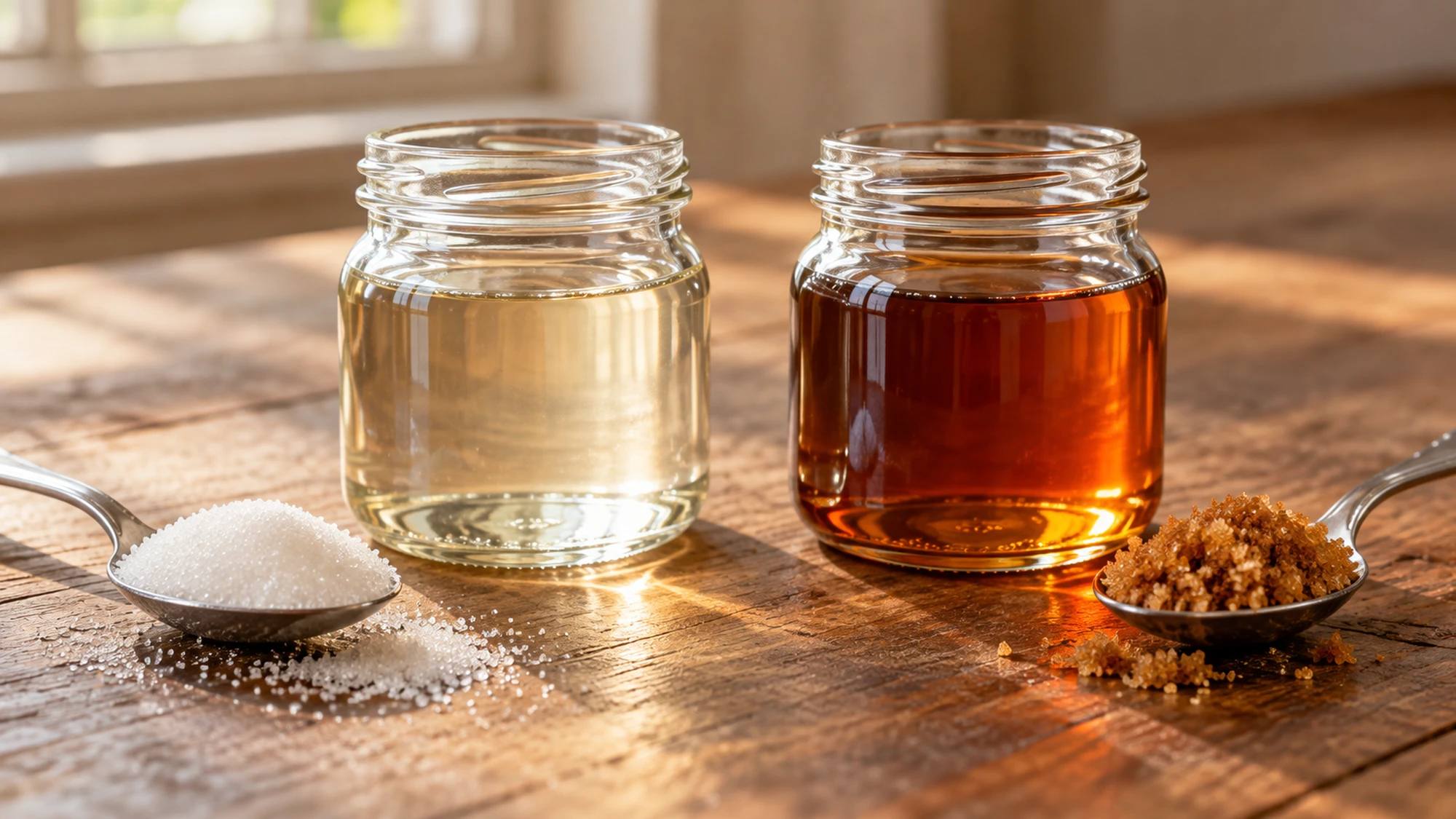
White granulated sugar gives the cleanest flavor and clearest color. Brown sugar brings a deeper molasses note, while a brief vanilla or citrus-peel infusion changes the aroma. I’d keep the first batch plain, then flavor a smaller portion once there is a particular drink in mind.
- Brown sugar: Use the same sugar weight for an amber syrup with a molasses flavor.
- Vanilla: Stir a small splash of vanilla extract into a cooled portion, tasting gradually.
- Citrus peel: Steep a few clean strips in warm syrup, then remove them before storage.
Rich syrup uses more sugar relative to water, so it is not an equal-volume substitute for this version. Cocktail Chemistry’s sweetener guide explains the distinction between equal-weight and richer mixtures. Its video also discusses other sweeteners; this card stays with plain sugar and water and omits alcohol.
After cooling, transfer the syrup to a clean, tightly closed container and refrigerate. Use a clean utensil each time and avoid dipping a used drink spoon into the jar. Make enough for about a week as a conservative household plan; this is not a canning recipe or a promise of shelf stability.
Health Benefits and Sugar Considerations
Simple syrup provides sweetness, rather than a meaningful source of fiber, protein, or micronutrients. Its practical advantage is that you can measure a small amount and distribute it evenly. Adding water does not remove the sugar’s calories; it only changes how concentrated the sweetener is.
The FDA’s explanation of added sugars includes table sugar and syrups in that category. Brown sugar, honey, and other sweeteners should not be treated as a nutritional free pass. Consider the whole drink, including sweetened milk, juice, or mixers, when deciding how much sweetness to add.
The card’s estimate is about 40 calories and 10 grams of sugar per 20-gram portion, calculated from the sugar used and an approximately 400-gram finished batch. Evaporation changes the final weight, so these are useful kitchen estimates rather than laboratory measurements. Measuring a smaller portion reduces the amount added.
Bottom Line
Keep this simple syrup recipe uncomplicated: dissolve, cool, and measure. A clear syrup with a neutral flavor is useful because it lets the tea, coffee, citrus, or spices remain recognizable. If it develops mold, unexpected cloudiness, gas, or an off smell, discard it; do not taste it to investigate.
I’d label the container with the preparation date and keep it beside the drinks it will actually sweeten. A small, clearly identified jar is more useful than a large forgotten bottle. The full card below keeps the amounts, timing, cooling period, and storage notes together for the next batch.
Simple Syrup Recipe

Ingredients
- 200 g white granulated sugar about 1 US cup
- 200 g water 200 mL; about 3/4 cup plus 1 tablespoon and 1 teaspoon
Equipment
- 1 Small saucepan
- 1 Kitchen scale
- 1 Spoon or spatula
- 1 Clean lidded jar at least 400 mL capacity
Instructions
- Weigh the sugar and water into a small saucepan.
- Warm over medium-low heat, stirring, for about 3–5 minutes, until the liquid is clear and no sugar crystals remain. Do not boil down or caramelize.
- Remove from the heat and let cool for about 30 minutes. Protect from contamination while cooling.
- Transfer to a clean lidded jar and refrigerate. The yield is approximately 400 g, depending on evaporation. Measure about 20 g per portion, or use less to taste.
Nutrition
Video
Notes
Tried this recipe?
Let us know how it turned out!Hi, I’m Emily Pocker! I share recipes and food guides here at Recipes360 to help you find everyday meal inspiration and feel more confident in the kitchen. My goal is to make cooking approachable, enjoyable, and full of flavor.