
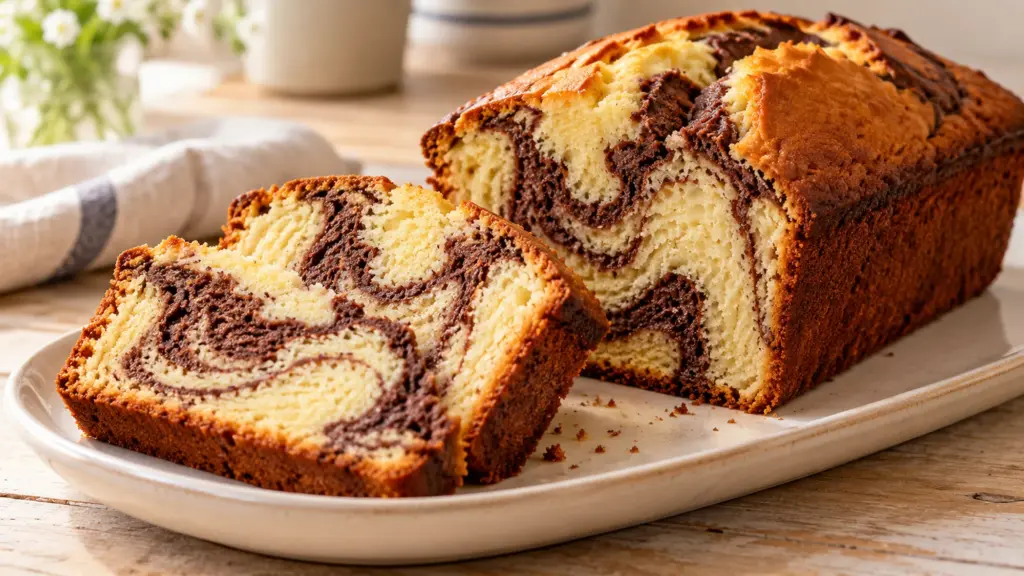
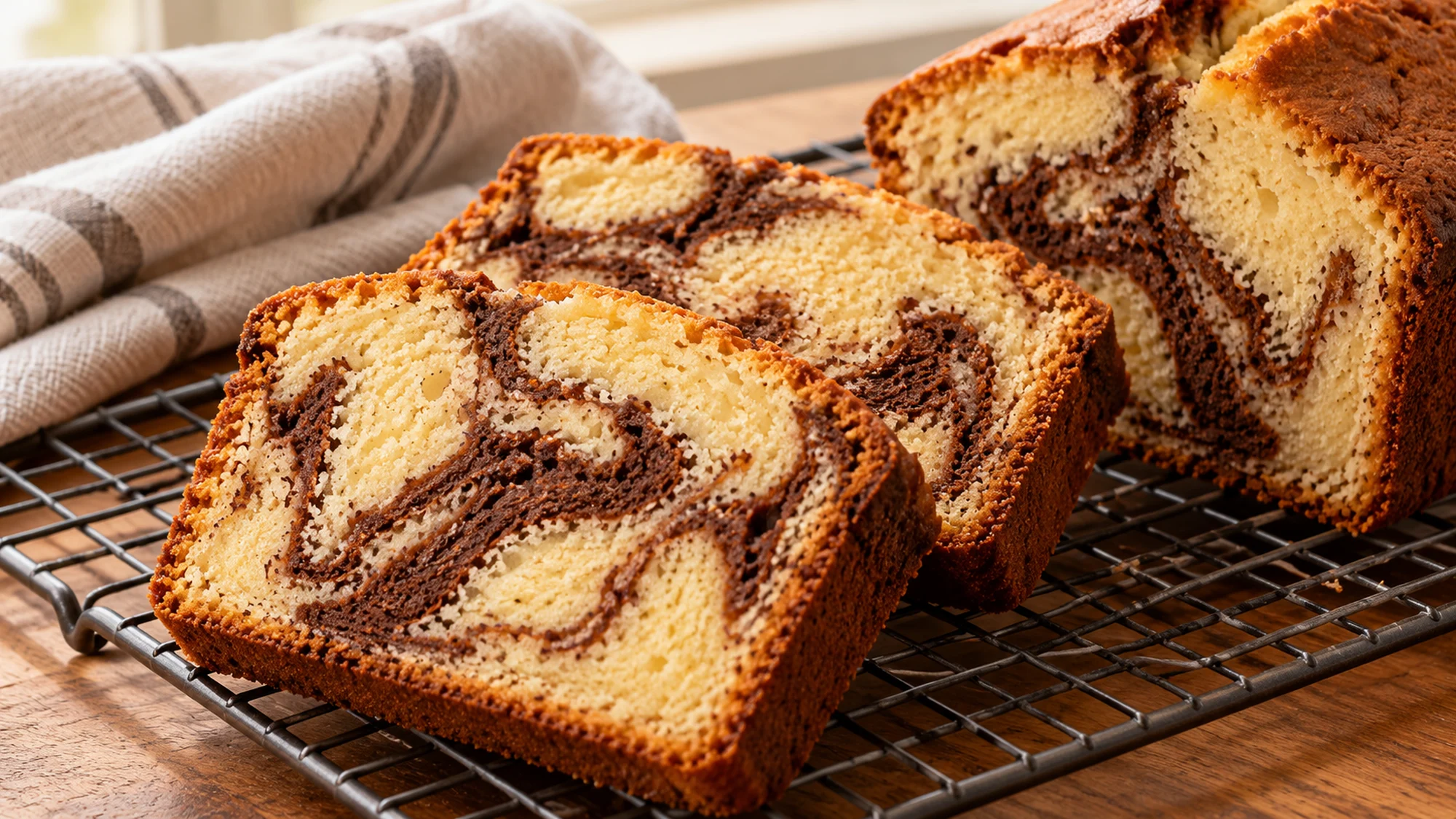
A plain-looking loaf can hide a good surprise. Cut into this loaf with a chocolate swirl and the vanilla crumb opens into broad cocoa ribbons, with a golden edge that needs neither frosting nor a complicated finish. It is a butter-based cake baked in a loaf pan, not a yeasted bread.
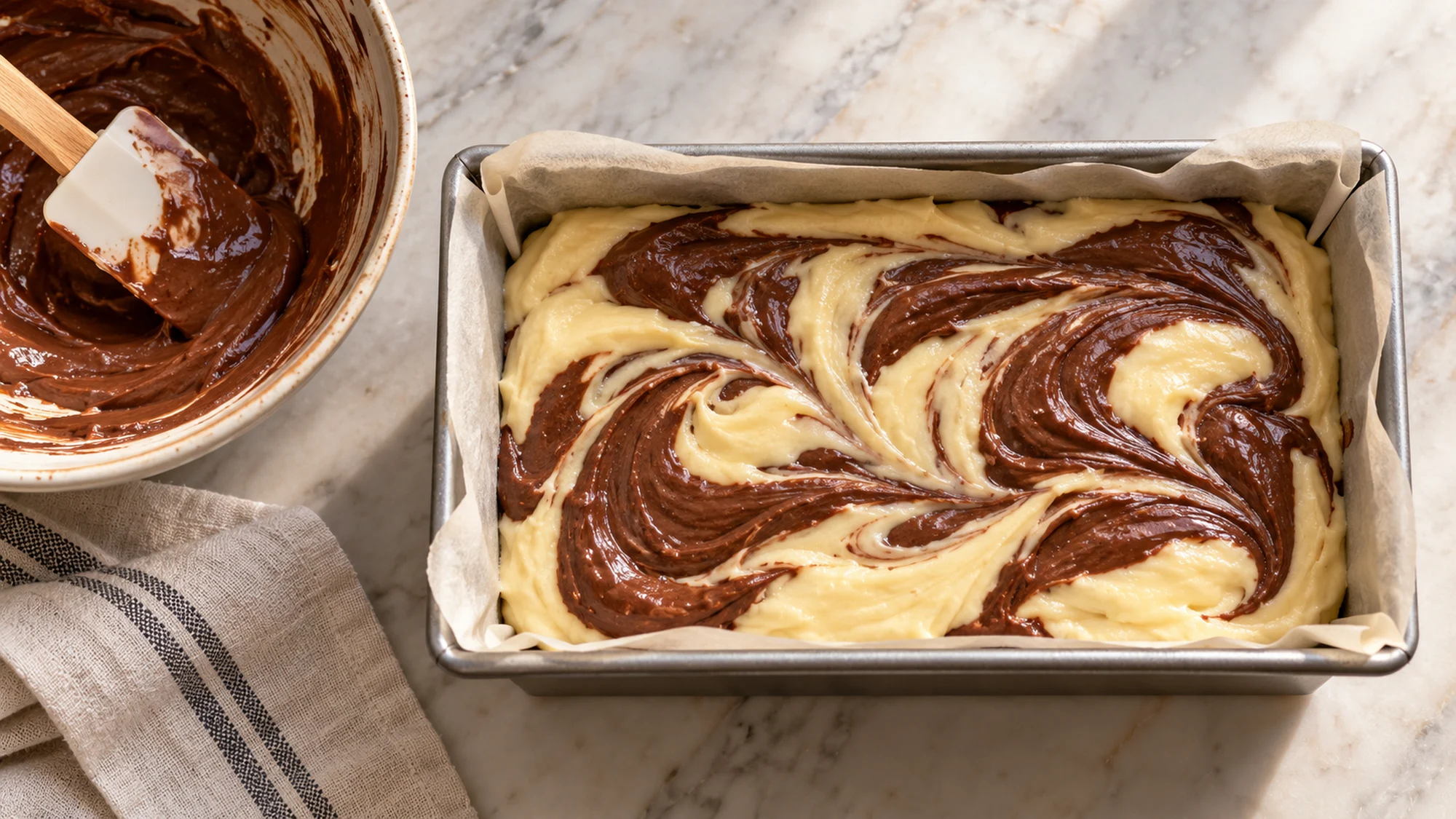
The clearest chocolate swirl comes from two batters with similar thickness and just a few passes of a skewer. Stop while you can still see separate colors; extra swirling blends away the pattern.
I would spend more attention on that last gentle motion than on making the top look perfect. A natural crack is welcome here, and each slice can have its own pattern. The recipe uses cocoa powder stirred into part of the vanilla batter, so there is no separate chocolate mixture to melt and cool.
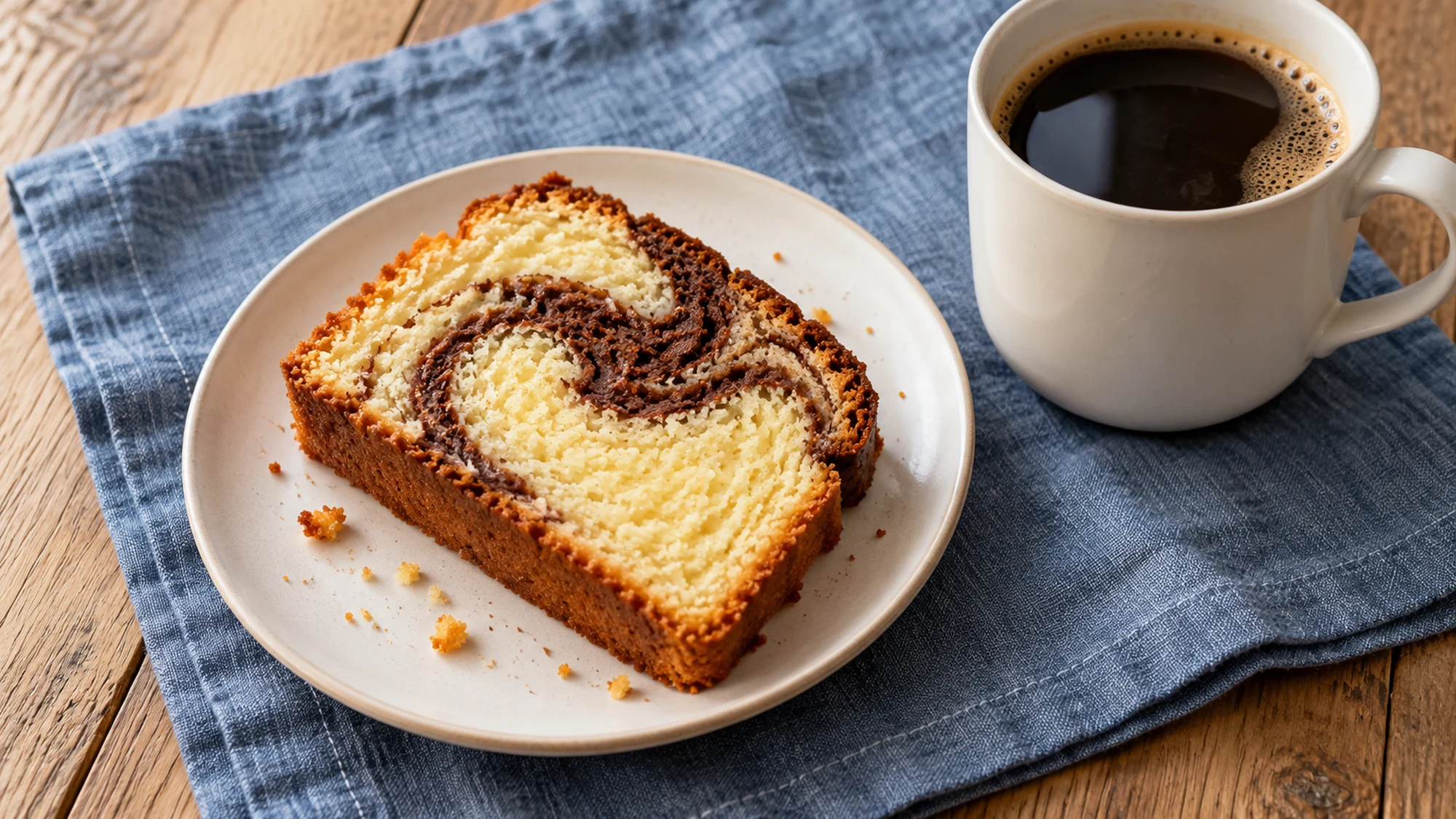
Serving a Loaf With a Chocolate Swirl
Let the cake cool before slicing if you want neat pieces rather than a scattering of warm crumbs. A serrated knife, used with a light sawing motion, cuts through the golden crust without pressing the center flat. Cut only what you plan to serve and keep the remaining loaf covered.
- For coffee time: serve a slice plain so the vanilla and cocoa remain distinct. Unsweetened coffee or tea balances the sweet crumb without adding another topping.
- For a dessert plate: add a few fresh berries alongside, rather than covering the marble pattern with sauce. Wash and dry the berries first.
- For sharing: divide the loaf into ten even slices. Smaller pieces are easy to arrange on a platter, but changing the slice size also changes the nutrition estimate.
- For a different bake: our apple fritter cake takes the fruit-and-cinnamon route instead of cocoa.
My preference is to leave this cake unglazed. The crust already provides a little contrast, and the cut face is the decoration. If you do add whipped cream, keep it separate until serving and refrigerate any dairy-topped leftovers promptly.
Cool, slice gently, and keep toppings simple: the swirl should still be the first thing you notice.
Variations That Keep the Swirl Visible
Small flavor changes are easier to manage than changing the entire batter. Cocoa absorbs liquid, which is why its portion gets a little extra milk. If it looks much stiffer than the vanilla portion, it will sit in dense clumps rather than forming broad ribbons.
| Change | How to use it | What to expect |
|---|---|---|
| Orange zest | Add 1 teaspoon finely grated zest to the vanilla batter | A citrus aroma without extra liquid |
| Coffee accent | Replace the milk mixed into the cocoa with the same amount of cooled coffee | A more pronounced cocoa impression |
| Different cocoa | Use unsweetened cocoa, not hot-chocolate mix | Sweetened drink mixes change the sugar and texture |
| Larger pan | Keep the specified 9 × 5-inch pan when possible | A wider pan makes a shorter loaf and can bake faster |
- Avoid overmixing: once flour disappears, use a spatula rather than continuing to beat the batter.
- Check the middle: a browned top does not prove the center is baked. Test in more than one spot, including a pale section.
- Protect the top: if it colors before the middle is ready, loosely cover with foil and continue baking.
- Do not improvise a gluten-free swap: wheat-free flours behave differently. Our gluten-free bread guide explains why labels and ingredients need a separate look.
Aim for a visible contrast, not a perfectly symmetrical design. A few broad ribbons are more useful than a pan full of tiny streaks.
Health Benefits and Sensible Portions
This is a dessert, not a health treatment. Eggs and milk contribute some protein, but the butter, flour and sugar are still the main structure of the cake. The estimated nutrition in the card is for one tenth of the loaf, without toppings; ingredients and slice size can change those numbers.
- Allergens: the recipe contains wheat, eggs and milk. Check cocoa and other packaged ingredients for any additional allergen information.
- Raw batter: do not taste it. The FDA explains that flour is a raw food, and uncooked flour and eggs can carry harmful germs.
- Kitchen cleanup: wash hands, utensils and work surfaces after handling the raw mixture, as described in CDC raw-dough guidance.
Enjoy the cake for its flavor and texture, with a portion that suits you. Cocoa does not turn a sweet loaf into a nutritional shortcut.
Bottom Line
A loaf with a chocolate swirl is a satisfying place to practice a light hand. Keep the batters distinct, watch the center rather than the clock alone, and allow enough cooling time for clean slices. The result should look homemade in the nicest way: golden outside, softly marbled inside, and ready for a simple plate.
Make the swirl with restraint, then let the oven and a little patience do the rest.
Loaf With a Chocolate Swirl Recipe

Ingredients
- 220 g all-purpose flour
- 150 g granulated sugar
- 113 g unsalted butter softened, not melted
- 2 large eggs room temperature
- 150 ml 2% milk room temperature
- 2 teaspoons baking powder
- 1/4 teaspoon fine salt
- 1 teaspoon vanilla extract
- 20 g unsweetened cocoa powder
- 30 ml 2% milk
Equipment
- 1 9 × 5-inch loaf pan metal pan
- 1 Electric mixer
- 2 Mixing bowls
- 1 Skewer and wire rack
Instructions
- Heat the oven to 350°F (175°C). Grease a 9 × 5-inch metal loaf pan and line it with parchment, leaving an overhang. Whisk flour, baking powder and salt in a bowl.
- Beat softened butter and sugar for about 3 minutes until lighter. Beat in the eggs one at a time, then vanilla. On low speed, add the flour mixture in three additions alternating with 150 ml milk in two additions. Stop as soon as the flour disappears; scrape the bowl and fold briefly.
- Whisk cocoa with the remaining 30 ml milk into a paste. Transfer about one-third of the batter to a second bowl and fold in the paste. Keep the two batters separate.
- Alternate spoonfuls of vanilla and cocoa batter in the pan. Draw a skewer through the batter in two or three broad passes. Avoid repeated stirring, which blends away the contrast. Smooth the top gently.
- Bake for 50–60 minutes. Check the center with a skewer: it should emerge without wet batter, though a few moist crumbs are fine. If the top browns early, cover loosely with foil and continue baking. Oven and pan differences affect the timing.
- Rest in the pan for 15 minutes, lift out with the parchment and cool on a rack for about 1 hour before slicing into 10 pieces. Do not taste raw batter; wash hands and utensils that touched raw flour or egg.
Nutrition
Video
Notes
Tried this recipe?
Let us know how it turned out!Hi, I’m Emily Pocker! I share recipes and food guides here at Recipes360 to help you find everyday meal inspiration and feel more confident in the kitchen. My goal is to make cooking approachable, enjoyable, and full of flavor.