
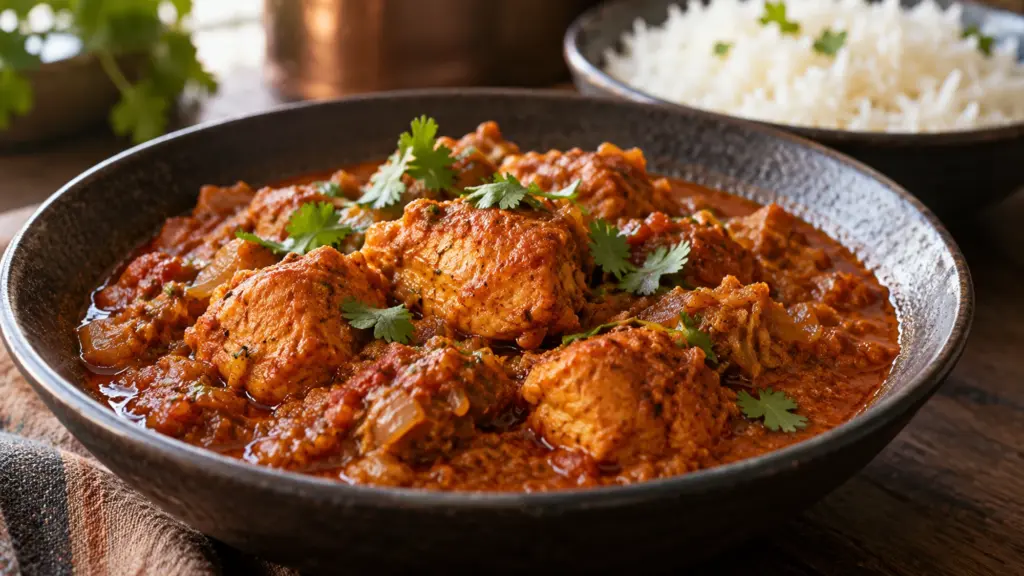
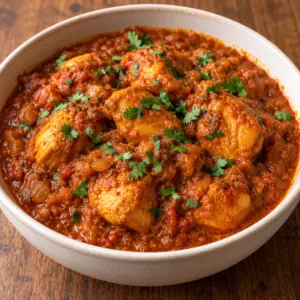
A curry can smell beautifully spiced and still taste mostly of heat. This madras recipe aims for the other balance: tender chicken, a rounded tomato-and-onion sauce, and enough chili to warm the meal without erasing the ginger and garlic. It is a practical, British-Indian-inspired chicken curry made in one pan.

Build flavor before adding more chili: soften the onion, briefly warm the spices, and simmer the chicken gently in the tomato sauce. Finish with lemon for brightness rather than chasing heat alone.
I would use boneless thighs here because they suit a gentle simmer. Chop the onion finely so it blends into the sauce, and keep water beside the stove: a splash is more useful than extra oil if spices begin sticking. This version uses individual ground spices, not a pre-made base gravy, and does not need cream.
Serving This Madras Recipe as a Complete Meal
The sauce is thick enough to cling to chicken and spoon over rice. Keep the supporting dishes simple so you can actually taste the curry. A cool, crunchy side is particularly welcome when you have chosen the hotter end of the cayenne range.
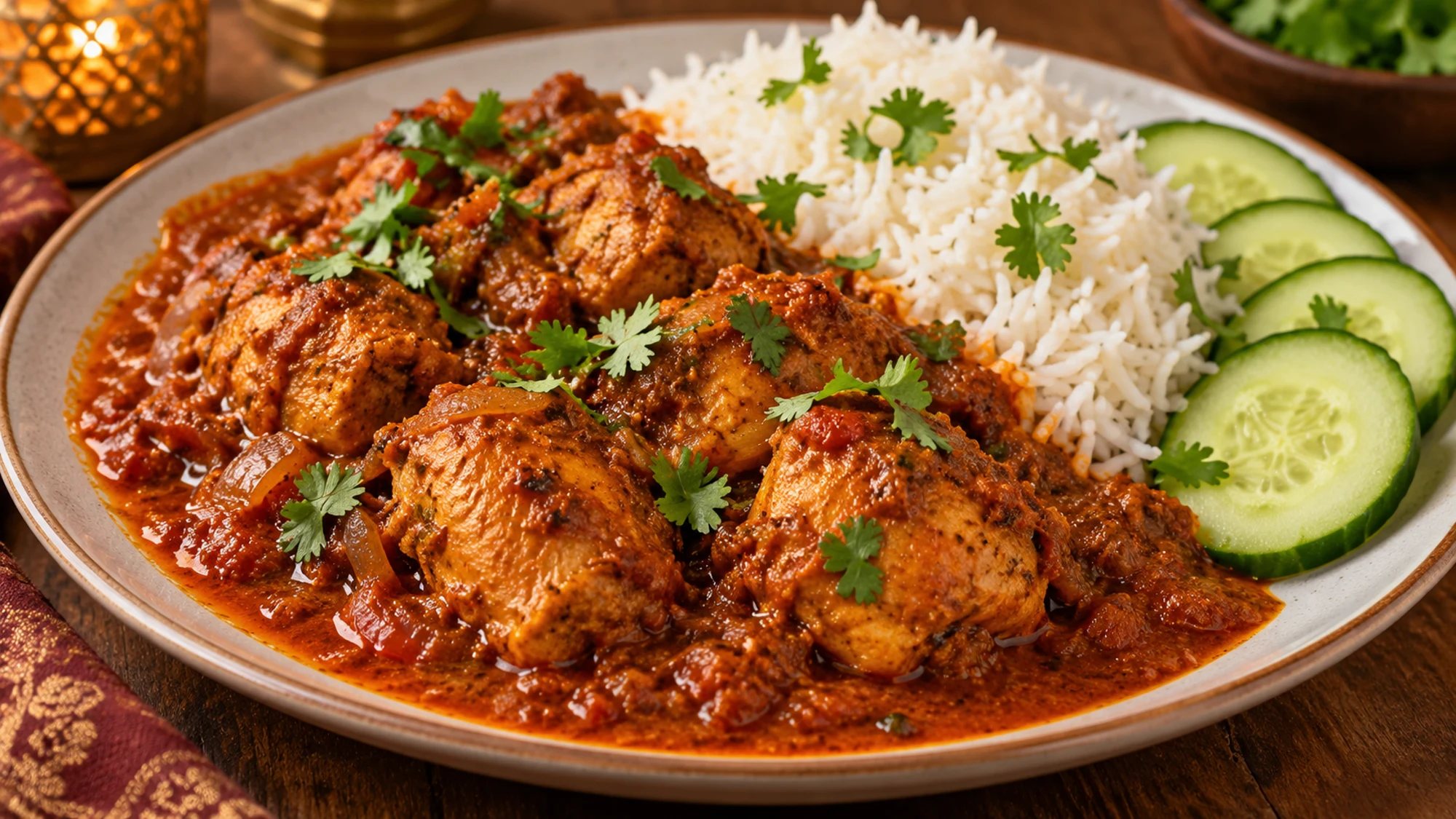
- Plain rice: Basmati or another rice you enjoy gives the sauce somewhere to go. Cook it separately so you can choose your own portion.
- Fresh vegetables: Sliced cucumber, tomato and a squeeze of lemon bring contrast without another pan. For a warm side, try these garlic and lemon green beans.
- Something creamy: Offer plain yogurt at the table rather than making the whole curry milder. Check dairy needs before serving.
- Flatbread: A small warm flatbread is useful for the last bit of sauce. It is an accompaniment, not an ingredient included in the nutrition estimate.
If everyone likes a different level of heat, start with less cayenne and offer sliced fresh chili separately. That is easier than trying to rescue an entire pan after it has become too hot. I prefer this approach to treating a red face as proof of a good dinner.
Keep the sides gentle and let people add heat at the table. Rice, cucumber and a little plain yogurt are enough to make the curry feel like a complete meal.
Variations Without Losing the Sauce
Madras-style curries vary, so this is a home-kitchen interpretation rather than a claim to one definitive formula. The useful constant is a deeply flavored sauce with a clear chili note. Adjust heat separately from the coriander, cumin and paprika, which do other jobs.
| Adjustment | How to approach it | What changes |
|---|---|---|
| Milder curry | Start with 1/4 teaspoon cayenne | The sauce stays aromatic with less heat. |
| More heat | Increase cayenne gradually | Taste the fully cooked sauce before adding more. |
| Chicken breast | Use similar-sized pieces and check early | It can become dry if simmered too long. |
| Thicker sauce | Simmer uncovered briefly | Stir regularly and stop before it catches. |
- Spices catching: Lower the heat and add a tablespoon of water. Burned spices taste bitter and cannot be fixed with extra chili.
- Sharp tomato flavor: Give the sauce its simmering time before deciding it needs adjustment.
- Sauce too tight: Add hot water a spoonful at a time until it flows around the chicken.
- Vegetarian plans: Chickpeas need a separate cooking and nutrition plan; they are not a direct nutritional replacement for the chicken.
Change one thing at a time. Heat, thickness and acidity are separate adjustments, so fix the specific problem rather than adding more of everything.
Health Benefits and Safe Chicken Cooking
Chicken supplies protein, while tomatoes and onion bring vegetables into the sauce. That does not turn a spicy curry into a special health treatment. The nutrition estimate covers one-quarter of this recipe without rice, yogurt or bread; those additions change the meal total.
- Check doneness: FoodSafety.gov specifies 165°F (74°C) for poultry. Measure a thick chicken piece rather than judging only by sauce bubbles.
- Keep raw chicken separate: Wash hands and utensils after handling it. Do not reuse a raw-chicken plate for the finished food.
- Cool leftovers promptly: Follow the two-hour refrigeration rule, or one hour above 90°F (32°C), using shallow containers.
- Reheat thoroughly: Reheat leftovers to 165°F (74°C); add a little water if the chilled sauce has thickened.
The salt and oil are measured so you can see what goes into the pan. You can serve a smaller portion beside extra vegetables without changing the recipe itself. For a useful comparison across foods, the FDA’s serving-size guidance explains why portions matter as much as a headline number.
A balanced plate and safe handling matter more than how spicy the curry is. Use a thermometer, include a vegetable side and count the accompaniments when planning your meal.
Bottom Line
This madras recipe puts a warm, tomato-rich chicken curry within reach of an ordinary weeknight. Give the onion time, keep the spices from burning and finish with just enough lemon to make the sauce feel lively.
Madras Recipe

Ingredients
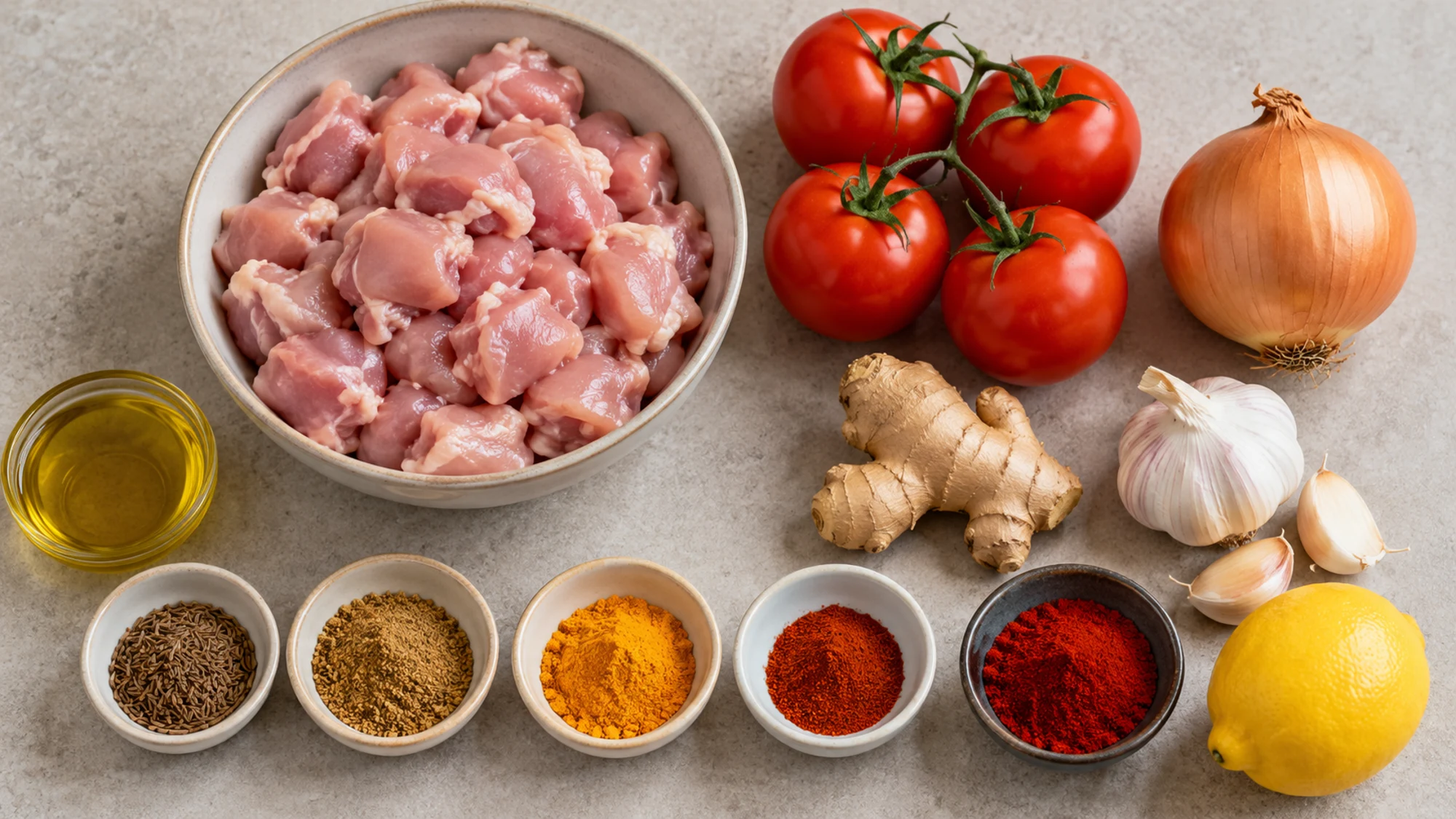
- 1 1/2 pounds boneless skinless chicken thighs 680 g, cut into 1-inch pieces
- 2 tablespoons neutral oil 28 g
- 1 large onion about 200 g, finely chopped
- 4 garlic cloves 12 g, minced
- 1 tablespoon grated fresh ginger 15 g
- 2 teaspoons ground coriander
- 1 teaspoon ground cumin
- 1 teaspoon paprika
- 1/2 teaspoon ground turmeric
- 1/4 teaspoon cayenne pepper increase to 1/2 teaspoon if preferred
- 1 can crushed tomatoes 14 ounces / 400 g
- 1/2 cup water 120 mL, plus a little if needed
- 3/4 teaspoon fine salt 4.5 g
- 1 teaspoon garam masala
- 1 tablespoon lemon juice 15 mL
- 2 tablespoons chopped cilantro optional garnish
Equipment
- 1 Large deep skillet with lid
- 1 Cutting board
- 1 Food thermometer
Instructions
- Heat the oil in a large deep skillet over medium heat. Add the onion and cook for 8–10 minutes, stirring, until soft and lightly golden. Lower the heat if it browns rapidly.
- Add garlic and ginger and stir for 1 minute. Stir in coriander, cumin, paprika, turmeric and cayenne for about 30 seconds. Add a tablespoon of water if the spices start sticking; do not let them burn.
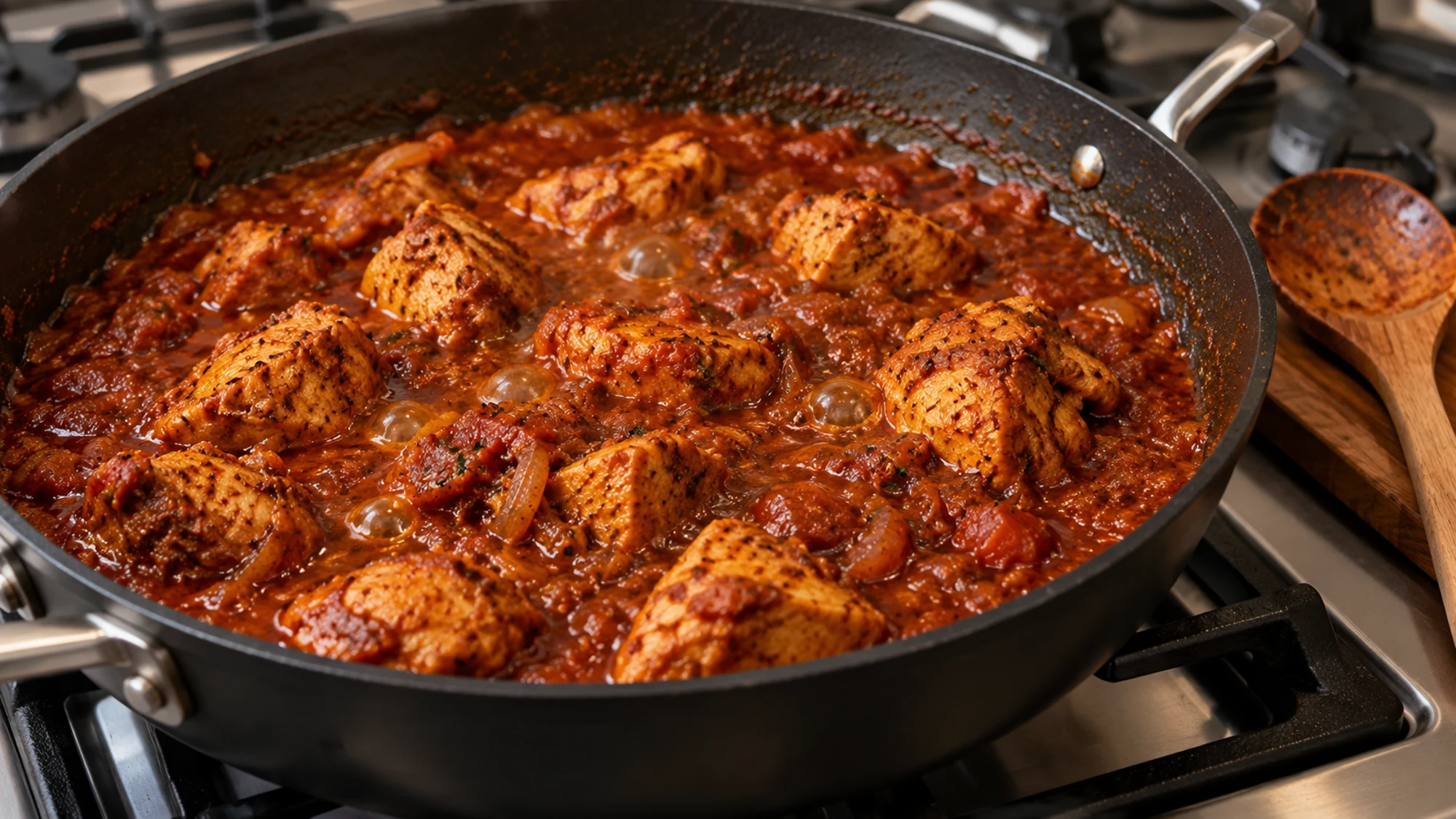
- Add chicken and stir to coat. Add crushed tomatoes, 1/2 cup water and salt. Bring to a gentle simmer, scraping the bottom of the pan.
- Cover partially and simmer gently for 18–22 minutes, stirring occasionally, until every piece is cooked through and a thermometer in a thick piece reads at least 165°F (74°C). Add water if needed to prevent sticking. If the sauce is thin, uncover near the end.
- Stir in garam masala and lemon juice. Simmer for 1 minute, taste the fully cooked sauce and adjust cautiously if desired. Garnish with cilantro and serve with separately prepared rice or vegetables.
Nutrition
Video
Notes
Tried this recipe?
Let us know how it turned out!Hi, I’m Emily Pocker! I share recipes and food guides here at Recipes360 to help you find everyday meal inspiration and feel more confident in the kitchen. My goal is to make cooking approachable, enjoyable, and full of flavor.