
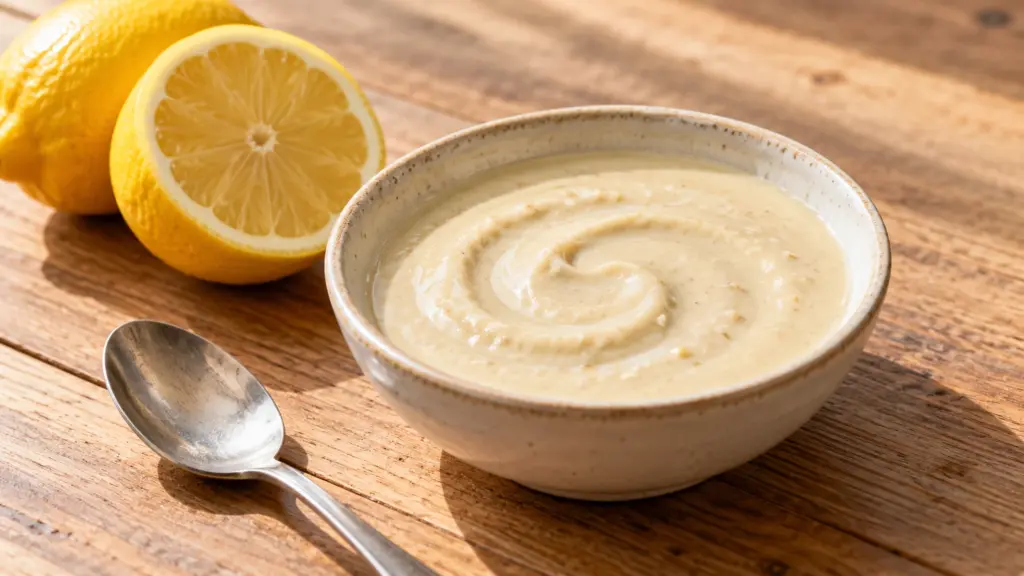
A bowl of tahini can turn surprisingly stiff when lemon juice hits it. That is not your cue to throw it away. This lemon tahini sauce becomes smooth and pourable as you whisk in cold water a little at a time, giving vegetables, grain bowls and sandwiches a creamy finish without dairy.
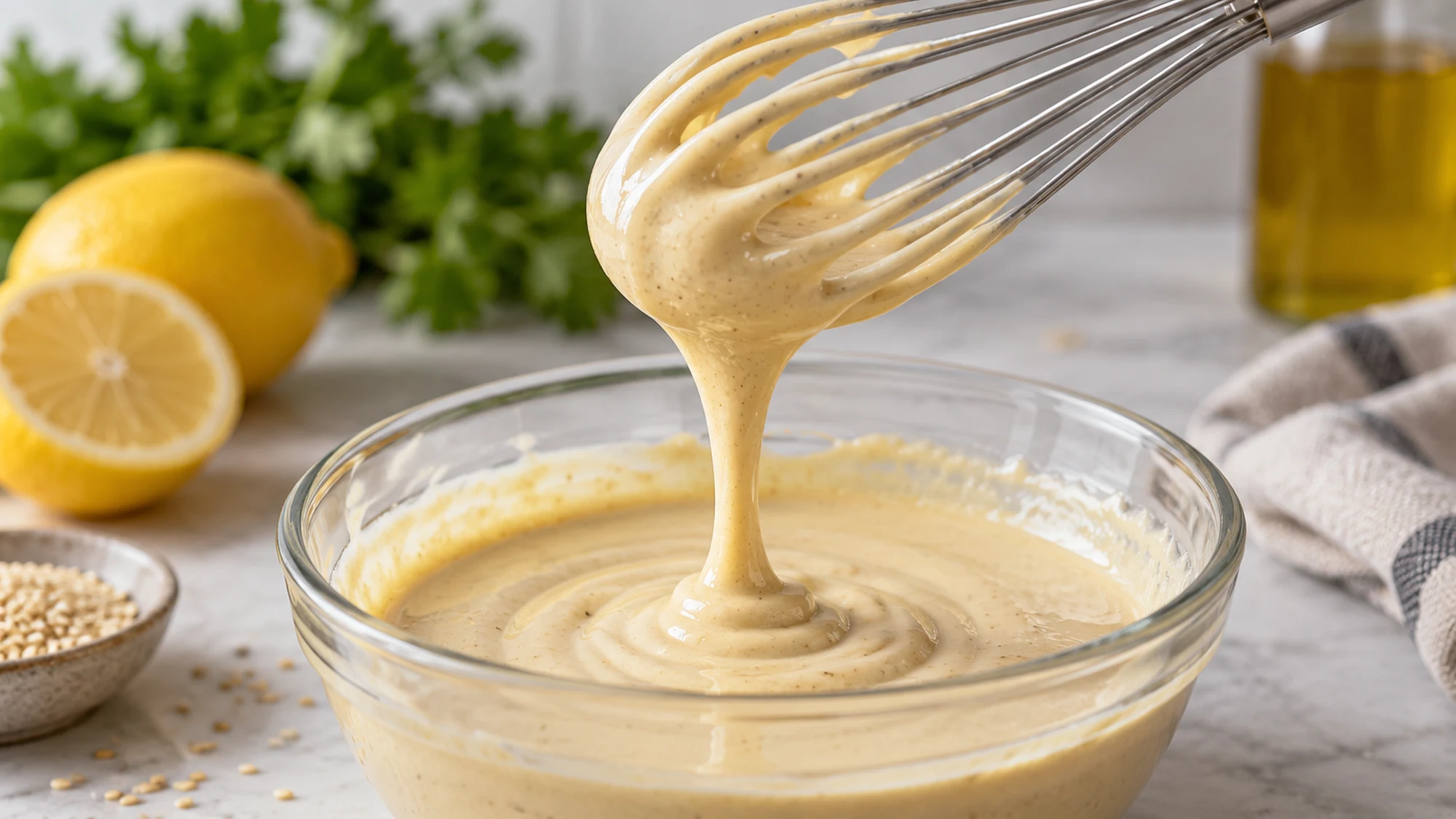
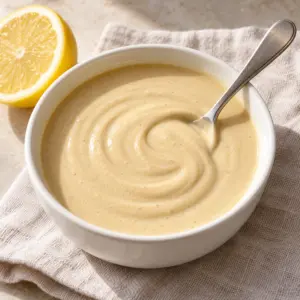
The trick to lemon tahini sauce is controlling the water, not adding more oil. Start with thoroughly stirred tahini, mix in lemon and garlic, then whisk in water gradually until the sauce falls from the spoon in a soft ribbon.
Use plain sesame tahini rather than a prepared sweetened spread. Stir the jar from the bottom before measuring, bringing the settled paste and surface oil together. I prefer a gentle garlic note here: one small, finely grated clove gives the lemon room to show up instead of turning the sauce into a garlic announcement.
Serving Suggestions for Lemon Tahini Sauce
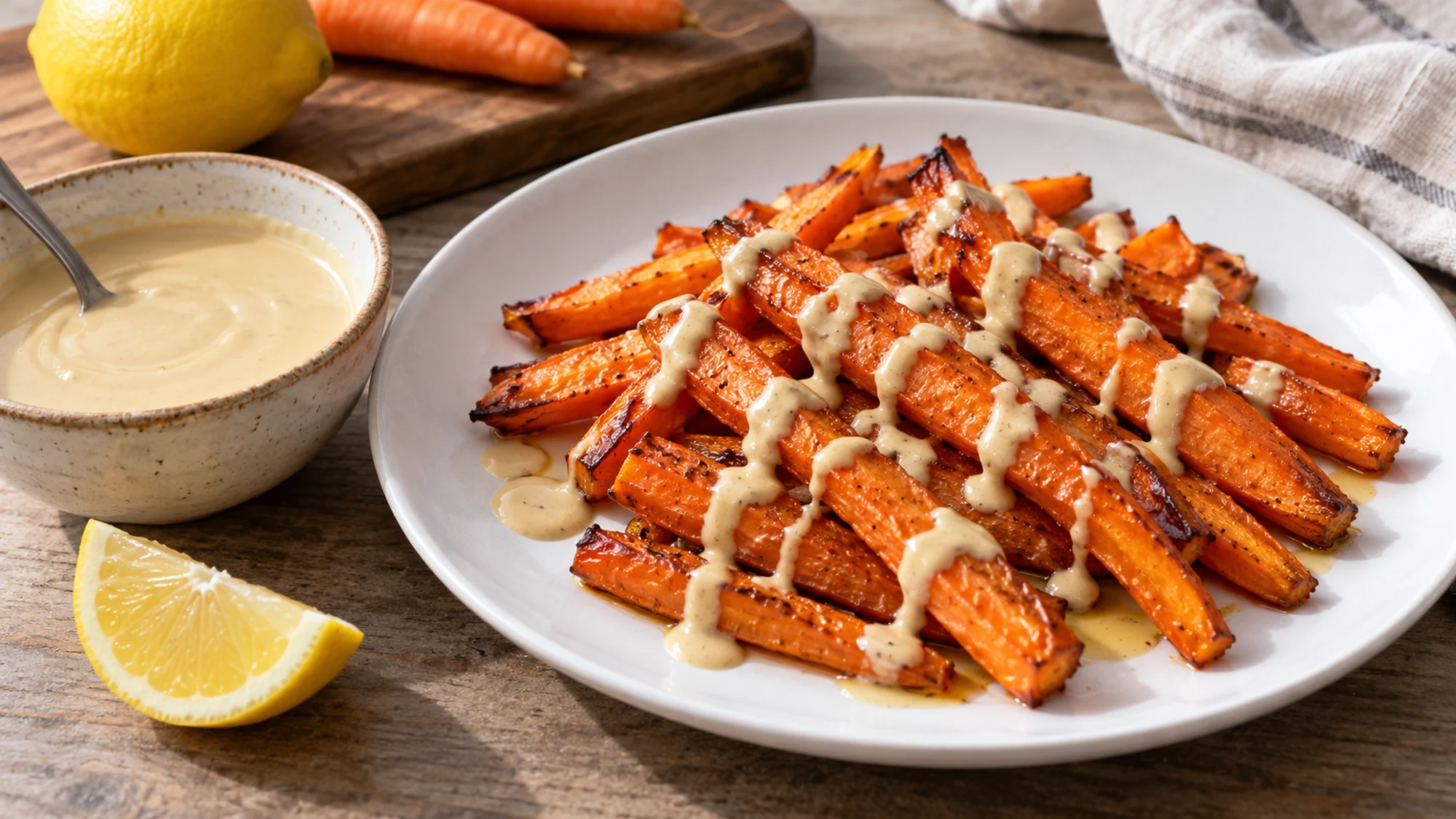
This is a finishing sauce, so spoon it onto the meal after cooking. A little goes a long way on roasted carrots, cauliflower or a warm bowl of grains. It should add a creamy contrast without hiding crisp edges or burying every other flavor.
- For roasted vegetables: Drizzle over the plate just before serving. Leave some browned surfaces uncovered so you keep their texture.
- For sandwiches: Use a slightly thicker consistency inside pita or alongside falafel smash pita. Spread it lightly rather than soaking the bread.
- For a dipping bowl: Stop adding water when the sauce coats a vegetable stick. Offer cucumber and carrot pieces on the side, keeping the dip chilled until serving.
- For salad dressing: Whisk in a teaspoon of water at a time until it pours easily. Taste again, since thinning also softens the seasoning.
The recipe yields about three-quarters of a cup, depending on how much water you use. Eight portions are roughly one and a half tablespoons each. For a larger dinner table, double the mixture in a bowl with enough room to whisk without splashing.
I would start with a small drizzle and put the rest on the table. That lets the sauce complement the meal instead of becoming the meal’s only flavor.
Variations and Texture Fixes
Different jars of tahini vary in thickness and bitterness. Water is therefore a range, not a challenge to use every last drop. If the sauce tastes unpleasantly rancid or the jar shows spoilage, discard it; lemon is not a way to rescue spoiled ingredients.
| What you want | Adjustment | Keep in mind |
|---|---|---|
| A thinner drizzle | Whisk in cold water, one teaspoon at a time | Taste again after thinning. |
| A thicker dip | Stir in a little well-mixed tahini | This increases both yield and sesame flavor. |
| A green herb version | Fold in finely chopped parsley | Add just before serving for a fresher appearance. |
| A warmer savory note | Add a small pinch of ground cumin | Start lightly so the lemon remains distinct. |
If the mixture looks grainy or tight after adding lemon, keep whisking while adding the first spoonfuls of water. A fork works for a small portion, but a small balloon whisk makes the job easier. Scrape around the bottom and sides so no dense streaks remain.
Make one adjustment at a time. More lemon changes acidity; more water changes concentration and texture. Treating them as interchangeable makes it harder to find the balance you want.
Health Benefits and Sesame Awareness
Tahini is ground sesame paste, so the sauce supplies fat, a little protein and minerals in a small portion. Its practical value here is making an ordinary plate of vegetables more appealing. It is not a detox sauce, and a dairy-free label does not make it suitable for every person or every diet.
- Sesame allergy: Sesame is a major food allergen recognized by the FDA. Do not serve this sauce to someone with a sesame allergy; check labels and preparation surfaces.
- Salt: Start with the measured amount, especially when pairing it with salty foods. More lemon can change the flavor, but it does not remove sodium already added.
- Storage: Refrigerate promptly in a clean, covered container at 40°F (4°C) or below. Make a small batch and use within three to four days; stir in a little water if it thickens.
Choose it for its nutty flavor and useful creamy texture. The right portion and an awareness of sesame allergy matter more than any broad healthy label.
Bottom Line
Start with well-stirred tahini, keep the garlic modest, and add water gradually. You will have a lemon tahini sauce that can be thick enough for dipping or loose enough to finish a bowl of vegetables.
Lemon Tahini Sauce Recipe

Ingredients
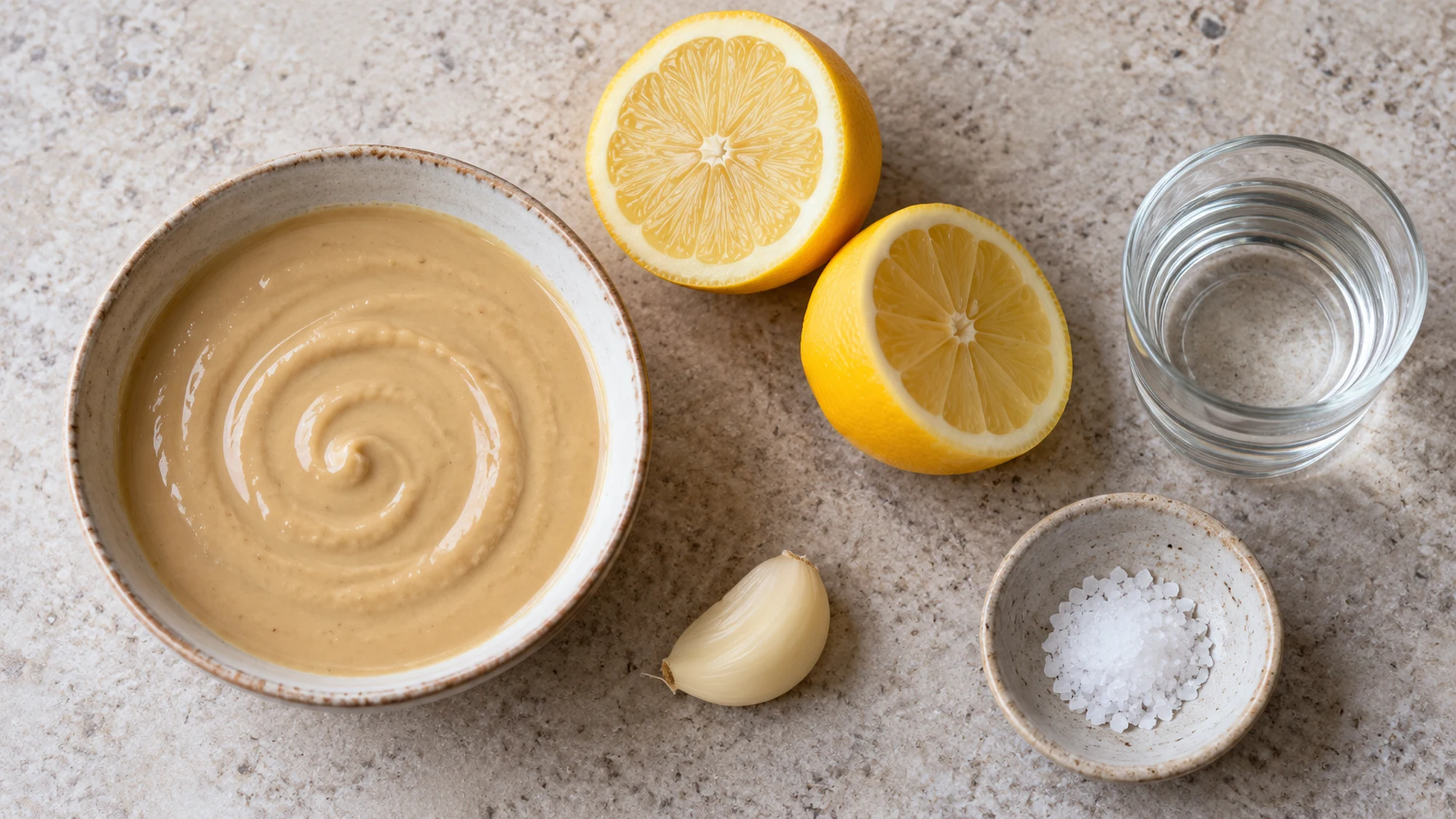
- 1/2 cup plain tahini about 120 g; stir the jar thoroughly before measuring
- 3 tablespoons fresh lemon juice
- 1 small clove garlic finely grated
- 1/4 teaspoon fine salt adjust to taste
- 3–6 tablespoons cold water add gradually to desired consistency
Equipment
- Small mixing bowl
- Small whisk
- Fine grater
- Measuring spoons
Instructions
- Stir the tahini in its jar from the bottom until evenly mixed. Measure into a bowl, then add lemon juice, garlic and salt. Whisk together; the mixture may tighten at first.
- Whisk in 3 tablespoons cold water, adding it a spoonful at a time. Continue whisking until smooth. Add more water by the teaspoon as needed, up to about 6 tablespoons total, to make a dip or pourable drizzle.
- Taste and adjust with a little more lemon or salt if needed. Serve immediately or transfer to a clean covered container and refrigerate. Stir in a splash of water before serving if it thickens.
Nutrition
Video
Notes
Tried this recipe?
Let us know how it turned out!Hi, I’m Emily Pocker! I share recipes and food guides here at Recipes360 to help you find everyday meal inspiration and feel more confident in the kitchen. My goal is to make cooking approachable, enjoyable, and full of flavor.