
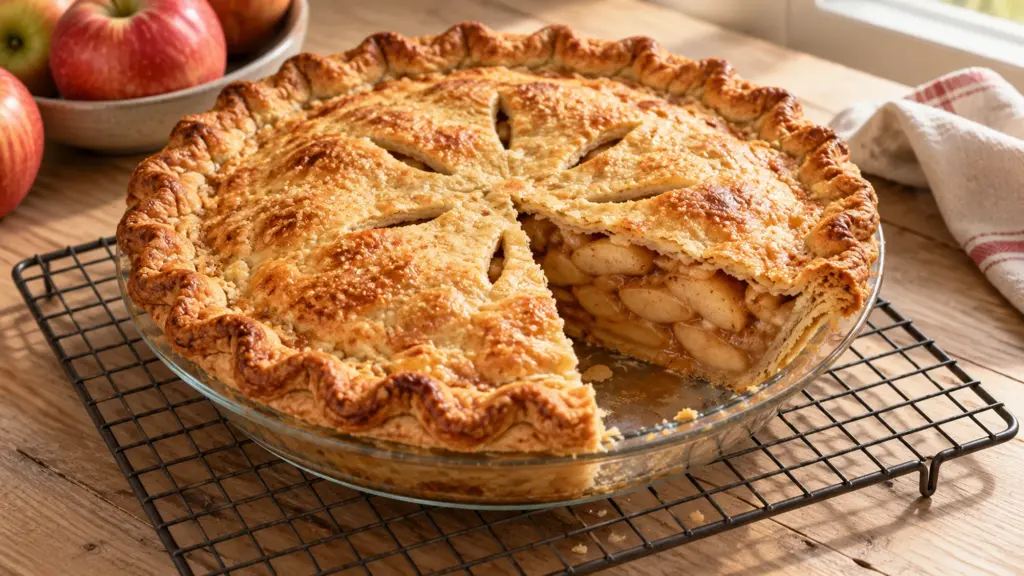
Learning how to make apple pie means bringing two textures together: tender, lightly spiced apples and pastry that stays crisp enough to support them. This double-crust version uses a homemade butter dough with a simple apple filling. The most useful signs of progress are a dough that holds together without feeling sticky, apples cut evenly, and filling that bubbles through the vents before the pie leaves the oven.
Keep the pastry cold, give the filling room to release steam and let the baked pie cool before slicing. A beautiful top crust is only part of the job; the apples and the bottom crust need time to finish too.
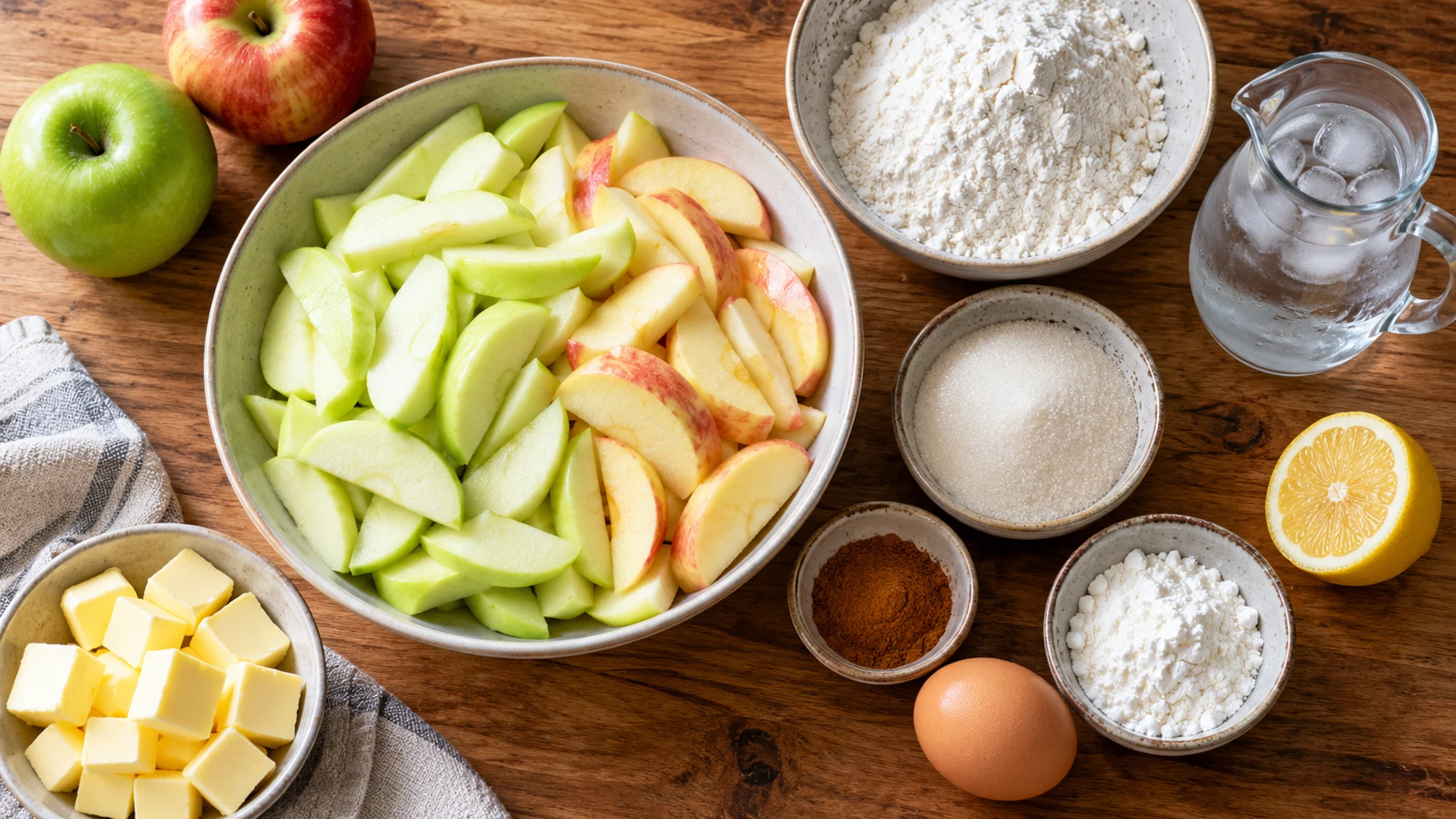
Choose firm apples that hold some shape when cooked. A mix of tart and sweeter varieties gives the filling more range than a single very sweet apple. Peel and core them, then cut slices of a consistent thickness. Toss them with the measured sugar, thickener, lemon and spices shortly before assembling the pie so you can transfer the filling without a long wait.
How to serve apple pie
Set the baked pie on a rack and leave it to cool completely before cutting. The juices thicken as the filling loses heat, so an early slice will be looser even when the pie has baked properly. Use a sharp knife to cut through the top crust, then slide a thin pie server underneath the bottom.
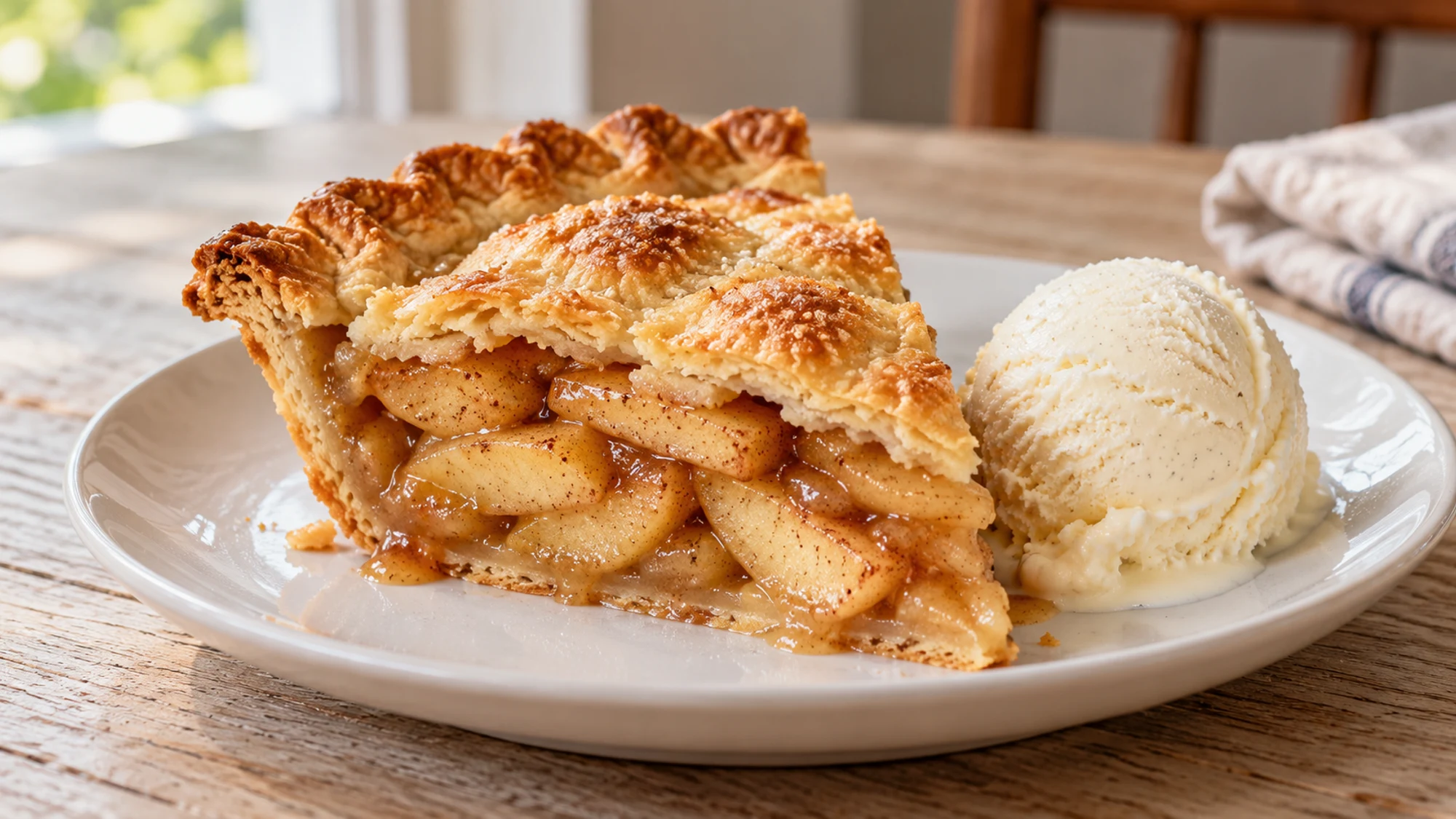
Serve the pie plain, with a small scoop of vanilla ice cream or with lightly whipped cream. Add cold toppings only when each slice is ready to eat. The card’s nutrition estimate covers the pie alone. If you want an apple dessert without a pastry shell, the apple crumble recipe offers a different texture and a shorter shaping process.
| Stage | Useful cue | What to do |
|---|---|---|
| Rolling | Dough bends without smearing | Chill briefly if the butter becomes soft |
| Baking | Golden crust and bubbling filling | Shield dark edges while the center finishes |
| Slicing | Pie has cooled completely | Wait for the juices to thicken before cutting |
How to Make Apple Pie: Crust and Filling Choices
When making the dough, work the cold butter into the flour until you have a mixture of small crumbs and visible flattened pieces. Add the ice water gradually and stop once a squeezed handful holds together. Gather the dough instead of kneading it like bread. Chilling makes it easier to roll and gives the flour time to absorb the water.
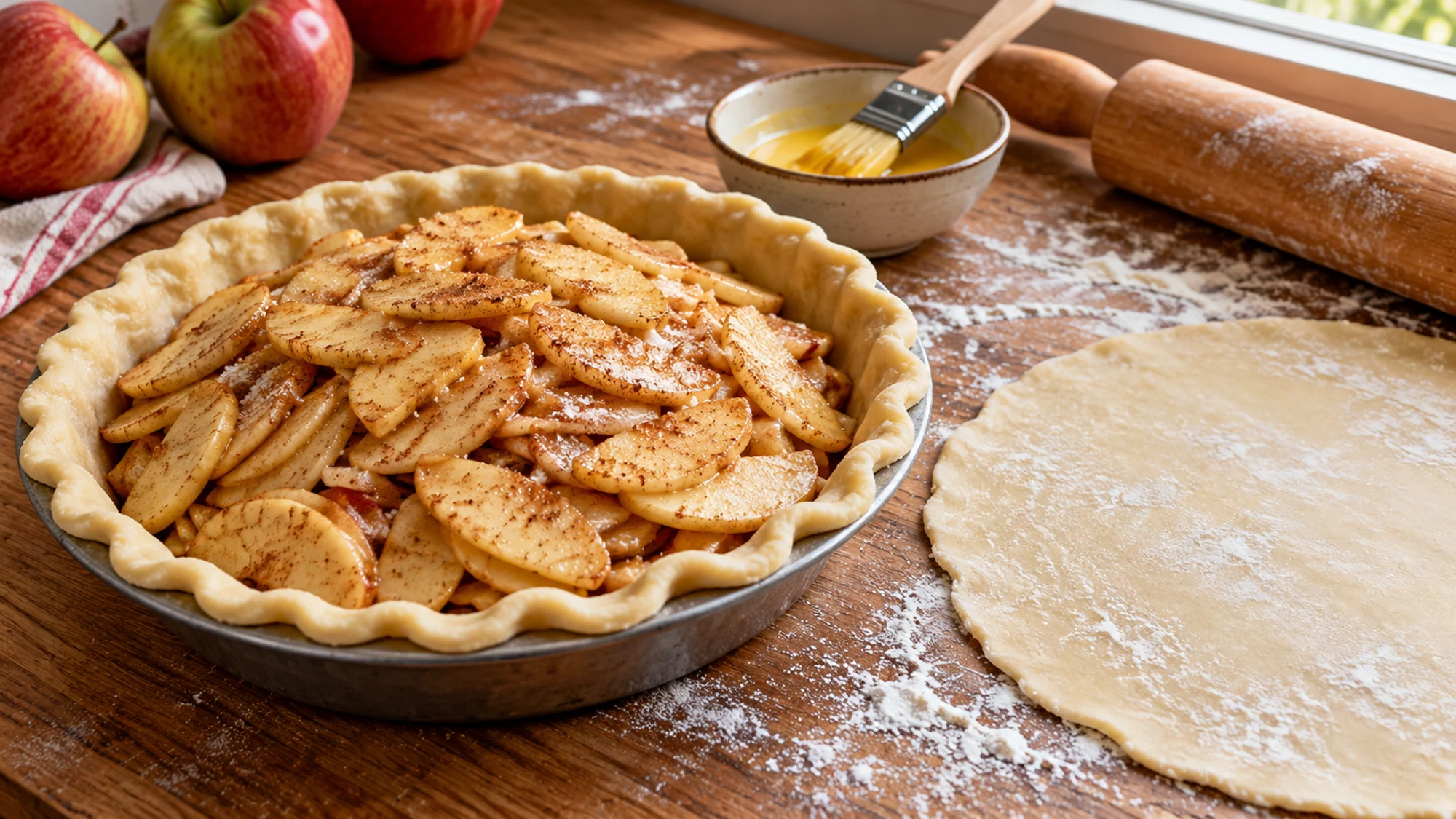
Roll from the center outward on a lightly floured surface, rotating the dough often. Lift it occasionally so it does not stick underneath. If a split opens at the edge, patch it gently rather than stretching the sheet. Ease the bottom crust into the pan and leave enough overhang to join it to the top. Pulling the dough tight can make the edge shrink during baking.
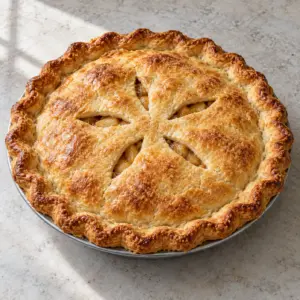
For the top, keep the solid double crust with steam vents shown here, or use a lattice if you are comfortable weaving strips. Either way, join and crimp the edges before baking. A lattice exposes more filling and can brown differently, so watch the pie rather than assuming every shape finishes at the same minute.
Avoid changing several filling ingredients at once. Juicier apples, less sugar and a different thickener can all alter the way the filling sets. King Arthur Baking notes that cornstarch needs bubbling filling to work fully. If the rim darkens first, protect the edge with foil and continue baking. A tray underneath catches drips and keeps escaped filling from burning on the oven floor.
Health benefits and portion notes
Apples bring fruit to the filling, but apple pie is still a dessert made with flour, butter and added sugar. A modest slice can fit alongside an otherwise varied meal; it does not need a health claim to earn its place at the table. The estimated values below depend on the actual dough and filling quantities and exclude optional toppings.
Do not taste the raw dough. The FDA explains that flour is a raw food and must be cooked before eating. Clean the work surface, utensils and hands after handling dough. Keep ready-to-eat toppings away from flour dust, and follow the storage instructions for any cream or ice cream you serve alongside the pie.
Bottom Line
A successful apple pie rewards patient preparation more than complicated decoration. Use cold dough, even apple slices and clear baking cues, then give the finished pie time to cool. UC Cooperative Extension provides storage guidance for fruit pies made with sugar; refrigerate the cooled pie, loosely covered, and use within four days for a simple household plan. Bring out only the slices you intend to serve.
How to Make Apple Pie Recipe

Ingredients
- 300 g all-purpose flour plus a little for rolling
- 200 g unsalted butter cold and diced
- 15 g granulated sugar
- 0.5 tsp fine salt
- 100–120 ml ice water add only as much as needed
- 1 kg apples prepared peeled and cored weight; half Granny Smith and half Honeycrisp, sliced about 5 mm thick
- 125 g granulated sugar
- 25 g cornstarch
- 1.5 tsp ground cinnamon
- 30 ml lemon juice
- 1 large egg
- 1 tbsp water
Equipment
- 9-inch pie pan
- Mixing bowls
- Pastry cutter or fingertips
- Rolling Pin
- Baking sheet
- Pastry brush
- Wire cooling rack
Instructions
- Combine the flour, sugar and salt. Work in the cold diced butter with a pastry cutter or fingertips until the mixture contains crumbs and small flattened pieces of butter.
- Add 100 ml ice water gradually, tossing gently. Add up to 20 ml more only if a squeezed handful will not hold together. Gather without kneading, divide into two disks, wrap and refrigerate for 60 minutes.
- Heat the oven to 425°F/220°C with a rack in the lower third. Have a baking sheet ready to catch drips. Roll one dough disk on a lightly floured surface to about 13 inches across and ease it into a 9-inch pie pan without stretching.
- Toss the prepared apple slices with the filling sugar, cornstarch, cinnamon and lemon juice until evenly coated. Transfer promptly to the pastry-lined pan, distributing slices to avoid large gaps.
- Roll the second disk to about 11 inches across. Cover the filling, trim excess dough, join the edges and crimp. Cut five steam vents in the top. If the pastry has become soft, refrigerate briefly before baking.
- Beat the egg with 1 tablespoon water. Brush a thin layer over the top crust, avoiding puddles. Discard unused egg wash; do not taste raw pastry.
- Set the pie on the baking sheet. Bake at 425°F/220°C for 15–20 minutes, then lower the oven to 375°F/190°C and bake for 45–60 minutes more. Shield the edges with foil if they brown early. The top should be golden, the apples tender when pierced through a vent, and thick filling should bubble through the center vents for at least 5 minutes before removing it.
- Cool on a wire rack for at least 3 hours and until completely cool before slicing; allow longer if the center is still warm. The total time is an estimate and includes chilling and a minimum cooling period. Refrigerate the cooled pie, loosely covered, and use within 4 days. Optional ice cream or cream is excluded from nutrition.
Nutrition
Video
Notes
Tried this recipe?
Let us know how it turned out!Hi, I’m Emily Pocker! I share recipes and food guides here at Recipes360 to help you find everyday meal inspiration and feel more confident in the kitchen. My goal is to make cooking approachable, enjoyable, and full of flavor.