
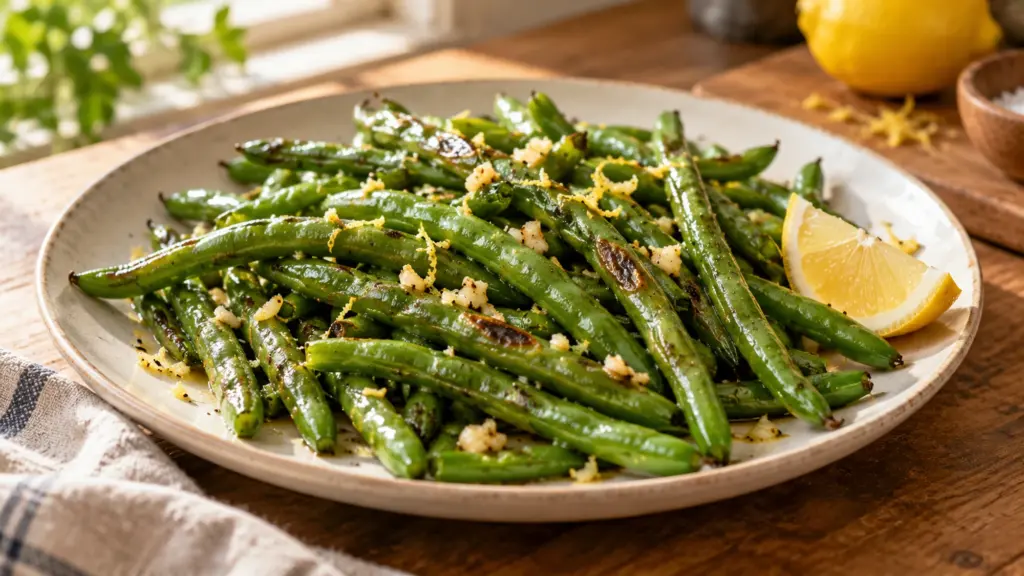
A green beans recipe can be simple and still have a clear point of view. Here, fresh beans get a short covered steam before olive oil and garlic coat their surfaces. Lemon juice goes in at the end, with a little zest for fragrance. The result is a bright vegetable side with tender centers and enough bite to hold its shape on the plate.

There is no large pot of boiling water to drain and no separate ice bath. A wide skillet handles the whole job. The useful detail is the order: soften the beans first, let excess water evaporate, then add the garlic. That keeps small garlic pieces from turning bitter while the beans are still firm.
Let the beans become tender before adding garlic; the short finishing stage should season them, not rescue an undercooked center.
Choose beans that feel firm rather than limp, and trim away the tough stem ends. Similar thickness matters more than identical length. Thin beans may finish early, while broad, mature beans need another splash of water and a longer covered cook. The timings below are a starting point, with texture as the final guide.
Serving
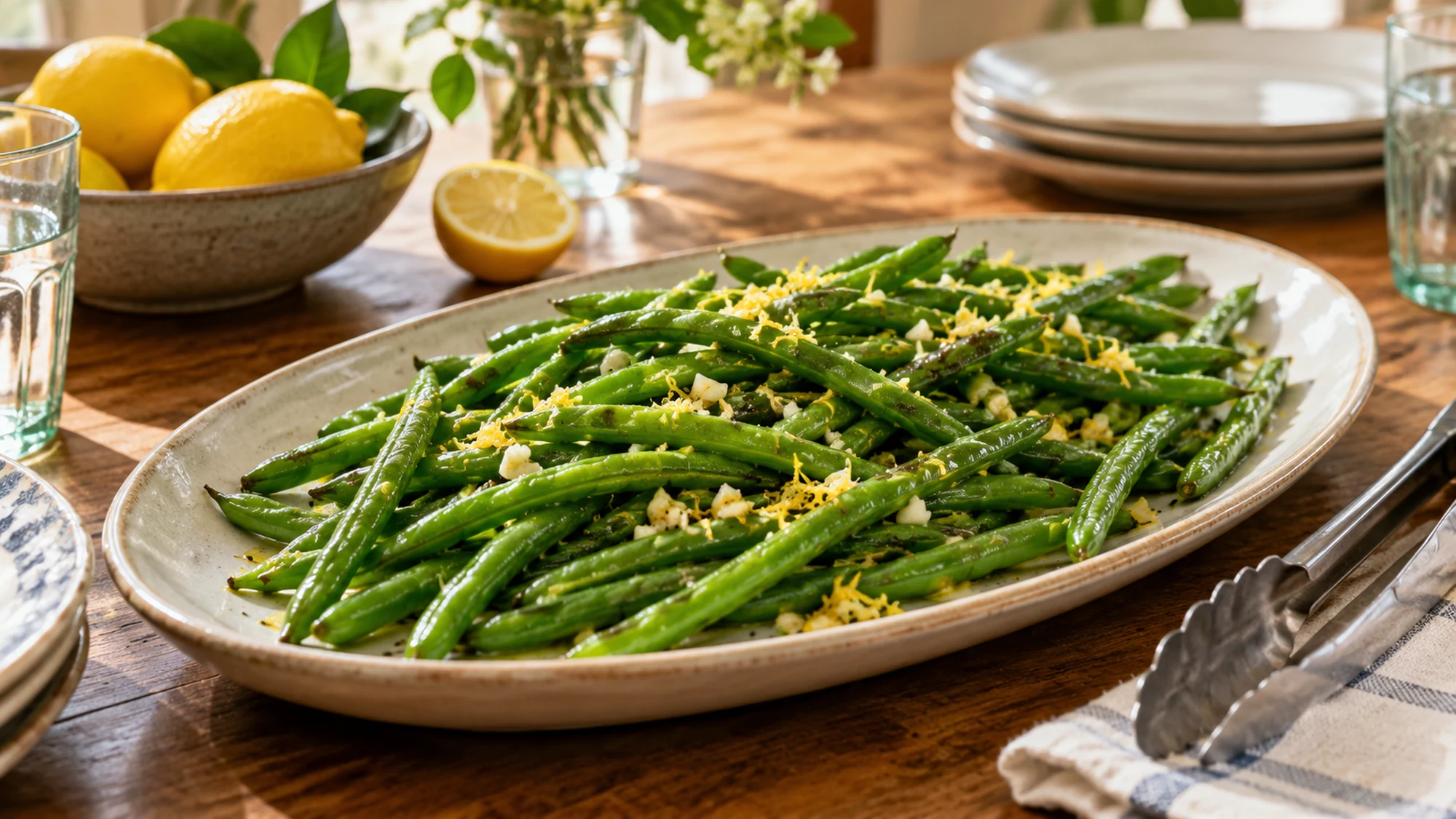
Serve the beans warm as soon as the lemon is folded through. They suit roast fish, baked tofu, eggs, or a chicken dinner. For a sweet and tangy main alongside the citrus, try the blog’s apricot chicken. Keep the sauces separate until they reach the plate so the beans retain their own clean garlic flavor.
One pound makes four modest side portions. For a vegetable-centered lunch, plan on two larger portions and add a protein and bread or potatoes. Put the beans on a warm shallow platter rather than leaving them covered in the pan; trapped steam continues softening them.
| Choice | What to expect |
|---|---|
| Dinner side | Divide the pan into four portions; add the main dish separately. |
| Packed lunch | Cool promptly, refrigerate, and pack in an insulated bag with a cold source. |
| Larger batch | Use two skillets so the beans can steam evenly and the water can evaporate. |
If dinner is running late, finish the steaming step first and leave the beans uncovered briefly. Add the garlic, oil, and lemon just before serving. This is a short preparation pause, not a reason to hold cooked vegetables at room temperature for hours.
Variations
The base recipe uses olive oil, two garlic cloves, and lemon. A pinch of chili flakes can join the garlic for heat, while chopped parsley can go in with the zest. These additions change the flavor without needing a different cooking method. Avoid adding extra lemon early; prolonged heating dulls its fresh aroma.
- For softer beans, extend the covered steaming stage in one-minute increments, adding water by the tablespoon if the pan dries.
- For smaller bites, cut the trimmed beans into two-inch lengths before cooking; start checking them sooner.
- For frozen beans, follow the package’s cooking directions first, then drain thoroughly and use the brief garlic-and-lemon finish.
The skillet should be almost dry when the oil goes in. If water is still pooling, uncover and let it bubble away before seasoning. If the garlic colors immediately, lower the heat and move the pan off the burner for a moment. Pale gold is enough; deeply browned fragments can dominate the lemon.
Health
A quarter of the batch is estimated at about 70 calories, with roughly 2 grams of protein and 3 grams of fiber. These rounded figures come from the listed beans, oil, garlic, and lemon divided by four. They are estimates rather than a laboratory analysis, and extra oil or toppings increase them.
Wash the beans and lemon under running water before trimming or zesting. The FDA’s produce guidance advises against washing produce with soap. Use a clean board and utensils, especially when preparing raw meat for the same meal.
Refrigerate leftovers in a shallow covered container within two hours. University of Illinois Extension recommends using refrigerated leftovers within three to four days and reheating to 165°F. Add a little water when reheating to prevent scorching; expect softer beans and less vivid color.
The estimated ingredient cost is US$3 for the pan, or about US$0.75 per side portion. That budgeting allowance assigns about US$2.20 to the beans and the rest to the lemon, oil, garlic, and seasonings actually used; local prices and package sizes vary.
Bottom Line
This green beans recipe works through careful sequencing: steam until tender, evaporate the water, briefly warm the garlic in oil, and finish with lemon. Keep that order and adjust the first stage to the beans in front of you. The measured recipe below brings the quantities and texture checks together.
Green Beans Recipe

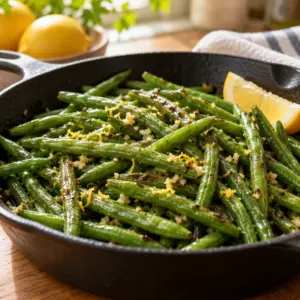
Ingredients
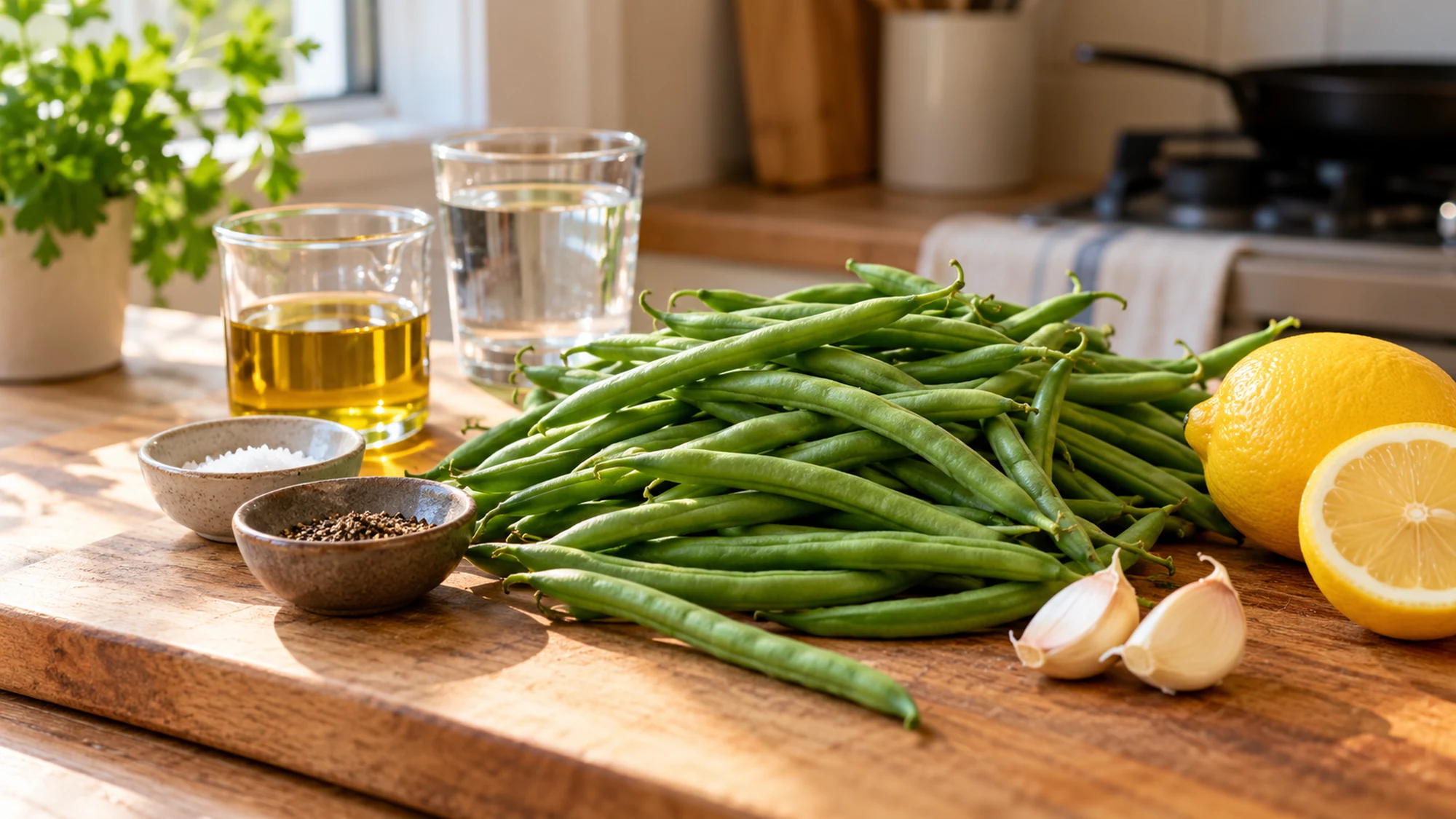
- 1 lb fresh green beans about 450 g; tough stem ends trimmed
- 2 tbsp water 30 mL; extra by the tablespoon only if needed
- 1 tbsp olive oil 14 g
- 2 garlic cloves about 6 g, finely minced
- 1 tbsp lemon juice 15 mL
- 1 tsp finely grated lemon zest about 2 g; yellow part only
- 1/4 tsp fine salt about 1.5 g
- 1/8 tsp black pepper
Equipment
- 1 12-inch skillet with lid
- 1 Tongs
- 1 Fine grater
Instructions
- Wash the beans and lemon under running water. Trim the stem ends. Mince the garlic and grate the lemon zest before juicing.
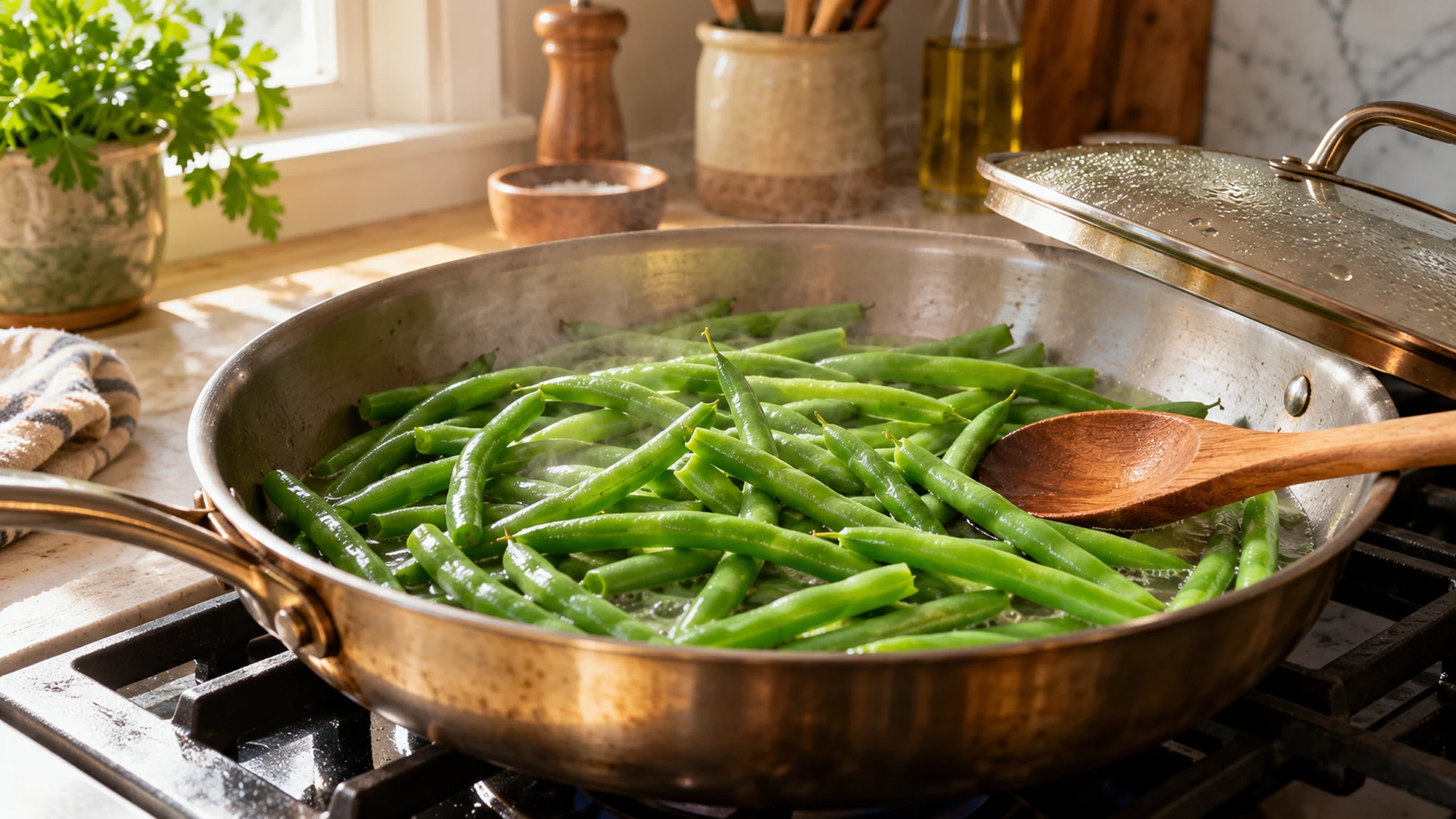
- Put the beans and 2 tablespoons water in a wide skillet over medium-high heat. Cover and steam for 4–6 minutes, tossing once, until a bean is tender enough to bite but still holds its shape. Thick beans may need another minute or two and an extra tablespoon of water.
- Uncover and let any pooled water evaporate, about 1–2 minutes. Reduce the heat to medium.
- Add the olive oil and garlic. Toss for 30–60 seconds, just until fragrant and very pale gold. Lower the heat if the garlic starts darkening.
- Turn off the heat. Toss with lemon juice, zest, salt, and pepper. Divide into four side portions and serve warm.
Nutrition
Video
Notes
Tried this recipe?
Let us know how it turned out!Hi, I’m Emily Pocker! I share recipes and food guides here at Recipes360 to help you find everyday meal inspiration and feel more confident in the kitchen. My goal is to make cooking approachable, enjoyable, and full of flavor.