
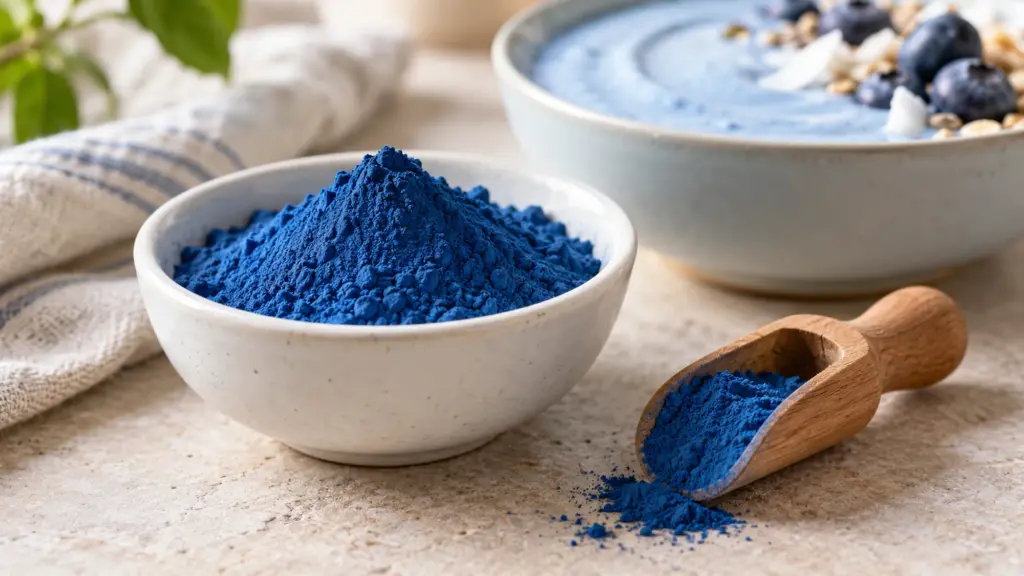
A bright blue smoothie can make a small pouch of powder look much more mysterious than it is. Blue spirulina is usually a concentrated blue extract used for color, not simply ordinary green spirulina in a different shade. Knowing which one you bought matters more than the dramatic color on the front of the package.
Choose blue spirulina for its color, read the ingredient list for the actual product, and keep health promises separate from what a spoonful can realistically offer.
What Blue Spirulina Actually Is
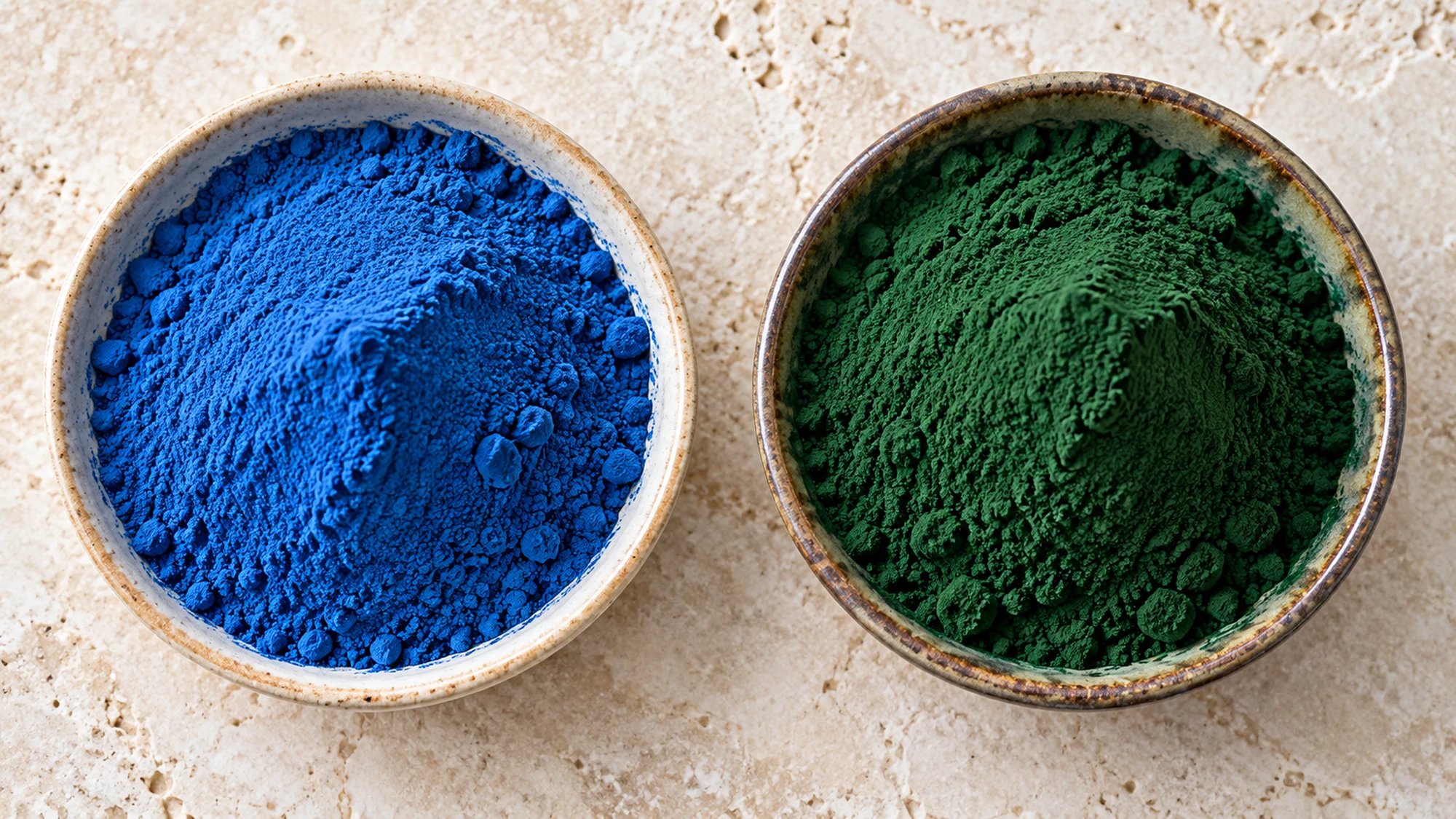
The blue comes from phycocyanins, pigment-containing proteins extracted from spirulina. The U.S. specification for spirulina extract describes a filtered water extraction of dried Arthrospira platensis, with phycocyanins as its principal coloring components. The extract and the whole organism are therefore different ingredients.
Whole spirulina powder retains other components and looks green rather than clean blue. An extract may also contain carriers or other ingredients, so the name alone does not tell you its concentration. I would compare the back of two pouches before comparing their price per ounce.
| Product | Main distinction | Useful label check |
|---|---|---|
| Blue spirulina extract | Concentrated blue coloring components | Extract content and suggested use |
| Whole green spirulina | Dried whole spirulina material | Serving size and nutrition panel |
| Blue coloring blend | Extract plus other ingredients | Carriers, sweeteners, and allergens |
An extract is not a nutritional substitute for the whole ingredient just because both names contain spirulina.
Using Blue Spirulina Without Losing the Color
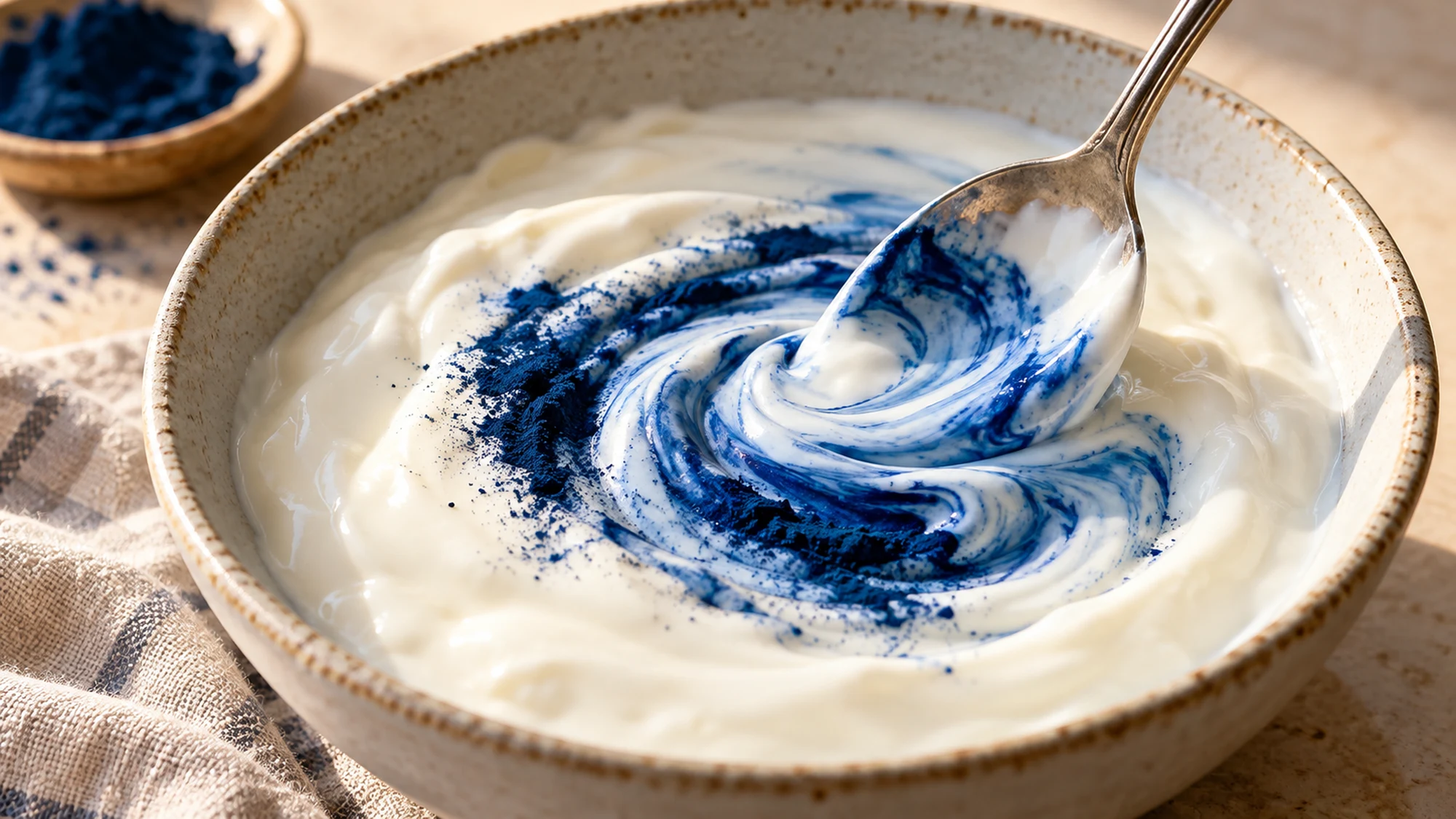
Cold, light-colored foods offer a straightforward starting point. DIC’s LINABLUE instructions recommend dissolving that product in a little water before mixing and warn that heat, acidity, and sunlight can weaken its color. Different formulations behave differently, so follow your own product’s directions rather than borrowing a universal teaspoon amount.
- Begin with a small test: mix a little into a spoonful of your base before coloring the entire bowl.
- Consider the background: white yogurt or a pale banana mixture lets blue show more clearly than a dark berry mixture.
- Keep the serving instructions: more powder is not automatically better, even when you want a deeper shade.
- Use a clean, dry utensil: avoid introducing moisture into the storage pouch and reseal it promptly.
I would use it in a cool topping before trying it in baked batter. That keeps the experiment small and makes it easier to see whether the color suits the food. A pretty blue swirl is a reasonable goal; a guaranteed result in every acidic drink or hot recipe is not.
Test the color in the food you actually plan to serve, especially when heat or acidic ingredients are involved.
What the Health Claims Leave Out
A blue drink is not evidence of a detox effect, immune treatment, or weight-loss benefit. Findings about whole spirulina, isolated compounds, or laboratory experiments cannot simply be transferred to a small serving of a particular coloring powder. Its actual contribution depends on the formulation and amount used.
The FDA’s supplement guidance also explains that supplements are not approved for safety and effectiveness before sale in the way drugs are. A food-color authorization is not approval of a treatment claim. Check whether you are buying a food coloring or a dietary supplement; the intended use and directions matter.
- For protein or minerals: use the product’s nutrition label, not nutrient claims copied from whole spirulina.
- For a health condition: do not replace prescribed care with a brightly colored supplement.
- For an ordinary snack: judge the whole bowl, including its ingredients and portion, rather than the powder’s reputation.
Buying and Storing It Sensibly
Choose a clearly identified food-use product from a seller that supplies ingredient and handling information. The FDA’s microcystin guidance discusses contamination concerns in blue-green algae products, especially wild-harvested AFA. That is not proof that every spirulina extract is contaminated; it is a reason to value manufacturing controls over reassuring slogans.
- Look for traceability: manufacturer contact information, a lot number, and clear storage directions are useful basics.
- Ask specific questions: a relevant batch test is more informative than an unexplained claim that something is pure.
- Respect the label: keep the powder sealed and stored as directed; do not assume all formulations need identical handling.
- Get individual advice: consult a healthcare professional before supplement use during pregnancy, nursing, chronic illness, or use in children.
My preference is a small package with clear information over a large bargain pouch with vague promises. Color is the part you can see; product identity and appropriate use deserve the same attention.
Bottom Line
Blue spirulina can add a striking color to familiar foods, but it is an extract, not a shortcut to better health. Buy a clearly labeled product, start with a modest color test, and let the rest of the meal do its ordinary job.
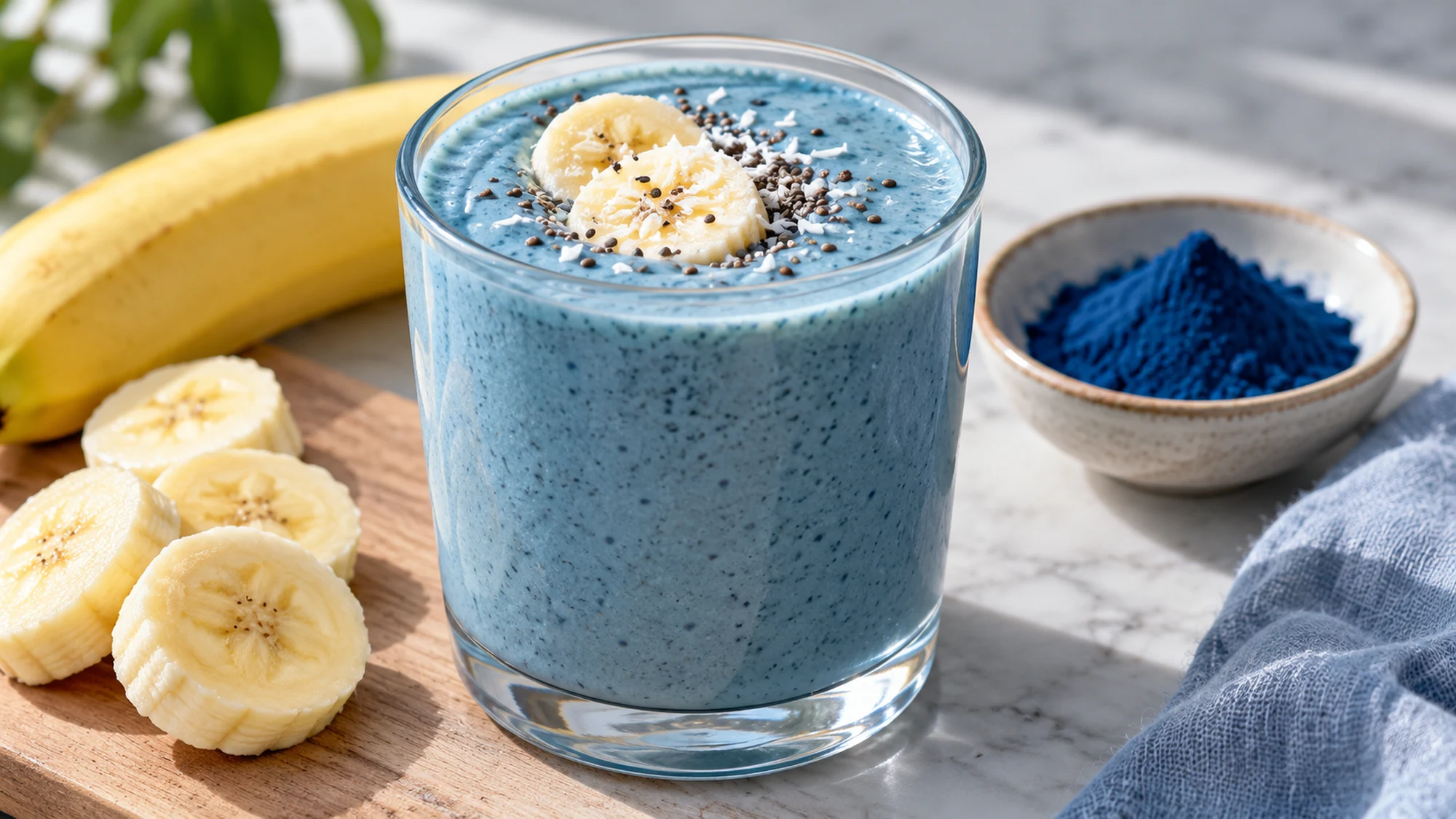
Vegan Michele’s blue smoothie bowl demonstration shows one cold-food use for the ingredient; it is a preparation example, not evidence for health claims.
Sources
- eCFR: Spirulina extract identity and specifications
- DIC: LINABLUE ingredient and handling information
- FDA: Blue-green algae products and microcystins
- FDA: Dietary supplement questions and answers

Hi, I’m Emily Pocker! I share recipes and food guides here at Recipes360 to help you find everyday meal inspiration and feel more confident in the kitchen. My goal is to make cooking approachable, enjoyable, and full of flavor.