
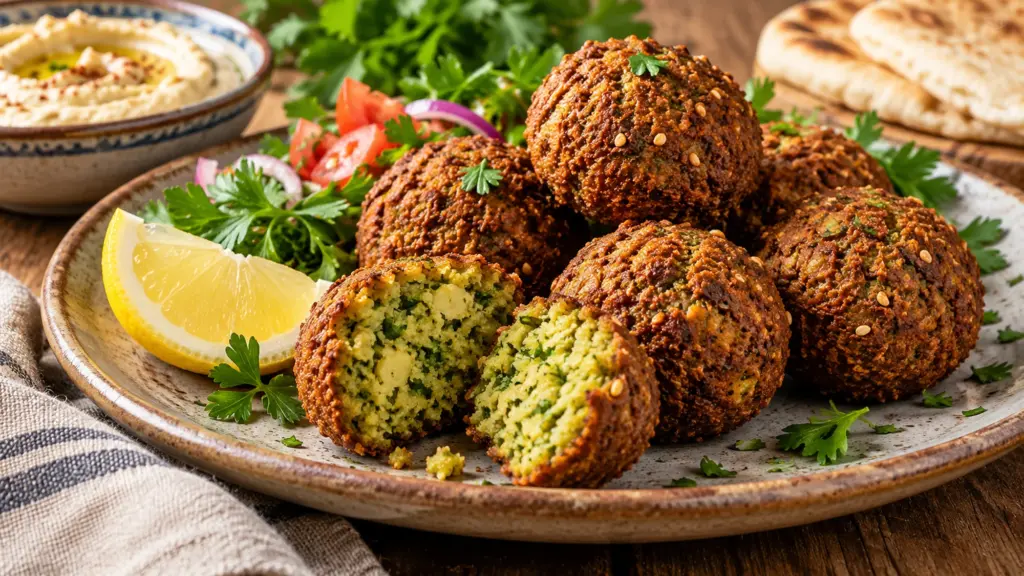
A falafel sandwich can be all crunch, herbs and tangy sauce—or a rather different experience if the filling has gone soft. Understanding what is inside those small patties helps you order, shop and cook with better expectations, without assuming every version follows the same formula.
What is falafel? It is a savory fritter commonly made with ground chickpeas, fava beans or a combination, plus herbs and seasonings. The familiar contrast is a browned exterior and tender interior. Ingredients, cooking methods and accompaniments vary, so dietary labels need checking.
What Is Falafel Made From?
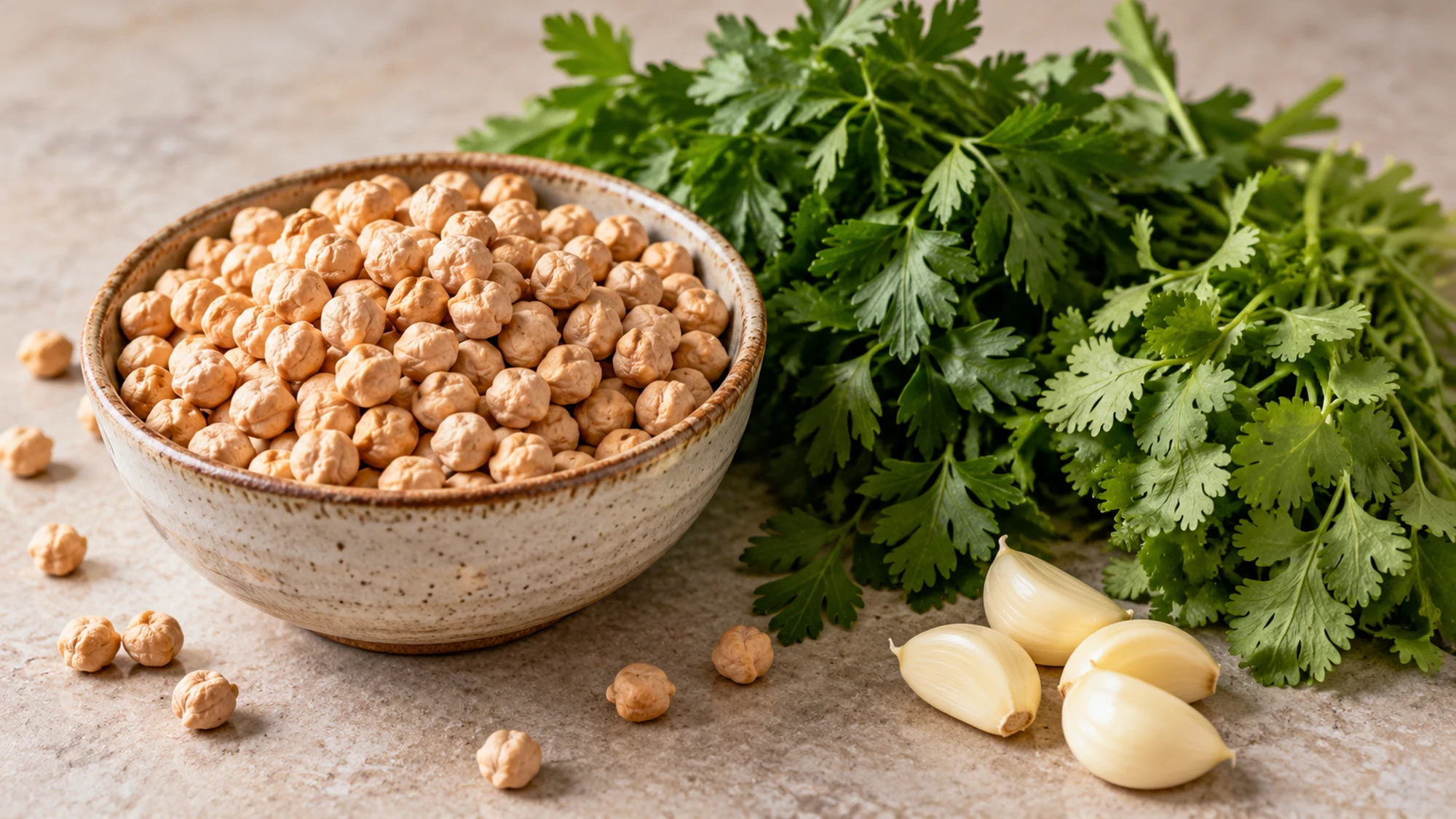
Cookbook author Suzy Karadsheh describes chickpea and fava-bean versions in her falafel guide at The Mediterranean Dish. Herbs, onion, garlic and spices give the mixture much of its character; the exact balance belongs to the particular cook or product. It is not simply hummus shaped into balls.
Falafel is associated with several Middle Eastern food traditions, and one ingredient list cannot stand in for all of them. Rather than declaring a single version the only legitimate one, I would ask which beans it uses and what texture the cook intends. That tells you more about the meal you are about to eat.
| Component | What it contributes | What can vary |
|---|---|---|
| Chickpeas or fava beans | The substantial base | One bean, the other or a mixture |
| Fresh herbs | Aroma and sometimes a green interior | Parsley, cilantro and their proportions |
| Onion and garlic | Savory flavor | Amount and preparation |
| Spices | Aromatic seasoning | Cumin, coriander and other blends |
| Binders or coatings | Structure in some adaptations | Flour, egg or other additions may appear |
Why Texture Matters More Than a Perfect Shape
A good falafel does not need to be a mathematically perfect ball. It can be a flattened patty, and the inside may be greener or paler depending on the herbs. Manufacturer Athenian Foods describes its chickpea-and-cilantro falafel as crisp outside and tender inside, a useful contrast to look for rather than a universal color standard.
For a freshly cooked serving, notice whether the crust still has some crispness and whether the middle feels pleasantly tender rather than pasty or dry. A sauce can make a dry bite easier to eat, but it cannot recreate a crust that has spent a long time sealed in a steamy container.
- Choose freshly cooked falafel when crispness is your priority.
- Keep sauce separate until serving if you are carrying a meal home.
- Expect baked, fried and reheated products to differ rather than judging them as identical.
- Do not use exterior color alone to judge whether a homemade batch is fully cooked.
The appeal is the contrast: a seasoned, tender center with an exterior that still has a little resistance.
Is Falafel Always Vegan or Gluten-Free?
No. Many versions are plant-based, but the name does not guarantee the ingredients. For a concrete counterexample, Eat Simple Food’s canned-chickpea adaptation includes egg and flour. A commercial product or restaurant preparation needs its own ingredient check.
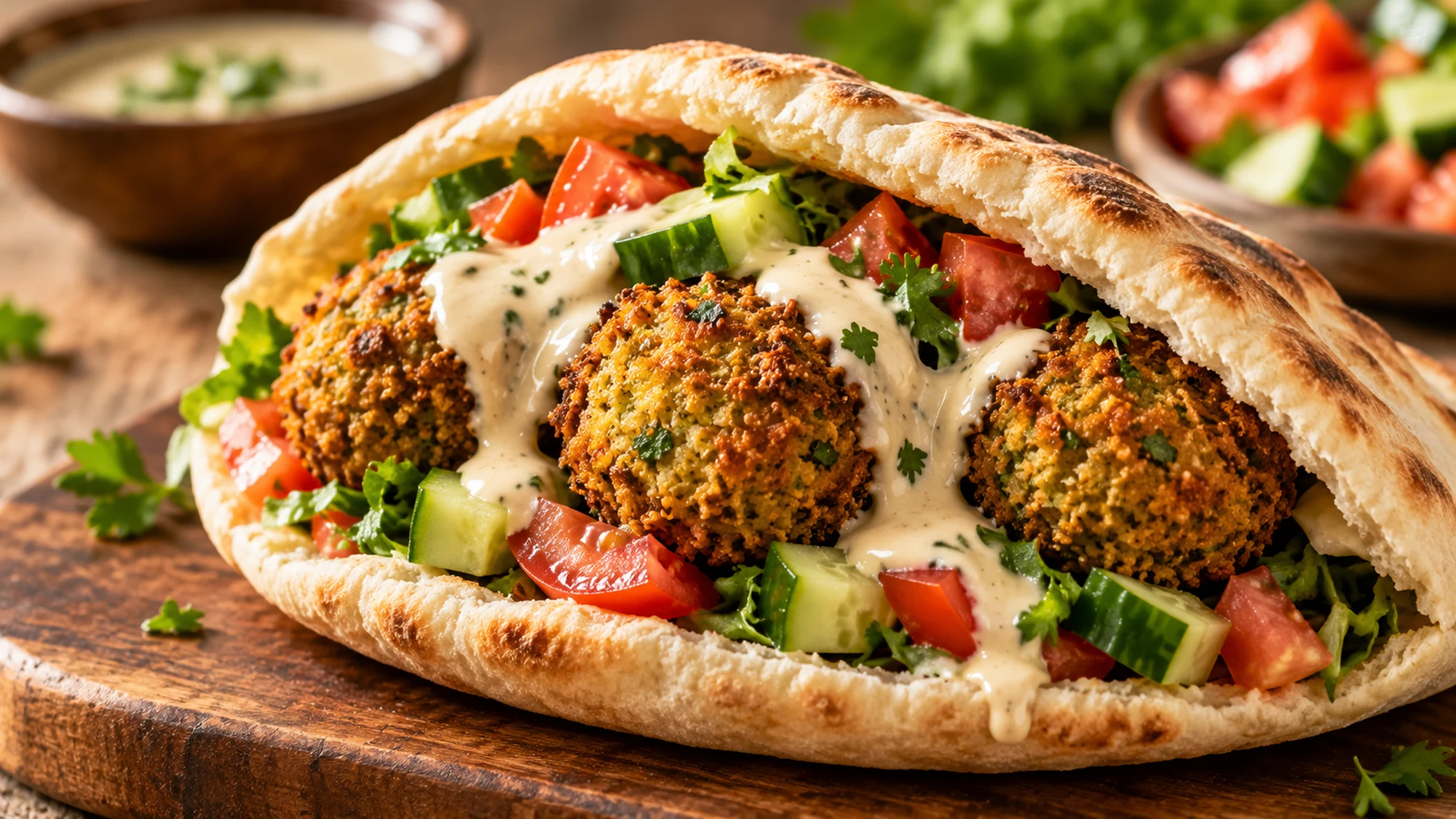
The rest of the plate matters too. Pita may contain wheat, tahini contains sesame, and yogurt-based sauces contain milk. If the falafel uses fava beans, people with G6PD deficiency should avoid that version because fava beans can trigger red-blood-cell breakdown. Ask directly when the bean base is unclear.
- For vegan eating, check the falafel mixture and every sauce or topping.
- For celiac disease or allergies, ask about ingredients and shared preparation or frying equipment.
- Do not assume a salad bowl is gluten-free simply because the pita was removed.
- Read the current package rather than relying on how a previous brand was made.
A familiar dish name is not an allergen statement. Check the mixture, the cooking environment and the extras.
Ordering, Serving and Making It at Home
You can build a satisfying plate around falafel without burying it. Try crisp vegetables, a sauce that suits your needs and either bread or a grain alongside. For a sandwich, I would avoid packing in so much wet salad that the bread and crust lose their texture before the first bite.
At home, follow a complete recipe written for the exact type of beans you have. A method using soaked dried chickpeas is not automatically compatible with a can of already cooked chickpeas. The moisture and structure differ, so choose a recipe designed for the substitution instead of improvising at the frying stage.
- For packaged falafel, follow its storage and heating instructions; frozen does not necessarily mean ready to eat.
- For takeout, keep cold toppings separate when practical and refrigerate leftovers promptly.
- For reheating, use the product or recipe directions rather than expecting a microwave to restore a fried crust.
- For a first attempt, make the recipe as written before changing several ingredients at once.
Bottom Line
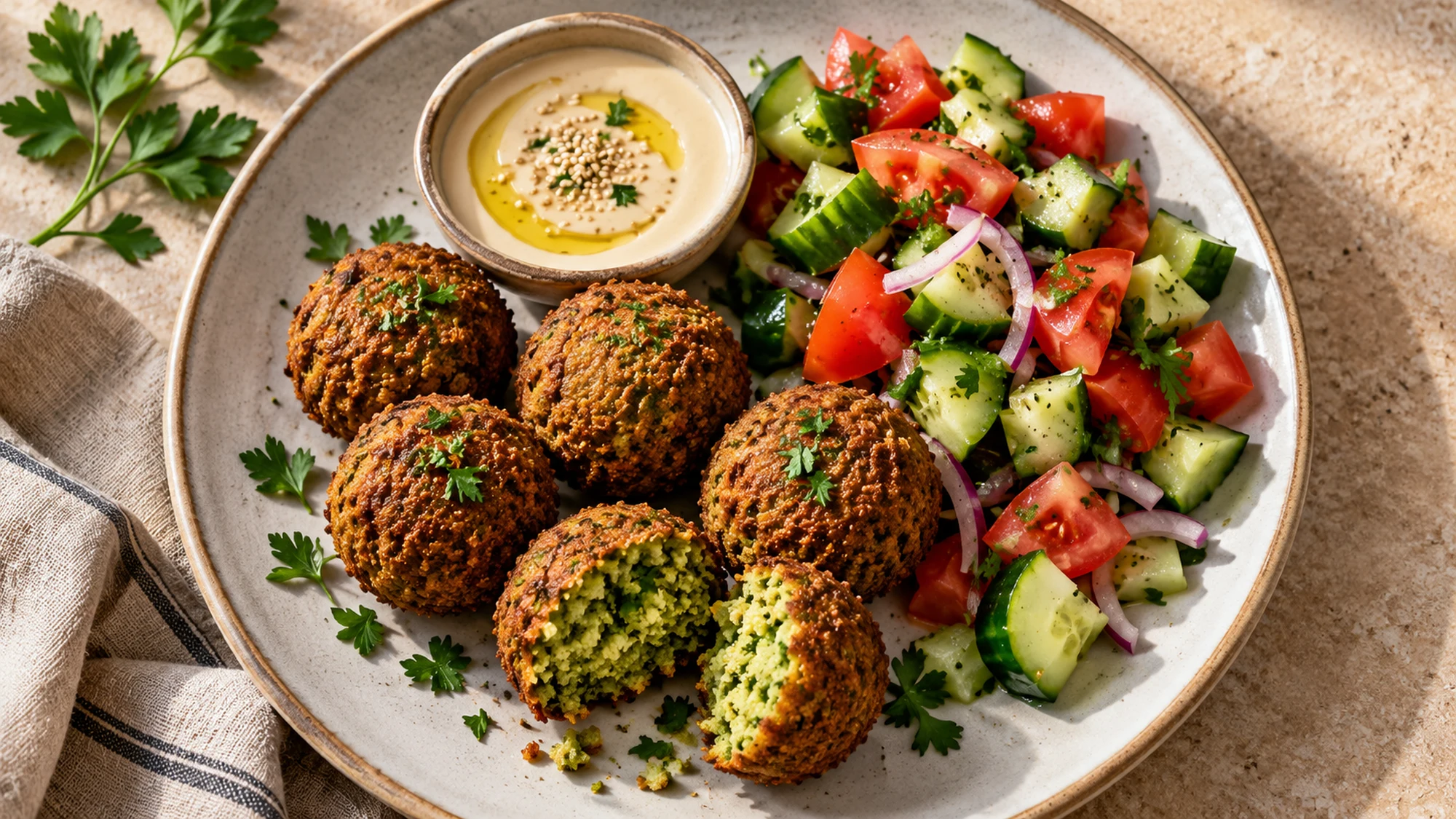
Falafel is a bean-based fritter with plenty of room for variation. Look for the bean base, herb flavor and contrast of crust and center, then check dietary requirements separately. Whether it arrives in pita or on a plate, the details matter more than a blanket label.
The Mediterranean Dish demonstrates its chickpea version in the video below; it is one preparation, not a rule for every falafel.
Sources
- The Mediterranean Dish: falafel ingredients and method
- Athenian Foods: product descriptions
- Eat Simple Food: an egg-and-flour adaptation
- MedlinePlus: G6PD deficiency

Hi, I’m Emily Pocker! I share recipes and food guides here at Recipes360 to help you find everyday meal inspiration and feel more confident in the kitchen. My goal is to make cooking approachable, enjoyable, and full of flavor.