
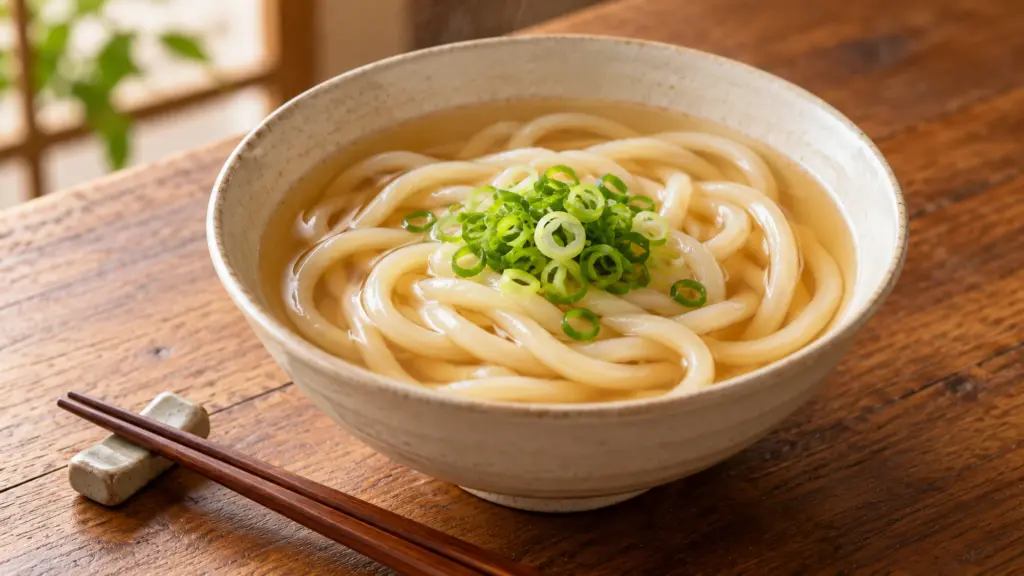
Two packs of udon noodles can look similar and need quite different treatment. These Japanese wheat noodles come fresh, dried, precooked and frozen, so the first useful step is reading the pack. Choose the form that fits your meal, then follow its cooking directions rather than borrowing a timer from another noodle.
Udon noodles are Japanese wheat noodles, often thick and smooth, used in hot broth, stir-fries and chilled dishes. Fresh, dried and frozen versions are not cooked on one universal schedule. Check the product form, storage instructions and sauce ingredients before starting.
What makes udon noodles different?
Japan’s Ministry of Agriculture, Forestry and Fisheries describes udon production as kneading flour with salted water, then shaping the dough. Regional styles vary in thickness and texture; udon does not have to be one particular round, chunky strand.
That mild wheat flavor makes the noodle a useful partner for different sauces. I’d pay attention to the bite and the serving style before choosing a substitute. A thin rice noodle or a springy ramen noodle can make a pleasant meal, but it changes what the bowl feels like.
- Hot broth: The noodles share the bowl with a light or richer soup.
- Stir-fried: Udon is tossed with sauce and other ingredients.
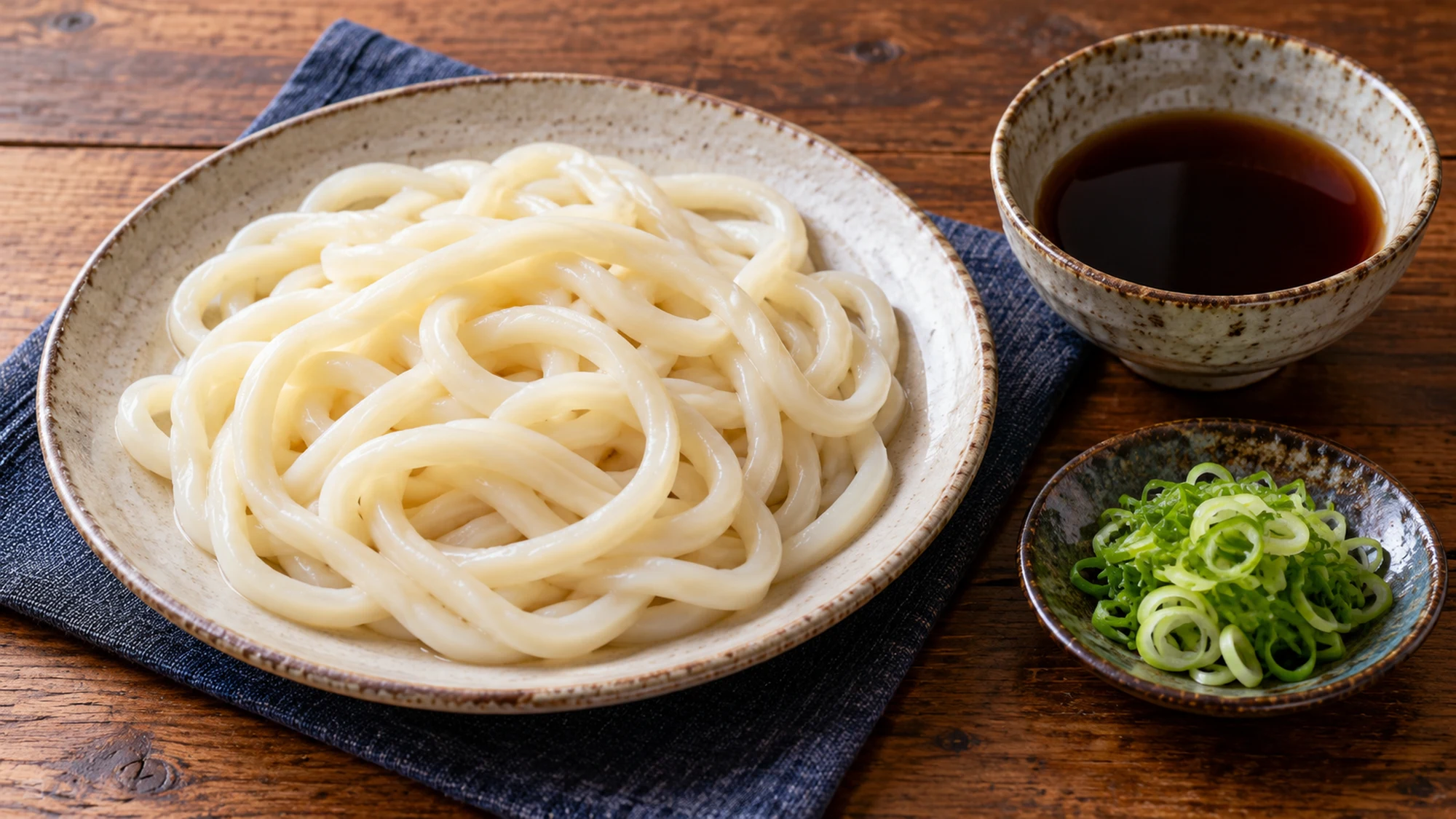
- Chilled: Cooked noodles can be served with a separate dipping sauce.
- Regional texture: Do not judge every udon by maximum chewiness; MAFF describes Ise udon as deliberately thick and soft.
Match the pack to the preparation
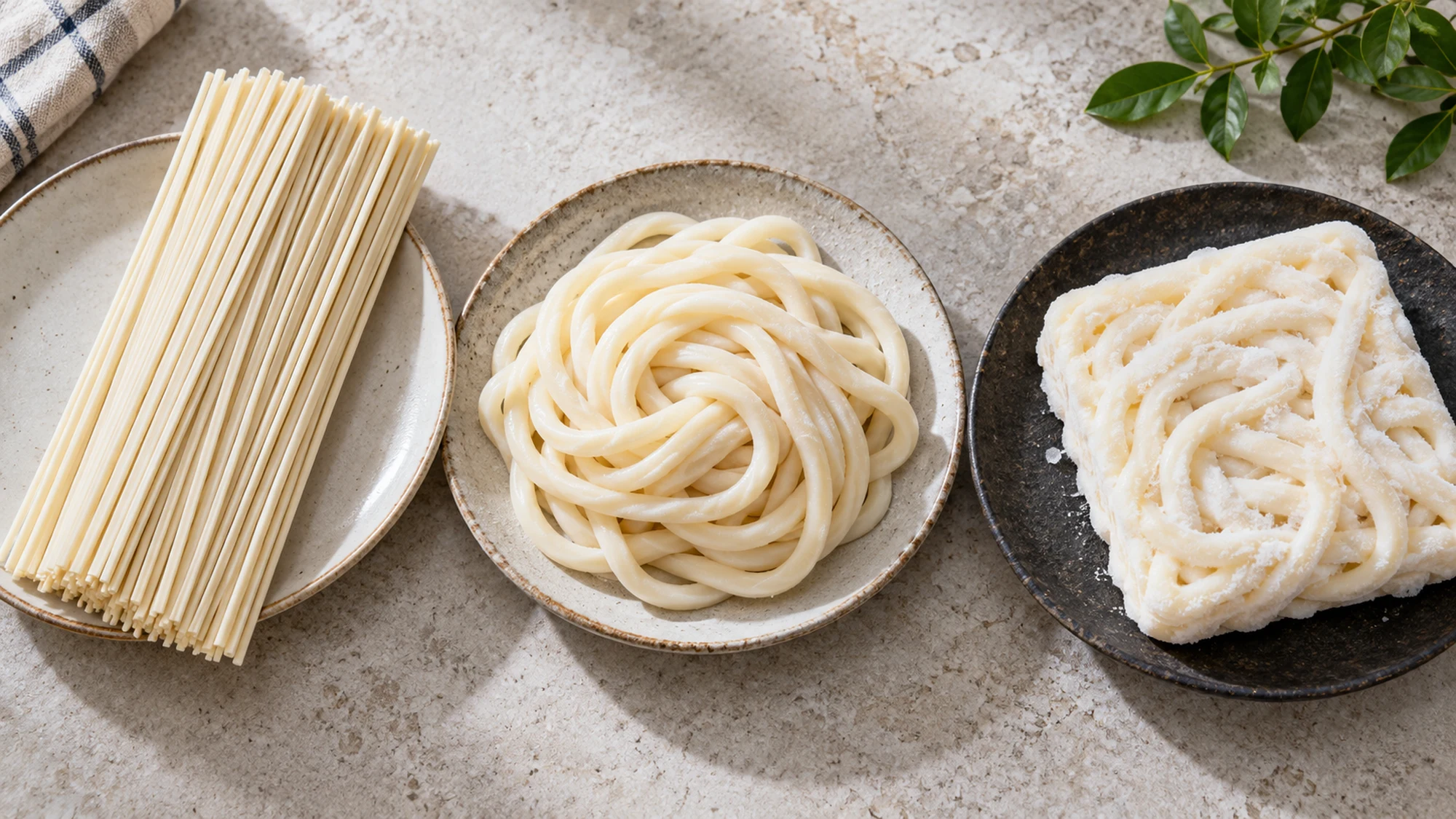
The shelf location is a clue, but the printed directions are the deciding evidence. TableMark describes its frozen udon as cooked before flash-freezing, with microwave or pot preparation. That is different from raw fresh dough or hard dried noodles.
Soft does not always mean refrigerated. Hakubaku’s Gourmet Udon is a soft, shelf-stable product with its own storage and cooking instructions. I’d keep the outer wrapper until the meal is finished rather than discover the directions disappeared with the recycling.
| Product form | What to check | Practical approach |
|---|---|---|
| Dried | Boiling and draining directions | Allow the stated cooking time |
| Fresh, uncooked | Refrigeration and cooking instructions | Cook the dough as directed |
| Frozen, precooked | Microwave or pot instructions | Use the maker’s reheating method |
| Soft, shelf-stable | Unopened and opened storage rules | Do not infer storage from softness |
Cook for the dish, not a borrowed timer
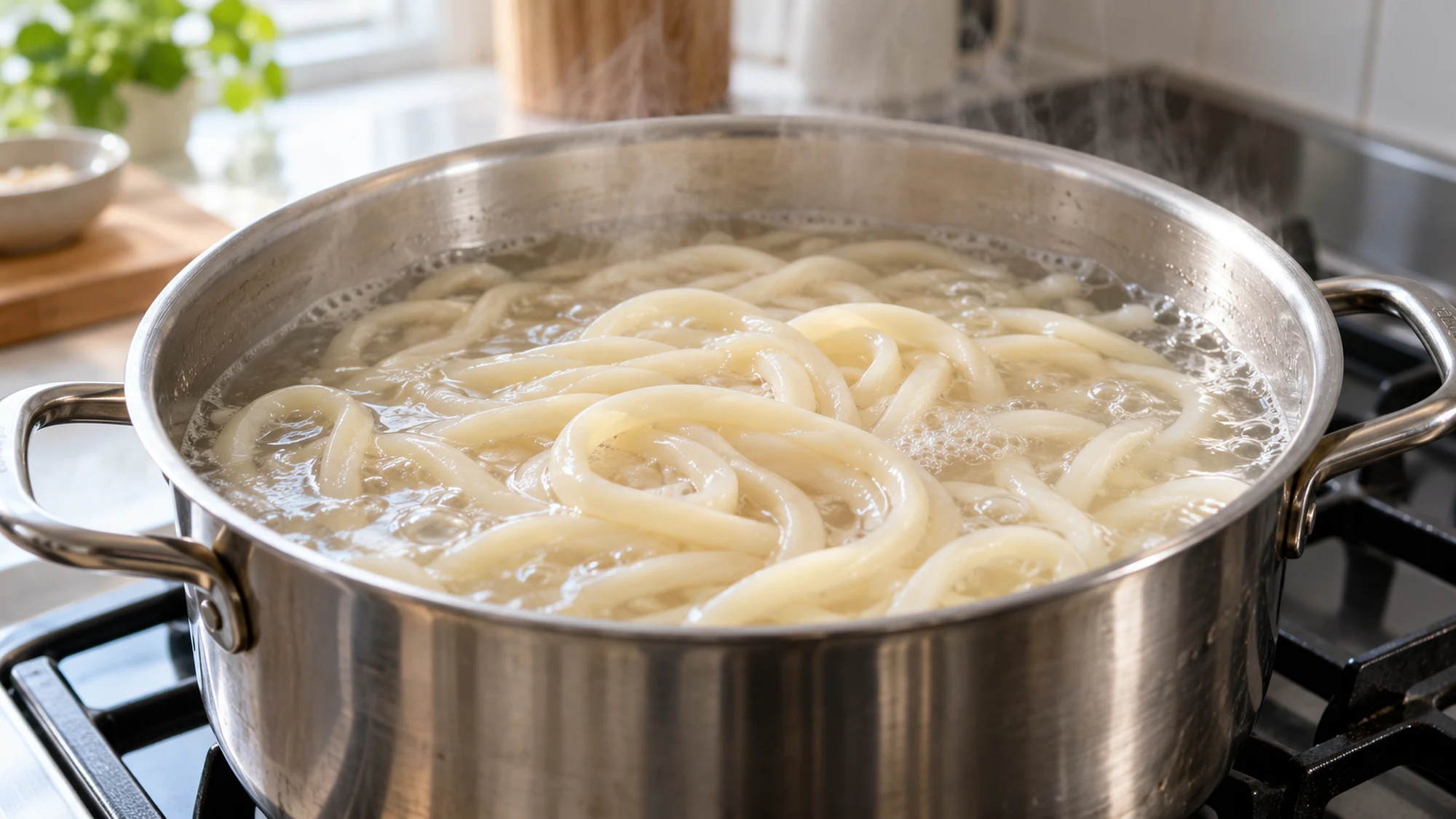
Kikkoman’s udon instructions recommend plenty of boiling water, loosening the noodles and following the package time. Its dried-noodle method includes draining, rinsing and briefly warming the noodles in broth. That sequence is useful context, not a requirement to apply unchanged to every frozen or ready-to-heat product.
- Read before heating: Check whether the noodles need boiling, microwaving or another stated method.
- Loosen gently: Let the recommended heat soften a compact noodle portion instead of forcing stiff strands apart.
- Drain as directed: Excess cooking water can dilute a sauce. For chilled preparations, follow the specified rinsing and chilling steps.
- Finish deliberately: Have broth, sauce and accompaniments ready so cooked noodles do not wait while everything else catches up.
For a first bowl, I’d keep the seasoning uncomplicated so you can notice the noodle texture. Hakubaku’s chilled udon guidance illustrates another option: cooked noodles are rinsed, chilled and drained, then served with dipping sauce. Hot soup is only one way to enjoy them.
Check wheat, broth and storage together
Standard udon is wheat-based, so it is not a gluten-free noodle. FDA lists wheat, soy and fish among major food allergens. Read the full ingredient list, including separate soup sachets, rather than assume plain-looking noodles make the whole dish suitable for a dietary requirement.
Dashi and dipping sauces deserve attention too. MAFF’s Ise udon description includes fish-based stock and soy sauce. A vegetable topping does not establish a vegetarian broth. If you need an alternative, our gluten-free noodles guide explains how to choose by label and intended use.
- Check sauce allergens: Kikkoman’s standard soy sauce label lists both soybeans and wheat; a separate sauce can introduce allergens beyond the noodles.
- Keep frozen products frozen and refrigerated products refrigerated, as their labels specify.
- Check the after-opening instructions separately from the unopened shelf life.
- Use clean utensils and follow the finished dish’s handling directions when meat, seafood or other ingredients are added.
- Compare sodium and other nutrition information for the serving you will actually eat, including broth and sauce; the noodle name alone cannot describe the whole meal.
Bottom Line
Choose udon noodles by their product form and the dish you want, then let the package guide the cooking. A gentle touch, prepared sauce and careful draining help preserve their appeal. Check wheat and broth ingredients separately so the whole bowl fits your needs.
Sources
- MAFF: Grain Products and Udon Forms
- MAFF: Ise Udon
- TableMark: Frozen Udon
- Hakubaku: Gourmet Udon Product Instructions
- Kikkoman: Udon Cooking Instructions
- Hakubaku: Chilled Udon Serving Method
- FDA: Food Allergies
- Kikkoman: Soy Sauce Ingredient Label

Hi, I’m Emily Pocker! I share recipes and food guides here at Recipes360 to help you find everyday meal inspiration and feel more confident in the kitchen. My goal is to make cooking approachable, enjoyable, and full of flavor.