
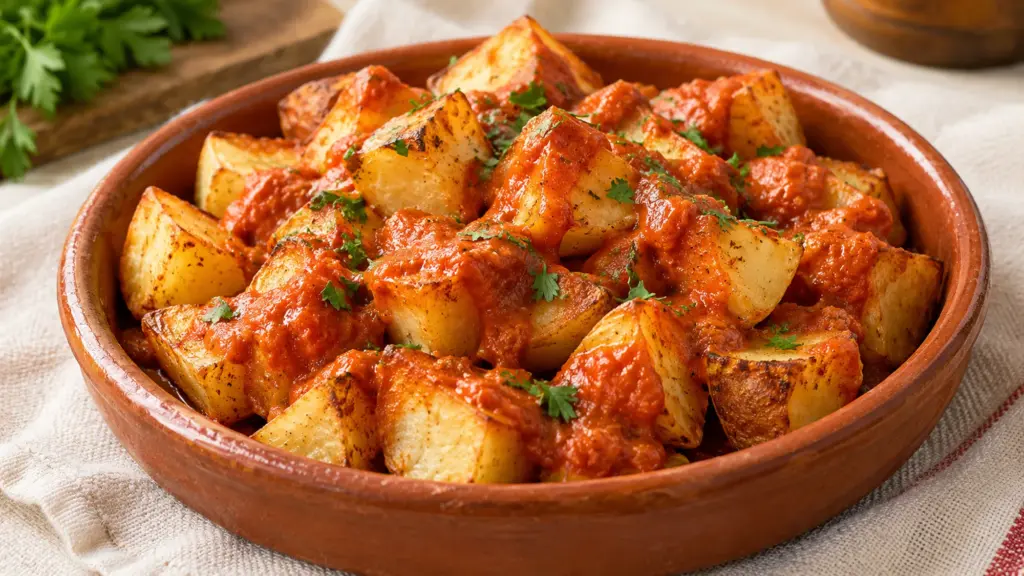
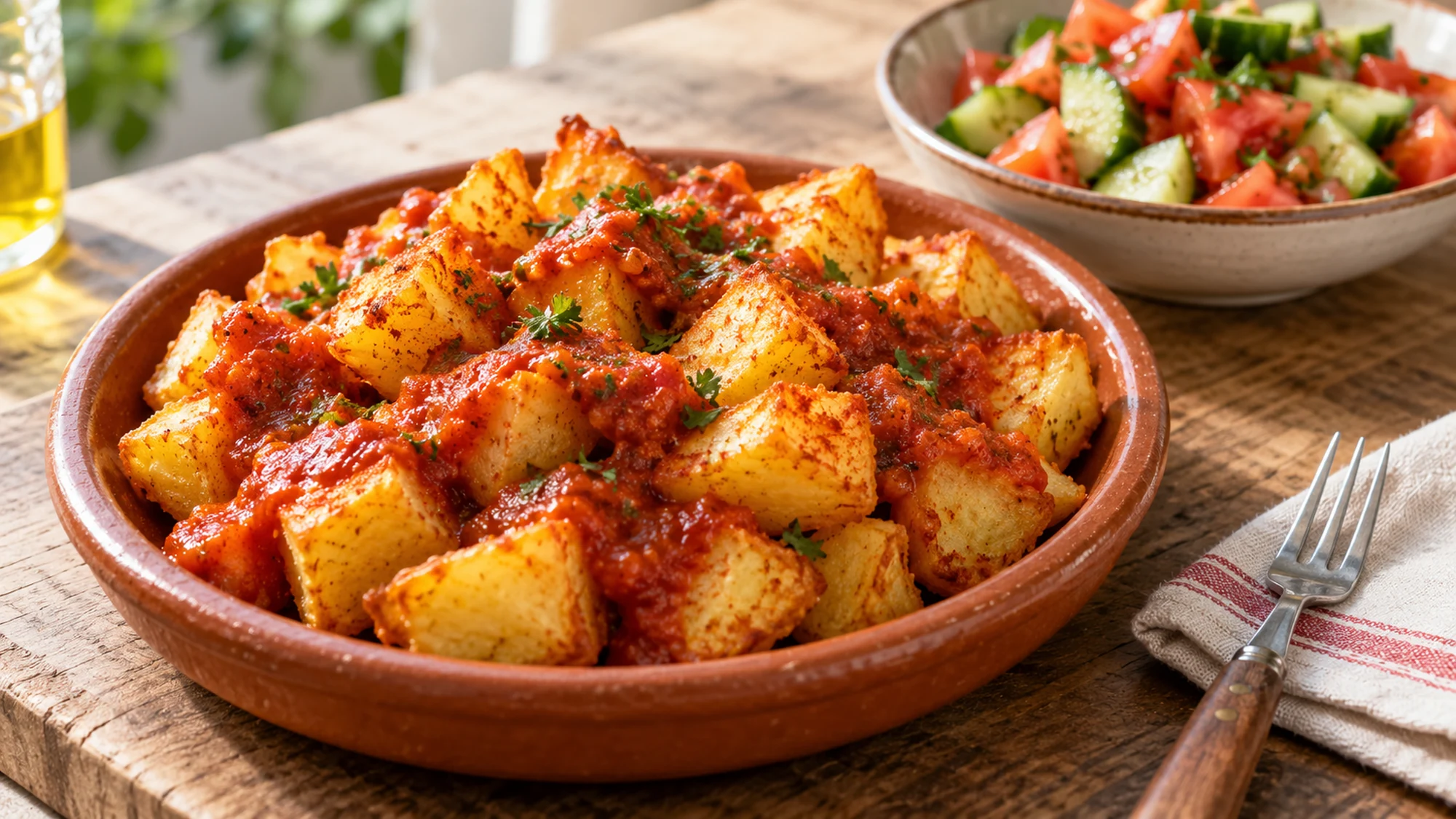
This patatas bravas recipe pairs crisp-edged roasted potatoes with a warm, smoky paprika sauce. You get the familiar contrast of fluffy centers and punchy red sauce without managing a pan of frying oil, making it an approachable side for a relaxed dinner.
Give the potatoes space to roast, then add the sauce at the table.
I prefer a separate sauce jug because the last few potatoes deserve crisp edges, too. This is an oven-friendly interpretation of Spanish tapas, not a claim that every tapas bar makes bravas the same way; sauces and cooking methods vary.
Serving suggestions for patatas bravas
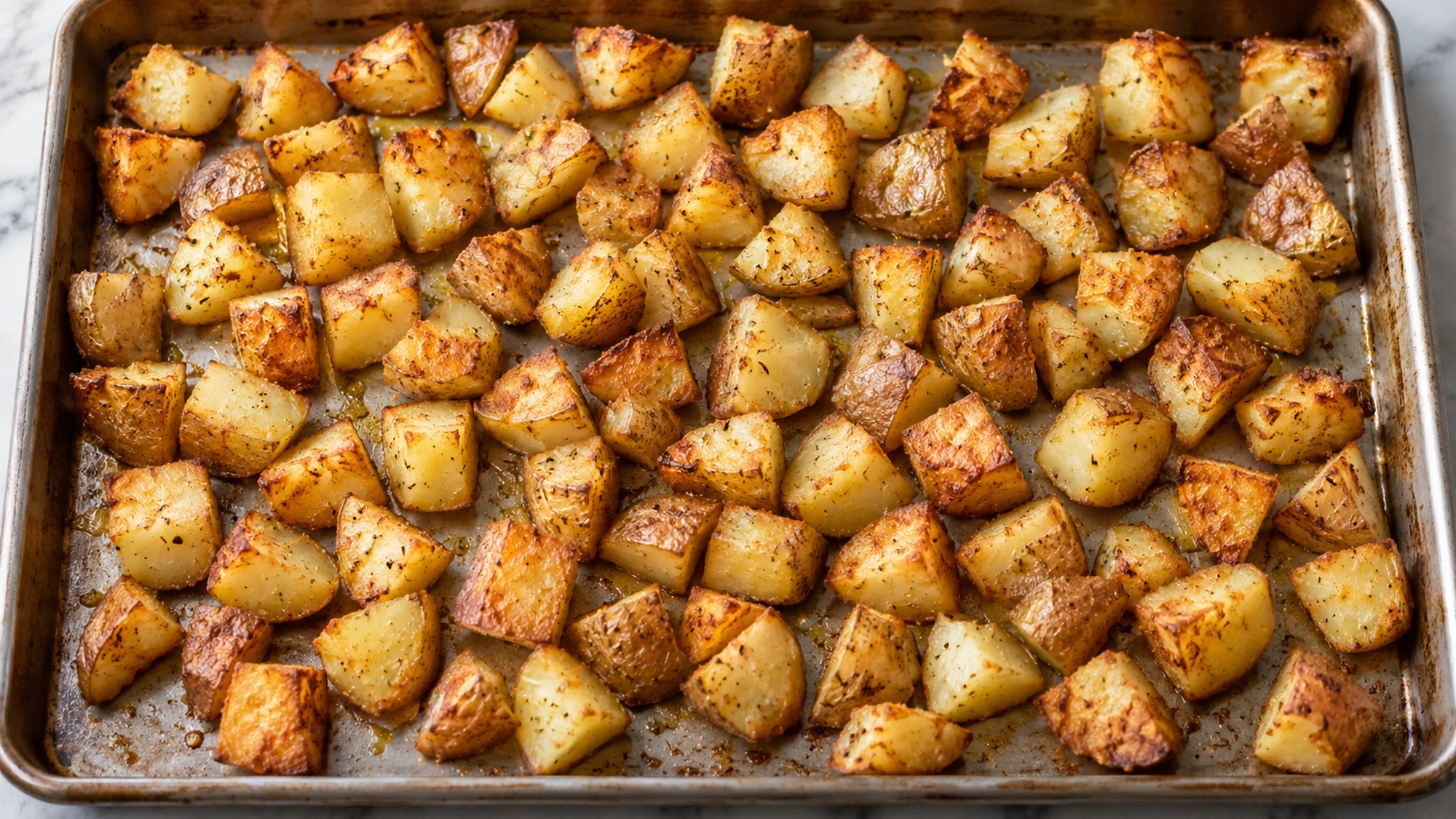
Serve four side portions straight from the oven, with the sauce warm rather than piping hot. A shallow platter exposes more crunchy edges than a deep bowl. Spoon a little sauce across the top, leaving plenty of potato visible, and offer the rest alongside.
For a tapas-style spread, add olives, sliced tomatoes and a simple protein such as grilled fish or eggs. A bright carrot ribbon salad brings a useful fresh contrast. Bread is optional: the potatoes already provide the starchy part of the plate.
Planning ahead? Cube and refrigerate the potatoes covered in cold water for a few hours, then drain and dry them extremely well. Make the sauce separately and loosen it gently with water while reheating; do not coat the potatoes until everyone is ready.
Keep the sauce separate until serving to protect those golden edges.
Variations and easy fixes
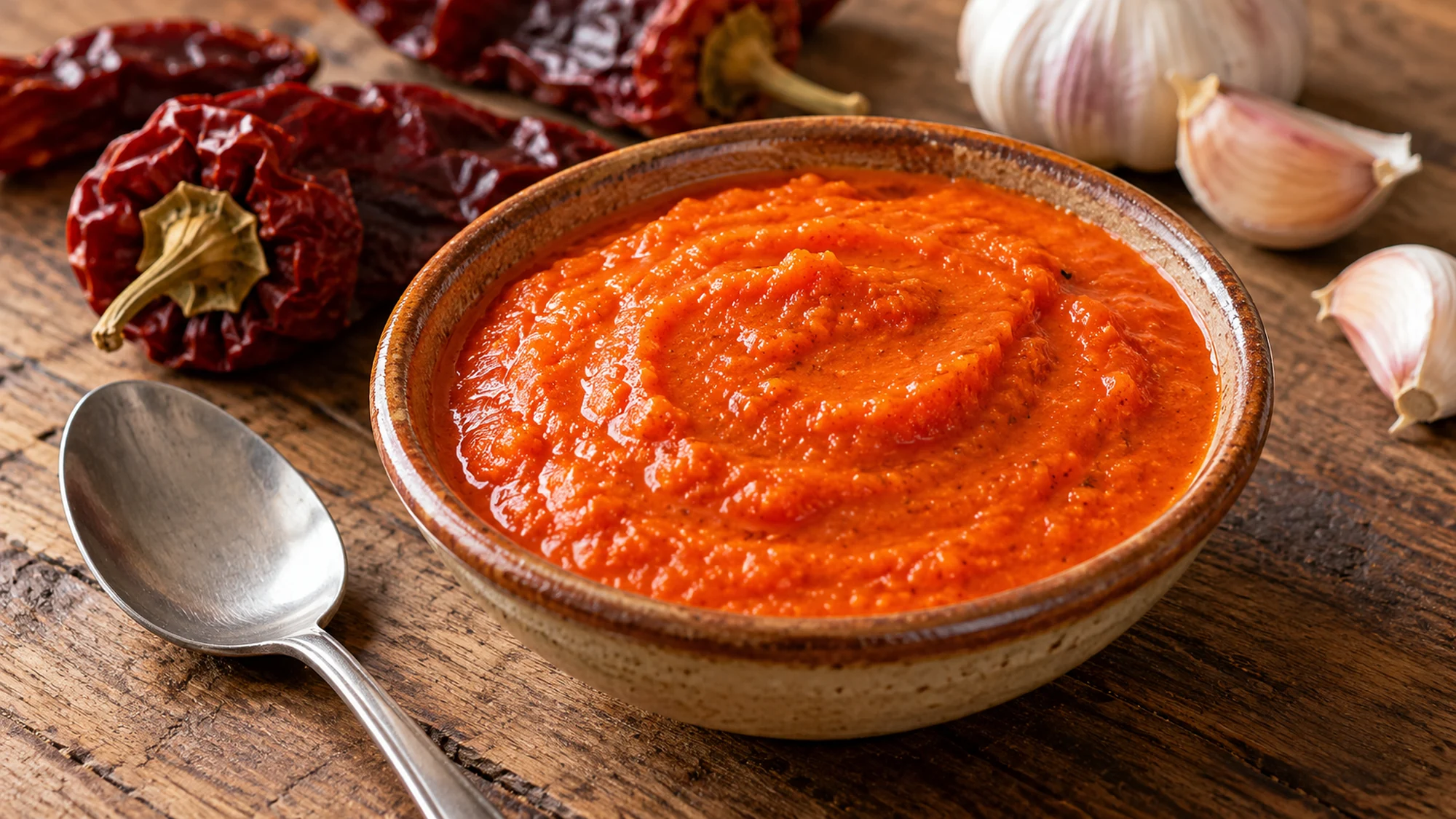
Yukon Gold potatoes offer creamy centers, while russets give a fluffier bite. Either works when the pieces are similar in size. I would choose mild smoked paprika plus a small amount of cayenne rather than a large dose of hot paprika, which makes the heat harder to adjust.
Dry surfaces and a roomy tray matter more than constant stirring. If the cubes touch closely, divide them between two pans and rotate the pans halfway through cooking. Paprika can turn bitter when scorched, so stir it into the sauce base off the heat before adding water.
| What you notice | What to change |
|---|---|
| Pale, soft edges | Spread potatoes farther apart and roast a few minutes longer. |
| Sauce too thick | Whisk in warm water a tablespoon at a time. |
| More heat than wanted | Use less cayenne next time; serve extra sauce separately. |
For a gluten-free sauce, replace the flour with one teaspoon cornstarch mixed into cold water, then simmer until thickened. That is a different thickening method, so skip cooking the starch in oil. If using stock instead of water, taste before adding the measured salt.
Change one element at a time: potato variety, heat level or sauce thickness.
Health benefits and practical balance
Potatoes provide carbohydrate, some fiber and potassium; they are not merely a vehicle for sauce. The Potatoes USA nutrition reference lists these nutrients for an unadorned potato, while the finished dish also includes oil and salt. Keeping the skin adds texture without another preparation step.
This version uses three tablespoons of oil across the whole recipe, including the sauce. Measure rather than pouring freely if you want the card estimate to remain useful. Our guide to olive oil and extra virgin olive oil explains the choices without treating either as a magic ingredient.
The estimated 271 calories per serving assumes four equal portions and all the sauce. That number changes with portion size and additions such as mayonnaise. Serve these potatoes beside vegetables and protein for a more varied meal, and adjust the salt to suit your own needs.
Enjoy the potatoes as part of the meal, with portions and toppings in view.
Bottom Line
Crisp potatoes, a spoonable sauce and good timing do most of the work here. The roasting window is a guide, not a finish line: look for tender centers and browned edges. I like a small splash of vinegar in the sauce because it keeps the smoky flavor lively.
Refrigerate leftovers in separate shallow containers within two hours and use within three to four days. Follow USDA reheating guidance and heat leftovers to 165°F; the oven can restore some crispness. The recipe card below contains the complete quantities and method.
Roast until genuinely golden, sauce lightly, and serve while the contrast is at its best.
Patatas Bravas Recipe

Ingredients
- 900 g Yukon Gold or russet potatoes about 2 lb, scrubbed and cut into 1-inch cubes
- 2 tablespoons olive oil for roasting
- 1/4 teaspoon fine salt about 1.5 g
- 1/4 teaspoon black pepper
- 1 tablespoon olive oil
- 2 cloves garlic minced, about 6 g
- 1 tablespoon all-purpose flour about 8 g
- 2 teaspoons sweet smoked paprika
- 1/4 teaspoon cayenne pepper or less to taste
- 3/4 cup water 180 ml, plus a splash if needed
- 1 teaspoon sherry vinegar
- 1/4 teaspoon fine salt about 1.5 g
- 1 tablespoon chopped parsley optional garnish
Equipment
- Large rimmed baking sheet
- Small saucepan and whisk
- Large mixing bowl
Instructions
- Heat the oven to 425°F (220°C). Dry the scrubbed potato cubes thoroughly with a clean towel. Toss with 2 tablespoons olive oil, 1/4 teaspoon salt and black pepper.
- Spread in one uncrowded layer on a large rimmed baking sheet. Roast for 35–45 minutes, turning after about 20 minutes, until golden at the edges and easily pierced through the center. Use two sheets if needed and rotate them midway.
- When potatoes are nearly done, warm 1 tablespoon oil in a small saucepan over medium-low heat. Stir in garlic for 30 seconds without browning. Whisk in flour and cook for 1 minute.
- Remove the pan from the heat and stir in paprika and cayenne. Gradually whisk in the water. Return to low heat and simmer, whisking, for 4–6 minutes until smooth and lightly coating a spoon. Thin with a splash of water if needed.
- Stir sherry vinegar and the remaining 1/4 teaspoon salt into the sauce. Taste for heat. Spoon over the hot potatoes immediately before serving; add optional parsley and serve remaining sauce alongside.
Nutrition
Video
Notes
Tried this recipe?
Let us know how it turned out!Hi, I’m Emily Pocker! I share recipes and food guides here at Recipes360 to help you find everyday meal inspiration and feel more confident in the kitchen. My goal is to make cooking approachable, enjoyable, and full of flavor.