
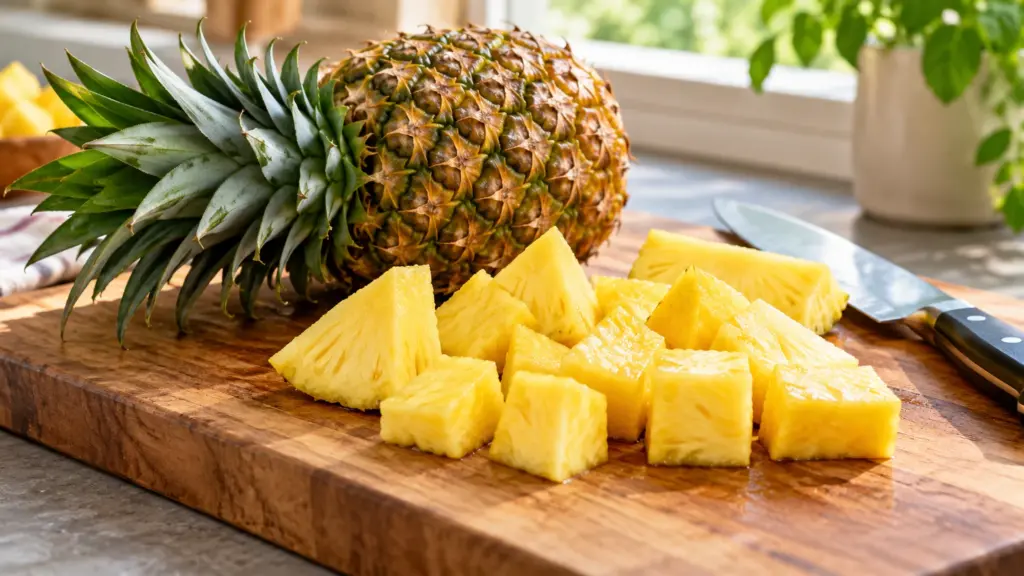
A whole pineapple combines round sides, prickly skin, and a crown that takes up half the cutting board. If you are wondering how to cut a pineapple without wrestling it, the first goal is not speed. It is creating a flat base so the fruit stops rolling.
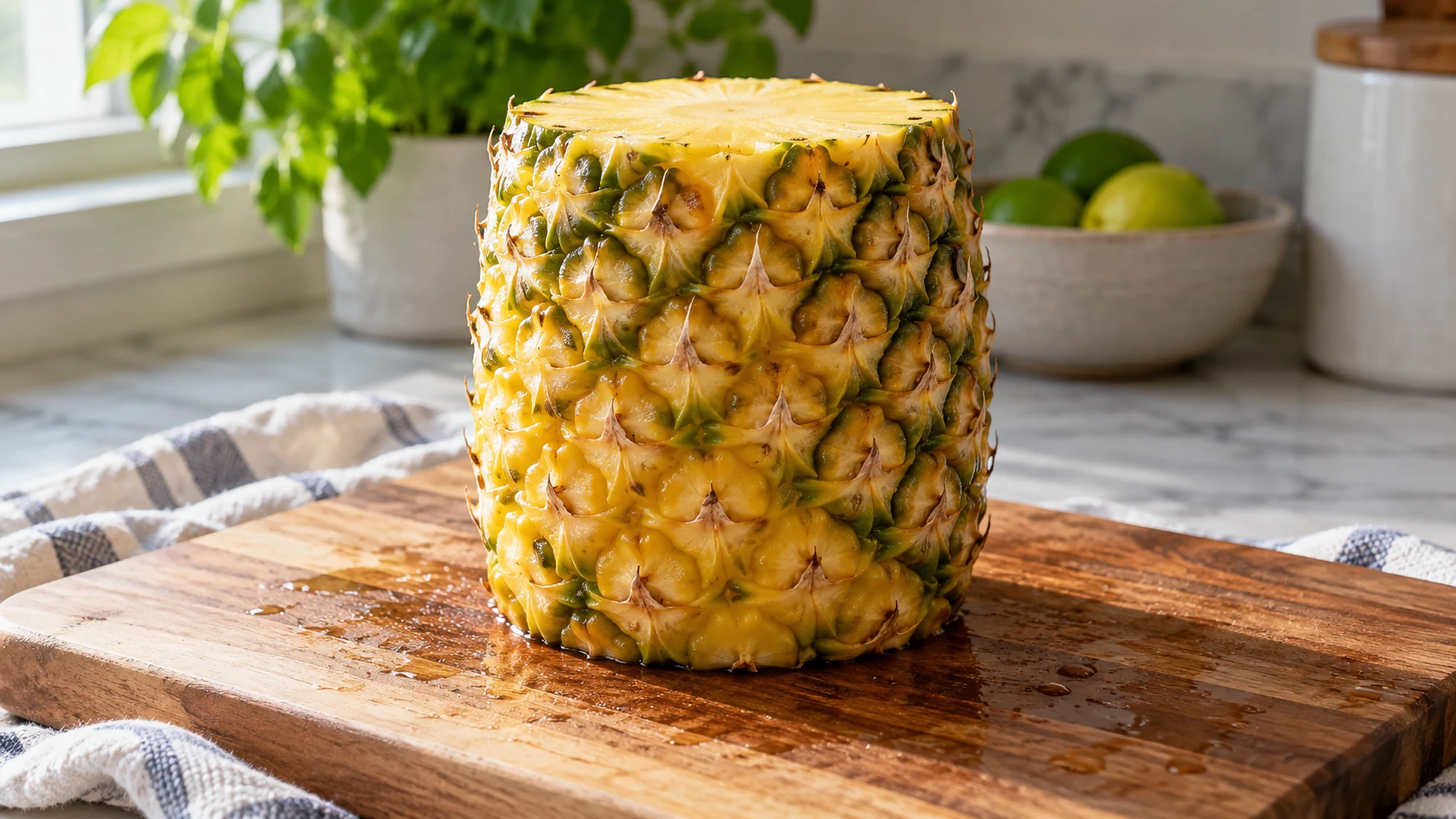
Wash the pineapple, trim off its top and bottom, and stand it on the flat base. Remove the peel, quarter the flesh, trim away the firm core, then cut the quarters into spears or chunks.
I’d choose chunks for the simplest first attempt. They do not require a special corer, and an uneven piece tastes just as good as a perfect cube. A sturdy board and controlled cuts matter more than matching the supermarket fruit tray.
How to Cut a Pineapple: Set Up a Stable Workspace
Wash your hands and rinse the whole fruit under running water before cutting it. The FDA advises washing produce even when you will remove the peel, because cutting can transfer contamination from the surface. Do not wash fruit with soap or detergent.
- Use a roomy cutting board: clear space for the trimmed skin. A damp towel beneath a slipping board can help keep it steady, as described in Made With Lau’s pineapple guide.
- Choose a sharp kitchen knife you can control: it should be large enough for the fruit without requiring you to force the blade through with your body weight.
- Dry the fruit and your hands: a wet, sticky surface is harder to hold securely.
- Keep fingers outside the blade’s path: reposition the fruit on the board rather than completing an awkward cut while holding it in your palm.
Remove the Peel, Then the Core
The flat-base, peel, and quarter method is demonstrated by Chef Adam Glick for Messermeister. Work slowly enough to see where the blade will exit; there is no prize for finishing before the juice reaches the board.
- Trim the ends. Lay the pineapple securely on its side. Cut off the crown and a thin slice from the bottom, keeping your supporting hand away from the cut.
- Stand it upright. Set it on the newly cut bottom. If it wobbles, correct the base before continuing.
- Slice down the sides. Follow the curve from top to bottom to remove strips of peel. Rotate the pineapple between cuts, not while the knife is moving.
- Remove remaining eyes. With the fruit resting securely on the board, trim away the tough brown spots. Take another thin strip if that is easier than intricate cuts.
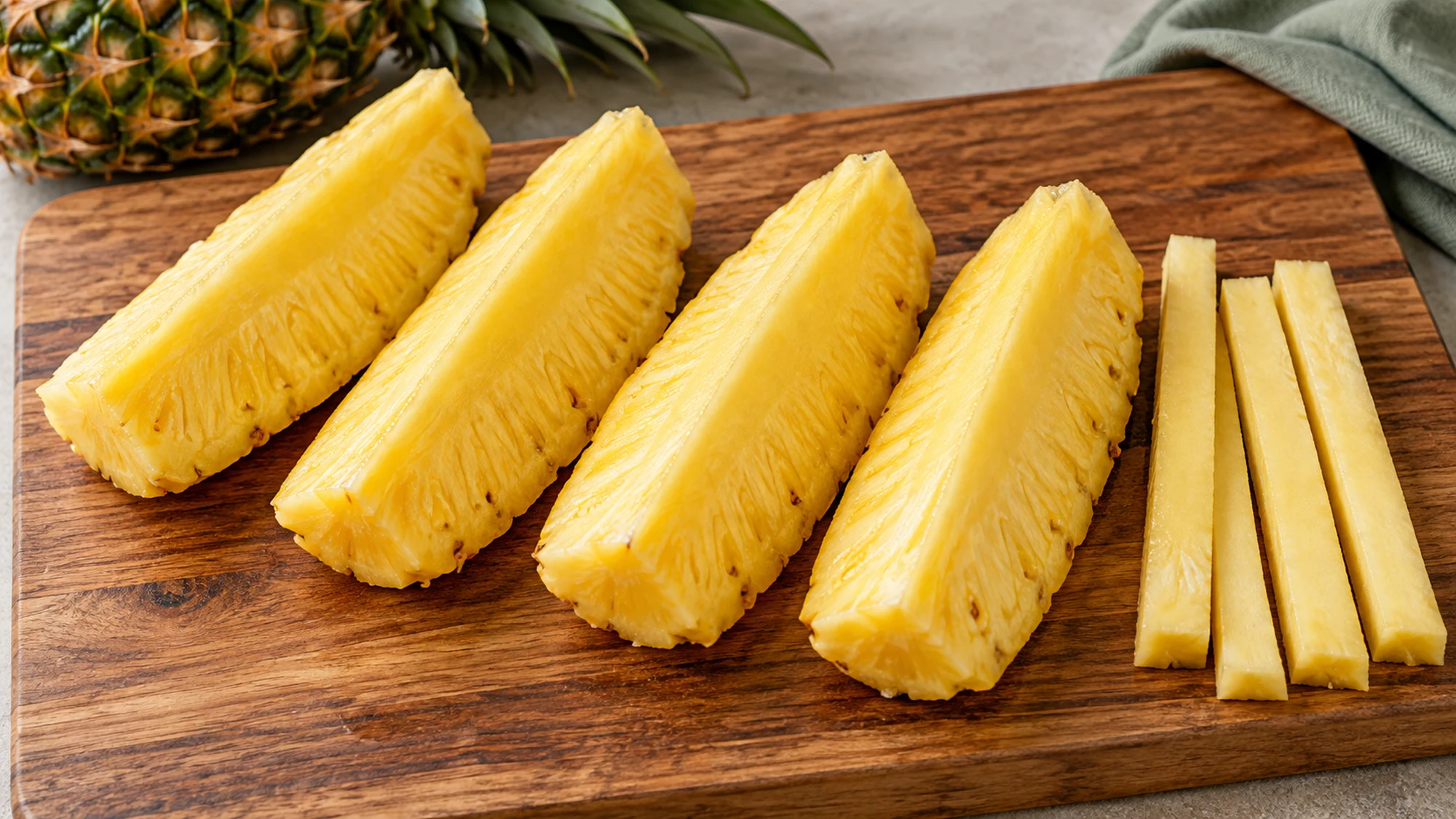
- Quarter it lengthwise. Halve the peeled fruit from top to bottom, then lay each half flat-side down before cutting it lengthwise again.
- Trim each quarter’s core. Rest the wedge on a stable cut face and slice away the firmer strip along its inner edge. Keep supporting fingers clear of the knife.
If a cut feels forced, stop and change the fruit’s position. Removing a little extra flesh is not a disaster; rescuing every millimeter is not worth an unstable grip. I’d prioritize a safe, clean cut over an elaborate spiral pattern.
Choose Chunks, Spears, or Rings
Once you have cored quarters, most of the work is done. Cut pieces to suit how you plan to serve them rather than cutting everything tiny and deciding later. Similar sizes help presentation, but exact measurements are unnecessary.
| Shape | Where to start | How to finish |
|---|---|---|
| Chunks | Cored quarters | Slice into strips if needed, then cut crosswise into bite-size pieces |
| Spears | Cored quarters | Cut lengthwise into narrower wedges |
| Thin pieces | Cored quarters | Lay flat and slice crosswise for a fruit plate |
| Rings | Peeled whole cylinder, before quartering | Lay securely on its side, slice crosswise, then remove each round’s core on the board |
Rings follow a different route: skip the quartering step. Keep each round flat while removing its center with a suitable cutter. If the cylinder will not sit steadily for slicing, choose the quarter-and-chunk method instead.
Store the Cut Fruit Promptly
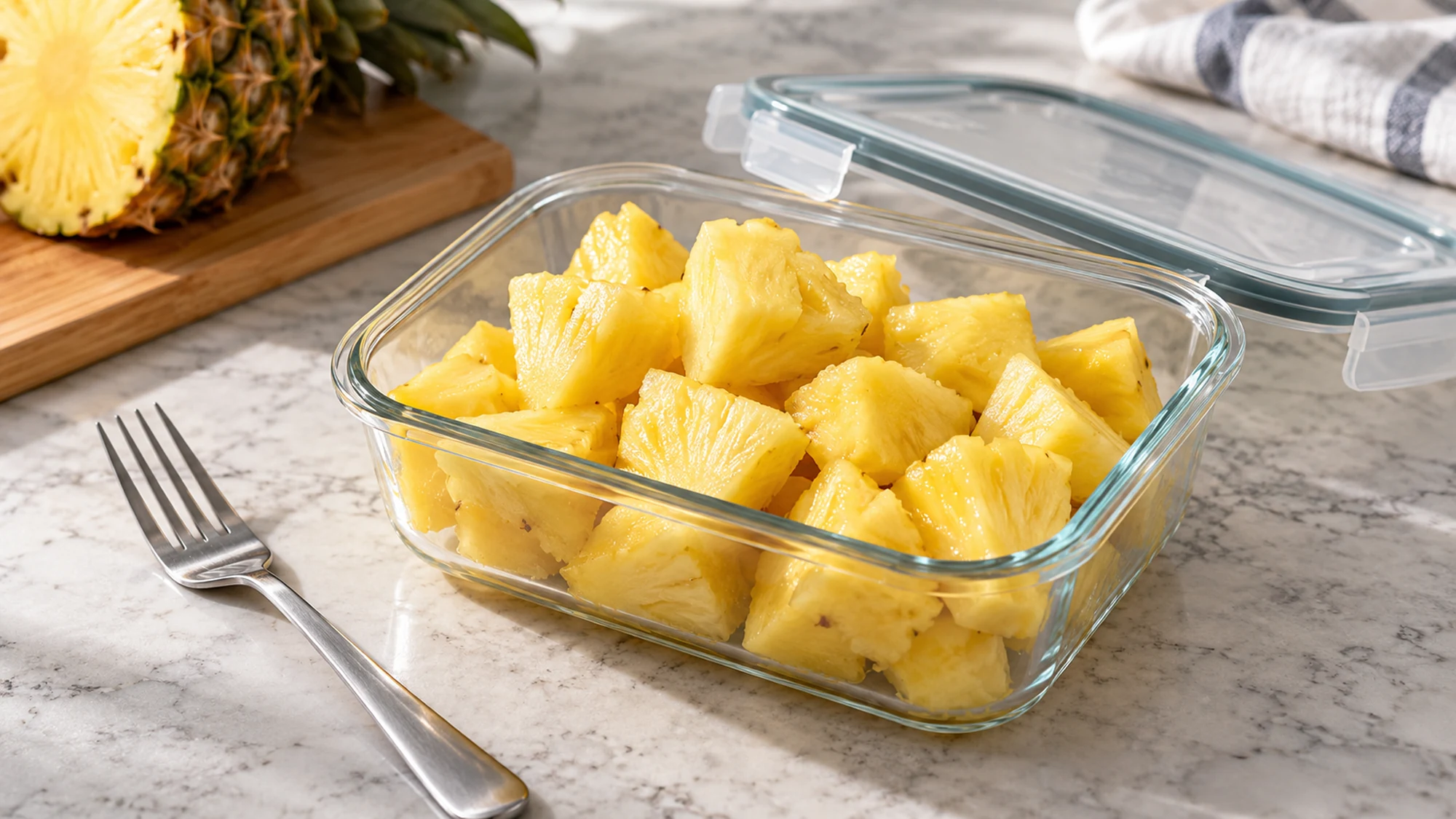
Transfer prepared pineapple to a clean, covered food container and refrigerate it. Health Canada recommends keeping cut produce at 4°C (40°F) or below; a bowl on the counter is not the storage plan simply because the fruit started there whole.
- Watch the clock: CDC guidance calls for refrigerating cut or peeled produce within two hours. Put most away while serving a smaller portion.
- Separate fruit from peel scraps: use a clean container rather than piling it back onto a surface covered with discarded skin.
- Plan the next use: refrigerate what you will eat soon; freeze extra chunks in a suitable container for longer storage. Thawed pineapple will be softer, so choose uses where that texture works.
Bottom Line
Start with stability, not speed. A flat base and flat-side-down quarters turn an awkward pineapple into manageable pieces; clean tools and prompt refrigeration finish the job.
Sources
- FDA: Selecting and serving produce safely
- Health Canada: Produce safety
- CDC: Fruit and vegetable safety
- Messermeister: How to cut a pineapple with Chef Adam Glick
- Made With Lau: How to cut a pineapple

Hi, I’m Emily Pocker! I share recipes and food guides here at Recipes360 to help you find everyday meal inspiration and feel more confident in the kitchen. My goal is to make cooking approachable, enjoyable, and full of flavor.