
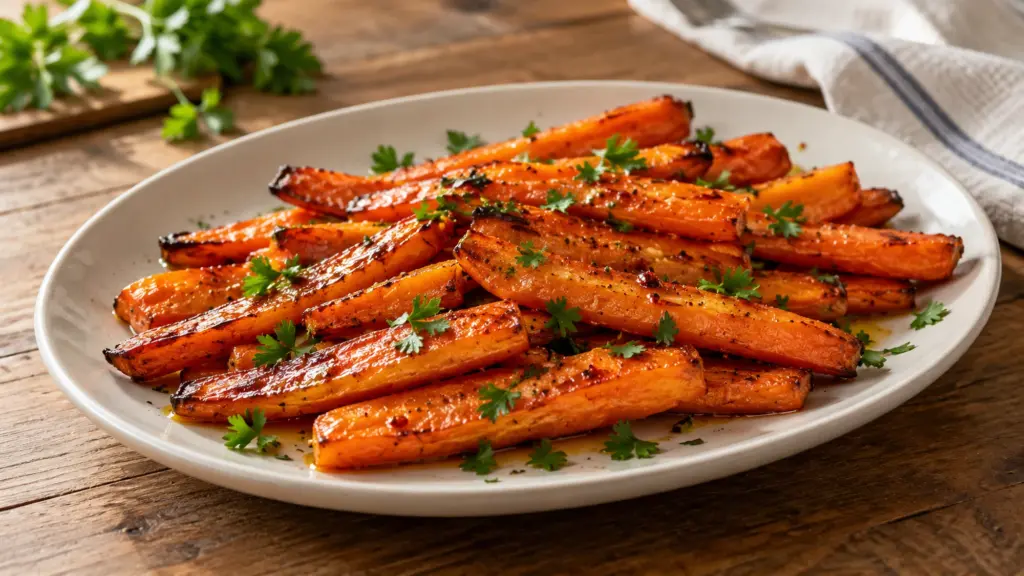
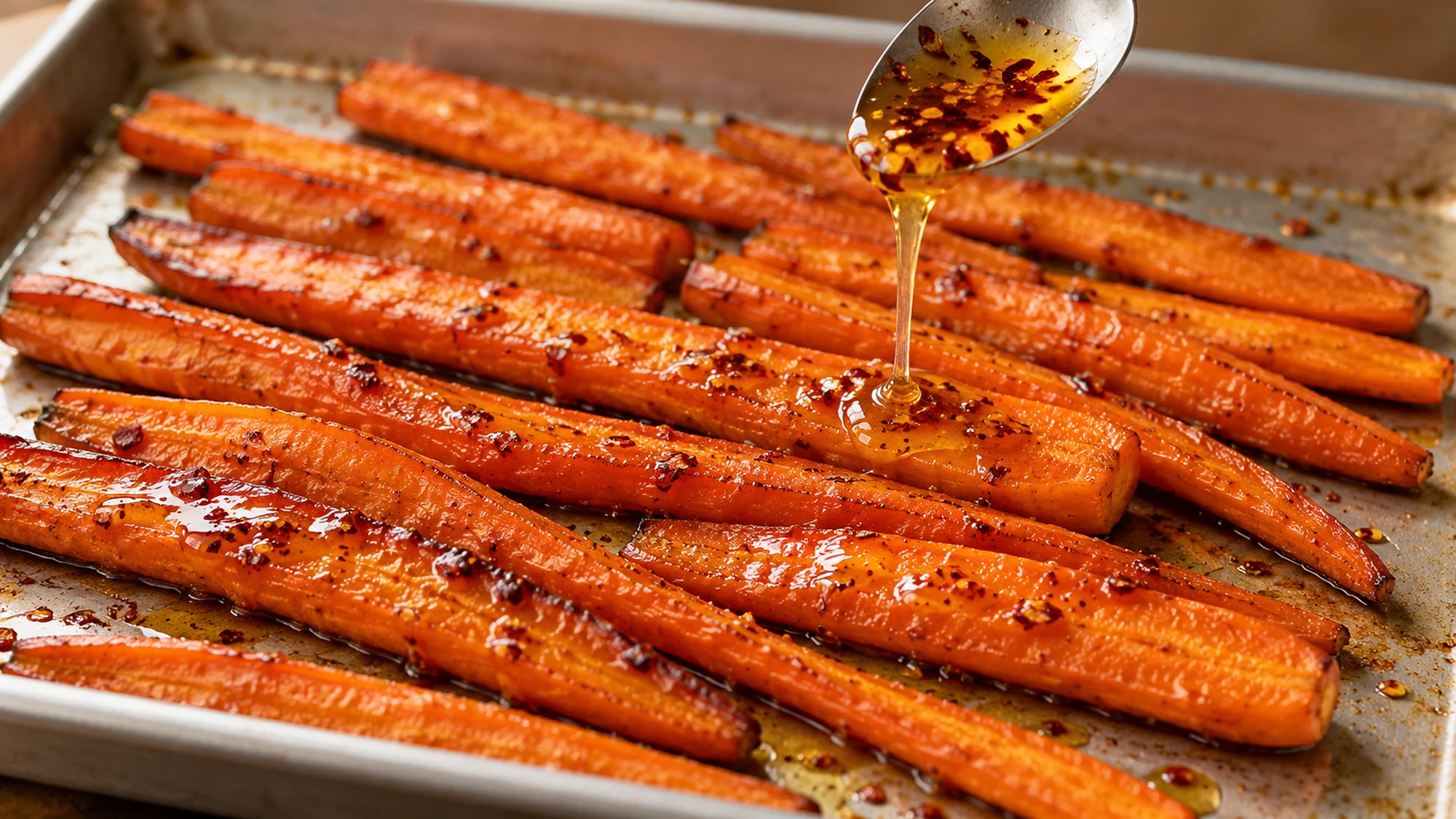
Carrots can look nicely colored on the outside while the thick end still resists a fork. These hot honey roasted carrots solve that mismatch by cutting the pieces to a similar thickness, roasting first and adding the honey near the end. The result aims for tender centers, browned edges and a sweet-spicy coating brightened with lemon.
Give the carrots space on the pan and keep their cut faces against the hot surface for the first part of roasting. Toss with the measured honey and chili flakes only after they begin to soften. This gives the vegetables time to color before the sugary glaze needs close attention, then lemon balances the finish.
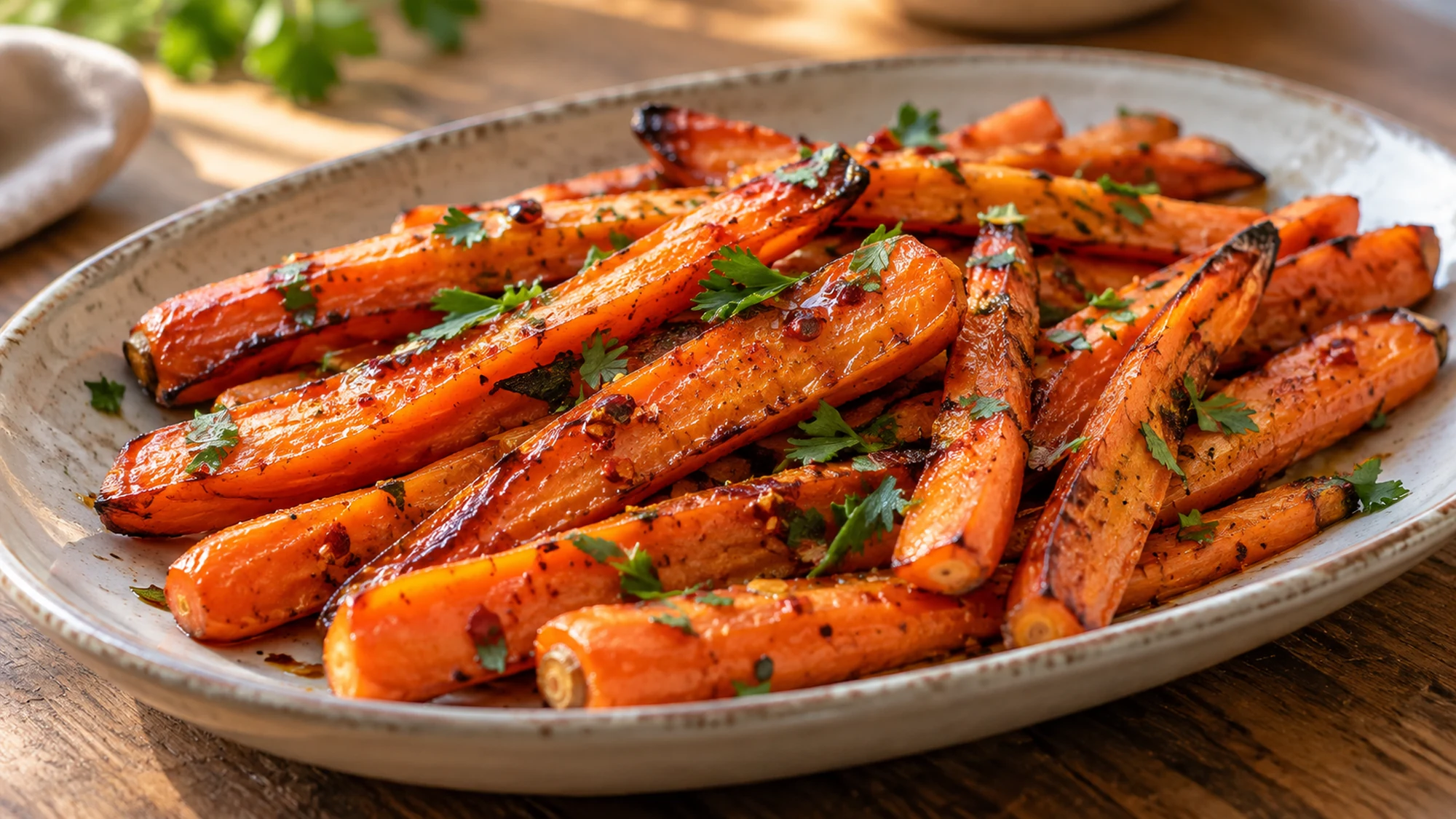
Serving Hot Honey Roasted Carrots
Serve the carrots warm rather than straight from a fiercely hot pan. A brief pause lets the honey settle into a light coating, and a wide serving plate keeps the pieces from steaming in a deep heap. Scrape the flavorful pan juices over them, but leave behind any patches that have turned black and bitter.
I’d put these beside a simple protein or a savory bean dish, keeping the rest of the plate less sweet. Black bean burgers offer a useful contrast with their smoky cumin seasoning and recognizable bean texture. Their patties cook separately, so plan the timing rather than trying to squeeze both recipes onto one tray.
- Cutting: match the thickest part of each baton so the tray cooks evenly.
- Heat: keep extra chili at the table instead of making every serving very spicy.
- Serving: use a wide platter and add lemon just before bringing it out.
Add the parsley after roasting so its fresh flavor remains distinct. For a shared table, start with the measured moderate chili and offer extra flakes separately; different jars and different diners have different ideas about hot. The honey should complement the carrots, not leave a puddle large enough to count as their swimming pool.
Adjusting the Heat and Carrot Shape
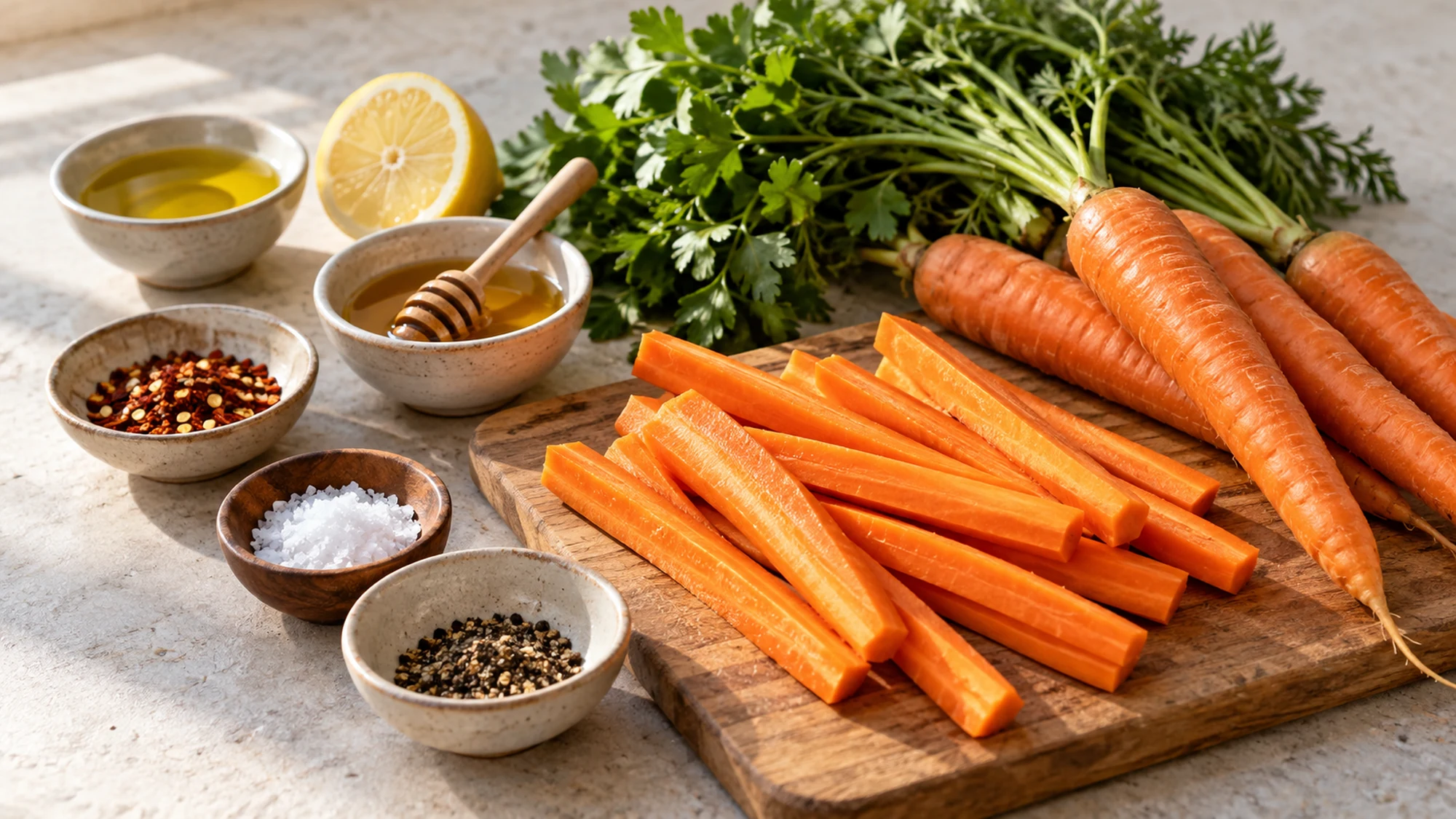
Long carrots vary in width, so halve slender ones and quarter thicker ones lengthwise. Shorter sections are fine if they are easier to handle. Bagged baby-cut carrots have a different shape and surface moisture; dry them thoroughly and use tenderness as the cue rather than assuming the same roasting time will apply.
Oil helps the cut surfaces make contact with the pan, while crowding traps steam. I prefer a bare, lightly oiled metal tray for browning, though oven-safe parchment can make cleanup easier. If you use parchment, follow its temperature rating and expect the contact surface to color a little differently.
The table separates changes that affect flavor from changes that affect cooking. Maple syrup can make a useful variation, but it is no longer a honey glaze. Fresh minced garlic can scorch during a hot roast, so this version leaves it out rather than adding another strong ingredient that needs its own timing.
| Choice | What changes | Practical cue |
|---|---|---|
| Thick carrot batons | Need longer to soften | Cut the widest pieces again |
| Baby-cut carrots | Different shape and moisture | Dry well and check with a fork |
| Less chili | Milder finish | Keep the honey amount measured |
| Maple syrup | Different sweetener flavor | Watch the glaze closely |
Health Benefits and Portion Balance
Carrots contribute fiber and provitamin A carotenoids. The NIH explanation of vitamin A and carotenoids identifies orange vegetables as food sources and explains that the body converts some carotenoids into vitamin A. That is useful ingredient context, not evidence that this particular side dish prevents or treats a condition.
Honey adds sugar as well as flavor, and the oil contributes much of the fat in the estimate. A modest glaze can fit into a varied meal without calling it sugar-free or treating it as a health supplement. The card estimates one-quarter of the carrots and all their measured coating; extra sauce or toppings change those numbers.
Do not serve this honey-containing dish to children younger than 12 months, in line with CDC advice about honey. Refrigerate leftover carrots promptly in shallow containers, keep them at 40°F (4°C) or below and follow safe food handling guidance when cooling and reheating.
Bottom Line
Match the carrot thickness, give the pan room and bring in the honey once the roasting is underway. I’d keep the lemon finish noticeable so the sweet glaze has a bright counterpoint. Browning, tenderness and a restrained coating matter more than chasing a dark surface that may hide an undercooked center or an overcooked glaze.
Hot Honey Roasted Carrots Recipe

Ingredients
- 700 g carrots peeled or well scrubbed; cut into long, even 1/2-inch-thick batons
- 20 g olive oil
- 1/4 tsp fine salt
- 1/4 tsp black pepper
- 30 g honey
- 1/2 tsp red pepper flakes use less for a milder dish
- 1 tbsp lemon juice
- 1 tbsp flat-leaf parsley chopped
Equipment
- Large rimmed metal baking sheet
- Vegetable peeler
- Knife and cutting board
- Mixing bowl
- Tongs
Instructions
- Heat the oven to 425°F (220°C). Pat the prepared carrots dry. Toss with the olive oil, salt and pepper.
- Spread on a large rimmed metal baking sheet in one layer with space between pieces, placing a cut face down where possible. Roast for 20 minutes, turning once halfway through.
- Mix the honey and red pepper flakes. Toss through the hot carrots, spread them out again and roast for another 8–12 minutes, checking closely, until a fork enters the thickest pieces easily and the edges are browned. Remove earlier if the glaze begins to darken too much.
- Rest for 3 minutes, then toss with lemon juice and parsley. Serve warm. Refrigerate leftovers in shallow containers within 2 hours, use within 3–4 days and reheat to 165°F (74°C). Do not serve honey-containing food to children younger than 12 months.
Nutrition
Video
Notes
Tried this recipe?
Let us know how it turned out!Hi, I’m Emily Pocker! I share recipes and food guides here at Recipes360 to help you find everyday meal inspiration and feel more confident in the kitchen. My goal is to make cooking approachable, enjoyable, and full of flavor.