
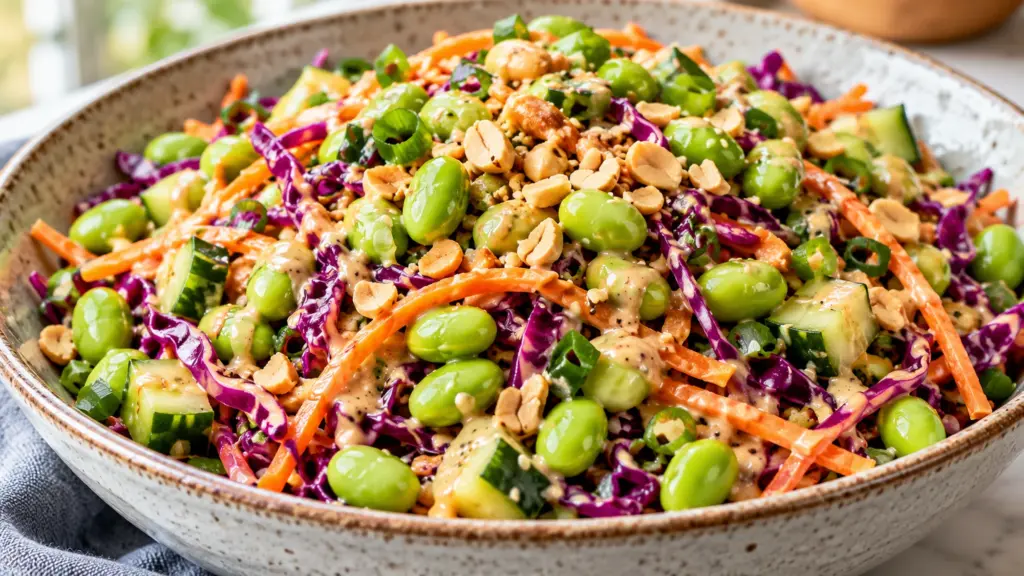
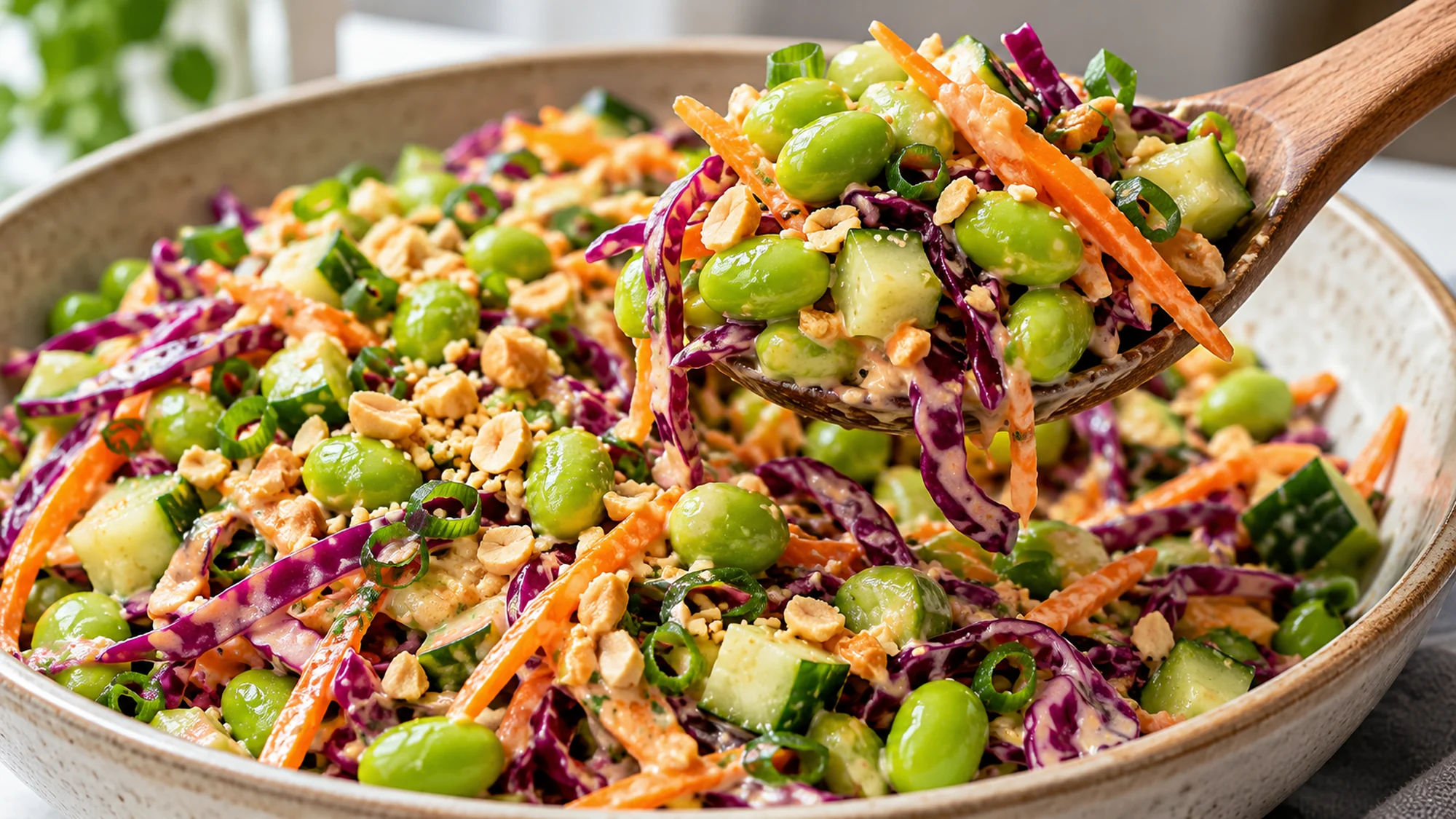
Edamame crunch salad earns its name from contrasts: tender green soybeans, thin cabbage ribbons, crisp cucumber and a scattering of roasted peanuts. A rice-vinegar dressing with peanut butter, ginger and sesame oil coats the vegetables lightly instead of turning the bowl into a heavy slaw.
Cool and drain the cooked edamame, dry the vegetables, and add the peanuts at serving so the salad keeps its crunch.
I like a generous amount of cabbage here, provided it is sliced finely. Thick chunks demand too much chewing and let the beans drop to the bottom. Small, similar pieces make a spoonful that includes the dressing and several textures rather than one large piece of cucumber.
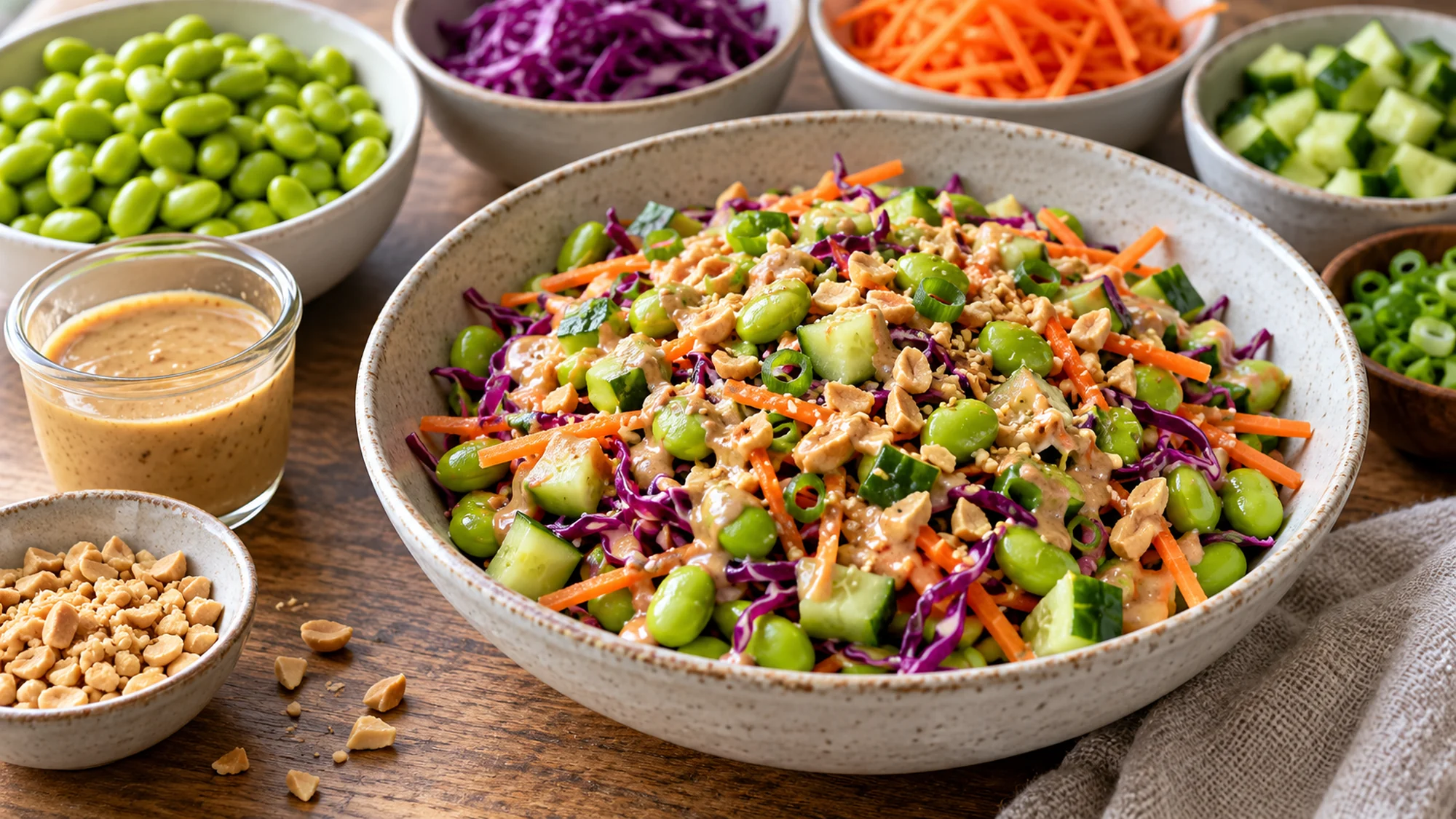
Serving edamame crunch salad without losing the bite
The recipe makes four generous side portions or the starting point for four light lunches. Serve it beside tofu, grilled chicken or a sandwich, depending on the rest of the meal. Cooked rice can turn it into a larger bowl, but cool and store that rice safely on its own.
Dress the amount you intend to eat soon, then scatter over the peanuts and sesame seeds. If you want another bean salad with a different dressing, chickpea cucumber salad pairs chickpeas with lemon and parsley instead of the peanut-ginger combination.
| When you need it | Store separately | Combine at serving |
|---|---|---|
| Immediately | Nothing needs advance storage | Toss, then add peanuts |
| Tomorrow’s lunch | Dressing and peanuts | Stir into the chilled vegetables |
| A shared meal | Chilled salad and a small dressing jar | Dress a serving bowl as needed |
For the freshest texture, keep the crunchy topping dry and dress only the portion you plan to serve.
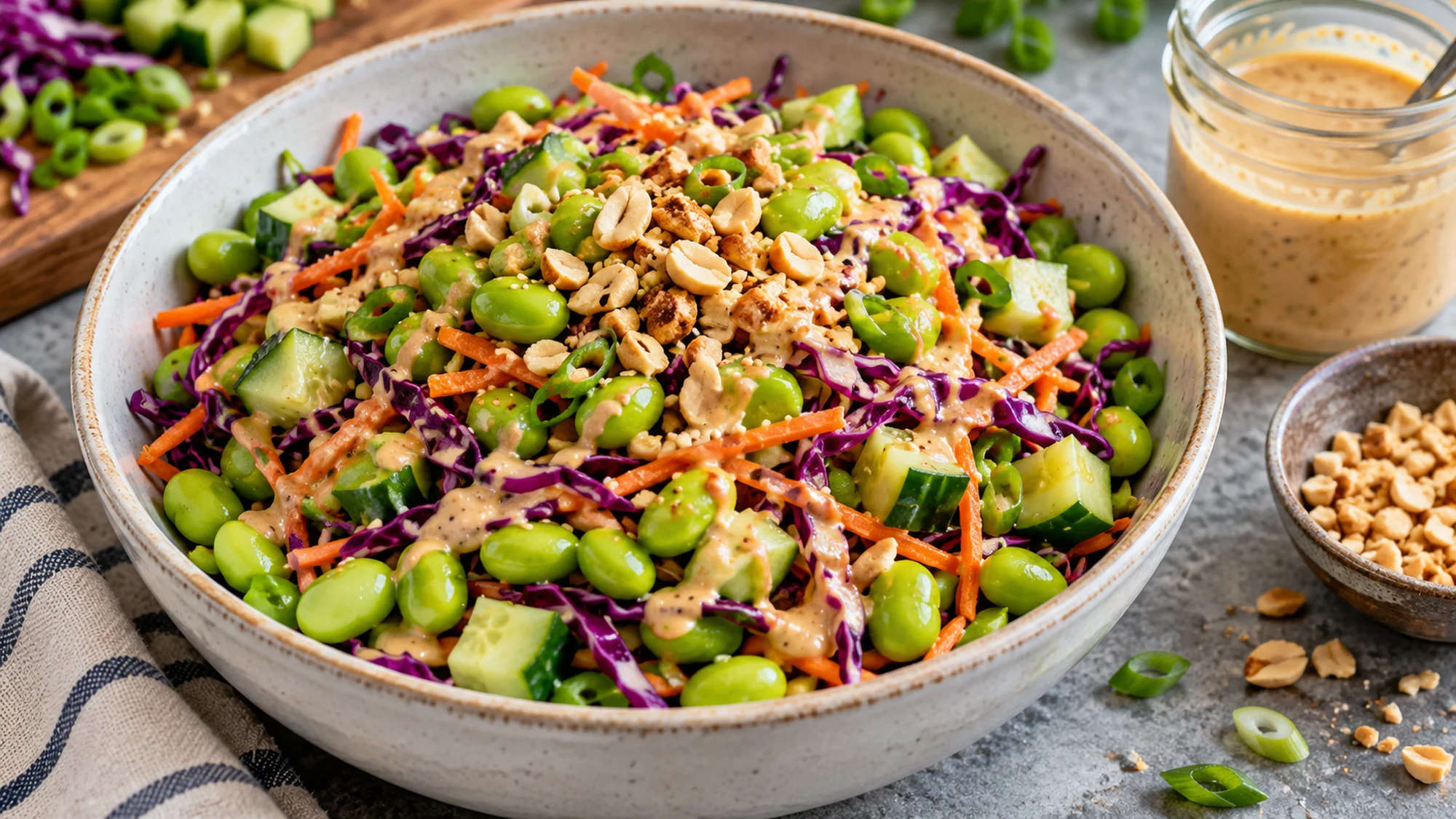
Vegetable swaps and a dressing that actually pours
Shelled edamame are the edible beans; pods do not belong in the salad. Frozen products differ, so follow the package’s cooking directions rather than assuming every bag is ready to eat after thawing. Spread the drained cooked beans in a shallow container to cool promptly while you prepare the vegetables.
Peanut butter can tighten when vinegar first hits it. Keep whisking, then add water a tablespoon at a time until the dressing runs from the spoon in a thin ribbon. Tossing a thick paste through fragile vegetables tends to leave clumps and broken cabbage. Slice scallions finely as well, so a mouthful gets their mild bite without a large raw onion piece.
- Cabbage: use the same weight of green cabbage if purple is unavailable. A sharp knife and thin slices matter more than the color.
- Cucumber: scrape out a watery seed core before dicing a large garden cucumber; firm mini cucumbers can be diced as they are.
- Peanut substitution: use sunflower seed butter and sunflower seeds if appropriate for your household, checking every label for cross-contact. Sesame remains in the original dressing.
- Soy sauce: use a labeled gluten-free tamari when needed. Salt levels vary, so taste the dressed salad before adding any extra seasoning.
Thin the dressing before it meets the vegetables; the beans should be coated, not hidden under paste.
Health benefits and sensible refrigerator habits
Edamame contributes protein and fiber alongside the vegetables. The Harvard Nutrition Source’s soy overview describes soy foods as sources of both. That is useful context for choosing a substantial salad ingredient, rather than evidence that one bowl will prevent or treat a condition.
The peanuts, peanut butter and sesame oil also contribute fat and energy. The card counts all measured dressing and toppings across four portions; extra rice, tofu or other additions require their own allowance. Contains soy, peanuts and sesame, and conventional soy sauce may contain wheat.
- Clean before chopping: rinse produce under running water, remove damaged outer cabbage leaves and dry well. The FDA’s produce advice recommends plain running water rather than soap.
- Keep it cold: refrigerate promptly in covered containers at 40°F (4°C) or below and use within three days. Store peanuts dry and separate. Discard perishable salad left out beyond two hours, or one hour above 90°F (32°C).
The beans provide substance; careful cooling and separate toppings make the salad practical for tomorrow, too.
Bottom Line
A good edamame crunch salad needs dry vegetables, properly cooked beans and a dressing loose enough to spread. Keep those details in place, and the bowl stays colorful, savory and pleasantly crisp without a long ingredient hunt.
Edamame Crunch Salad Recipe

Ingredients
- 400 g cooked shelled edamame drained and cooled weight; cook frozen beans according to the package first, enough to yield this weight
- 200 g purple cabbage finely shredded
- 200 g cucumber diced; remove a watery core if needed
- 100 g carrot peeled and cut into thin matchsticks
- 30 g scallions thinly sliced
- 30 g unsalted roasted peanuts roughly chopped
- 1 teaspoon toasted sesame seeds 3 g
- 1 tablespoon smooth peanut butter 16 g; stir well before measuring
- 2 tablespoons unseasoned rice vinegar 30 ml
- 1 tablespoon reduced-sodium soy sauce 15 ml; labeled gluten-free tamari if needed
- 1 tablespoon toasted sesame oil 14 g
- 1 teaspoon maple syrup 7 g
- 1 teaspoon finely grated fresh ginger about 3 g
- 1–2 tablespoons water add as needed for a thin, pourable dressing
Equipment
- Saucepan or microwave-safe bowl
- Colander
- Large mixing bowl
- Small bowl and whisk
- Chef’s knife and cutting board
Instructions
- Follow the frozen edamame package cooking directions; the listed 5 minutes is an estimate, not a replacement for the package. Drain thoroughly, spread in a shallow container to cool promptly, and measure 400 g cooked, shelled beans. Do not include pods. Prepare the vegetables while the beans cool.
- Rinse the fresh produce under running water, remove damaged outer cabbage leaves and dry everything well. Shred cabbage finely, dice cucumber, cut carrot into thin matchsticks and slice scallions. Transfer to a large mixing bowl with the cooled edamame.
- Whisk peanut butter, rice vinegar, soy sauce, sesame oil, maple syrup and ginger. It may thicken at first; keep whisking. Add 1 tablespoon water, then a little more if needed, until it flows in a thin ribbon from a spoon.
- Pour the dressing over the beans and vegetables and toss gently until lightly coated. Taste before adding any extra salt because soy sauce brands differ. Scatter over chopped peanuts and sesame seeds immediately before serving. Divide into 4 generous side portions.
- If making ahead, keep the salad, dressing and dry peanut-sesame topping separate and combine only the portion being served. Refrigerate perishable components promptly at 40°F (4°C) or below in covered containers and use within 3 days. Discard salad left at room temperature more than 2 hours, or 1 hour above 90°F (32°C).
Nutrition
Video
Notes
Tried this recipe?
Let us know how it turned out!Hi, I’m Emily Pocker! I share recipes and food guides here at Recipes360 to help you find everyday meal inspiration and feel more confident in the kitchen. My goal is to make cooking approachable, enjoyable, and full of flavor.