
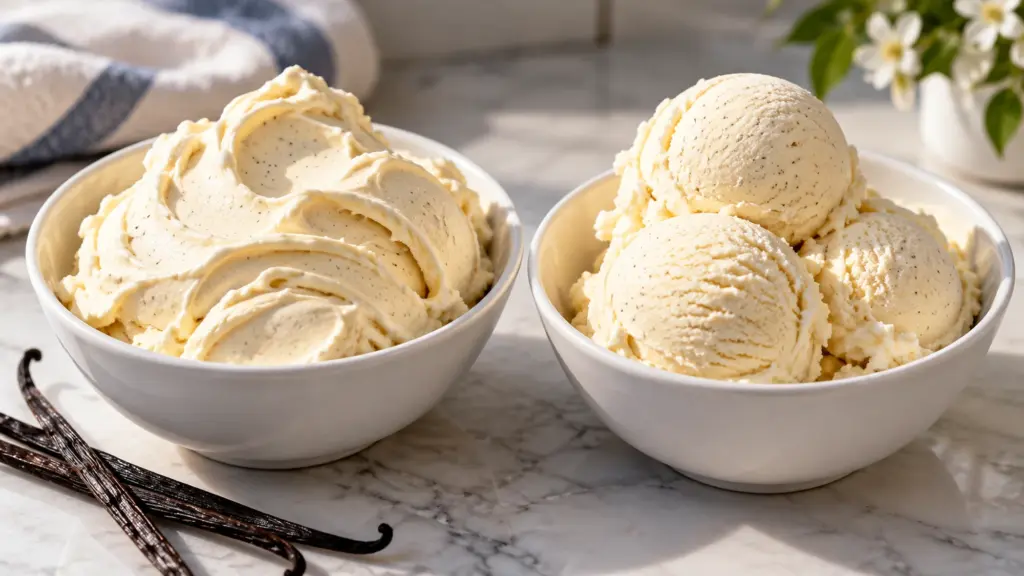
One counter offers soft folds of pistachio gelato; the next has round scoops of vanilla ice cream. The difference between gelato and ice cream is not simply an Italian name or a more elegant display. Recipe, incorporated air, and serving temperature all help explain why a spoonful can feel different.
Gelato is often made with more milk and less cream, incorporates less air, and is served slightly warmer than ice cream. Those are common patterns, not guarantees: recipes vary, and gelato is not automatically a lower-sugar or lower-calorie dessert.
I’d choose by the texture and flavor you want, then check the actual product if nutrition or ingredients matter. A name on the freezer door cannot tell you everything inside the tub.
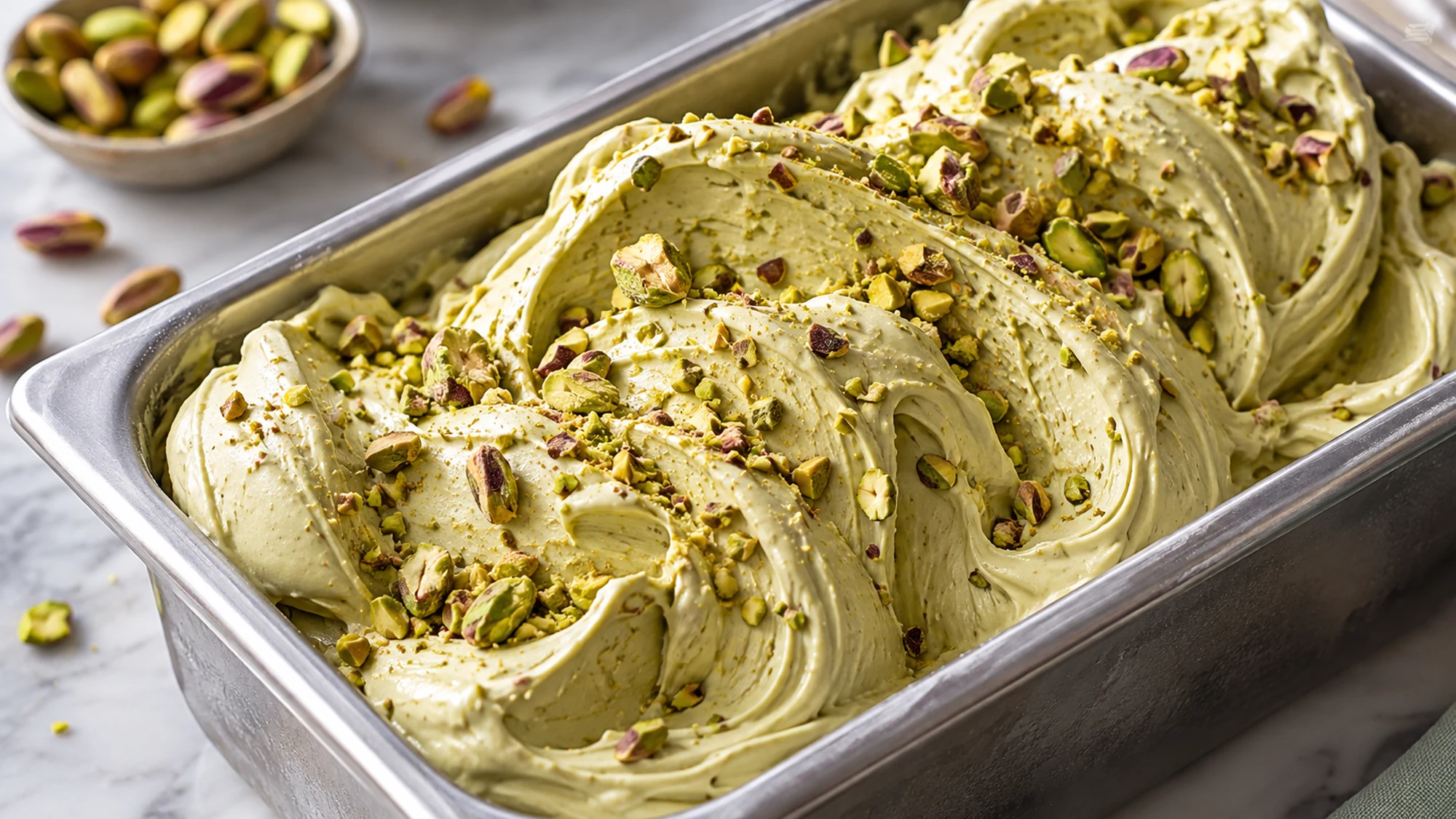
The Difference Between Gelato and Ice Cream Starts with the Recipe
Penn State food scientist Robert Roberts describes gelato as traditionally using more milk and less cream than ice cream. That often means less milk fat. However, different makers use different recipes, and a supermarket gelato does not have to resemble every scoop sold in Italy.
| Feature | Common gelato pattern | Common ice cream pattern |
|---|---|---|
| Dairy balance | More milk, less cream | More cream and often more milk fat |
| Incorporated air | Often less, producing a denser spoonful | Varies widely, from dense premium styles to airier products |
| Serving texture | Often softer, with smooth folds | Often firmer and suited to rounded scoops |
| Eggs and flavorings | Depend on the recipe | Depend on the recipe |
| Nutrition | Check the particular product and portion | Check the particular product and portion |
Do not turn those patterns into ingredient rules. Some formulas contain eggs and others do not; gelato is not a synonym for egg-free, dairy-free, or vegan. Read the ingredient list or ask the maker, especially when an allergy is involved.
Why Air Changes the Spoonful
Frozen-dessert makers call the increase in volume from incorporated air overrun. Less air can make a product feel denser, while more air can give it a lighter texture. That is a manufacturing detail, not a shortcut for deciding which dessert is better.
- Gelato still contains air: Carpigiani Gelato University’s training material discusses gelato overrun. The common claim that gelato has no air is misleading.
- Ice cream is not one texture: a dense premium ice cream may feel quite different from an airier product, even before you compare it with gelato.
- Volume and weight differ: equally sized scoops can contain different amounts of dessert. A visual comparison of two bowls does not establish equal serving weights.
- Flavor perception involves more than air: the recipe, fat, sugar, temperature, and flavor ingredients all contribute. Density alone does not prove that a product has more fruit, nuts, or chocolate.
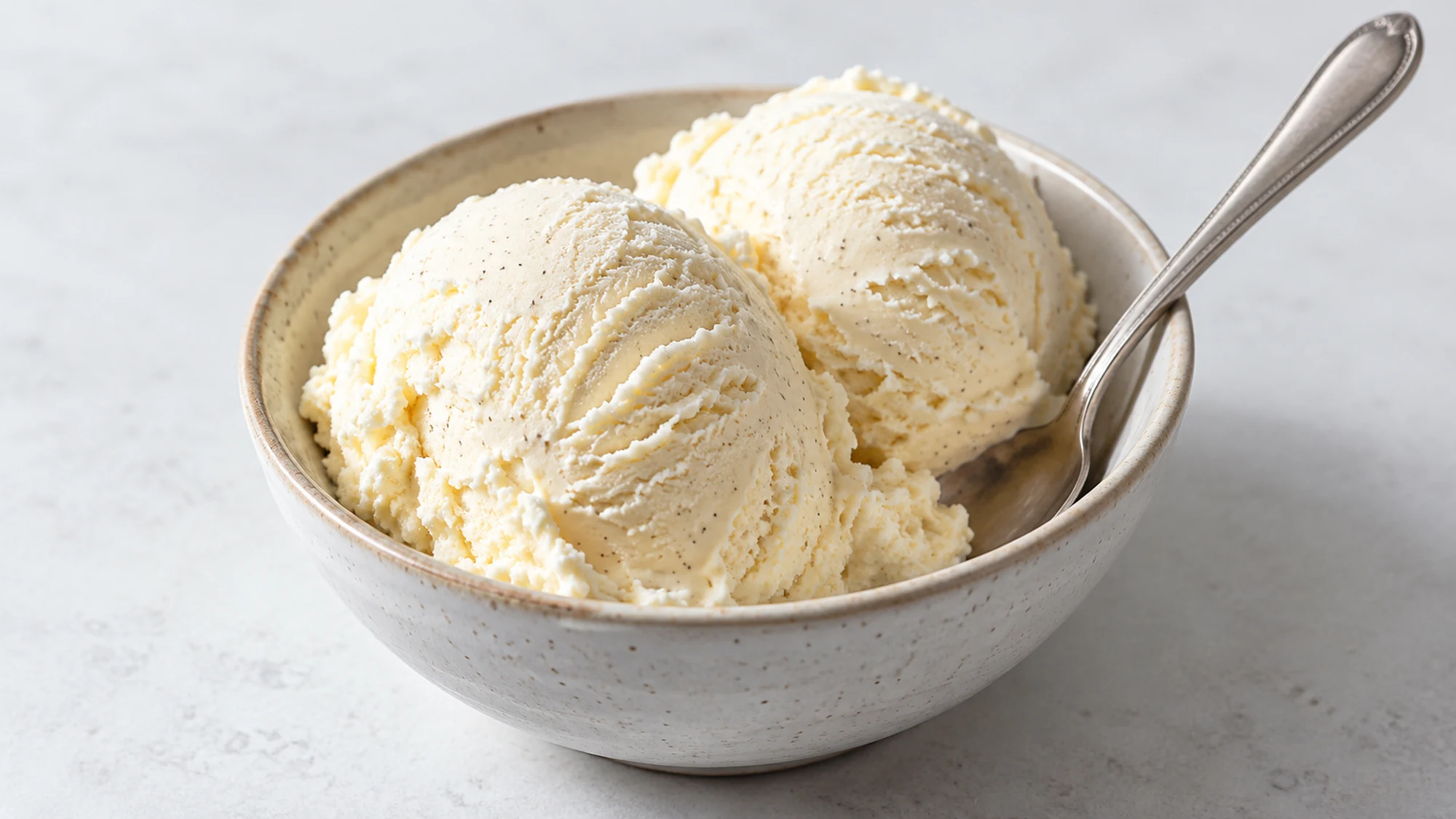
Serving Temperature Helps Explain the Softness
Gelato is commonly served a little warmer than ice cream while remaining frozen. Sensory research comparing the two desserts discusses their different serving temperatures. Temperature affects firmness, so a softer scoop is not evidence that a product contains less sugar or fewer calories.
- At a counter: notice whether you prefer a soft, dense spoonful or a firmer scoop. The display style is a clue to serving texture, not a complete ingredient analysis.
- From a home freezer: follow the package’s serving directions. A tub may be much firmer at home than a freshly served portion from a shop.
- When comparing products: avoid judging one straight from the freezer against another that has already softened. You are comparing temperatures as well as recipes.
- For storage: keep the container closed and return it to the freezer promptly. Repeated melting and refreezing will not preserve that smooth counter texture.
I’d give the spoonful a moment rather than assuming the hardest tub is the least creamy. Still, softening is not permission to leave a dairy dessert sitting out indefinitely; serving and storage are different jobs.
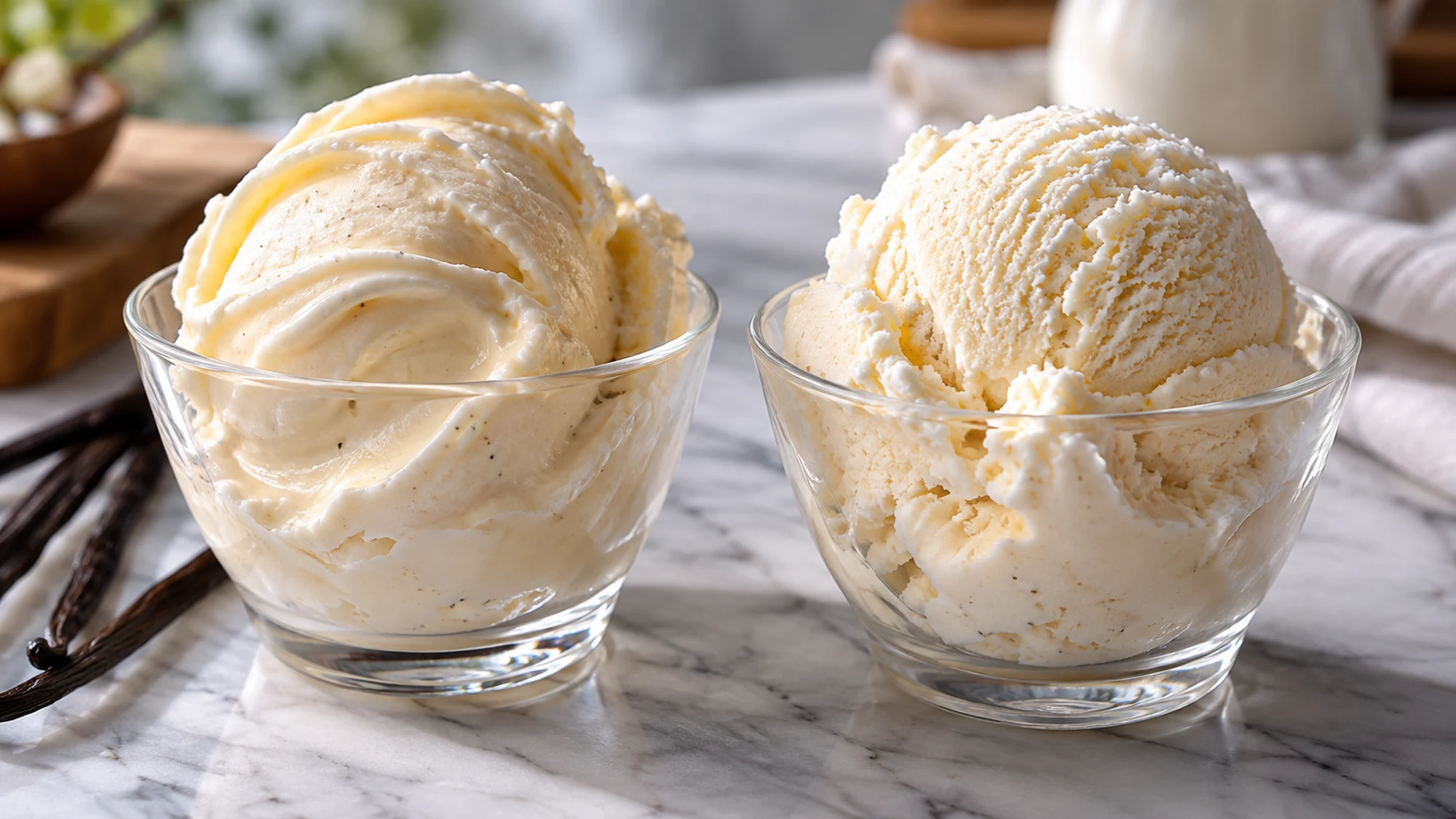
Neither Name Creates a Health Advantage
University of Florida IFAS cautions that gelato and other frozen desserts can still contribute substantial sugar and fat. Lower milk fat does not automatically mean less sugar, and a denser scoop may weigh more than an equally sized airy one.
- Compare a stated amount: use the serving weight and nutrition information on the label, following the FDA’s guidance on serving sizes. Note when two packages use different portions.
- Compare similar flavors: vanilla against vanilla is more informative than plain gelato against ice cream loaded with cookies and sauce.
- Check additions: cones, syrups, candies, and extra toppings change the dessert beyond the base recipe.
- Choose an enjoyable portion: neither label guarantees a suitable choice for an individual medical diet or an allergy.
Bottom Line
Gelato’s appeal is often its dense, soft texture; ice cream offers its own range of creamy, airy, or firm styles. Choose the spoonful you enjoy, and use the actual ingredients and serving information—not the name—to make nutrition comparisons.
Sources
- Penn State: What is the difference between ice cream and gelato?
- Carpigiani Gelato University: Basic course materials
- Journal of Sensory Studies: Sensory properties of ice cream and gelato
- University of Florida IFAS: Go easy on the ice cream
- FDA: Understanding the Nutrition Facts label

Hi, I’m Emily Pocker! I share recipes and food guides here at Recipes360 to help you find everyday meal inspiration and feel more confident in the kitchen. My goal is to make cooking approachable, enjoyable, and full of flavor.