
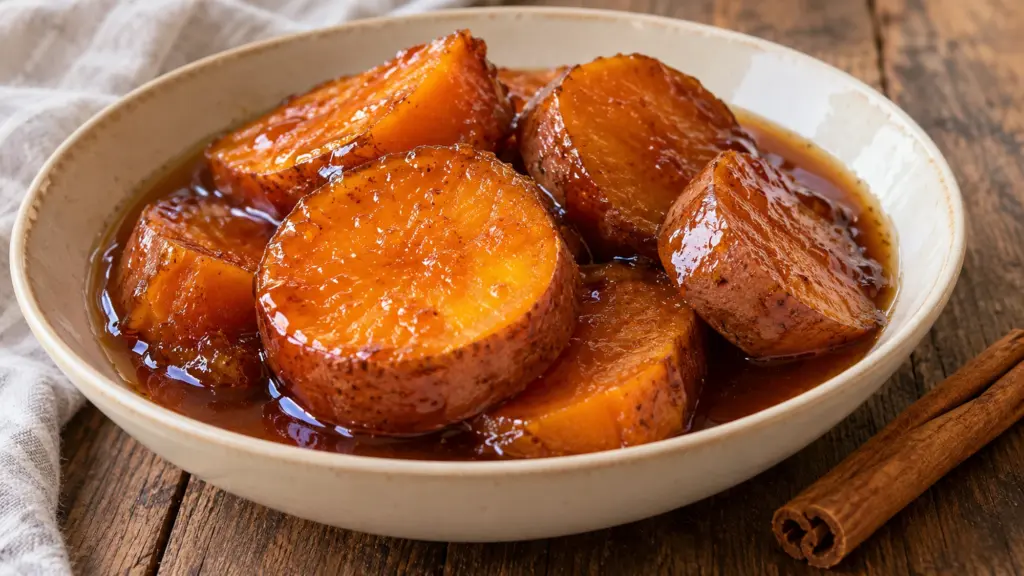
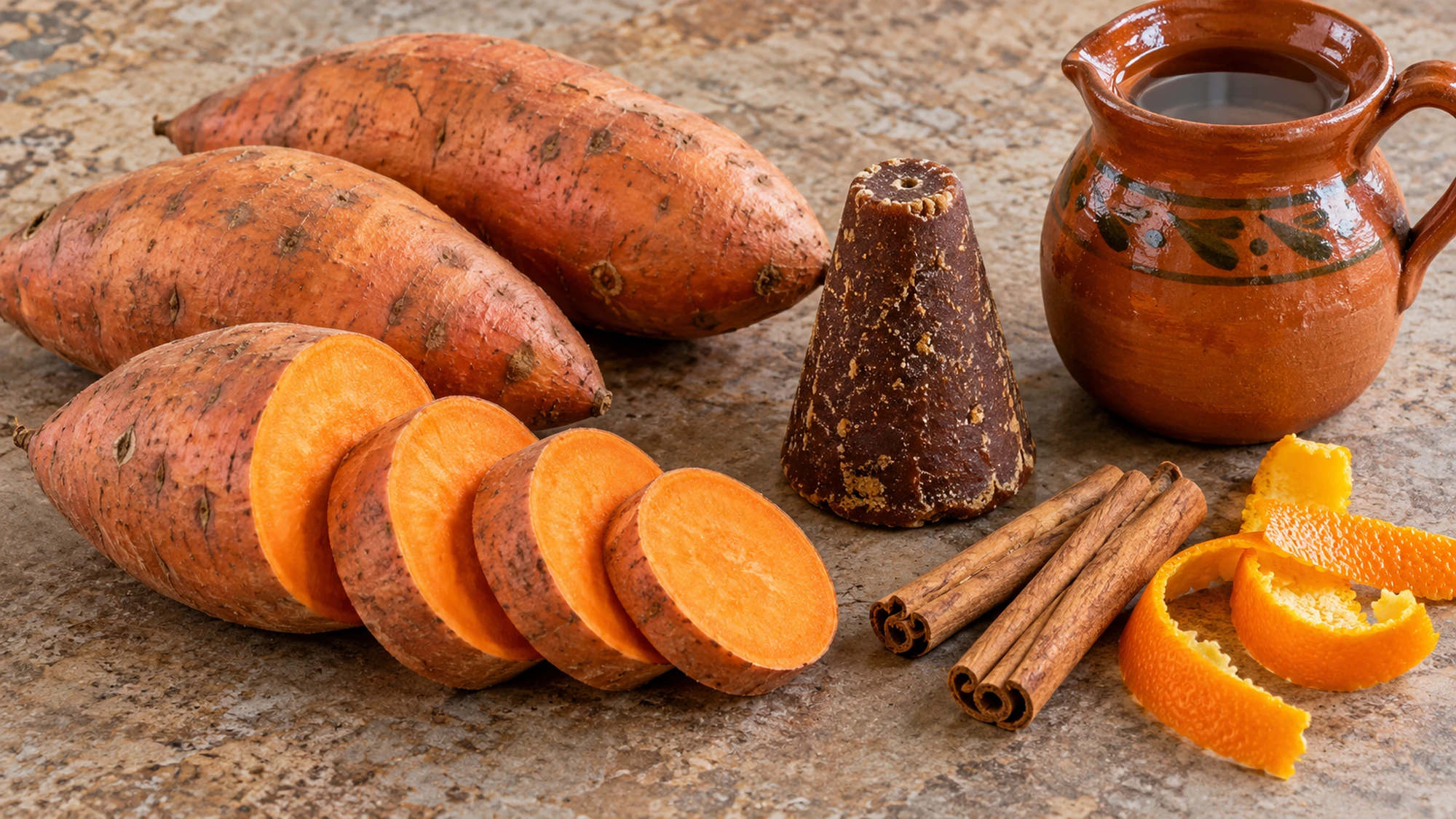
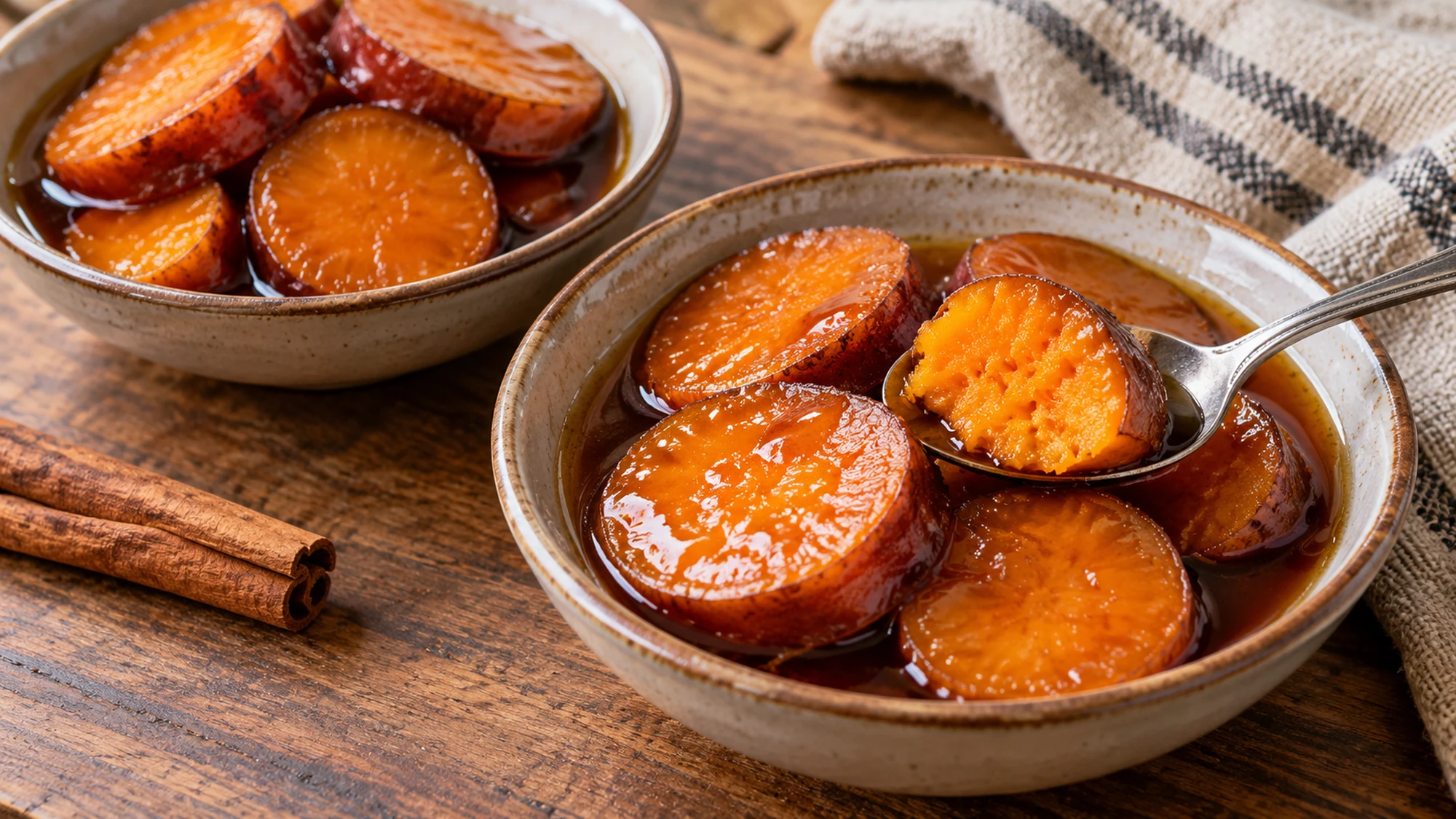
The piloncillo looks stubbornly solid until warm water starts loosening its edges. Soon the kitchen has the aroma of cinnamon and dark sugar, ready for camotes en dulce. Thick sweet potato rounds simmer gently in that syrup until a knife passes through the orange centers. A strip of orange peel gives this version a subtle citrus note.
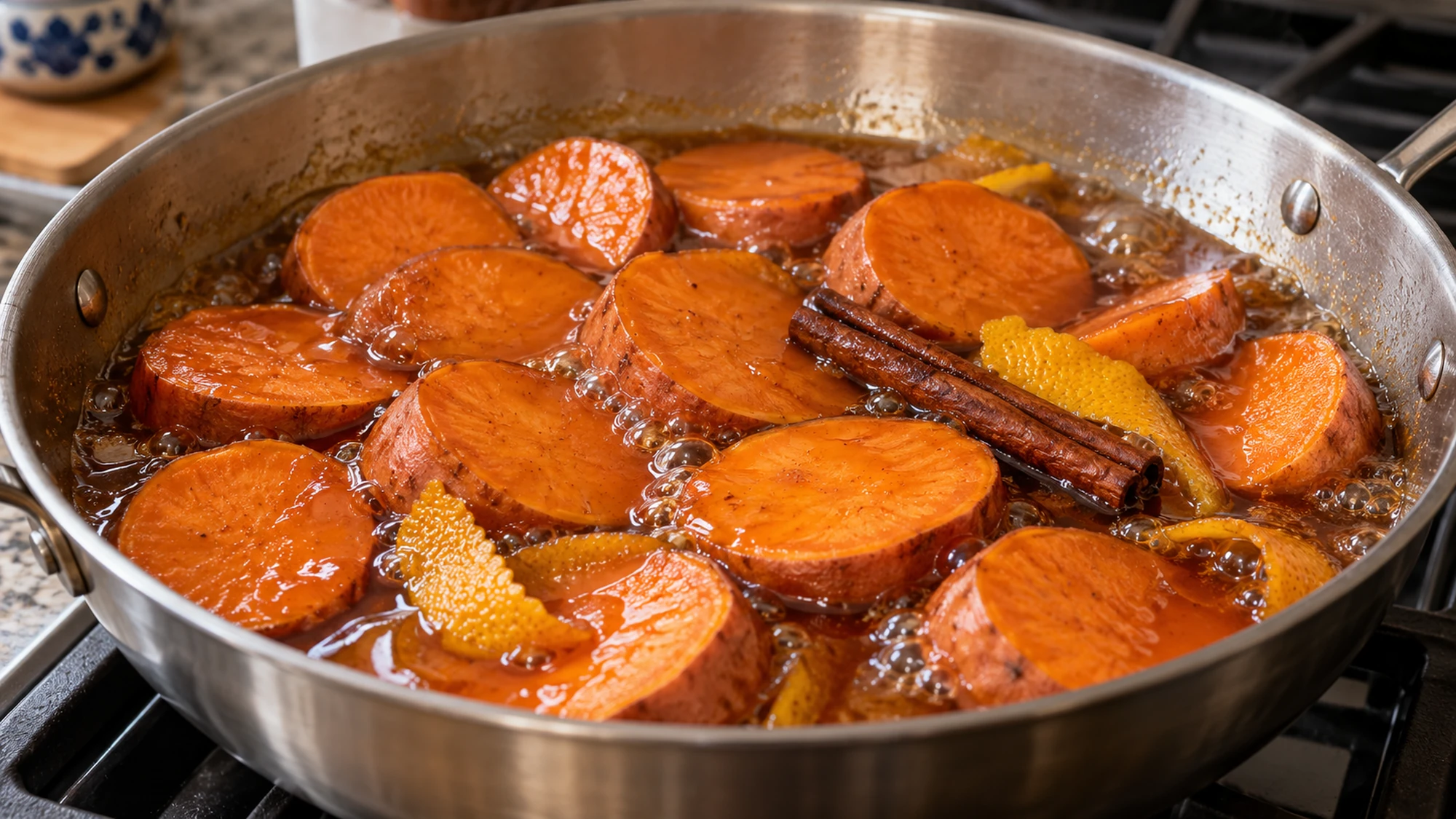
Keep the sweet potatoes at a gentle simmer and the syrup loose enough to move around them. Tender centers come first; a glossy, spoonable coating comes afterward.
This is a Mexican sweet potato dessert, with the peel left on to help the rounds hold together. Scrub it thoroughly and cut away any damaged spots. I’d choose sweet potatoes of similar width so the pieces cook at roughly the same pace, without a tiny end piece dissolving while the largest one stays firm.
Serving Suggestions for Camotes en Dulce
Let the pan stand before serving. Hot sugar syrup clings to food and can burn, so give both the syrup and the sweet potatoes time to cool to a comfortable temperature. Use a broad spoon to lift the rounds, then add a little syrup around them rather than burying everything under it.
If you choose a creamy accompaniment, add it to individual servings; it changes both the sweetness balance and the nutrition of the bowl.
| Choice | What to expect |
|---|---|
| Plain and warm | Lets the piloncillo and cinnamon stay in focus. |
| A little plain yogurt | Adds tang; spoon it alongside once the syrup is no longer hot. |
| A splash of milk | Thins the syrup around the serving; add at the table. |
For a different spoonable fruit dessert, try the apple crumble recipe with a buttery topping. Store leftover sweet potatoes with their syrup in shallow containers. Following Illinois Extension’s leftover advice, refrigerate within two hours, keep at 40°F (4°C) or below, and use within three to four days. Reheat leftovers to 165°F (74°C).
Serve a little syrup with each portion, and let it cool before tasting. Any milk or yogurt belongs in the serving bowl.
Variations and Syrup Troubleshooting
Piloncillo brings a deeper flavor than white sugar, but it still needs careful heat. A wide saucepan makes the rounds easier to arrange than a narrow, crowded pot. Once they soften, stirring vigorously can turn a dessert of distinct pieces into something closer to a mash.
- No piloncillo: use the same weight of dark brown sugar. The flavor will differ, and a spoonable syrup matters more than matching an exact shade.
- Different cinnamon: Mexican canela has a delicate aroma; a shorter piece of stronger cassia cinnamon also works. Remove the stick before serving.
- Skip citrus: leave out the orange peel for a simpler cinnamon version. Avoid thick white pith if you do use it.
- Syrup reducing too soon: add water a tablespoon or two at a time until the centers are tender. If it is thin afterward, lift out the potatoes and reduce the liquid briefly.
The syrup thickens as it cools, so stop while it still pours easily. I’d rather have a little extra sauce than a hard candy shell. Different sweet potato varieties also soften at different rates; check the largest round with a thin knife and use its tenderness to guide the final minutes.
Protect the pieces from rough stirring, and judge the syrup after a small sample cools on a spoon. It should coat, not glue.
Health Benefits and the Dessert Context
Sweet potatoes contribute carbohydrate, fiber and nutrients, but the syrup makes this a sweet dessert. The USDA’s sweet potato reference identifies fiber, potassium and vitamins A and C among the root’s nutrients.
- Keep the context clear: piloncillo is added sugar, even though its flavor is complex.
- Choose your portion: enjoy a smaller serving if you prefer less syrup and sweetness.
- Read the estimate: the card includes all the measured syrup divided among six servings; leaving syrup in the pan changes what you actually eat.
No butter or cream is needed in the saucepan. Optional dairy at serving adds its own nutrients and calories, so it is excluded from the card estimate. The exact sugar content of piloncillo and the sweet potato variety vary; the approximate numbers are a planning guide.
Enjoy the sweet potatoes for their flavor and texture, with the syrup treated honestly as added sugar. A vegetable ingredient does not erase the dessert portion.
Bottom Line
Camotes en dulce turns a short ingredient list into tender rounds and fragrant syrup. Keep the heat gentle, watch the largest piece for doneness, and stop reducing before the syrup becomes sticky candy. Serve warm, with enough cinnamon-scented sauce to make each spoonful count.
Camotes en Dulce Recipe

Ingredients
- 2.6 pounds orange-fleshed sweet potatoes 1.2 kg, scrubbed; peel left on and cut into 1-inch (2.5 cm) rounds
- 8 ounces piloncillo 225 g; dark brown sugar may be substituted by weight
- 2.5 cups water 600 mL, plus small splashes as needed
- 1 Mexican cinnamon stick about 3 inches (7.5 cm)
- 1 strip orange peel about 2 x 1 inches, without thick white pith
- 1 pinch fine salt
Equipment
- 1 Wide 4-quart saucepan with lid
- 1 Knife and cutting board
- 1 Broad serving spoon
Instructions
- Put piloncillo, water, cinnamon, orange peel and salt in a wide saucepan. Warm over medium-low heat, stirring occasionally, until piloncillo dissolves, about 8–10 minutes. Break up large cones carefully before adding if needed.
- Arrange sweet potato rounds in the syrup in one snug layer where possible, with minimal overlap. Bring to a gentle simmer, cover partly and cook for 30–40 minutes. Turn pieces once with a broad spoon; avoid vigorous stirring.
- Insert a thin knife into the largest round. It should pass through easily. If the syrup becomes thick before the potatoes soften, add water 1–2 tablespoons at a time. Continue simmering as needed.
- If the potatoes are tender but the syrup is watery, carefully lift the rounds to a plate and simmer the syrup uncovered for 3–5 minutes. Stop while it still pours easily; it thickens as it cools. Return potatoes and spoon syrup over them.
- Remove cinnamon and orange peel. Let stand for at least 15 minutes, until comfortably warm rather than scalding. Divide into six portions with syrup. Optional milk or yogurt may be added at the table.
Nutrition
Video
Notes
Tried this recipe?
Let us know how it turned out!Hi, I’m Emily Pocker! I share recipes and food guides here at Recipes360 to help you find everyday meal inspiration and feel more confident in the kitchen. My goal is to make cooking approachable, enjoyable, and full of flavor.