
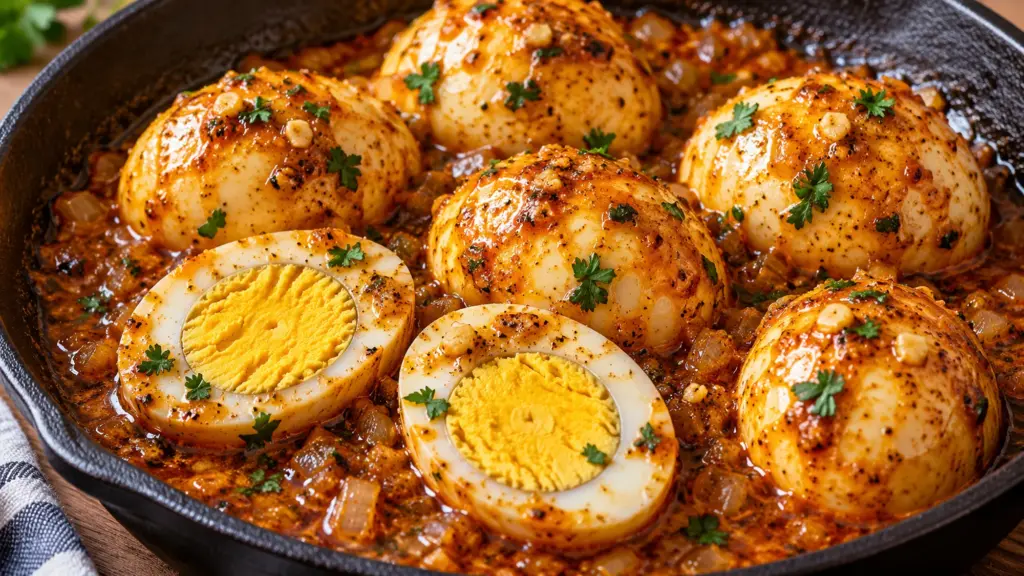
An egg boil brings peeled cooked eggs together with the garlicky, spiced butter sauce associated with seafood boils. This egg-only version uses softened onion, salt-free Cajun seasoning, a little Dijon and vegetable stock, with lemon stirred in at the end.

Cook the eggs until both whites and yolks are firm, then warm them gently in the finished sauce instead of boiling them hard a second time.
The sauce should spoon around the eggs, with soft onion pieces carrying the seasoning. I prefer a splash of stock to a pan filled with extra butter: it gives you something to spoon over the eggs while keeping the garlic from frying dry.
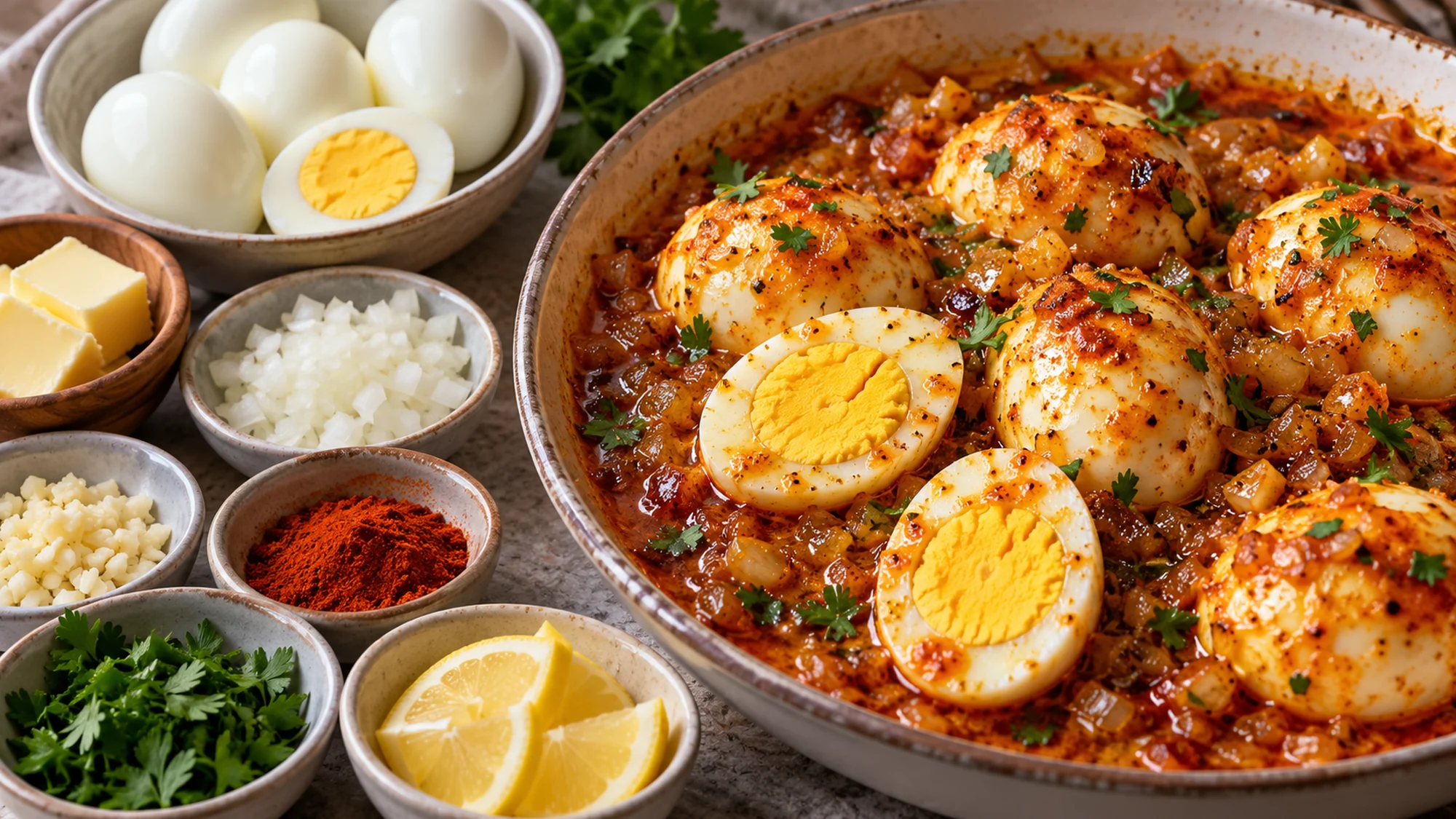
Serving an egg boil as a small, saucy meal
Allow two eggs per person and divide the onion sauce among the three portions. Warm toast, steamed rice or a baked potato can catch the remaining sauce. Those additions make the plate more substantial and sit outside the card’s nutrition estimate, so choose an amount that suits the meal.
A crisp cucumber side gives the buttery eggs a cool partner. Serve the eggs whole or halve them just before bringing the bowls to the table; cutting at the last moment keeps the yolks from crumbling into the sauce. If you want a different spicy egg preparation another day, try chili oil eggs with their fragrant finish after frying.
| Serving plan | What changes | Useful detail |
|---|---|---|
| Three small meals | Two eggs plus sauce per person | Add a vegetable and optional starch |
| Six snack portions | One egg with a little sauce | Keep the remaining eggs refrigerated |
| Prepared ahead | Store cooked eggs and sauce cold | Warm a portion gently and thoroughly |
Share the sauce as well as the eggs; it is the onion, garlic and spice that ties each bowl together.
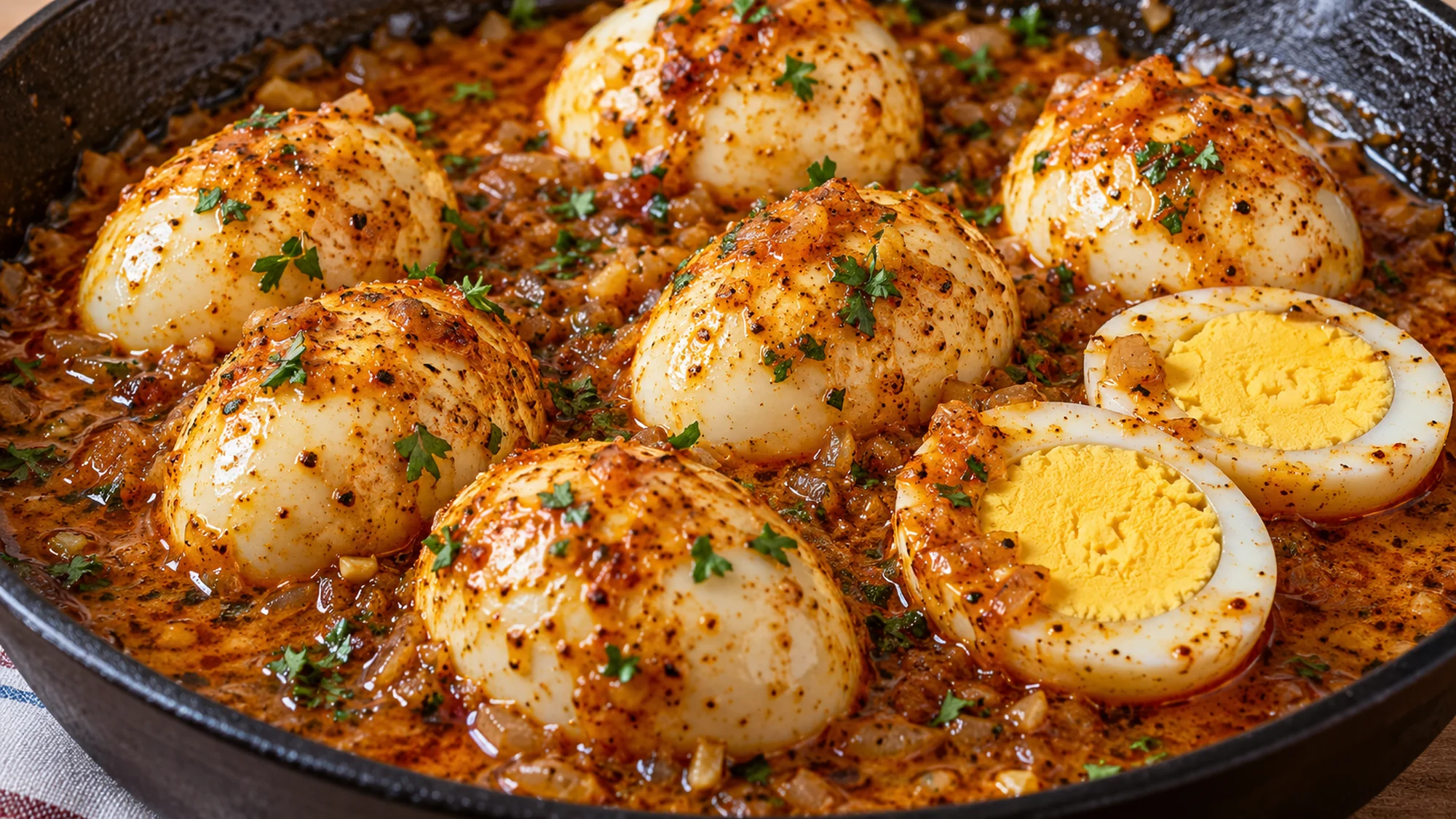
Seasoning variations and simple sauce repairs
Salt-free Cajun seasoning makes the salt easier to adjust alongside the stock and mustard. It does not guarantee mild heat: cayenne levels vary substantially between blends. Start with the listed amount only if you know your seasoning, or use less and add more after tasting the sauce.
Keep the heat moderate when the garlic and spices go in. Garlic that has turned dark brown will taste bitter, and extra lemon cannot reverse that. The onions need time to soften first; a little patience here is more helpful than turning up the burner.
- Milder bowl: reduce the Cajun seasoning and let smoked paprika provide color. Add hot sauce separately for anyone who wants it.
- No Dijon: omit it and adjust the lemon at the end. The sauce loses a little tang and body but still works.
- Sauce tightening: add stock or water a tablespoon at a time and stir gently. Avoid boiling until the pan looks oily and dry.
- Too sharp: taste the sauce with a piece of egg before changing it. The rich yolk softens the impression of acidity; a spoonful of sauce alone can be misleading.
Build flavor with softened onions and briefly warmed spices, then use liquid and gentle heat to keep the sauce spoonable.
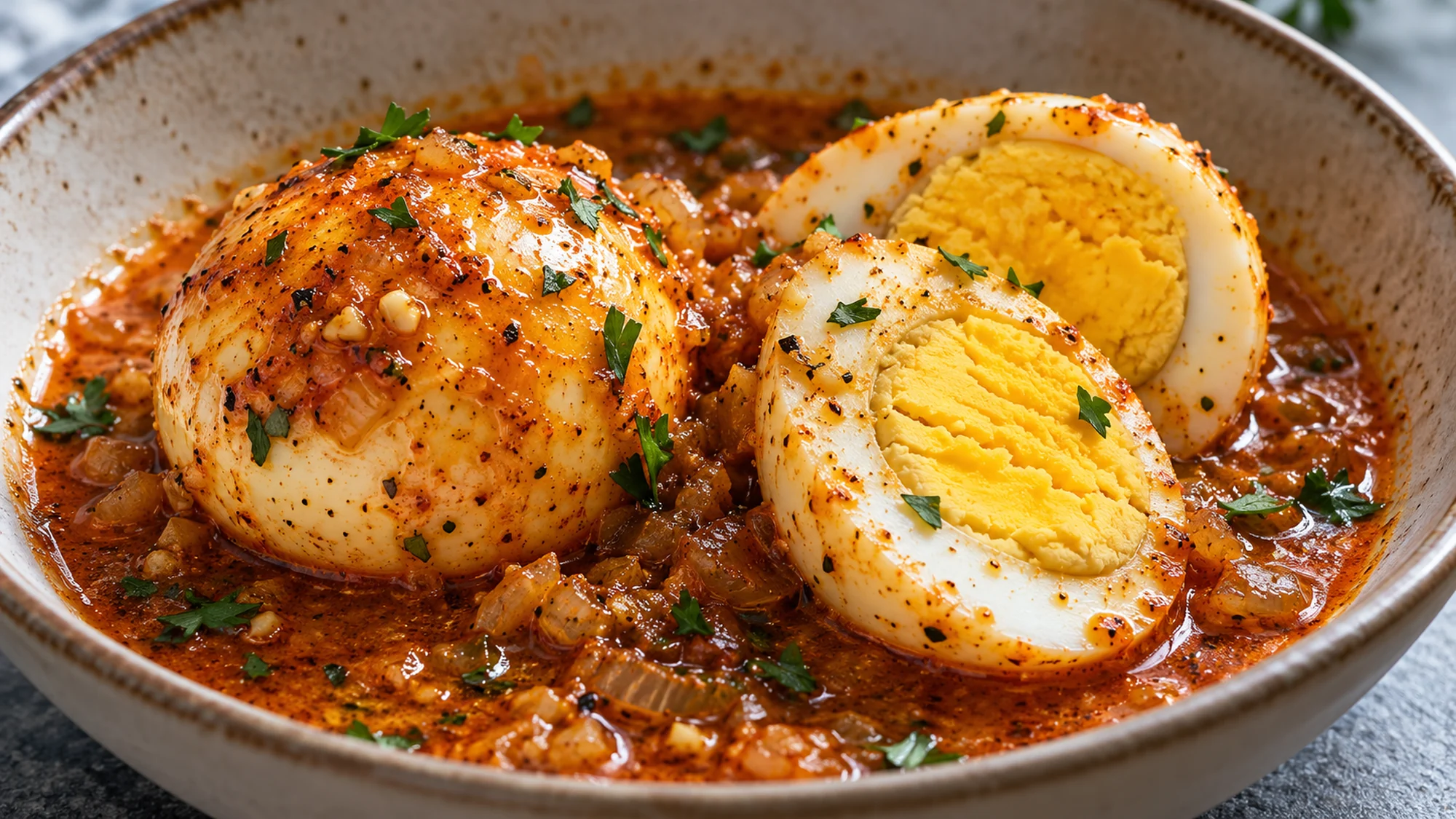
Health benefits and the egg safety details that matter
Eggs provide protein, but this preparation also includes a measured share of butter. Calling it high protein does not erase the sauce’s energy or make it a complete meal on its own. The estimate counts two large eggs and one third of every measured sauce ingredient, including butter that may remain in the pan.
For food safety, the FDA recommends firm whites and yolks. A timed method is a starting point rather than a guarantee: egg size, starting temperature and elevation affect doneness. Cut a check egg if you are uncertain, and cook longer when the center is still soft.
- Handle cleanly: wash hands after touching raw shells, use a clean board for peeled eggs and keep eggs refrigerated before cooking.
- Store promptly: refrigerate the finished dish in a shallow covered container at 40°F (4°C) or below within two hours, or one hour above 90°F (32°C).
- Reheat leftovers: use within three days and reheat thoroughly to 165°F (74°C), adding liquid as needed. The longer allowance for plain hard-cooked eggs does not become the storage plan for this prepared sauce dish.
Use firm yolks, clean utensils and prompt refrigeration; a buttery sauce does not change the basic rules for cooked eggs.
Bottom Line
This egg boil works best when the eggs are fully cooked before they meet the sauce. Soften the onion, protect the garlic from scorching and finish with Dijon and lemon for a savory bowl that welcomes a piece of toast.
Egg Boil Recipe


Ingredients
- 6 large eggs kept refrigerated before cooking
- 45 g unsalted butter about 3 tablespoons
- 100 g yellow onion finely diced
- 4 garlic cloves about 12 g, minced
- 120 ml low-sodium vegetable stock 1/2 cup, plus a little more if needed
- 2 teaspoons salt-free Cajun seasoning heat varies; start with less if your blend is hot
- 1 teaspoon smoked paprika
- 1 teaspoon Dijon mustard
- 1 tablespoon lemon juice 15 ml
- 10 g fresh parsley chopped
- 0–1/4 teaspoon fine salt optional, to taste
Equipment
- Medium saucepan with lid
- Bowl for ice water
- 12-inch skillet
- Slotted spoon
- Instant-read thermometer for reheating
Instructions
- Place eggs in a saucepan and cover with cold water by about 1 inch (2.5 cm). Bring just to a boil, cover and remove from the heat. Let large eggs stand about 12 minutes; size, starting temperature and elevation can require more time. Transfer to an ice-water bath for 10 minutes, then peel. Both whites and yolks must be fully firm: check an egg if uncertain and cook longer if needed. Wash hands after touching raw shells.
- While the eggs cool, melt butter in a 12-inch skillet over medium-low heat. Add onion and cook 7–8 minutes, stirring, until soft and translucent. Reduce heat if the butter begins browning.
- Add garlic and stir about 30 seconds. Add Cajun seasoning and paprika and stir about 20 seconds without scorching. Pour in the stock and simmer gently 4–5 minutes until the onions are tender and the sauce remains spoonable. Stir in Dijon.
- Add the peeled whole eggs and turn gently in the sauce over low heat for 3–5 minutes, until hot. Add a splash of stock or water if the sauce tightens. Remove from the heat, stir in lemon juice and parsley, and taste before adding optional salt. Halve eggs just before serving if desired. Divide into 3 portions, each with 2 eggs and one third of the sauce. Optional bread, rice or potatoes are excluded from the estimates.
- Refrigerate leftovers in shallow covered containers at 40°F (4°C) or below within 2 hours, or 1 hour above 90°F (32°C). Use within 3 days. Reheat thoroughly to 165°F (74°C), adding a little liquid and stirring gently to prevent scorching.
Nutrition
Video
Notes
Tried this recipe?
Let us know how it turned out!Hi, I’m Emily Pocker! I share recipes and food guides here at Recipes360 to help you find everyday meal inspiration and feel more confident in the kitchen. My goal is to make cooking approachable, enjoyable, and full of flavor.