
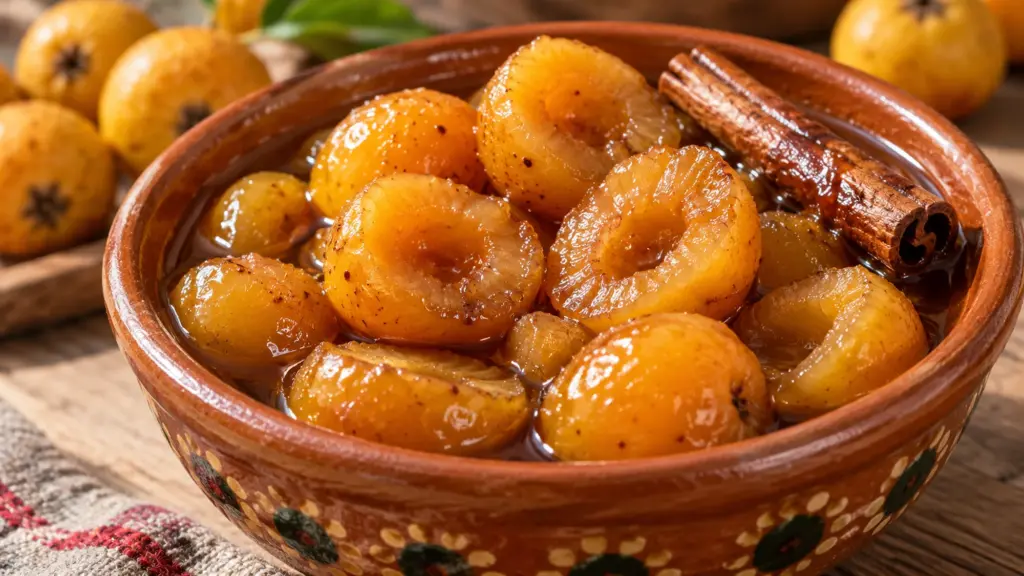
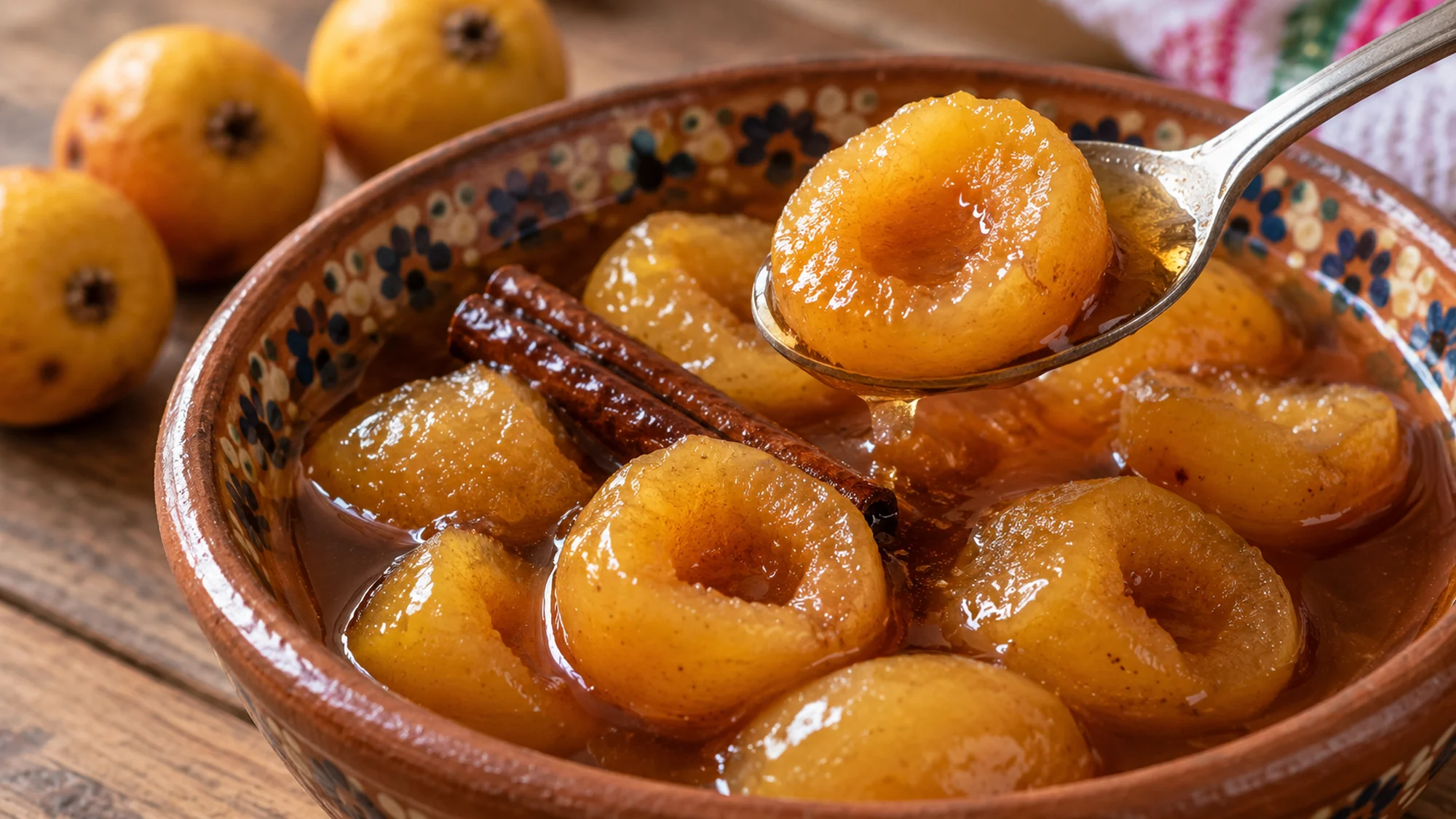
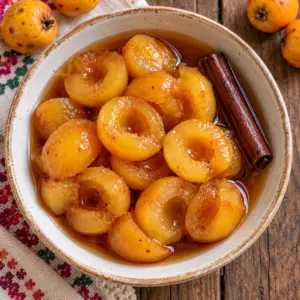
Dulce de tejocote turns small Mexican hawthorns into a dessert with tender flesh and a fragrant amber syrup. This version uses peeled, pitted halves, piloncillo, cinnamon and a little star anise. Removing the hard centers before the final simmer means the bowl arrives ready for a spoon.
Blanch the fruit just enough to loosen its skin, remove every hard seed, then simmer gently until a fork slides into the flesh.
I favor a syrup that pours easily over the fruit. A sticky candy coating can hide the tejocote’s gentle tartness, while a thin puddle leaves it tasting unfinished. The useful middle ground is a light glaze that gathers on the back of a spoon and loosens again when warm.
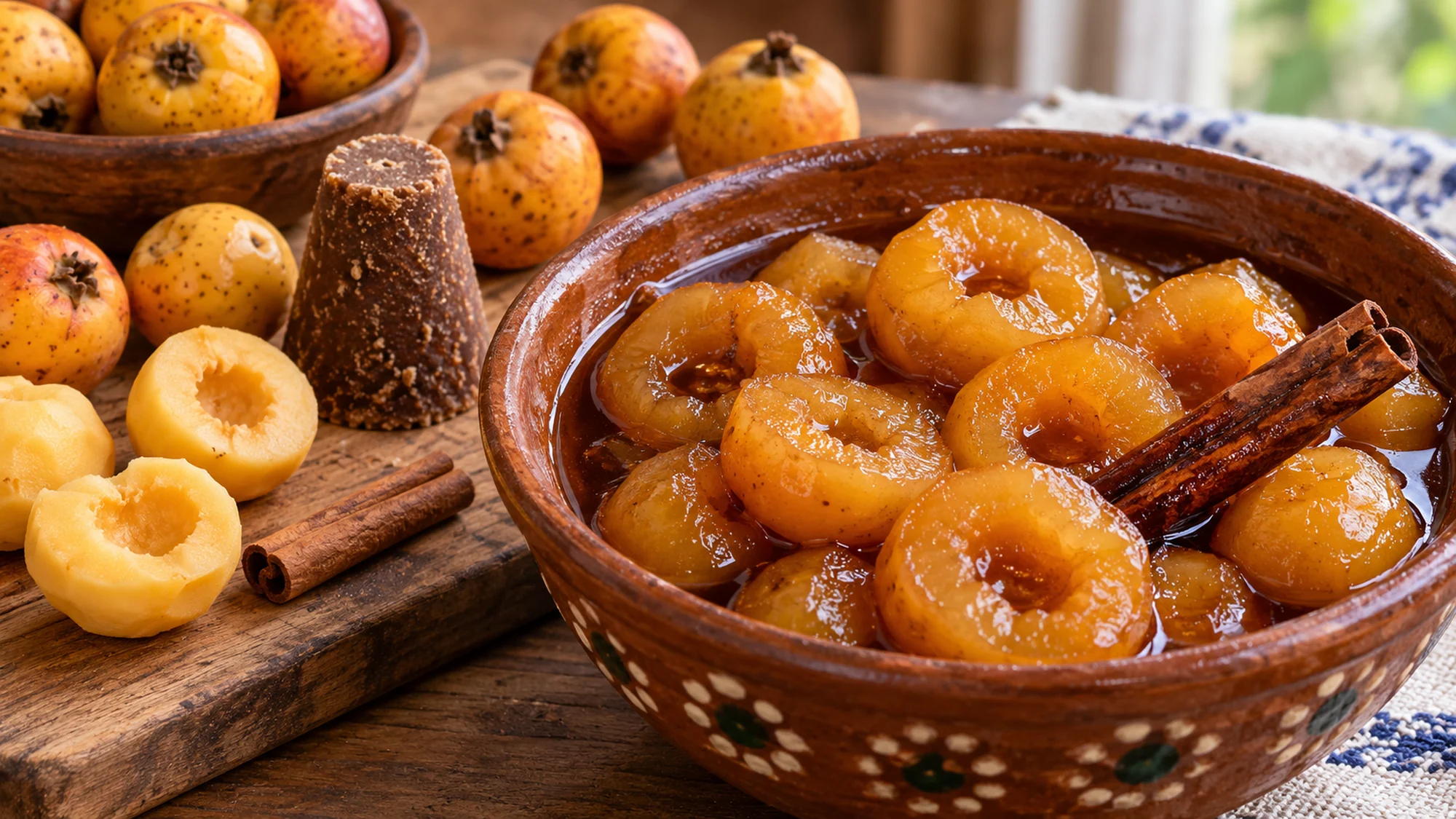
Serving dulce de tejocote warm or chilled
Divide the fruit and syrup among small shallow bowls so each portion includes both. Warm fruit emphasizes the cinnamon aroma; chilled fruit has a firmer bite and suits a meal when dessert is already waiting in the refrigerator. Neither needs an elaborate garnish.
Plain yogurt gives the syrup a tangy partner, while a small scoop of vanilla ice cream makes a richer dessert. Add either at the table so everyone can choose. For another piloncillo dessert with a different texture, the thick sweet potato rounds in camotes en dulce are worth considering.
| Serve it | What to do | Keep in mind |
|---|---|---|
| Warm | Let the hot syrup settle before spooning | Small bowls cool faster |
| Chilled | Refrigerate fruit in its syrup | The syrup thickens as it cools |
| With yogurt | Spoon fruit over plain yogurt at serving | Dairy changes the nutrition estimate |
Keep the fruit and syrup together, then add creamy accompaniments only when you serve.
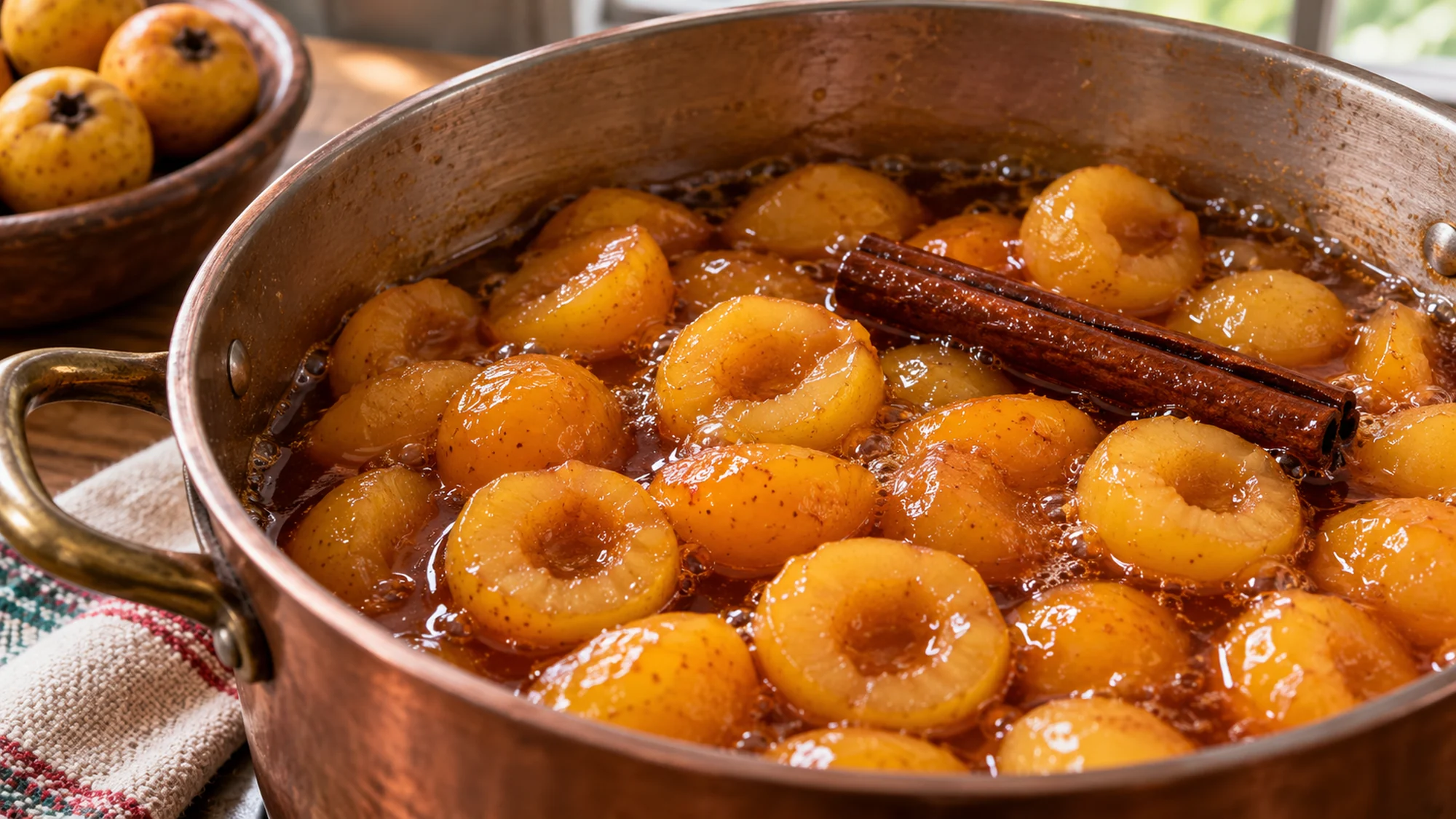
Variations and the syrup problems worth watching
Buy fresh edible tejocote fruit rather than a supplement or extract. The Quintana Roo fruit reference identifies tejocote as Crataegus mexicana and describes yellow to orange fruit with dark speckles. Its skin can remain leathery in a short syrup simmer, which is why this recipe includes a separate peeling step.
The prepared fruit weight matters more than the number of pieces: sizes and the amount removed vary. Weigh after peeling and removing the centers. If a piece resists your knife, soften it a little longer in the blanching water; avoid forcing a blade against a hard seed.
- Different sugar: replace piloncillo with the same weight of dark brown sugar. The molasses flavor changes, so choose the one whose flavor you prefer.
- Gentler spice: omit the star anise for a cinnamon-led bowl. Remove whole spices before serving rather than leaving them for someone to bite.
- Syrup still watery: lift tender fruit out, reduce the liquid briefly, then return the fruit. This avoids cooking the halves until they collapse.
- Syrup too thick: stir in a little hot water off the heat. Judge a cooled spoonful before reducing it further.
Adjust the syrup separately once the fruit is tender; extra boiling is a poor fix for an otherwise finished dessert.
Health benefits, portions and safe storage
The fruit supplies its own nutrients, but adding piloncillo makes this a sweet dessert. Piloncillo is still added sugar; its brown color does not turn the syrup into a health treatment. A modest portion of fruit with enough syrup to enjoy it is a more useful goal than a sweeping nutrition claim.
The card’s energy estimate counts all the measured syrup, even if some stays in the pan. It uses 600 g prepared fruit and a representative sugar-label value; actual fruit yield and the amount of syrup eaten change the result. Reliable complete nutrient data for this specific prepared dessert are limited, so the card does not fill every possible nutrient field.
- Cool promptly: transfer to shallow covered containers and refrigerate at 40°F (4°C) or below within two hours, or one hour above 90°F (32°C). Follow FDA refrigerator guidance rather than leaving a large hot pot on the counter.
- Use within three days: keep a clean serving spoon handy. This small refrigerator batch is not a tested canning formula and is not intended for pantry storage.
Treat this as cooked fruit in a sweet syrup: portion it as dessert and keep leftovers refrigerated.
Bottom Line
Pitted halves make dulce de tejocote easy to eat. Give the fruit a gentle simmer, stop when it is tender, and let the piloncillo syrup supply a glossy finish without burying its flavor.
Dulce de Tejocote Recipe

Ingredients
- 600 g peeled, pitted tejocote halves prepared weight; start with about 750–900 g fresh whole fruit, plus more if needed
- 180 g piloncillo finely chopped; or the same weight dark brown sugar
- 500 ml water for syrup, plus separate water to blanch the fruit
- 1 cinnamon stick about 3 inches / 7.5 cm
- 1 star anise whole; omit for a cinnamon-only syrup
Equipment
- Kitchen scale
- Medium saucepan
- Slotted spoon
- Paring knife and teaspoon
- Wide 2-quart saucepan
Instructions
- Rinse the whole fresh tejocotes. Cover with water in a medium saucepan, bring to a boil and simmer about 5 minutes, until the skins loosen. Drain and cool about 10 minutes, until safe to handle. Peel, halve and carefully remove every hard seed and the firm central core with a paring knife and teaspoon. If too firm to cut safely, blanch a little longer first. Weigh 600 g prepared fruit; blanch more if needed. Discard the blanching water, skins and seeds.
- Put the measured 500 ml water, chopped piloncillo, cinnamon and star anise in a wide 2-quart saucepan. Heat gently, stirring until the sugar dissolves. Skim out any pieces of debris from the unrefined sugar.
- Add the prepared fruit. Bring to a gentle simmer and cook uncovered about 20–30 minutes, turning carefully, until a fork enters the flesh easily while the halves retain their shape. Keep the fruit mostly bathed in syrup; add a small splash of hot water if the pan begins to dry. Time depends on the fruit.
- Remove whole spices. The syrup should lightly coat a spoon and remain pourable; it thickens as it cools. If the fruit is tender before the syrup is ready, lift the fruit out and simmer the syrup alone for 3–5 minutes, then return it. Loosen overly thick syrup with a little hot water. Let settle and divide fruit and syrup into 6 portions. Serve warm or chilled, with optional yogurt or ice cream excluded from the estimates.
- Transfer leftovers to shallow covered containers and refrigerate at 40°F (4°C) or below within 2 hours, or 1 hour above 90°F (32°C). Use within 3 days. This is a refrigerator dessert, not a tested shelf-stable canning recipe.
Nutrition
Video
Notes
Tried this recipe?
Let us know how it turned out!Hi, I’m Emily Pocker! I share recipes and food guides here at Recipes360 to help you find everyday meal inspiration and feel more confident in the kitchen. My goal is to make cooking approachable, enjoyable, and full of flavor.