
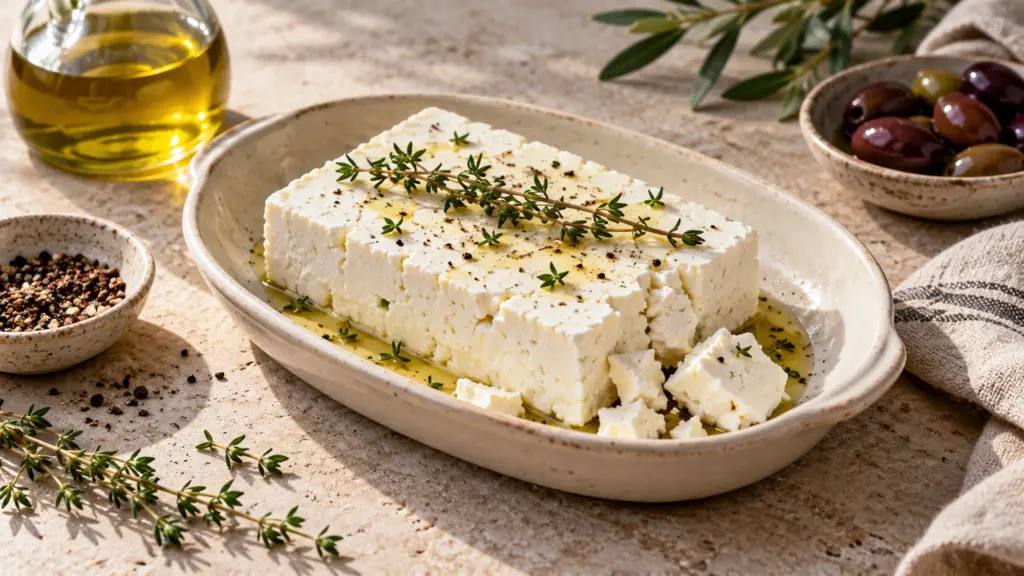
A few crumbles of feta cheese can change a bowl of plain vegetables: suddenly there is salt, tang, and a creamy contrast to all that crunch. Choosing it well is less about finding a single “best” cheese and more about understanding the milk, packaging, and job you want it to do.
Feta is a salty, tangy brined cheese. Choose a block when you want control over the size and texture, compare labels for milk and sodium, and keep it refrigerated according to the package instructions.
The cheese counter can make a simple purchase feel complicated. PDO labels, tubs of crumbles, and packages with different milk types all answer different questions. Here is how to separate origin, convenience, nutrition, and safe storage without turning dinner into a research project.
What makes feta cheese distinctive?
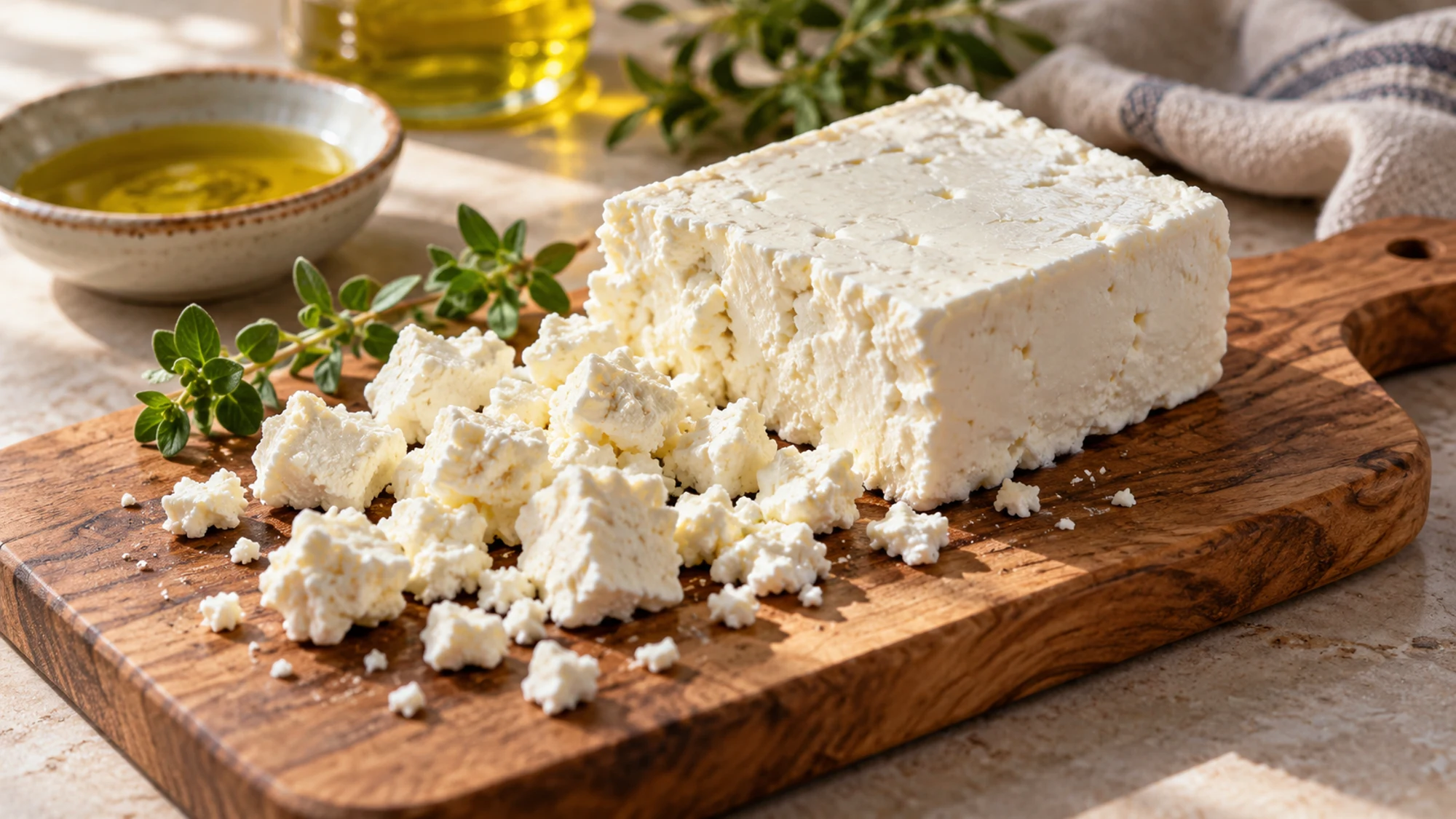
The European Commission’s Feta PDO guide describes a Greek cheese made from sheep’s milk, with goat’s milk permitted in the blend, salted and ripened with brine. Its protected designation links the product to specific production requirements and geography. If that origin matters to you, look for the actual PDO designation rather than relying on Greek-style imagery.
Feta PDO matures for at least two months. Its sharp, salty character is part of its identity, not a sign that something has gone wrong. However, familiar tang is not a food-safety test: storage history and package instructions still matter.
For everyday shopping, read the milk ingredients on the product you are holding. Do not assume every white cheese or every tub sold beside feta has the same composition. The label is more useful than judging by color or the picture on the lid.
Choose the format for the meal
A block gives you options: larger chunks for a salad, small crumbles for a topping, or a portion to mash into a spread. Ready-crumbled cheese saves a preparation step. Neither format automatically tells you the milk type, sodium content, or whether the milk was pasteurized.
| What you want | Useful choice | Check before buying |
|---|---|---|
| Large pieces for a salad | A block you can cut yourself | Milk type and storage directions |
| Quick finishing crumbles | Ready-crumbled feta | Ingredients and serving size |
| Protected Greek origin | Feta PDO | The designation, not just package imagery |
| Less sodium in the meal | Compare products at equal weights | Sodium per serving and the serving weight |
Think about how much you will use before buying a large container. A bargain tub is less useful if the last portion sits forgotten. Keep the original label available after opening so you retain the date, storage advice, and any recall-identifying information.
Choose by the meal and the label: block versus crumbles is a convenience decision, not a nutrition verdict.
Keep it cold and check pasteurization
For people at increased risk of Listeria infection, including pregnant people, adults 65 and older, and people with weakened immunity, the CDC lists feta made with pasteurized milk as a safer choice than cheese made with raw milk. Check for that wording; PDO status alone does not establish pasteurization.
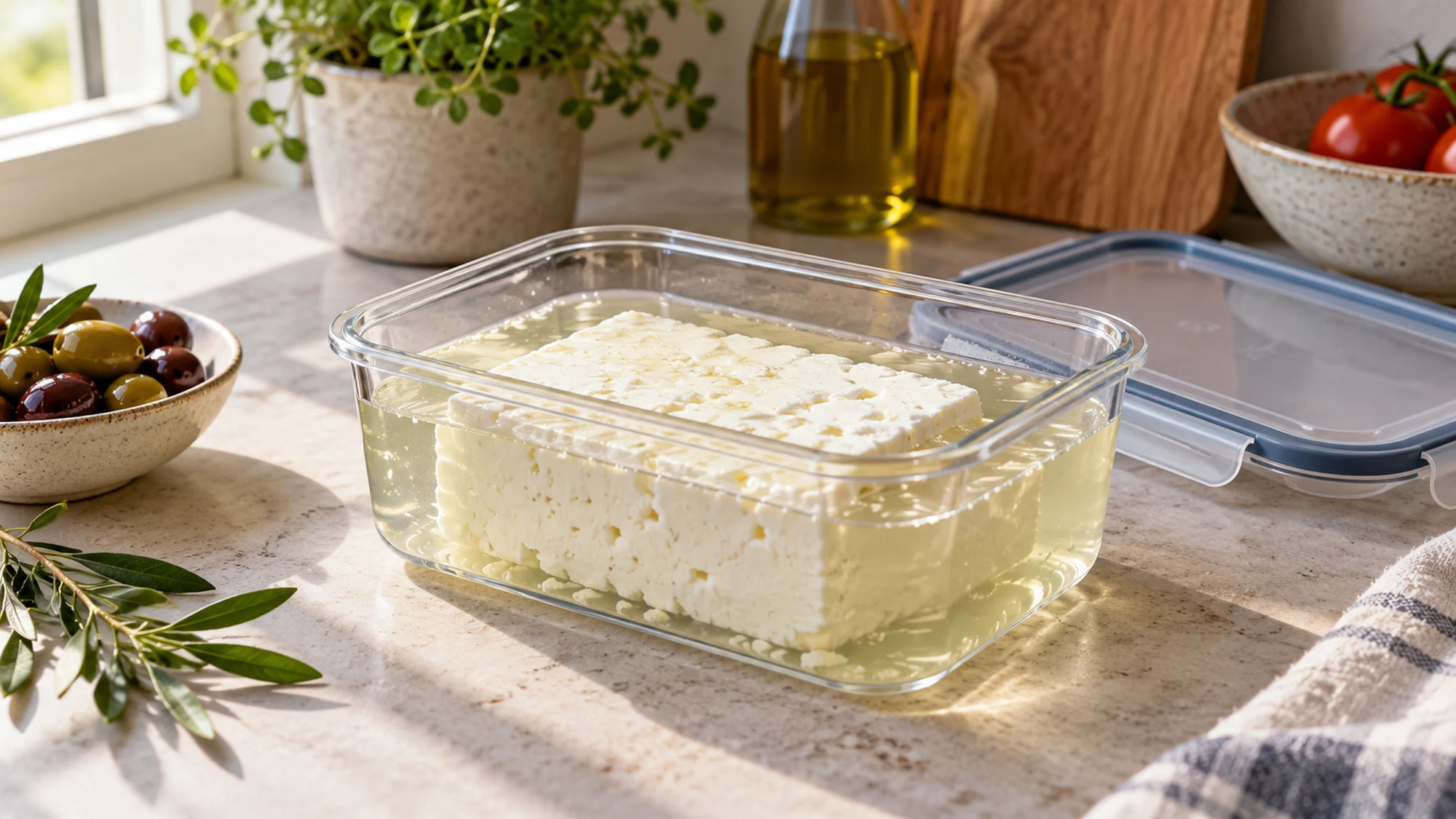
Keep feta refrigerated at 40°F (4.4°C) or below. Follow the manufacturer’s after-opening instructions and use clean utensils to remove portions. If supplied in brine, follow the product’s directions for keeping it in that liquid; do not improvise a room-temperature preservation method.
- Close the container promptly after serving.
- Keep ready-to-eat cheese away from raw meat juices.
- Discard perishable food left out more than two hours, or one hour above 90°F (32°C).
- Do not use smell or a tiny taste to decide whether improperly stored cheese is safe.
Those time limits follow USDA guidance for perishable foods. A salty taste or a covered dish does not cancel them.
Use its flavor without overwhelming the plate
Start with a small scattering, toss, and taste before adding more salt. Lemon, fresh herbs, tomatoes, beans, and cucumber offer other flavors and textures, so feta does not have to carry the whole dish. Larger chunks give occasional bold bites; fine crumbles distribute the flavor more evenly.
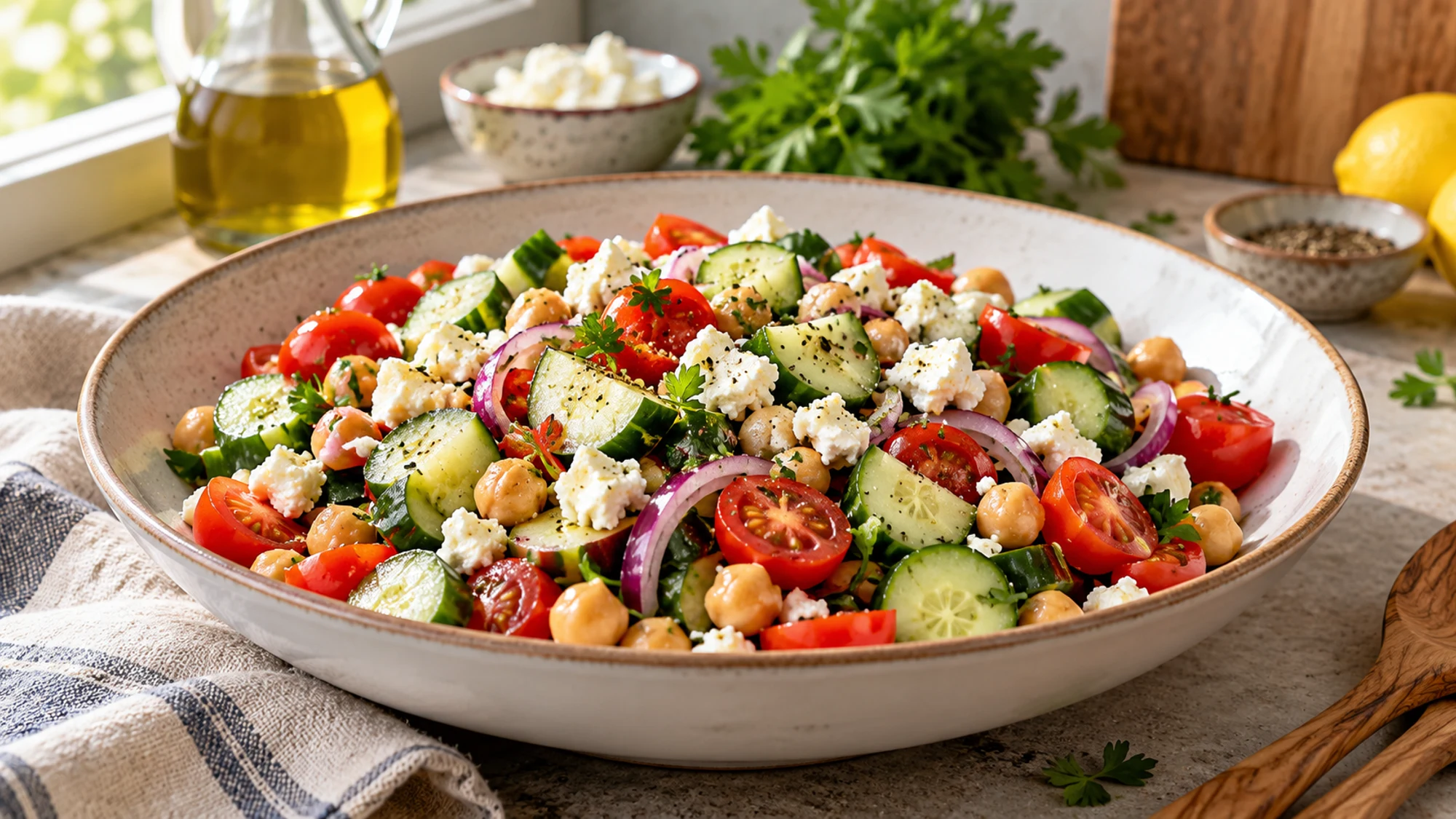
For a warm dinner idea, try baked feta pasta with roasted tomatoes. For a cold lunch, pair crumbles with chickpeas and chopped vegetables. These are different ways to use one ingredient, not claims that adding cheese makes every meal nutritionally identical.
Compare saturated fat and sodium on the Nutrition Facts panel if those matter to your choices. USDA dairy guidance encourages nutrient-rich choices with less saturated fat and sodium. The amount you actually use matters alongside the product you buy.
Bottom Line
Feta earns its place through flavor. Read the milk and pasteurization information, buy a practical amount, keep it cold, and let a modest portion bring contrast to the meal.
Food Insider’s production video below offers a closer look at feta-making in Greece; use the sources here for shopping and food-safety guidance.
Sources
- European Commission: Feta PDO
- CDC: Preventing Listeria Infection
- USDA: Refrigerator Temperature
- USDA: Perishable Food Left Out
- USDA: Dairy Choices

Hi, I’m Emily Pocker! I share recipes and food guides here at Recipes360 to help you find everyday meal inspiration and feel more confident in the kitchen. My goal is to make cooking approachable, enjoyable, and full of flavor.