
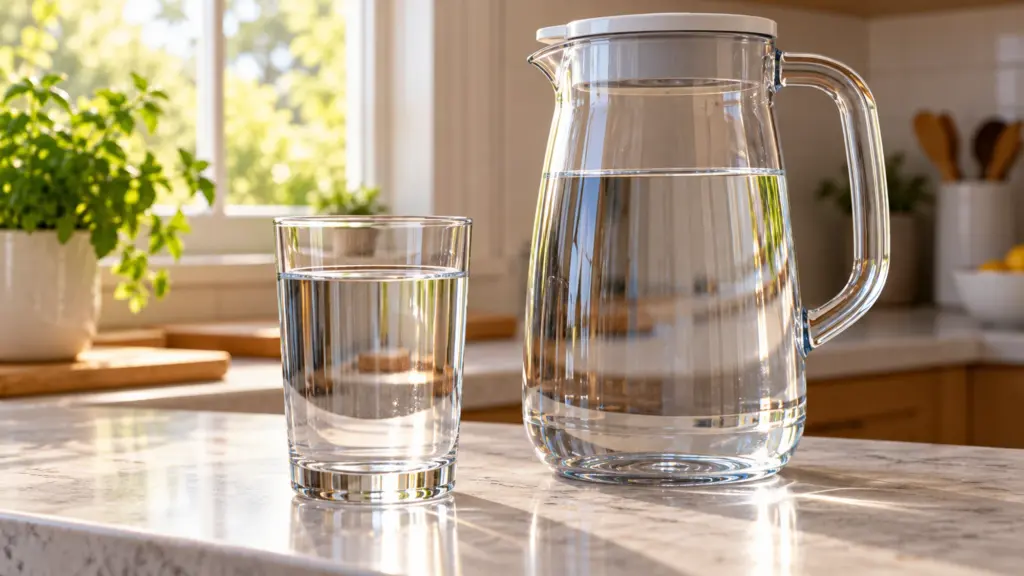
A bottle labeled distilled water can look more like an appliance supply than something for the dinner table. The important distinction is not how clear the water looks, but whether the product is intended for drinking and has been produced, packaged and stored for that purpose.
Can you drink distilled water? Yes, when it is a drinking-water product from a suitable source and has been handled safely. Distillation describes a treatment process, not a special health benefit. Do not assume industrial, laboratory or appliance-use water is suitable to drink.
Can You Drink Distilled Water From Any Bottle?
Choose water explicitly intended for human consumption. New York State’s bottled-water guidance includes distilled water among products sold for domestic consumption or cooking. That does not make every container carrying the word “distilled” a drinking-water product.
The FDA regulates bottled drinking water as food, with requirements for production and quality. For a purchase, I would look at the intended use, intact packaging and manufacturer information rather than treating an unfamiliar label as a purity award.
- Read the entire label, including warnings and intended use.
- Choose a sealed drinking-water product rather than an unmarked bottle.
- Do not drink water labeled for laboratory, industrial or other nonfood use.
- If the purpose or handling is unclear, use a known safe drinking-water source instead.
“Distilled” tells you how water was treated. The label still needs to tell you that this particular product belongs in a drinking glass.
What Distillation Does—and What It Does Not
The CDC explains that distillation boils water and collects it after cooling. Many germs and chemicals are left behind. This differs from simply boiling water in a saucepan and letting that same water cool.
Distillation is not a universal answer to every contaminant. CDC notes that some volatile compounds, solvents and pesticides are not removed, and bacteria can grow on cooling coils while equipment is idle. A home system therefore needs suitable selection and maintenance, not just a reassuring name.
| Term or process | Useful meaning | Do not assume |
|---|---|---|
| Distilled | Water collected after vapor is cooled | Every possible contaminant is removed |
| Filtered | Water passed through a particular treatment medium | All filters remove the same things |
| Purified bottled water | A product meeting the relevant label requirements | Distillation was necessarily the only treatment |
| Boiled water | Water heated to boiling | It has become distilled water |
| Clear-looking water | Little visible material | It is safe to drink |
Taste and Minerals Are Separate From Safety
The EPA’s bottled-water guide explains that source, treatment and mineral content affect taste. Distillation removes minerals such as calcium and magnesium, so the result may taste different from the tap or mineral water you usually drink.
A different taste is not proof of a detox effect, and a plain-tasting glass is not a medical treatment. You do not need to turn choosing water into a contest over which bottle sounds most scientific. Start with safety and suitability, then consider the flavor, cost and convenience you prefer.
- Do not use a water label to diagnose or treat a health problem.
- If you have a prescribed fluid or electrolyte plan, follow your clinician’s instructions rather than changing it based on general water advice.
- For infant feeding or medical equipment, follow the specific preparation or device instructions; ordinary drinking guidance does not replace them.
- If your normal water supply is safe, buying distilled water is not automatically necessary.
Mineral content can change flavor. It does not turn water into a cure, and it does not replace advice tailored to a medical need.
Keep Safe Water Safe After Opening
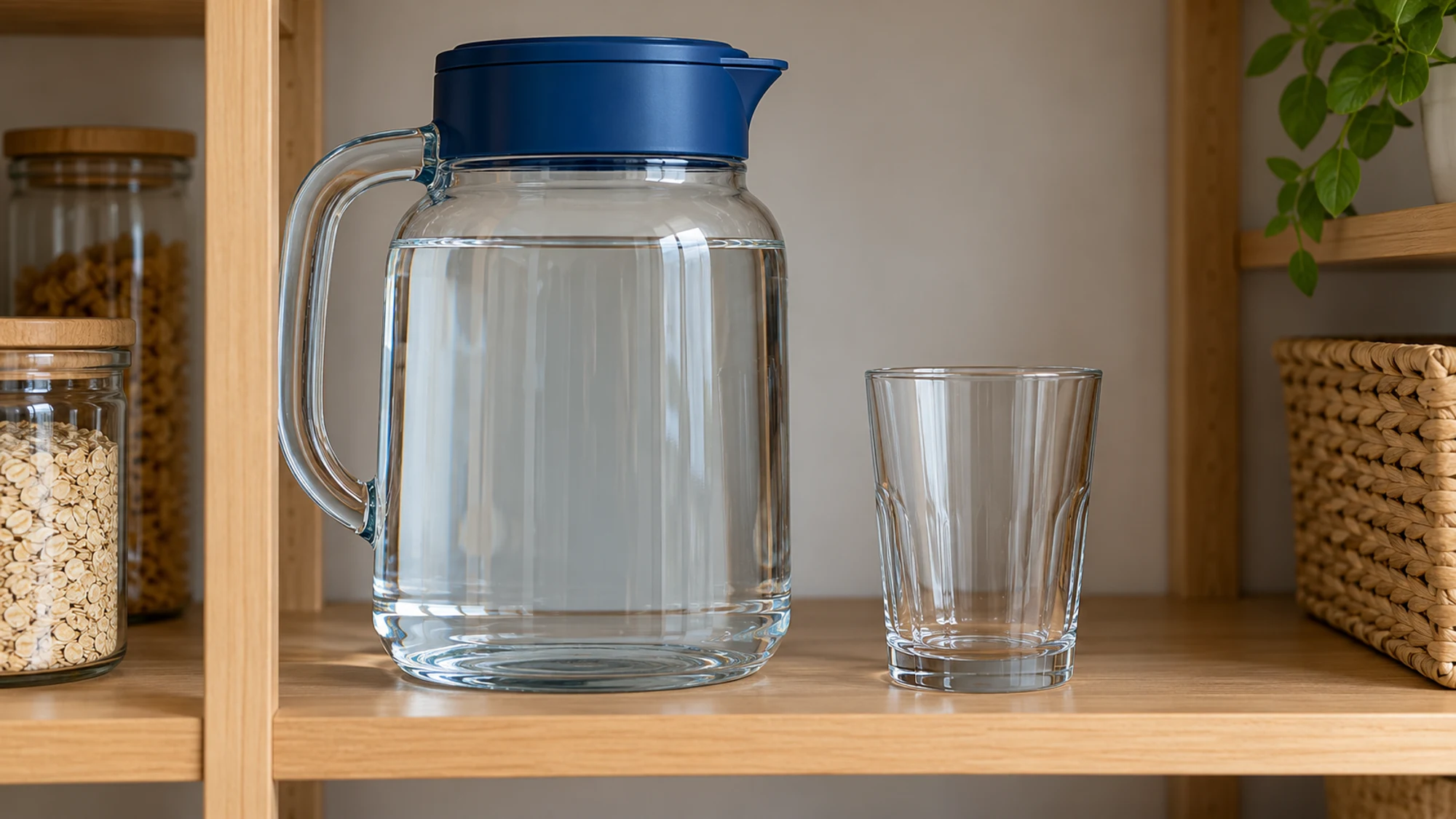
Treatment happens before the water reaches your glass; handling matters afterward. CDC’s safe-storage guidance emphasizes a clean, closable container that protects treated water from contamination. Pouring is preferable to reaching into stored water with hands or utensils.
Keep the manufacturer’s directions with the bottle and close it after use. If you transfer water to a reusable container, choose one intended for food or beverages and clean it appropriately. A container that once held chemicals is not a sensible shortcut, however thoroughly it appears to have been rinsed.
- Use clean glasses and avoid touching the inside of the bottle opening or cap.
- Follow the product’s storage directions instead of inventing a universal after-opening deadline.
- For home treatment, maintain the system according to the manufacturer and choose it for the contaminants actually present.
- During a local water advisory, follow the water authority’s specific instructions; do not improvise a treatment based only on appearance.
Bottom Line
Drinking-water-grade distilled water is an option, not a requirement or a remedy. Check the intended use, choose a reliable source and keep it protected after opening. The useful question is whether the water is suitable and safely handled—not whether its label sounds more pure.
WARE’s Steam Culture video illustrates water distillation. It explains the process, not a medical benefit or permission to drink laboratory or industrial water.
Sources
- New York State: bottled-water questions
- FDA: bottled-water safety
- CDC: home water treatment
- EPA: bottled-water basics
- CDC: safe water storage

Hi, I’m Emily Pocker! I share recipes and food guides here at Recipes360 to help you find everyday meal inspiration and feel more confident in the kitchen. My goal is to make cooking approachable, enjoyable, and full of flavor.