
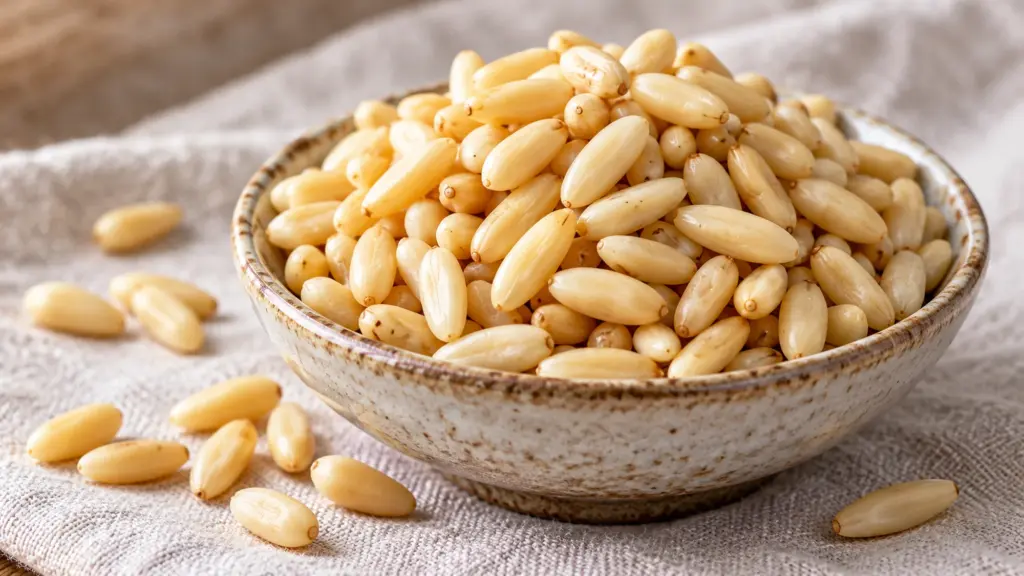
One recipe asks for pine kernels; another calls for pine nuts. Before you buy two bags for the same weekend’s cooking, it helps to know what those small ivory pieces actually are.
In ordinary grocery and recipe language, pine kernels and pine nuts mean the same edible ingredient. The useful differences are whether they are shelled, raw, toasted or seasoned—not which of those two names appears on the bag.
I’d put more attention into freshness and the amount you will use than into the wording. A little toasted crunch can be the finishing touch a simple bowl of vegetables needs.
Why pine kernels and pine nuts share a name
Pine nuts are edible seeds from several species of pine, as Food Standards Australia New Zealand explains. In the kitchen, “kernel” refers to the edible inner part you use after the shell is removed.
You can see the names overlap on an actual product: Waitrose Pine Nut Kernels lists pine kernels as its ingredient. A recipe calling for shelled pine nuts does not need a special conversion simply because your bag says kernels.
- Read beyond the name: raw, toasted and salted products serve different purposes.
- Check whether the product is shelled; ordinary recipe measurements usually refer to the edible pieces.
- Expect some variation in shape and size rather than assuming every package must look identical.
- Buy food-grade packaged pine nuts; this naming explanation is not a guide to harvesting wild seeds.
Choose raw or toasted for the job
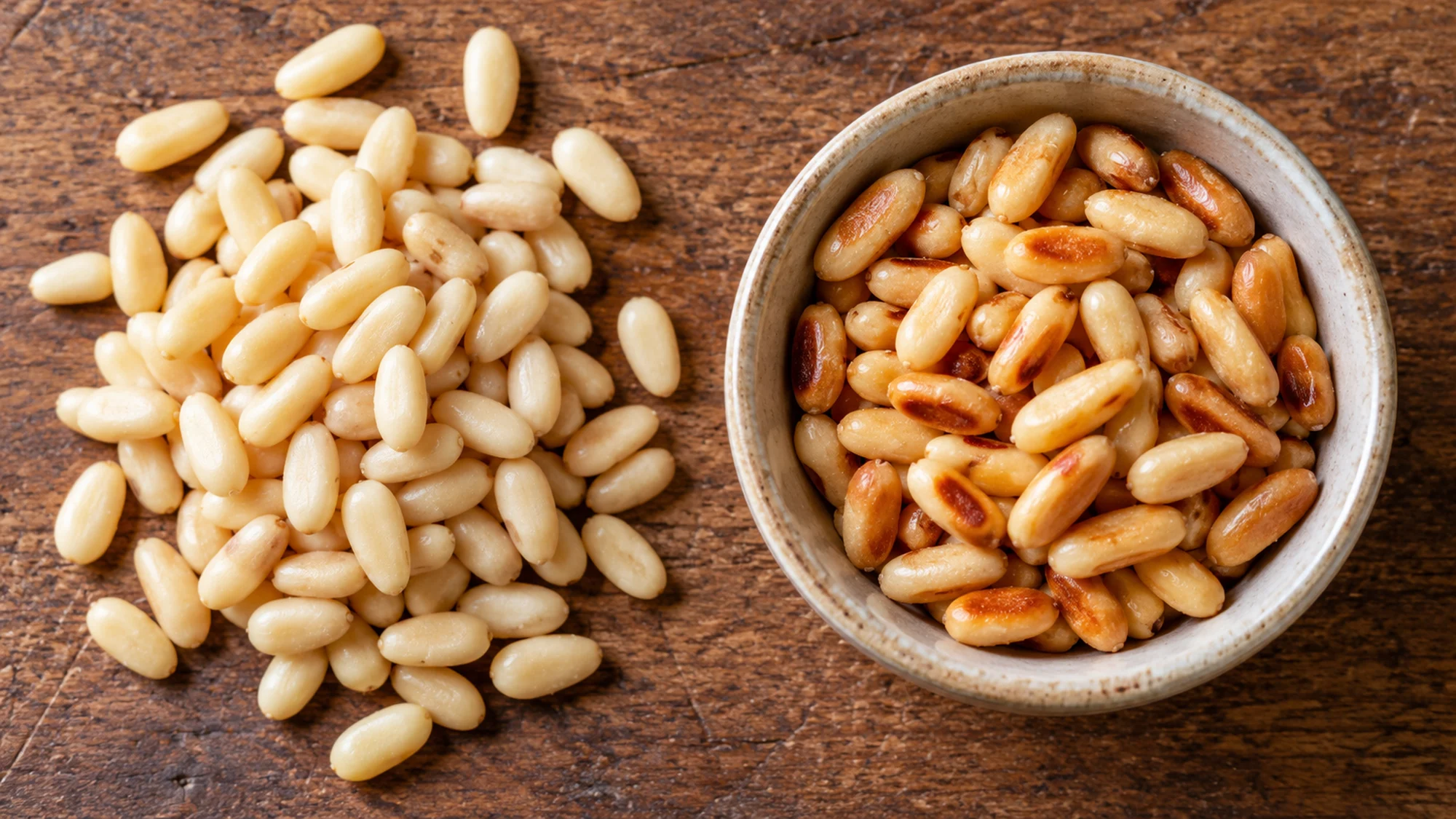
Raw pine nuts have a mild, rich character; toasting gives them a more pronounced aroma and golden color. I’d use the dish as the guide: a subtle blended sauce and a crisp finishing sprinkle do not need exactly the same treatment.
Think about when the nuts will meet heat. Nuts sprinkled over a finished plate have a different job from those going into the oven on a tart; a strongly toasted topping can darken further during baking.
| What you are making | Useful choice | What to watch |
|---|---|---|
| A blended sauce | Raw or gently toasted, as the recipe directs | Toasting changes the flavor. |
| A salad or cooked vegetable topping | Lightly toasted | Add near serving for distinct texture. |
| A baked tart or cookie | Follow the recipe’s raw/toasted instruction | Further baking can deepen browning. |
| A seasoned snack or topping | Plain or already seasoned | Account for added salt. |
Raw and toasted pine nuts are choices for flavor and texture, not two different ingredients.
Toast gently, then get them out of the pan
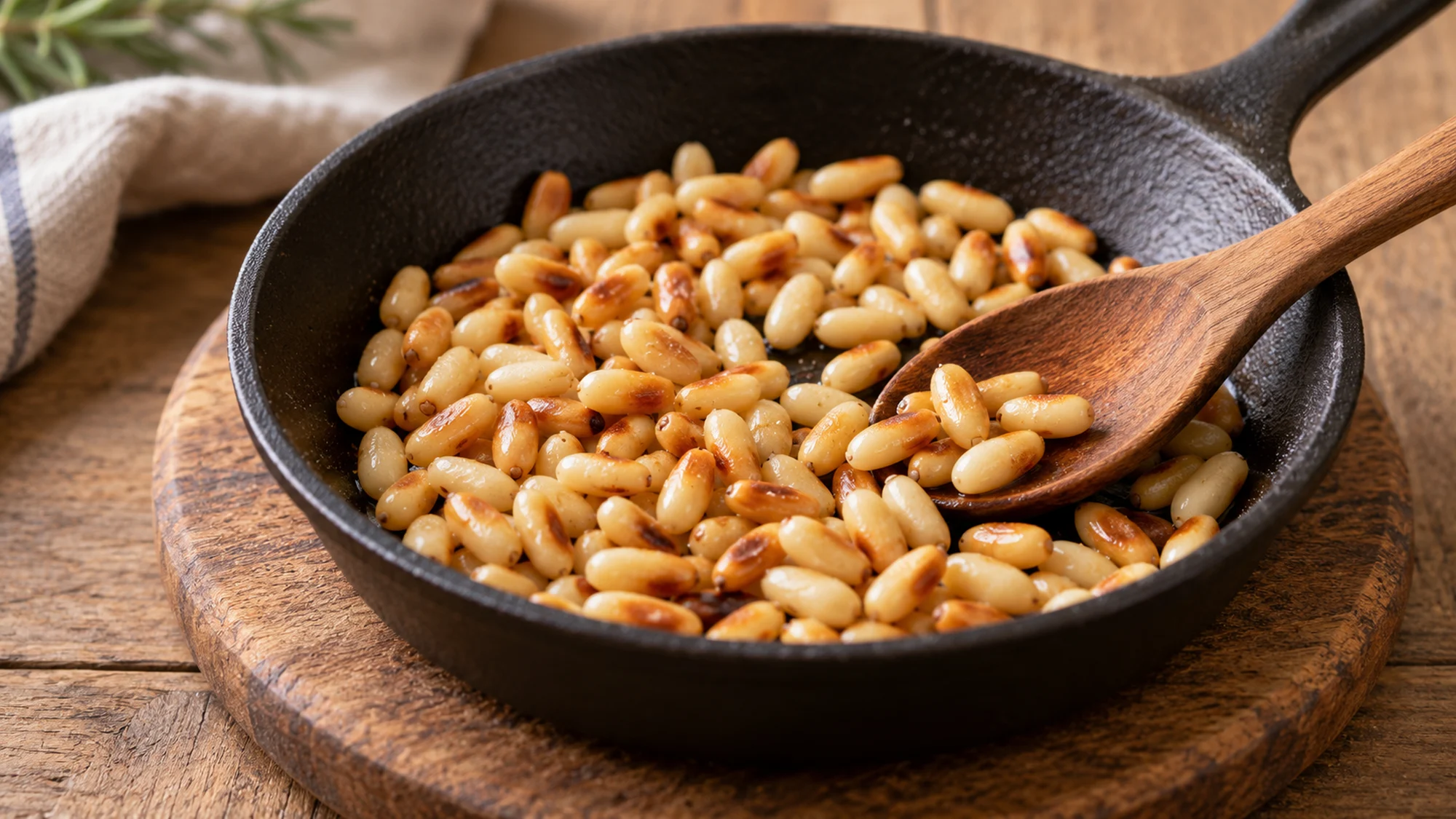
For stovetop guidance, Karen Breyer’s pine-nut demonstration and instructions use a dry skillet over medium-low heat, frequent stirring and transfer to a cool plate when golden. The important cue is the color, not a timer treated as a guarantee.
I’d keep the receiving plate ready before starting. Turning off a burner is not the same as removing the nuts from a hot pan, and the gap between nicely golden and overly dark is easy to miss.
- Use a pan large enough to see and move the nuts easily.
- Stay nearby and stir so the same side is not sitting against the hot surface.
- Look for light golden patches and a pleasant toasted aroma.
- Transfer promptly to a cool plate instead of leaving them in the skillet.
- Let them cool before sealing a portion for storage.
Storage, allergies and the unusual bitter aftertaste
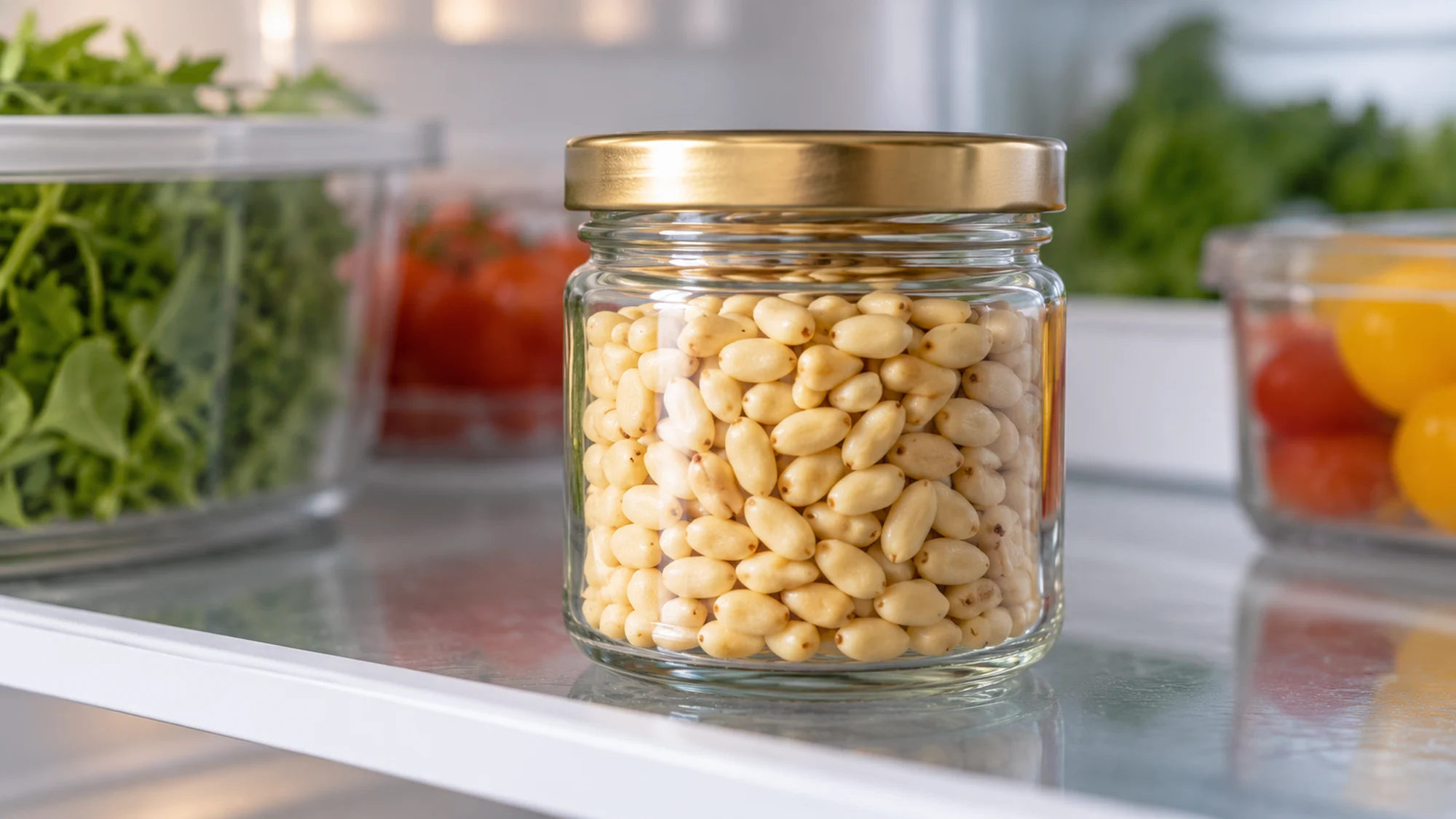
A sealed container in the refrigerator or freezer is useful for nuts you will not use soon; UC Davis recommends cold storage for longer keeping. Follow the package’s specific instructions and keep the original label so the purchase and opening details remain available.
Being botanically a seed does not make pine nuts allergy-safe. Tufts’ allergist guidance explains that pine-nut allergy can occur, and whether someone with another nut allergy can eat them needs individualized assessment. Do not test that question casually at home.
- For freshness: choose a package size you can use, seal it well, and protect it from heat. Avoid promising yourself that toasting will fix stale nuts.
- For a persistent bitter or metallic taste: NSW Food Authority advises stopping the implicated pine nuts, retaining the product and packaging, and seeking advice if symptoms are severe, persistent or concerning.
- For a possible allergic reaction: do not assume it is “pine mouth.” Breathing difficulty or throat swelling requires urgent help.
Bottom Line
You can shop for pine kernels and pine nuts as the same everyday ingredient, then choose the form your dish needs. Use gentle heat for toasting, keep longer-term supplies sealed and cold, and take allergy questions seriously. The name is straightforward; careful buying and handling make the difference on the plate.
Jenna Passaro of Sip Bite Go demonstrates dry-pan toasting. Watch the color and move the nuts out of the hot pan when they are ready.
Sources
- FSANZ: Pine nuts
- Waitrose: Pine nut kernels ingredient label
- Karen Breyer: Toasted pine nuts
- UC Davis: Storing nuts
- Tufts: Pine nuts and allergy
- NSW Food Authority: Pine mouth

Hi, I’m Emily Pocker! I share recipes and food guides here at Recipes360 to help you find everyday meal inspiration and feel more confident in the kitchen. My goal is to make cooking approachable, enjoyable, and full of flavor.