
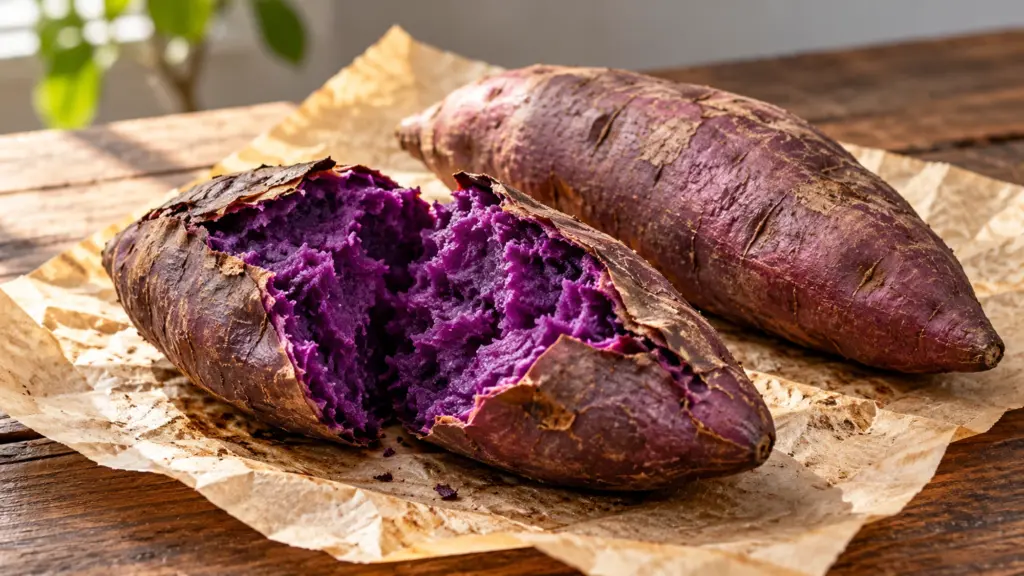
Cut into a purple sweet potato and the color can make an ordinary side dish look almost theatrical. The useful question is not whether that violet flesh is impressive—it is—but whether the potato in your hand is the ingredient your recipe actually needs.
A purple sweet potato is not the same ingredient as ube. Purple-fleshed sweet potato varieties differ in skin color and texture, and their natural pigments can tint cooking water. Choose the right variety, then cook until the center is genuinely tender.
Purple Sweet Potato and Ube Are Different Plants
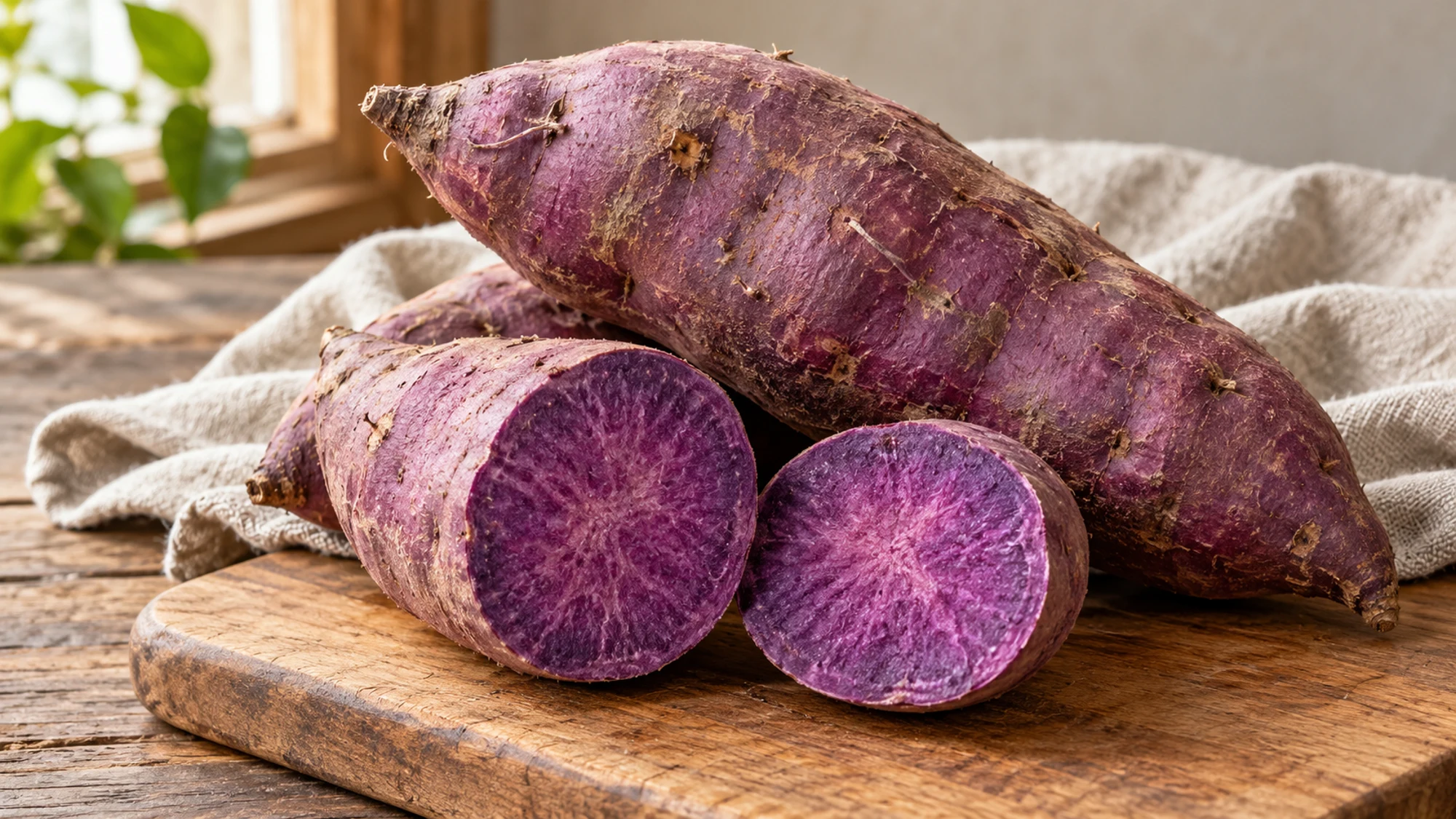
The Hawaiʻi ʻUlu Cooperative distinguishes sweet potatoes from ube, a true yam called Dioscorea alata. Purple color alone does not make them interchangeable, even when a dessert photograph makes the two look similar.
I would check the product name before choosing a substitute. A recipe written for ube jam, extract or cooked yam is asking for a particular ingredient, not simply something purple. Sweetness, moisture and added ingredients can all change the result.
| Ingredient | Useful identifying detail | Before substituting |
|---|---|---|
| Stokes Purple sweet potato | Purple skin and purple flesh | Expect its own texture and cooking needs |
| Okinawan sweet potato | Often beige skin with purple flesh | Do not judge the interior by the skin |
| Ube | A true yam with rough, bark-like skin | Use a recipe written for yam or its specific prepared form |
| Ube jam or extract | A processed ingredient, not a fresh root | Check sweetness, concentration and added ingredients |
Buy by the ingredient name and intended use, not by a purple photograph on its own.
Why the Flesh and Cooking Water Turn Purple
The Hong Kong Centre for Food Safety explains that anthocyanins give purple sweet potatoes their color. These water-soluble pigments can escape during washing or boiling, and their appearance changes with acidity. Purple water is not, by itself, evidence of added dye.
That natural color is a good reason to enjoy the vegetable, but it does not establish a disease-prevention effect or make every purple dessert nutritionally equivalent. A sweet potato served plain and one turned into a heavily sweetened filling are different foods on the plate.
- Expect some staining: pigment can reach the water, utensils or hands during preparation.
- Do not diagnose spoilage by pigment alone: consider the condition of the root, not simply a purple stain.
- Keep claims modest: a colorful ingredient is not a treatment, and color intensity is not a personal health score.
Cook for Tenderness, Not Just the Clock
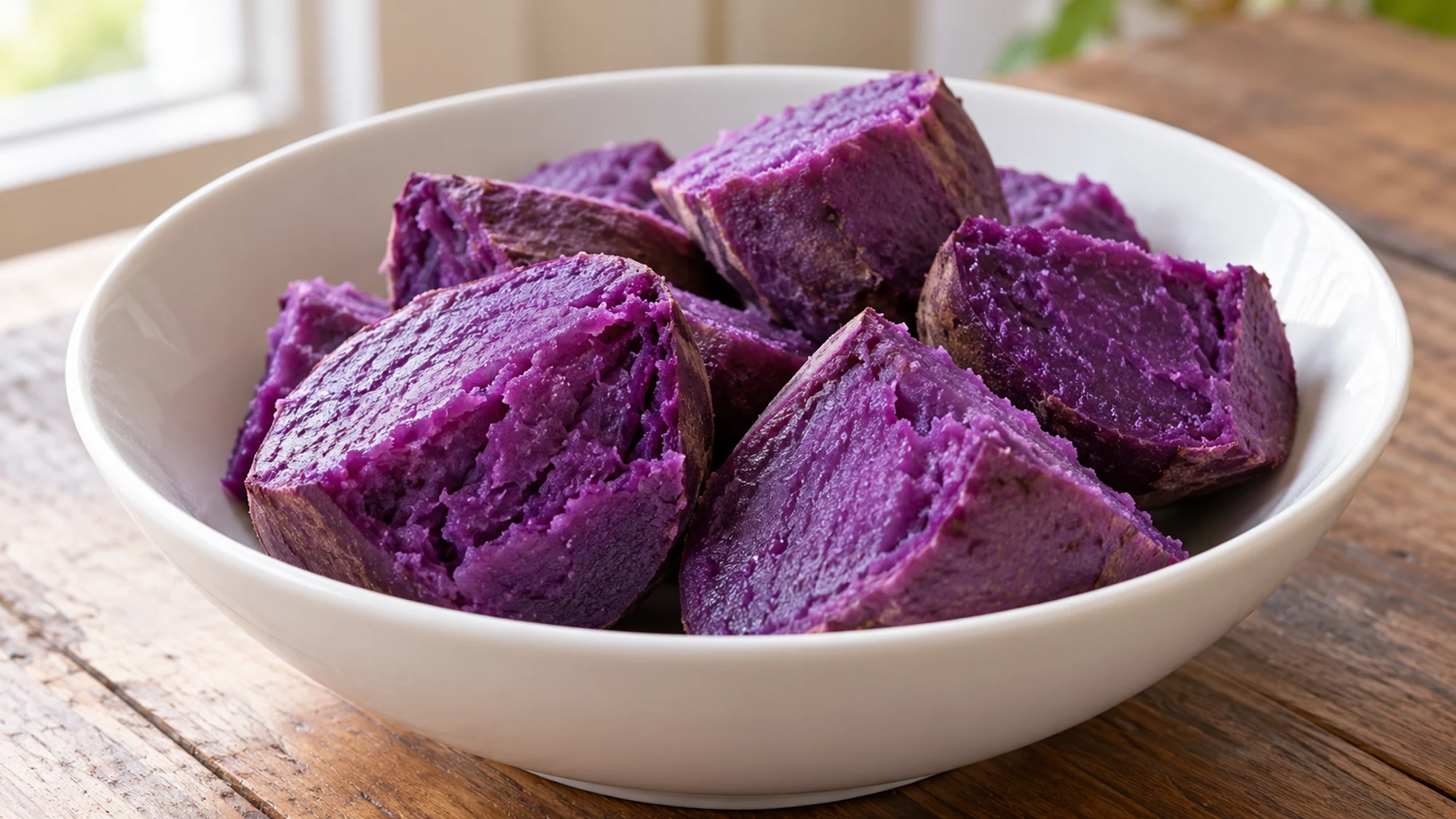
Purple varieties can have a dense texture. For its own Stokes Purple product, Frieda’s gives a whole-potato baking range of one to two hours at 350°F (177°C). That is product guidance, not a universal time for every size, variety or cooking method.
I would give the center more attention than the skin. A potato can look thoroughly baked outside and still resist a fork in the middle. If your plan is a smooth mash, that resistant center will not become silky simply because you add more liquid.
- Whole baked potatoes: test the thickest part and allow more time when it is still firm.
- Steamed chunks: cut reasonably even pieces so one large center is not holding up the rest.
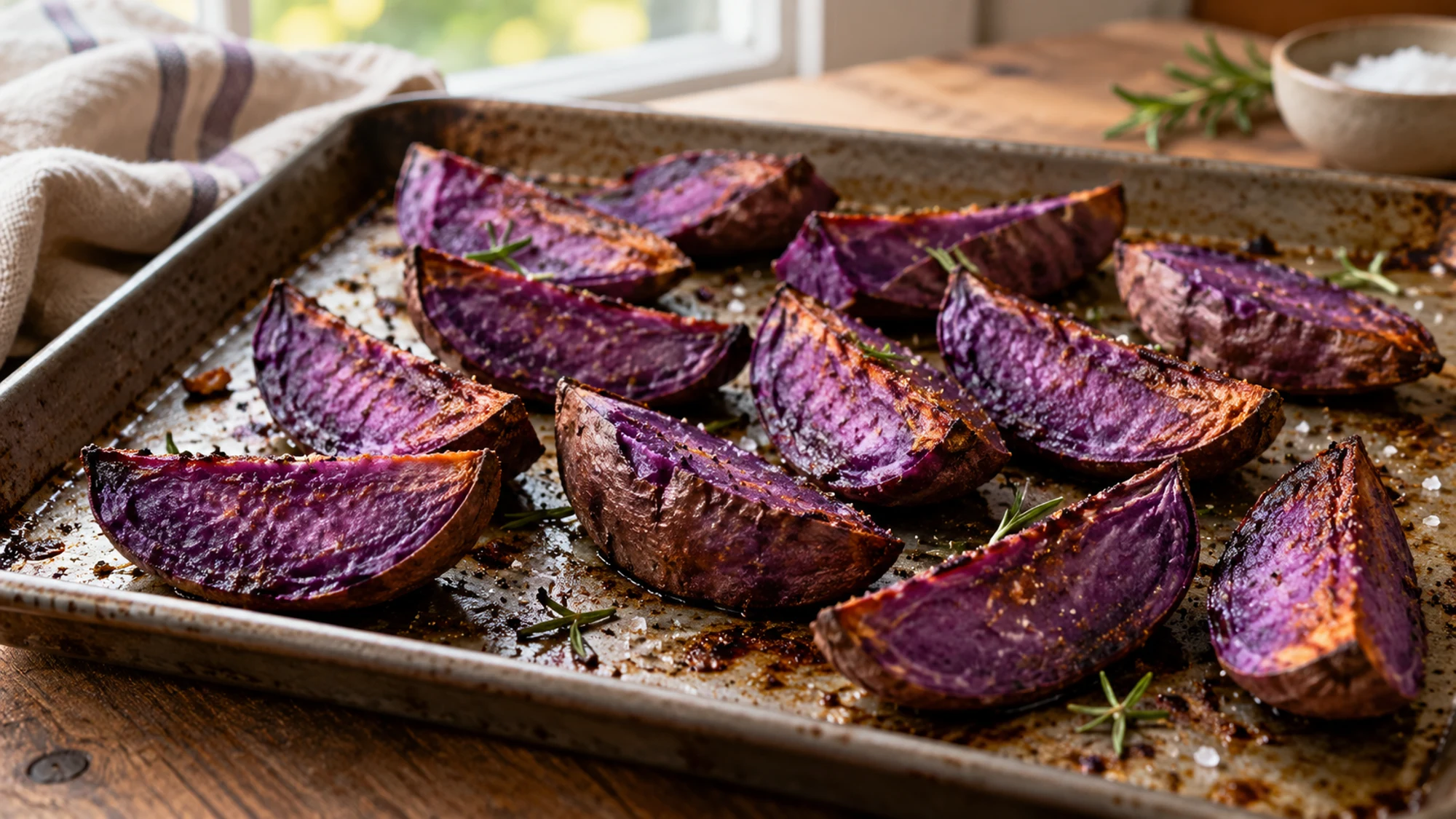
- Roasted wedges: give pieces space and look for both tender centers and browned edges.
- Mashes and fillings: add liquid gradually to suit the actual cooked texture; do not assume an orange-potato formula needs no adjustment.
A tender center is the useful finish line. The timer is a reminder to check, not permission to stop cooking a firm potato.
Choose, Store and Serve It Simply
Mississippi State University Extension recommends firm sweet potatoes without soft spots, cracks or bruises. Store uncooked roots in a cool, dry, dark, ventilated place rather than the refrigerator, and scrub them just before preparation.
For a first taste, I would keep the additions quiet: a little butter or olive oil, a pinch of salt, or a spoonful of yogurt if it suits your needs. That lets you decide whether you prefer this variety in a savory meal or a dessert before committing a whole bag to a complicated bake.
- Buy for your plan: similar-sized roots are easier to cook together than a mixture of very large and tiny ones.
- Keep cooked food cold: refrigerate leftovers promptly; do not treat a cooked root like an uncooked pantry vegetable.
- Use the label: frozen or prepared purple sweet potato products may have different handling instructions.
- Expect variation: one variety’s flavor and moisture are not a promise about every purple-fleshed sweet potato.
Bottom Line
Purple sweet potato brings striking natural color and a useful change of texture. Keep it separate from ube in your shopping decisions, cook the center until tender and choose additions that let the vegetable’s flavor show. The color has already done enough decorating.
Frieda’s explains the difference between ube and purple sweet potatoes in the ingredient-identification video below.
Sources
- Hawaiʻi ʻUlu Cooperative: sweet potato versus ube
- Centre for Food Safety: purple pigments
- Frieda’s: Stokes Purple product and cooking information
- Mississippi State Extension: choosing and storing sweet potatoes

Hi, I’m Emily Pocker! I share recipes and food guides here at Recipes360 to help you find everyday meal inspiration and feel more confident in the kitchen. My goal is to make cooking approachable, enjoyable, and full of flavor.