
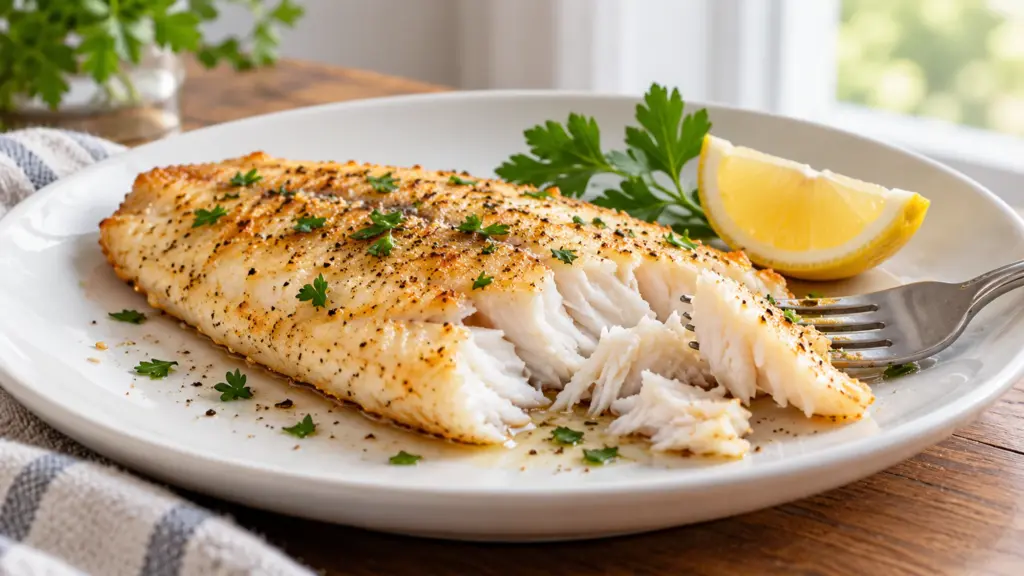
The freezer case often offers a bag of pale fillets with an unfamiliar name: swai fish. Before deciding whether it belongs in dinner, it helps to know exactly what you are buying and which details matter more than the price on the shelf.
Swai fish is a mild white fish sold as fillets, identified as Pangasianodon hypophthalmus. Choose a clearly labeled product, keep it cold, follow its thawing instructions and cook it thoroughly. Its name alone does not establish quality, safety or nutritional value.
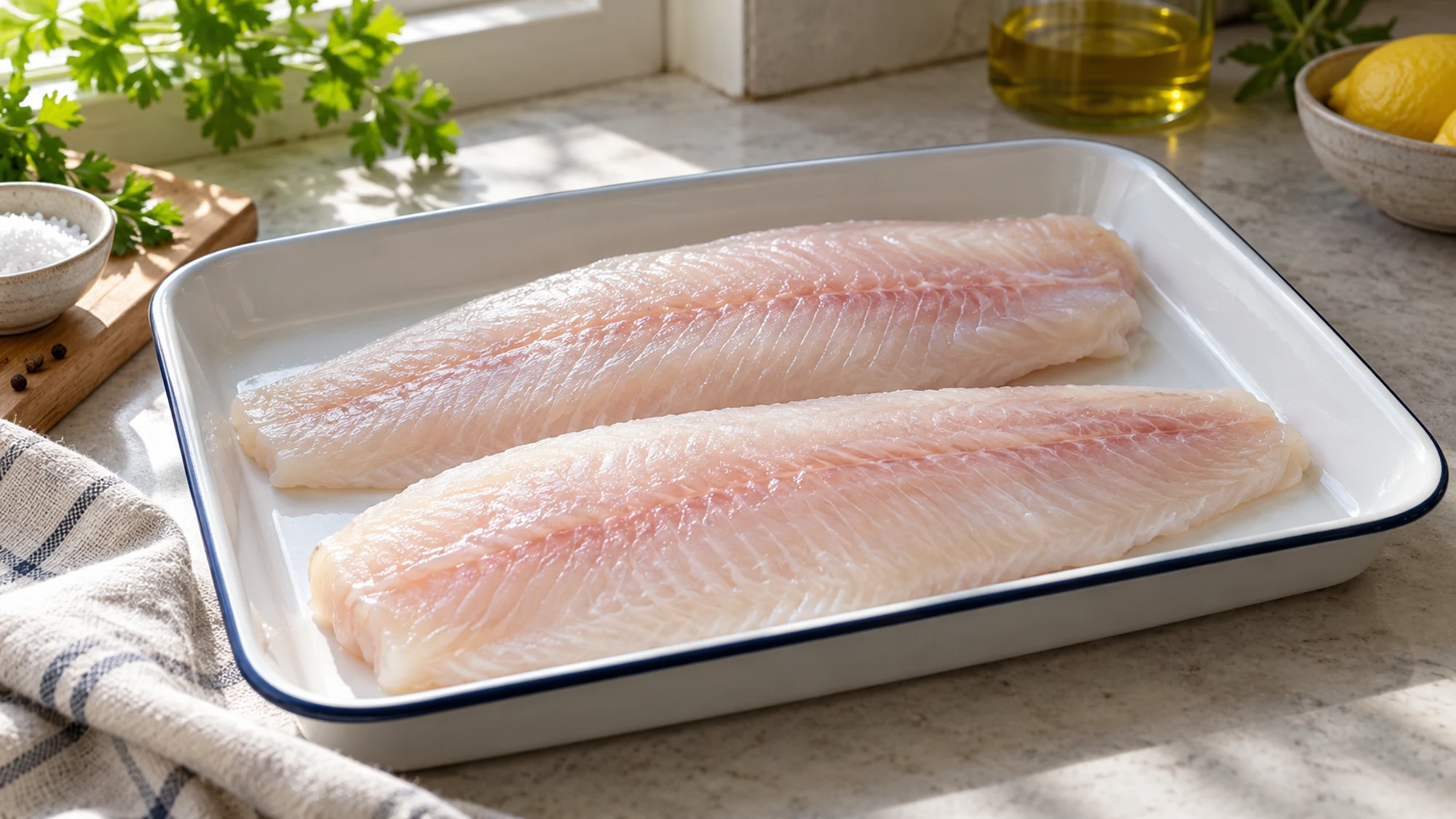
What Is Swai Fish?
The FDA Seafood List identifies swai as Pangasianodon hypophthalmus, with accepted market names including sutchi, striped pangasius and tra. Those names are useful when comparing labels; they are not a reason to assume every fish called “basa” is the same species.
I would start with the package rather than a sweeping claim about all farmed fish. A product’s species, handling instructions and ingredients give you something concrete to work with. A dramatic headline about where a fish might be raised does not inspect the fillet in your cart.
- Check the name: look for a clear species or market designation rather than an unexplained “white fish.”
- Read the ingredients: distinguish plain fillets from seasoned, breaded or solution-added products.
- Keep the package information: it gives you the producer, lot details and preparation instructions if you later need them.
Identify the product first. Then judge its condition and handling, rather than treating a name as a guarantee or a warning.
How to Buy and Store the Fillets
The FDA seafood handling guide advises choosing properly chilled fish and intact frozen packages. Avoid a thawed, bendable product sold as frozen, and do not buy packages with damage or suspicious heavy frost.
Once home, refrigerate promptly at 40°F (4°C) or below if using within two days; otherwise freeze. I would plan the side dishes before thawing the fish, so a busy evening does not turn into another day of uncertain storage.
| What you see | Useful question | What to do |
|---|---|---|
| Plain frozen fillets | Is the packaging intact and the fish frozen hard? | Keep frozen until ready to thaw |
| Seasoned fillets | What salt, sauces or allergens were added? | Read ingredients and preparation directions |
| Breaded fish | Does the product require cooking from frozen? | Follow its package method |
| Vacuum-packed portions | Must packaging be removed before thawing? | Read and follow the specific thawing instructions |
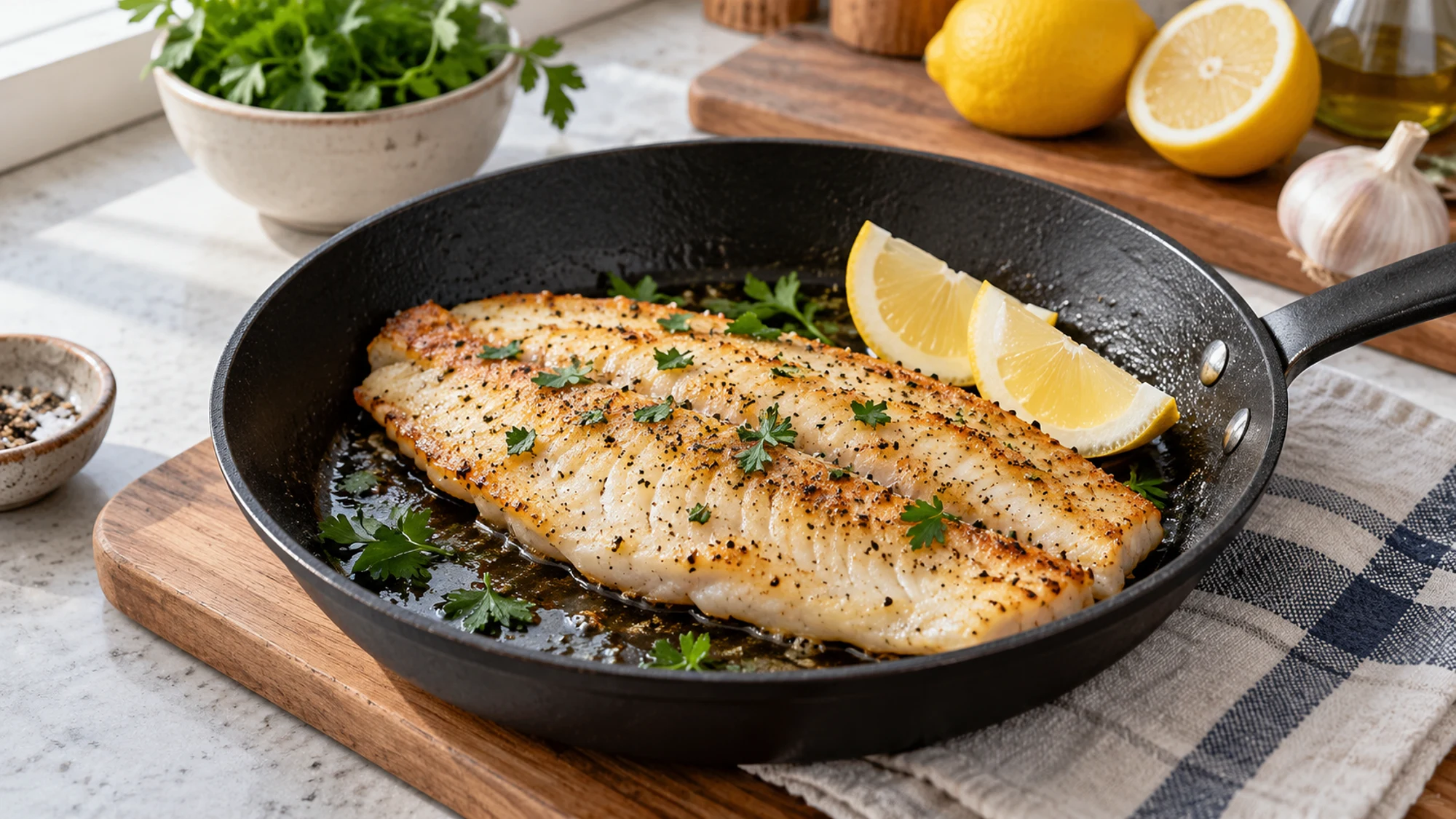
Cooking Swai Fish Without Guessing at Doneness
Thaw in the refrigerator rather than on the counter. Vacuum packaging deserves particular attention: Florida’s food-safety guidance explains that fish must be fully removed from reduced-oxygen packaging before refrigerator thawing when that removal is required, not merely given a tiny puncture.
For ordinary fish fillets, the FDA’s internal-temperature target is 145°F (63°C). Measure the thickest part with a food thermometer; a browned surface cannot tell you whether the center has reached that temperature. Keep raw-fish utensils separate from the cooked meal.
- Match the pieces: similar thickness helps portions finish together; a very thin tail may cook sooner than the center.
- Keep seasoning purposeful: lemon, herbs or a lightly spiced coating can give a mild fillet direction without hiding it under several competing sauces.
- Turn gently: use a broad spatula to support the fillet rather than repeatedly poking it with a fork.
- Serve promptly: build the rest of the plate before the fish finishes so it does not sit while you start the vegetables.
A timer can help you plan, but temperature tells you when the fish is cooked. Thickness and starting temperature change the timing.
Nutrition and Mercury: Keep the Claims Specific
Fish supplies protein, but different species are not nutritionally interchangeable. The NIH Office of Dietary Supplements notes that omega-3 content varies among seafood species. Do not assume a white fillet provides the same amount as salmon, or borrow another fish’s nutrition numbers for a swai package.
For pregnancy, breastfeeding and children, use the FDA/EPA fish advice to choose a variety of lower-mercury seafood. Swai is not separately named in that chart; if you cannot confidently match a product to the advice, ask a qualified health professional rather than guessing from a broad family name.
- Compare the actual label: added solutions, breading and sauces can change sodium and other nutrients.
- Keep variety: one affordable fish need not become the only seafood you eat.
- Respect fish allergy: a mild taste does not make swai an allergy-safe substitute.
Bottom Line
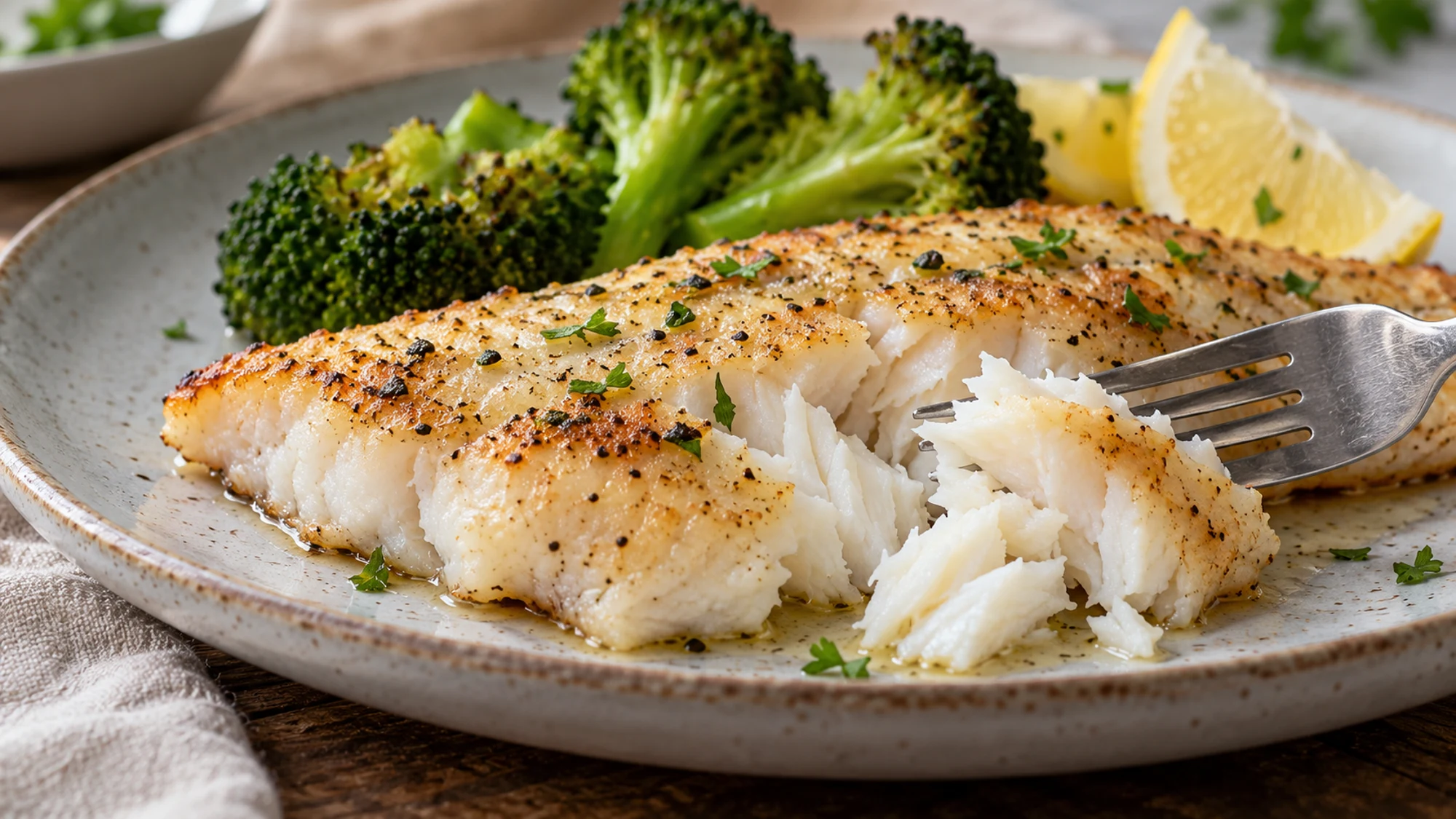
Swai fish can be approached like any unfamiliar ingredient: identify it, buy it in good condition and handle it carefully. I would put more attention into the label, cold storage and a thermometer than into blanket claims that every swai fillet is either exceptional or unsafe.
The FDA video below covers selecting and serving fresh and frozen seafood safely; the handling principles are relevant to swai fillets.
Sources
- FDA: swai species listing
- FDA: seafood handling
- Florida DBPR: thawing vacuum-packed fish
- NIH: omega-3 fatty acids
- FDA/EPA: fish advice

Hi, I’m Emily Pocker! I share recipes and food guides here at Recipes360 to help you find everyday meal inspiration and feel more confident in the kitchen. My goal is to make cooking approachable, enjoyable, and full of flavor.