
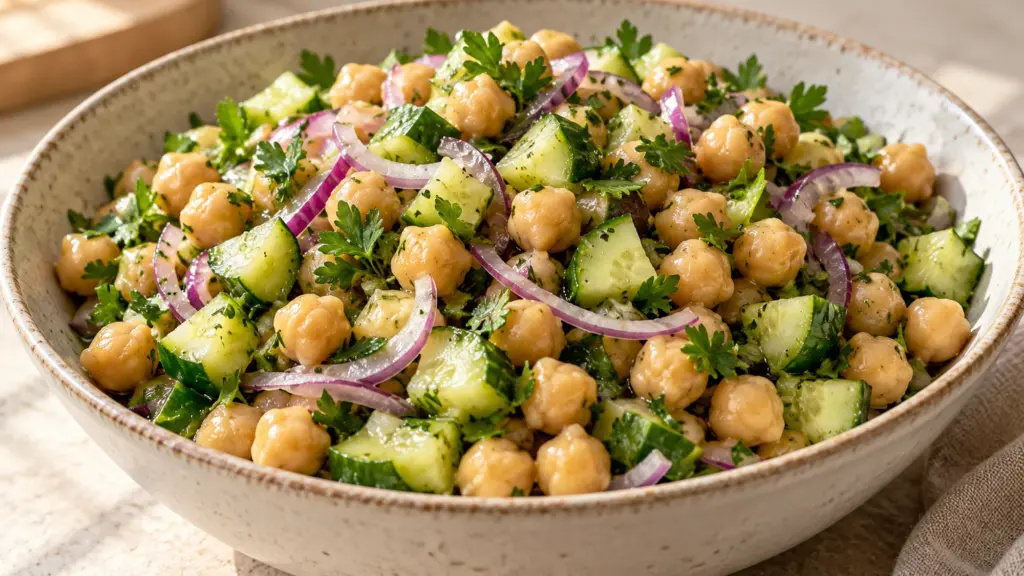
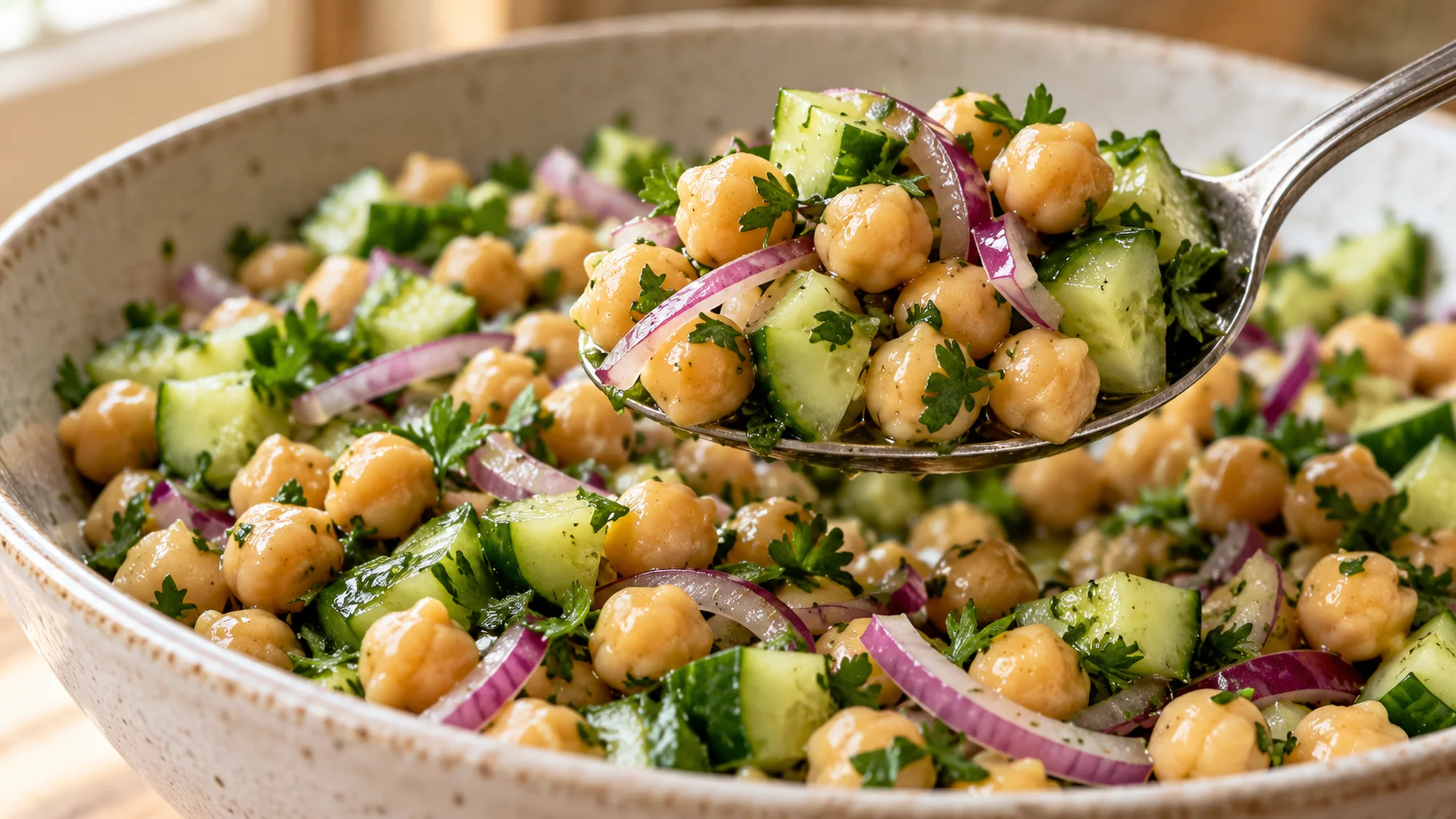
A cucumber salad can look crisp in the bowl and leave a puddle on the plate ten minutes later. This chickpea cucumber salad keeps the dressing light and pays attention to the cucumber’s watery center. Whole chickpeas give it substance, red onion brings bite and parsley makes the lemon dressing feel fresh.
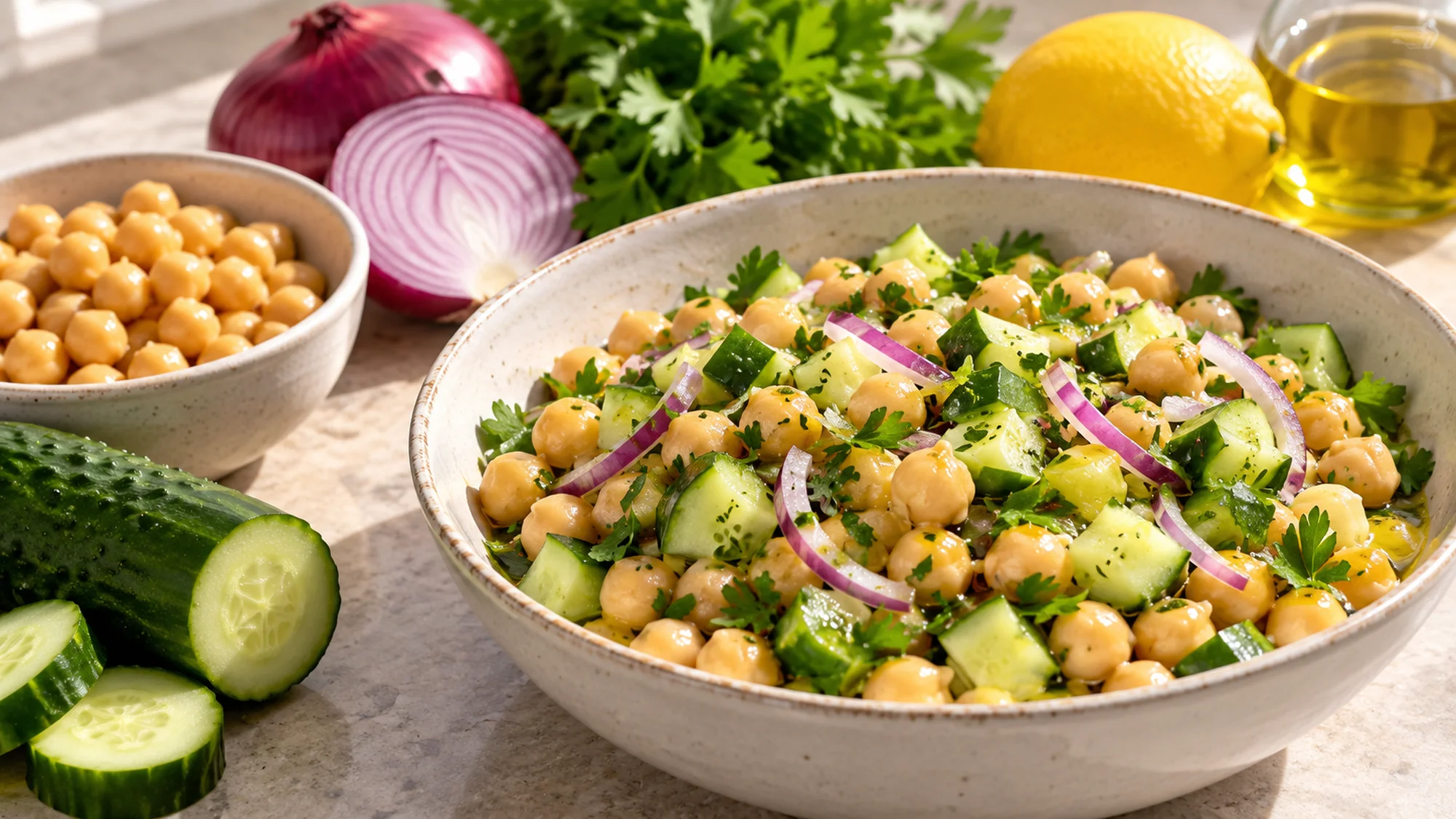
Drain the chickpeas thoroughly, dry the cucumber after washing and toss with the dressing close to serving. If the cucumber has a loose, seedy middle, scoop that part out before dicing.
I’d keep the pieces small enough to fit together on a fork, rather than turn the bowl into a collection of chickpeas and oversized cucumber chunks. There is no cheese or tomato in this version: that leaves the focus on a short list of ingredients and a clean lemon finish.
Serving Suggestions for Chickpea Cucumber Salad
Serve it as a substantial side or divide it into two larger portions for a light lunch with bread. The recipe card’s nutrition is for four side portions, so doubling the bowl size also doubles the estimate. A slotted serving spoon is helpful if the salad has been standing and the cucumber has released liquid.
For dinner, pair it with simply cooked fish or chicken. These crisp-skinned jacket potatoes offer another option when you want a warm component alongside a cool salad. I’d keep potato toppings restrained so the lemon and herbs still have room on the plate.
| How you serve it | Useful approach |
|---|---|
| Four side portions | Divide alongside a warm main dish. |
| Two lunch portions | Add bread if wanted; nutrition is twice the card’s side portion. |
| Packed separately | Keep the dressing apart until lunch for a crisper texture. |
- Toss gently to keep the chickpeas whole and avoid bruising the herbs.
- Taste after mixing, because canned chickpeas differ in saltiness.
- Add parsley shortly before serving if you want its freshest appearance.
- Carry the salad cold for a picnic or lunch rather than relying on the lemon to preserve it.
Choose the portion for the meal you are making, and dress the salad near serving for the freshest crunch.
Chickpea Cucumber Salad Variations
English and small Persian cucumbers usually have tender skins and manageable seeds. A larger garden cucumber may have a tougher peel or a wetter center; peeling some skin and removing the seeds changes the texture more than adding extra dressing. Either way, wash it before cutting so the knife does not transfer surface dirt inward.
Red onion adds a sharp contrast that can dominate if the pieces are too large. For a gentler bite, rinse the sliced onion briefly in cold water and dry it before mixing. I’d adjust that cut and intensity before adding another ingredient, since the best variation may simply be a better balance of the original ones.
- Herbs: dill or mint can replace part of the parsley, giving the same salad a noticeably different aroma.
- Acidity: red wine vinegar can replace some lemon juice; start modestly and taste, since their flavors differ.
- Extra richness: a little crumbled feta is optional, adding dairy and salt; it is not included in the card estimate.
- More vegetables: diced bell pepper brings crunch without the same loose seed pulp as tomato.
- Chickpeas: canned beans are convenient; home-cooked beans also work if fully tender, chilled and weighed after draining.
Adjust the cucumber, onion and herbs first, then decide whether the bowl really needs an extra ingredient.
Health Benefits and Keeping the Salad Fresh
Chickpeas contribute plant protein and fiber, while cucumber supplies a crisp vegetable component. The Nutrition Source’s chickpea overview explains their role as a useful pulse in a varied diet. Olive oil adds fat and energy, so a simple salad is still a recipe with portions worth considering.
Fresh produce needs attention even when nothing is cooked. The FDA’s produce-cleaning advice recommends plain running water, drying and clean equipment. Do not use soap on the cucumber, and keep the ready-to-eat ingredients away from raw-meat preparation.
- Store the salad covered in the refrigerator at 40°F (4°C) or below, and use within three days; the cucumber will soften as it stands.
- For advance preparation, refrigerate drained beans, cut vegetables and dressing separately, then combine before eating.
- Return leftovers to refrigeration within two hours, or one hour in temperatures above 90°F (32°C).
- Lemon juice adds flavor but does not make the salad shelf-stable.
- The estimate excludes bread, feta and other additions. Canned-bean sodium and the final drained weight vary by brand.
Let the beans and vegetables do their work, while keeping portions, added oil and cold storage in the picture.
Bottom Line
A good chickpea cucumber salad needs less fuss than attention: well-drained beans, cucumber without a watery core and an onion cut that suits the bite. Keep the dressing simple, fold in the parsley and serve while the textures still contrast. It is an easy bowl to adapt once those small details are in place.
Chickpea Cucumber Salad Recipe

Ingredients
- 480 g cooked chickpeas about 2 drained 15-ounce cans, rinsed and well drained
- 300 g cucumber washed, dried and diced; remove loose seed pulp
- 60 g red onion thinly sliced
- 15 g flat-leaf parsley chopped, about 1/3 cup loosely packed
- 3 tablespoons lemon juice 45 ml
- 2 tablespoons olive oil 27 g
- 1/4 teaspoon fine salt then adjust to the beans’ saltiness
- 1/4 teaspoon black pepper
Equipment
- Strainer
- Knife and cutting board
- Mixing bowl
- Small jar or whisk
Instructions
- Rinse and drain the chickpeas thoroughly. Wash cucumber under plain running water, dry and cut into small bite-size dice. Scoop out a watery seed center if present. Thinly slice onion; rinse briefly and dry if you prefer a milder bite.
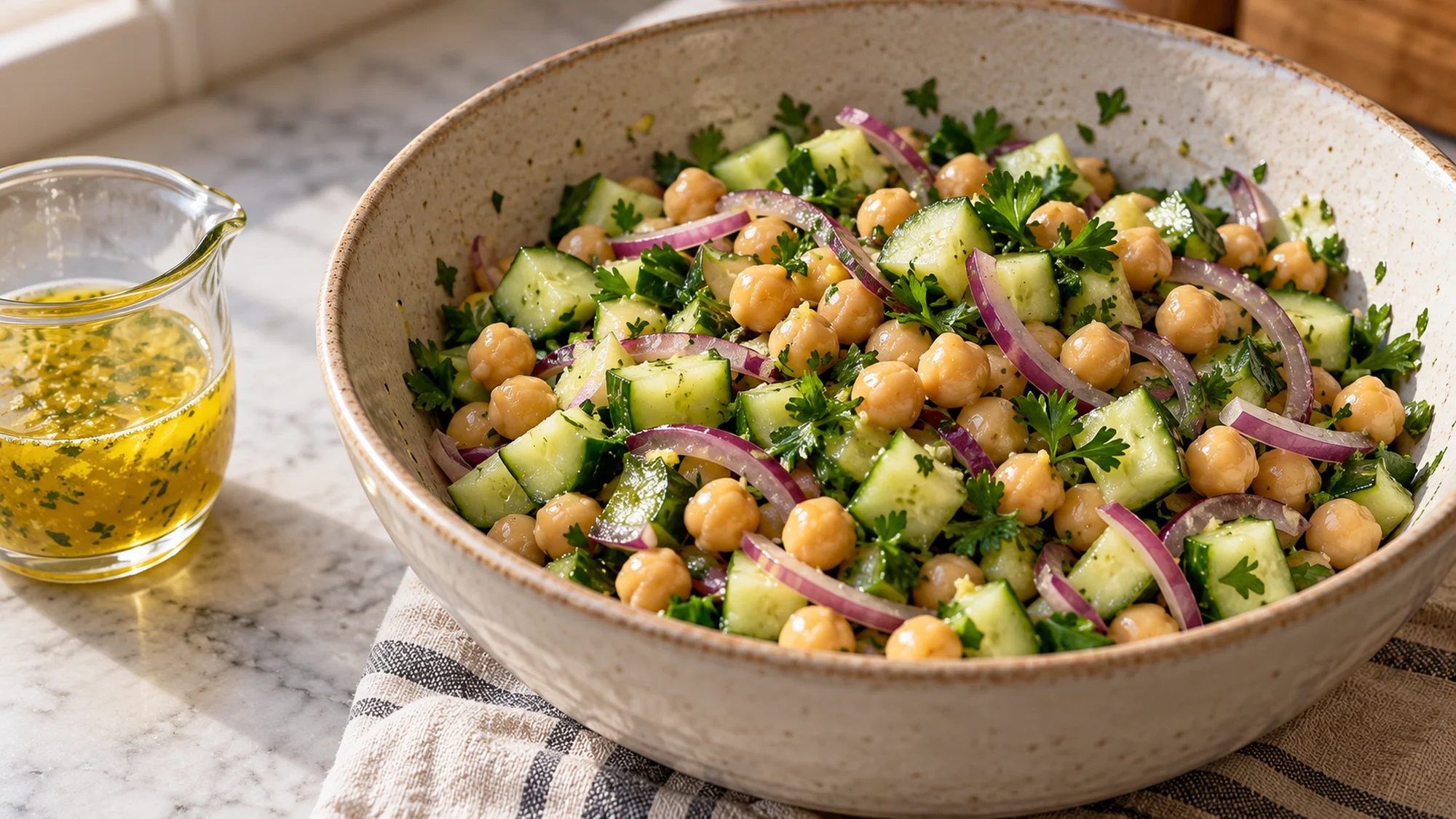
- Whisk or shake lemon juice, olive oil, salt and pepper together until combined.
- Combine chickpeas, cucumber, onion and parsley in a bowl. Add dressing and fold gently until coated. Taste before adding extra salt. Serve close to assembly for the crispest texture.
- For advance preparation, keep the dressing, drained beans and cut vegetables refrigerated separately, then toss before serving. Refrigerate at 40°F(4°C) or below, use within 3 days and return to refrigeration within 2 hours, or 1 hour above 90°F(32°C). Lemon does not make it shelf-stable.
Nutrition
Video
Notes
Tried this recipe?
Let us know how it turned out!Hi, I’m Emily Pocker! I share recipes and food guides here at Recipes360 to help you find everyday meal inspiration and feel more confident in the kitchen. My goal is to make cooking approachable, enjoyable, and full of flavor.