
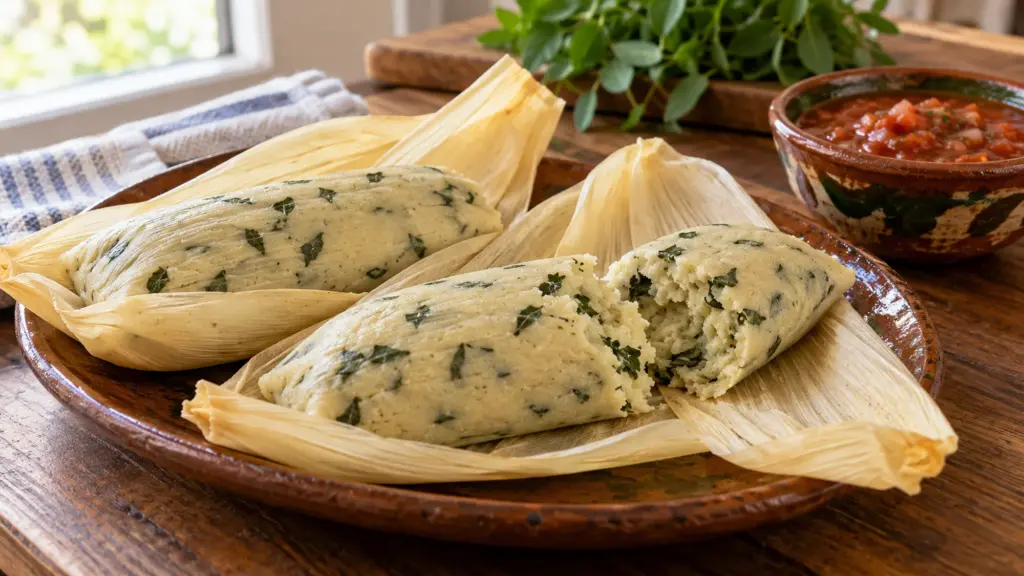
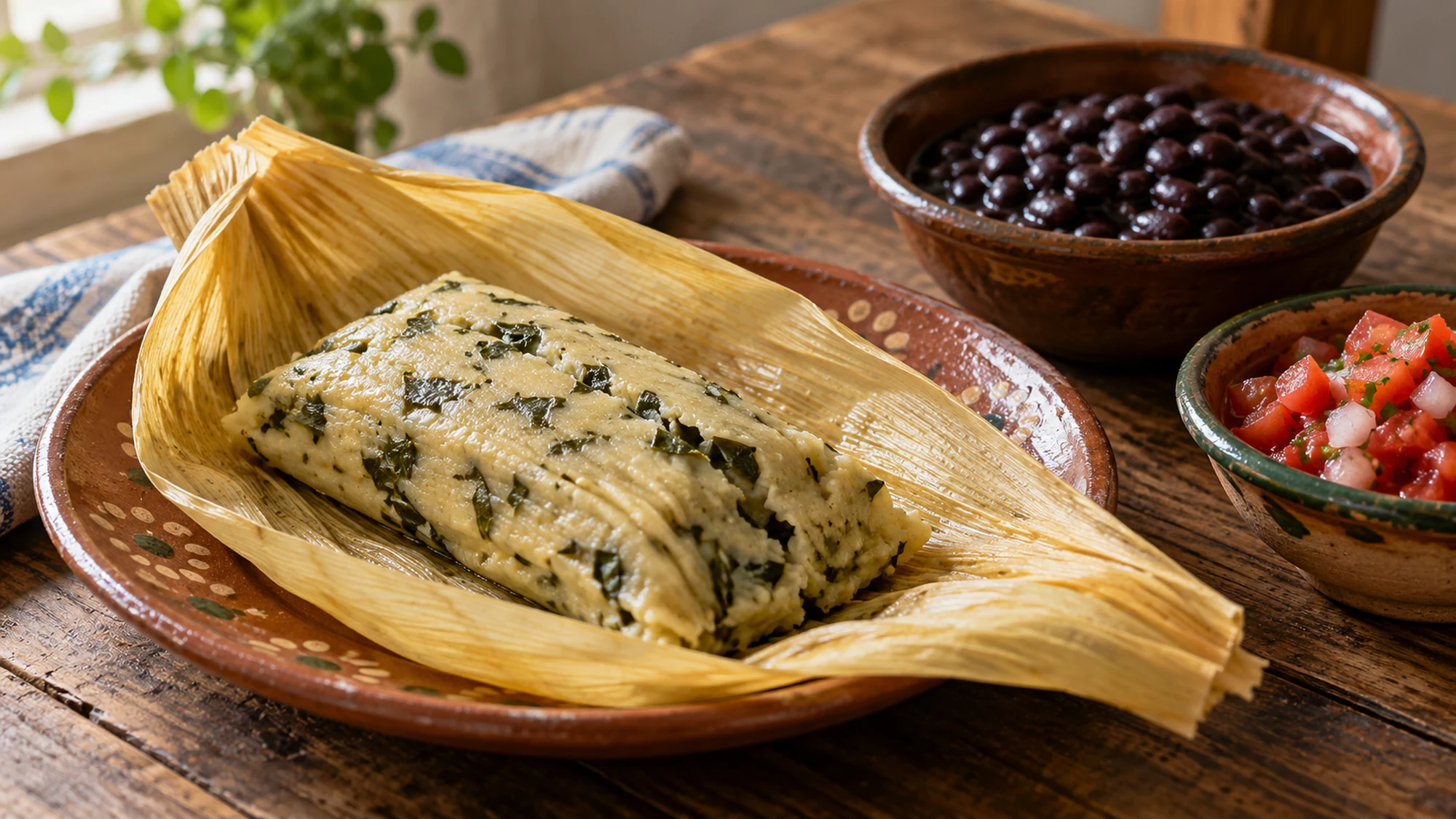
A corn husk opens, and the pale masa inside is dotted with tiny green leaves. Chipilín tamales get their character from the herb mixed directly into the dough, without needing a hidden filling. This small batch uses masa harina, neutral oil and commercially sold chipilín leaves, then steams until the dough releases cleanly from its wrapper.
Make a soft, spreadable masa and leave room for steam around the tamales. Judge doneness by a rested sample that releases from the husk, rather than by the timer alone.
I’d keep this version unfilled so the chipilín stays the point of the dish. Use leaves sold specifically as food, remove any tough stems and discard seeds. This recipe is not a guide to identifying or gathering wild plants.
Serving Suggestions for Chipilín Tamales
Let the tamales rest before unwrapping. Fresh from the steamer, the masa may seem softer than expected; a short pause gives it time to settle. Lift one out with tongs, open the husk away from your face and check a small piece before committing the whole batch to the plate.
| Choice | What to expect |
|---|---|
| S | e |
| W | h |
For a brothy meal alongside the tamales, try caldo de res with vegetables. Keep the tamales on a separate plate so their texture stays distinct. Remove the husks before eating; they are cooking wrappers, not part of the serving.
Cool extras in shallow containers and refrigerate within two hours. Illinois Extension recommends using refrigerated leftovers within three to four days and reheating to 165°F (74°C). Steam wrapped leftovers until hot through, adding water below the rack as needed.
Give the masa its resting time, then serve the tamales with a simple accompaniment. A clean wrapper release is more useful than an impatient first impression.
Variations and Masa Troubleshooting
Masa harina is nixtamalized corn flour, not ordinary cornmeal. Its water absorption can vary by brand and age, so the dough’s texture is a better guide than adding every last drop automatically. It should spread easily with a spoon while holding a soft mound.
- Cracking dough: mix in warm water a tablespoon at a time, then pause briefly before judging again.
- Loose, flowing dough: let it hydrate for a few minutes. If still pourable, work in a little masa harina; the batter should not run out of the husk.
- Frozen leaves: thaw in the refrigerator, drain and measure the prepared leaves. Follow any package cooking directions as well as this recipe.
- Different wrapping traditions: banana leaves are also used in chipilín preparations, but require different preparation and folding. This card’s yield and method are for corn husks.
The steamer needs active steam without water touching the dough. Check its water level carefully during the longer cooking time and replenish with hot water below the rack. I’d rather stop to check the pot than discover that the last half-hour happened in a dry pan.
Adjust the masa in small increments and protect the steam supply. Neither a stiff dough nor a dry steamer can be fixed by simply waiting longer.
Health Benefits and Safe Ingredient Selection
Corn masa supplies carbohydrate, while oil contributes energy and helps make the dough tender. The modest amount of herb adds flavor; these tamales should not be presented as a medicinal dose or an anemia treatment. Beans or other accompaniments change the nutritional balance of the meal.
- Buy the right ingredient: use food-grade chipilín from a reliable grocer, not an unidentified plant from the garden.
- Exclude seeds: the University of Texas at El Paso’s chipilín safety reference warns that the seeds are toxic and notes uncertainty during pregnancy and lactation.
- Keep portions moderate: enjoy the herb as a culinary ingredient, with the source’s cautions in mind.
The nutrition estimate covers one of twelve small tamales, without husk or accompaniments. Most of its energy comes from the measured masa and oil. The small leaf portion varies, and the figures are an approximation rather than a laboratory measurement.
Ingredient identity matters here. Use properly sourced leaves, leave out seeds, and enjoy the tamales as food without turning traditional use into a medical claim.
Bottom Line
Chipilín tamales reward attention to two things: a soft dough and steady steam. Keep the dough simple, test one rested tamal for release and serve the finished batch warm. The green-flecked masa can carry the dish on its own.
Chipilín Tamales Recipe

Ingredients
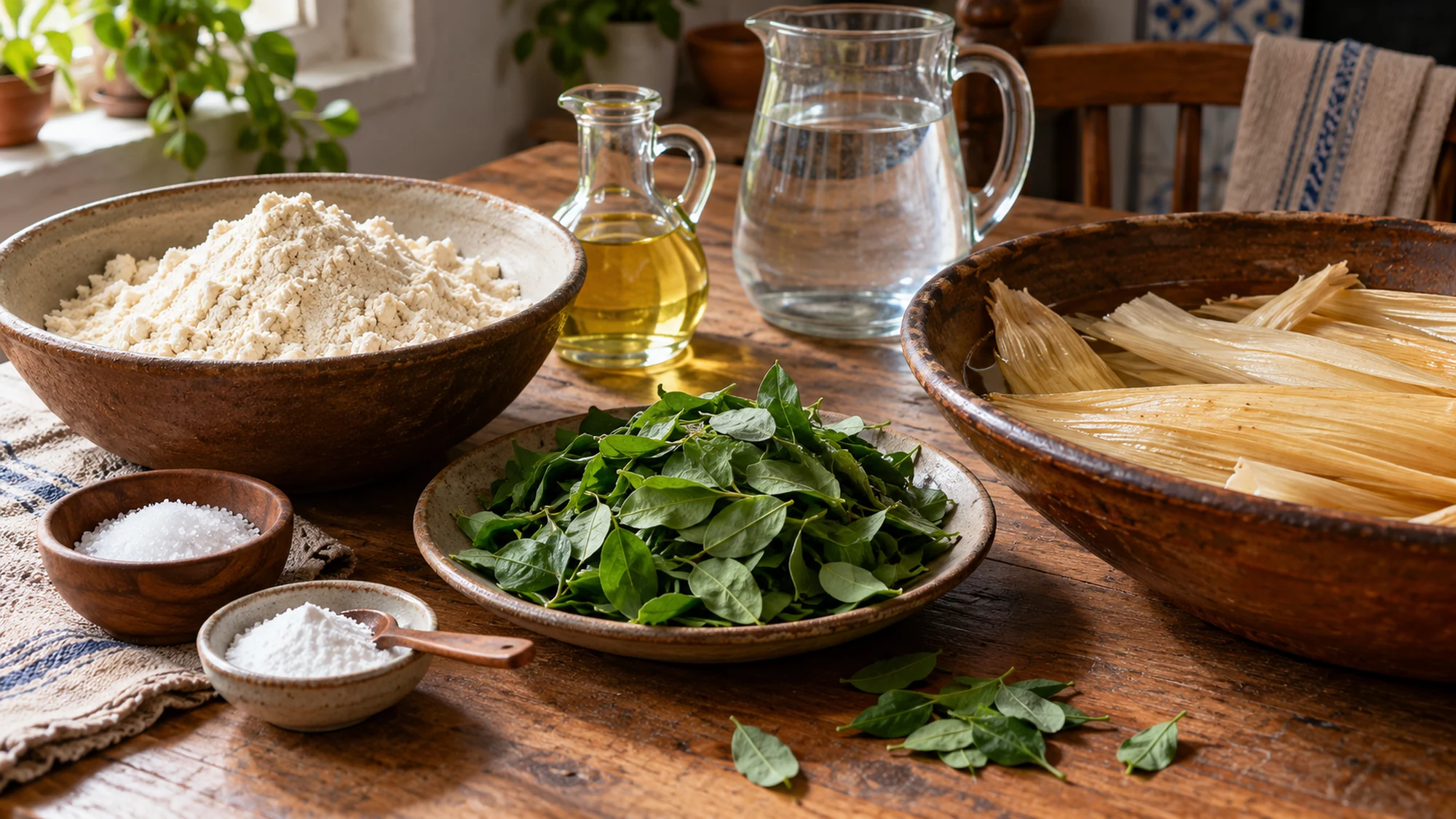
- 12 large dried corn husks plus a few extra for lining; wrappers are not eaten
- 2.5 cups masa harina for tamales 300 g; nixtamalized corn flour, not cornmeal
- 1 teaspoon baking powder 4 g
- 1 teaspoon fine salt 6 g
- 1/3 cup neutral oil 80 mL, about 73 g
- 2 cups warm water 480 mL, plus a little as needed for soft spreadable dough
- 1 cup food-grade chipilín leaves 50 g prepared leaves, stems and seeds removed; commercially sourced fresh or thawed frozen, drained
Equipment
- 1 Large steamer pot with rack and lid
- 1 Large mixing bowl
- 1 Spoon or spatula
- 1 Tongs
- 1 Kitchen scale
Instructions
- Cover corn husks with hot water and soak at least 30 minutes until flexible. Use a plate to keep them submerged. Inspect commercially sourced chipilín leaves, discarding seeds and tough stems. Wash fresh leaves, drain and chop roughly. Thaw frozen leaves in the refrigerator and follow package directions.
- Mix masa harina, baking powder and salt. Stir in oil and warm water. Beat with a sturdy spoon for 2–3 minutes until evenly combined and soft. Rest 5 minutes, then fold in leaves. Add warm water a tablespoon at a time if it cracks instead of spreading; it should hold a soft mound, not pour.
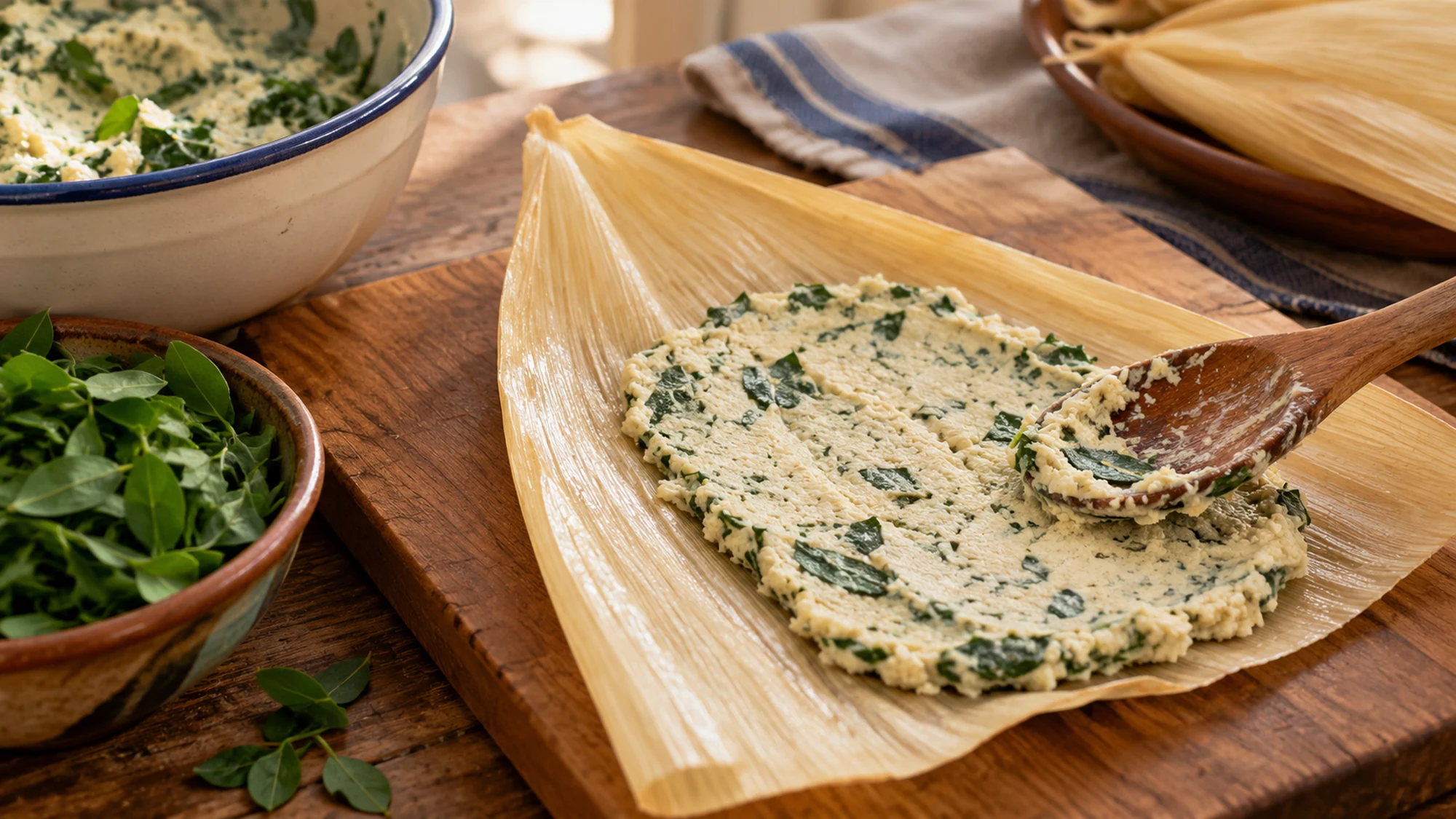
- Drain husks. Divide masa into 12 equal portions, about 1/3 cup each. Spread a portion in the broad center of each husk, leaving the edges and narrow tip bare. Fold long sides over the dough, then fold the narrow tip up. Keep the top open. No filling is added.
- Add water to the pot below the rack, following the steamer’s safe fill line, and bring to a simmer. Line rack with extra husks. Stand tamales open ends up, leaving space for steam. Cover with extra husks and the lid. Steam 60–75 minutes. Check water about every 20 minutes and add hot water below the rack as needed; never let the pot boil dry.
- Remove one tamal and let it rest 5 minutes. The husk should peel away easily from set masa without a wet paste sticking to it. If not, steam the batch 10 minutes longer and test again. Rest finished tamales 10 minutes, unwrap and serve warm. Remove all husks before eating.
Nutrition
Video
Notes
Tried this recipe?
Let us know how it turned out!Hi, I’m Emily Pocker! I share recipes and food guides here at Recipes360 to help you find everyday meal inspiration and feel more confident in the kitchen. My goal is to make cooking approachable, enjoyable, and full of flavor.