
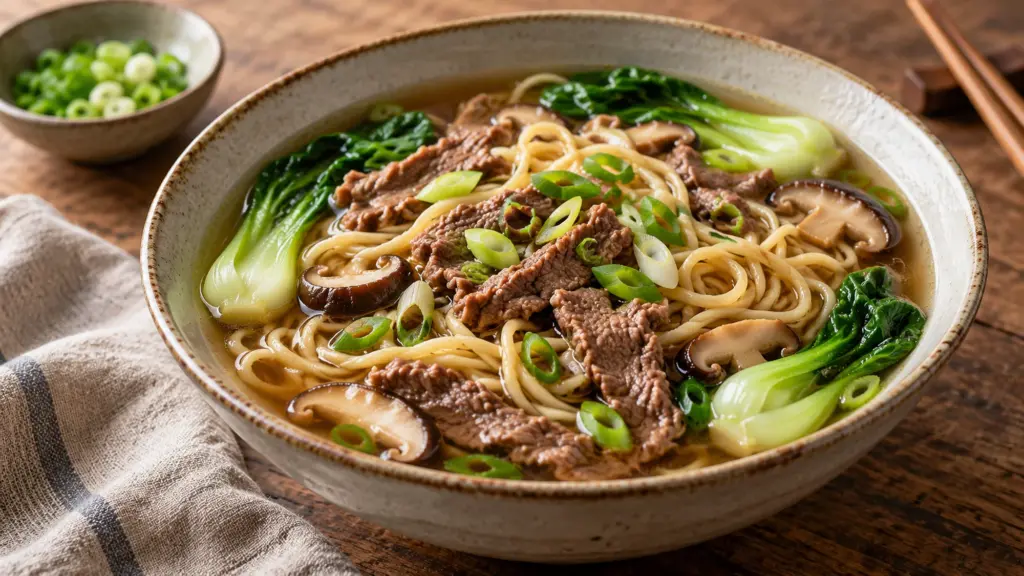
Noodles can turn a clear broth into a very crowded pot if they sit in it too long. This beef noodle soup keeps them separate until serving, then adds thin strips of beef, mushrooms and bok choy to a ginger-scented broth. It is a quick home-style bowl, not a substitute name for a long-simmered regional beef soup.
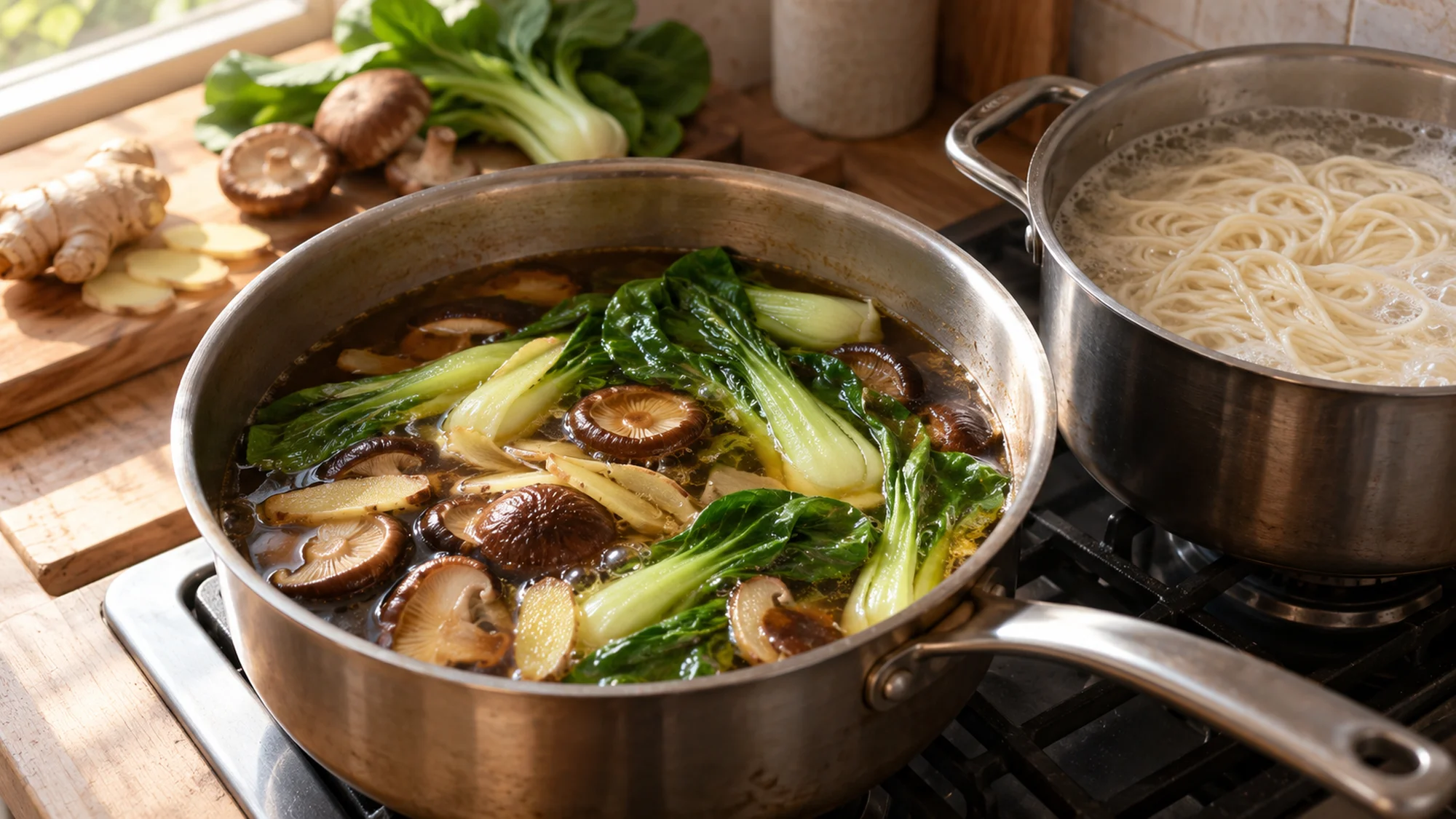
Slice the beef thinly across the grain, simmer the vegetables in the broth and cook the noodles in a separate saucepan. Bring the beef fully through its cooking step before serving, then divide the noodles among bowls and ladle the hot soup over them. Store any extra noodles apart from the broth.
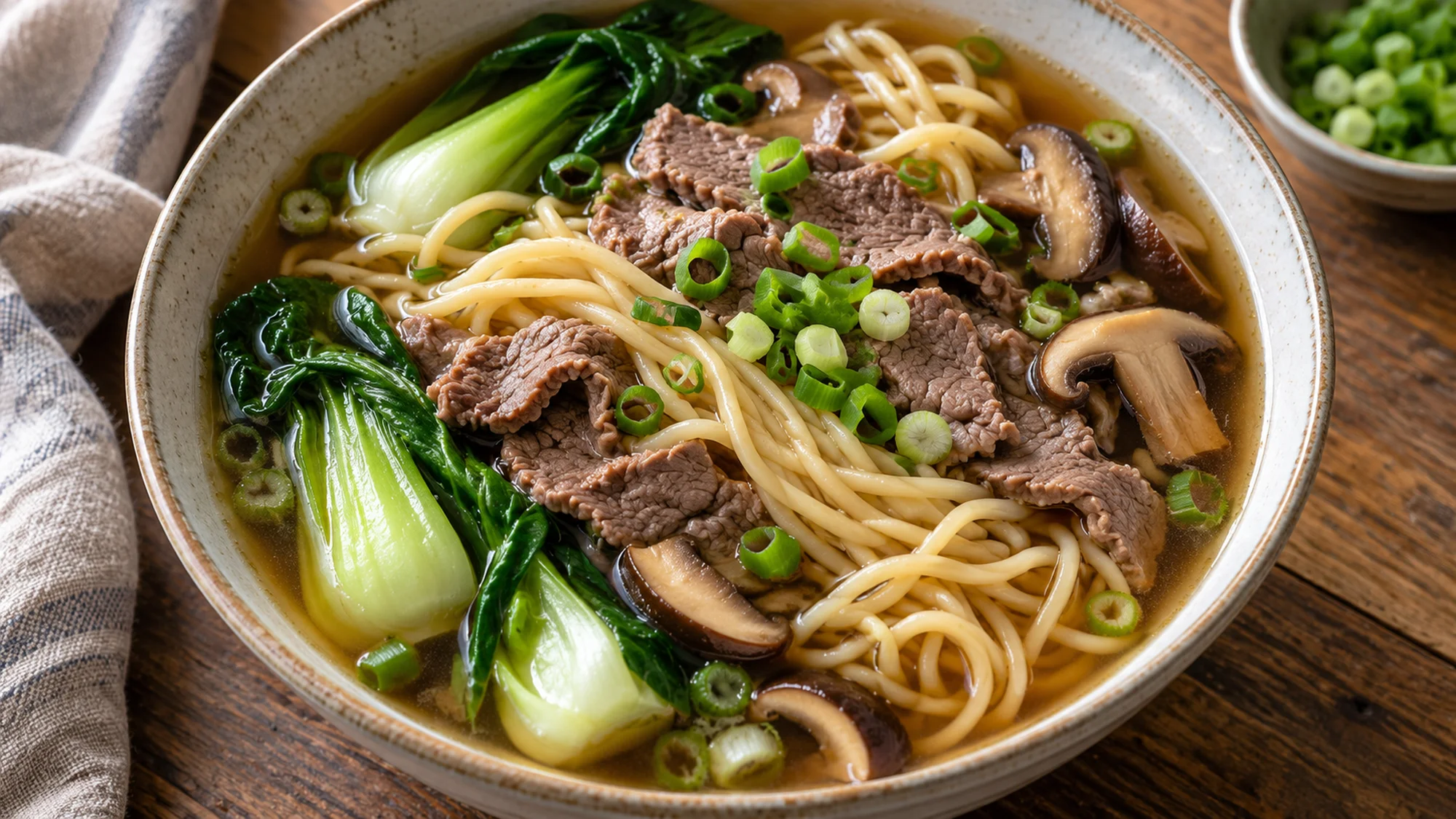
Serving Suggestions for beef noodle soup
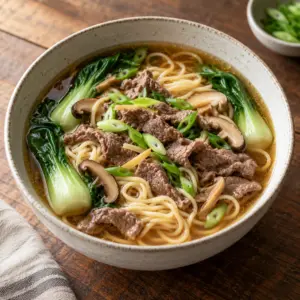
Use deep bowls with room for both broth and noodles. Divide the noodles first, arrange the beef and vegetables over them and pour in the broth last. That order helps keep the servings balanced, so the first bowl does not receive every mushroom while the final bowl becomes a noodle-only event.
I’d finish with scallion greens and keep extra soy sauce at the table. Stock brands differ considerably in saltiness, and the broth can taste more concentrated after simmering. A squeeze of lime or a little chili oil can be an optional finishing choice, but neither needs to cover up the ginger that gives this bowl its character.
This soup can stand on its own, with extra vegetables added according to appetite. If you are planning a different slow-cooked beef meal, barbacoa uses a longer braise and gives a very different result from the thin sirloin here. Do not swap tough stewing cubes into this short cooking schedule and expect them to become tender.
Variations for beef noodle soup
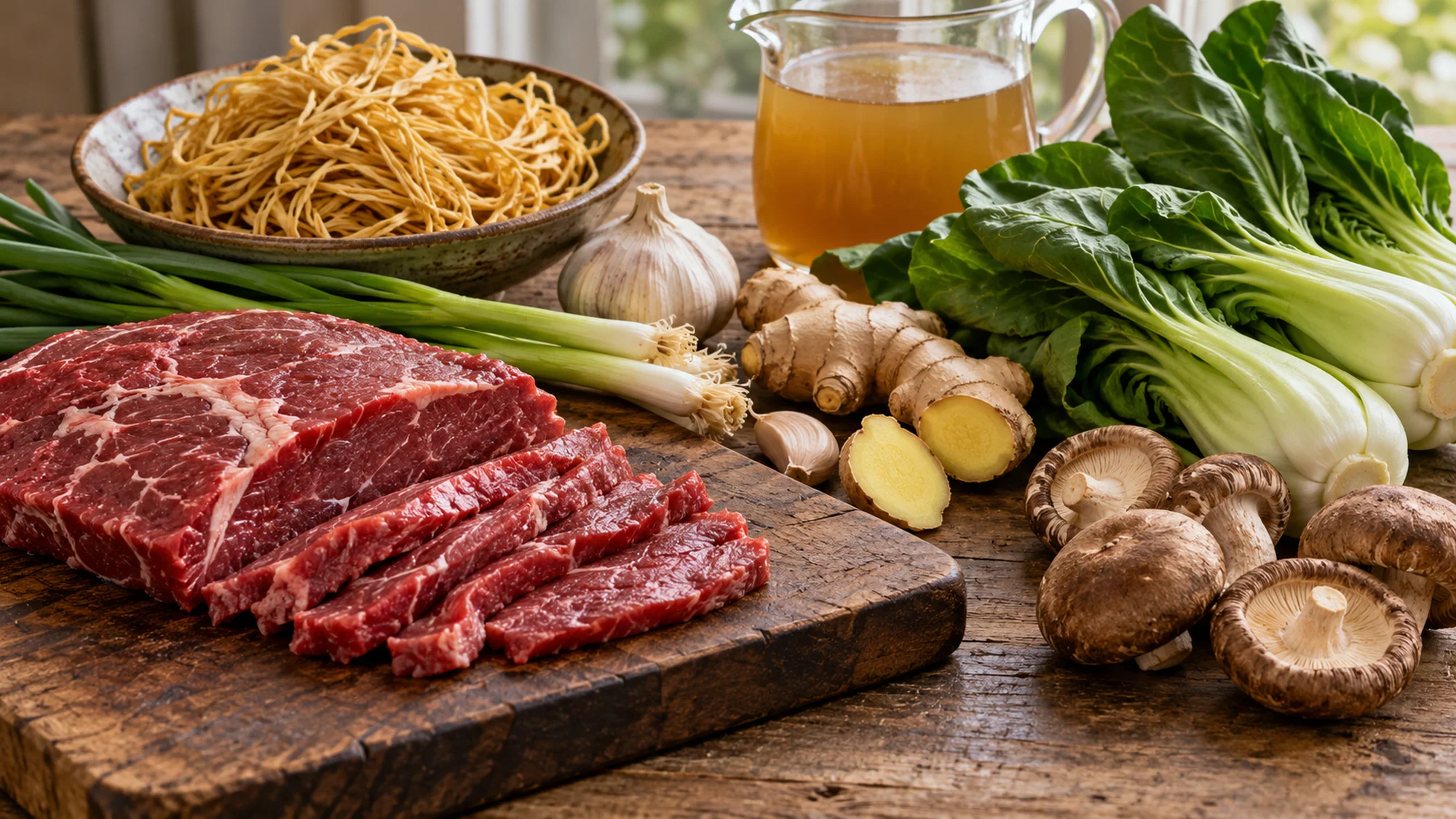
The cut and direction of the beef slices matter. Look for the lines running through the meat and cut across them rather than along them, then keep the slices reasonably thin. A steak cut such as sirloin suits this short method; chuck needs a longer braise and would change the entire recipe.
I prefer cooking noodles separately because their starch and water absorption are easier to manage that way. Wheat egg noodles, rice noodles and udon all need different cooking times. Follow the package rather than using one universal number, and drain before adding to the serving bowls. The broth is not meant to compensate for undercooked noodles.
Bok choy stems take longer than the leaves, so separate them and add the stems first. Wash carefully between the layers, where grit can hide. The table below offers a few practical changes while keeping the basic idea of a clear broth, a quickly cooked protein and noodles added at serving.
| Choice | What changes | Useful adjustment |
|---|---|---|
| Rice noodles | Different texture and allergens | Cook by package directions |
| Spinach instead of bok choy | Softer greens | Add near the end |
| Low-sodium stock | More control over salt | Taste before adding soy sauce |
| Leftover cooked beef | Different reheating step | Reheat thoroughly to 165°F |
Health Benefits and Portion Balance
Beef contributes protein and iron, while the noodles supply carbohydrate and the vegetables add variety. Broth can also bring substantial sodium, particularly when both stock and soy sauce are included. Choosing a lower-sodium stock gives you more control, but check the label rather than assuming every carton is similar.
Think about the whole bowl and your portion rather than calling broth automatically light or low-calorie. The card’s estimate includes one-quarter of all the noodles, beef and measured oil. Varied vegetables and protein choices offer broader meal-planning context without promising a special health effect from ginger.
Keep raw beef away from scallions and other ready-to-eat ingredients. Refrigerate leftover broth, beef and noodles in separate shallow containers within two hours and use within three to four days. Follow prompt cooling guidance and reheat to 165°F; add water if the cooled broth has concentrated.
Bottom Line
A clear, savory broth and noodles with some spring are worth keeping separate until the last minute. Let the ginger simmer, give the bok choy stems their head start and use thin sirloin rather than a cut that needs hours. I’d finish each bowl at the table so the scallions stay fresh and the noodles do not quietly drink the entire pot.
Beef Noodle Soup Recipe

Ingredients
- 400 g beef sirloin thinly sliced across the grain
- 200 g dried wheat egg noodles
- 1.2 liters low-sodium beef stock
- 200 g mushrooms sliced
- 300 g bok choy washed; stems and leaves separated
- 20 g fresh ginger peeled and thinly sliced
- 2 garlic cloves thinly sliced
- 3 scallions whites and greens separated
- 1 tbsp neutral oil
- 1 tbsp reduced-sodium soy sauce plus optional extra at the table
Equipment
- Large saucepan
- Second saucepan for noodles
- Colander
- Sharp knife and cutting board
- Food thermometer
Instructions
- Bring a saucepan of water to a boil for the noodles. In a separate large saucepan, warm the oil over medium heat. Add ginger, garlic and sliced scallion whites; stir for 1 minute without browning.
- Add mushrooms and stir for 3 minutes. Pour in the stock and soy sauce, bring to a simmer and cook gently for 8 minutes.
- Cook the noodles in the separate water according to the package until tender but still springy. Drain and divide among four bowls.
- Add chopped bok choy stems to the broth and simmer for 3 minutes. Add the thin beef strips, separating them with clean tongs. Simmer about 3–5 minutes until fully cooked; check that a thicker piece reaches at least 145°F (63°C), then keep it at a gentle simmer for 3 minutes. Stir in the bok choy leaves for the final minute.
- Taste the broth before adding any optional soy sauce. Divide the beef and vegetables over the noodles, ladle in broth and finish with scallion greens. Serve promptly.
Nutrition
Video
Notes
Tried this recipe?
Let us know how it turned out!Hi, I’m Emily Pocker! I share recipes and food guides here at Recipes360 to help you find everyday meal inspiration and feel more confident in the kitchen. My goal is to make cooking approachable, enjoyable, and full of flavor.