
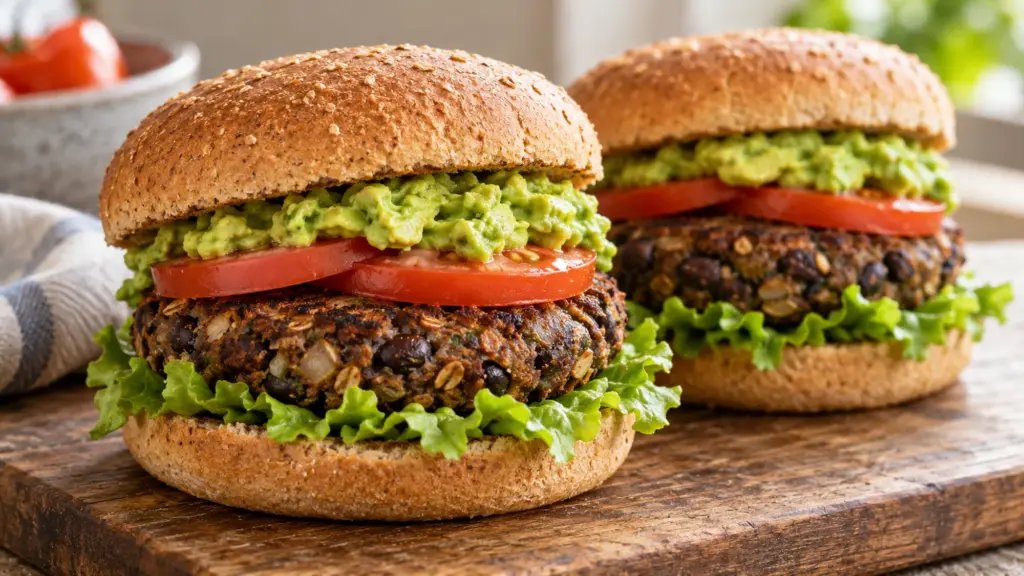
A bean burger that falls apart halfway to the bun is mostly a moisture problem wearing a dinner disguise. These black bean burgers use well-drained beans, oats and an egg to make a patty that can be lifted and turned gently. They keep a recognizable bean texture instead of aiming to imitate ground beef.
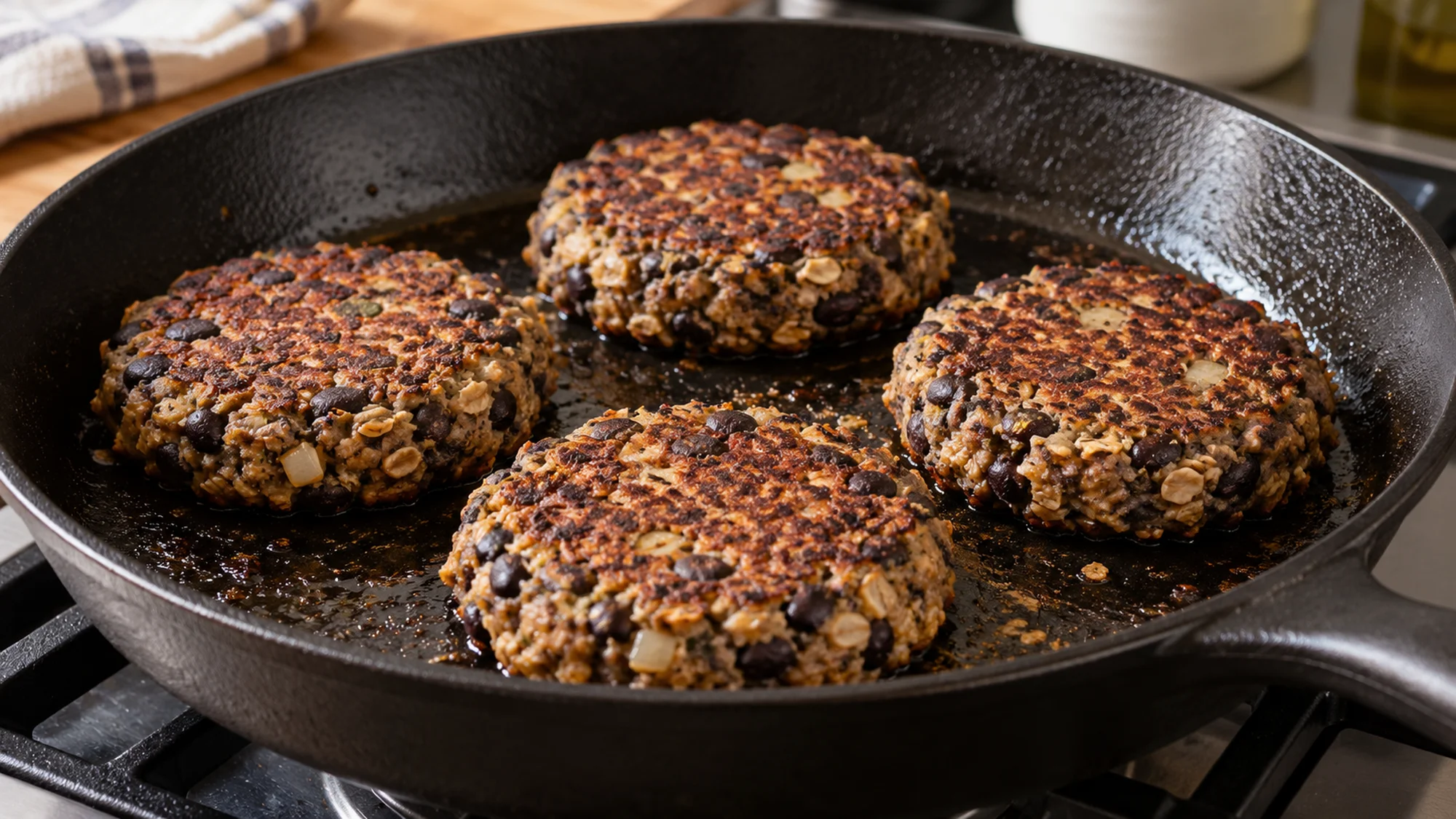
Drain the beans thoroughly, blot them dry and mash most of them while leaving a few pieces intact. Let the oats hydrate in the mixture before shaping, then chill the patties briefly. Cook over moderate heat and let a browned surface form before the first turn; repeated flipping makes a soft patty harder to manage.
Serving Suggestions for black bean burgers
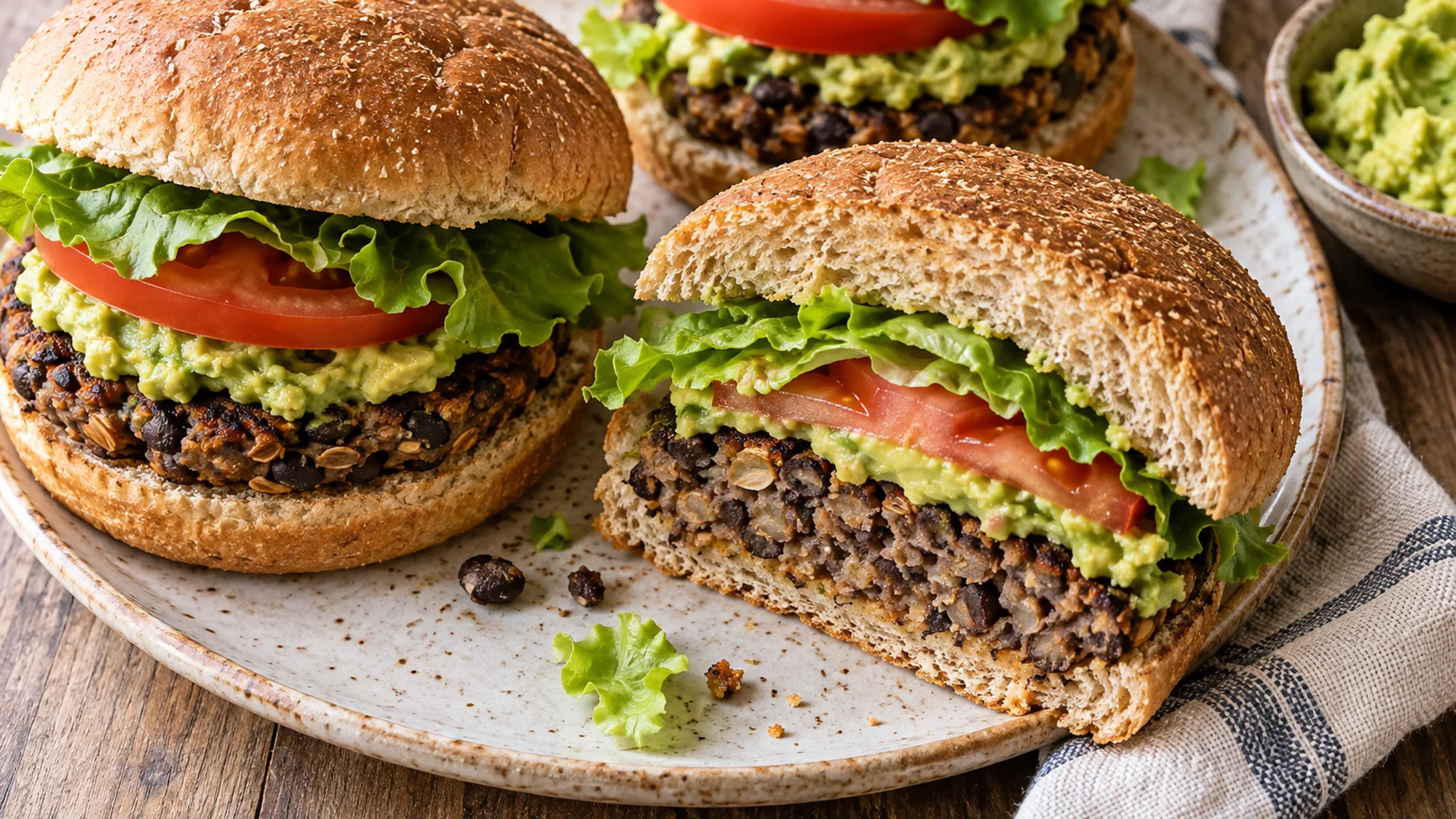
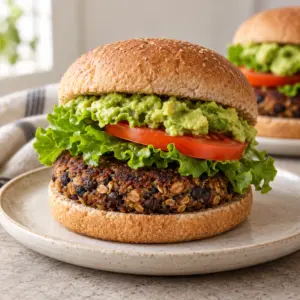
Serve the black bean burgers in whole-wheat buns with lettuce, tomato and mashed avocado. Keep the tomato slices relatively thin and pat away excess juice if they are especially wet. A bean patty can be well made and still struggle under a stack of slippery toppings, so give it a reasonable amount to carry.
I’d spread avocado on the bun rather than balancing thick pieces on top of the burger. It provides a creamy layer that helps the other ingredients stay in place. Offer hot sauce or a spoonful of salsa separately if you want more heat; the measured smoked paprika and cumin give flavor without requiring every serving to be spicy.
A crunchy side salad or roasted vegetables works well alongside. If you want a potato side, jacket potato in air fryer offers a different texture and cooking method. Keep cooked patties separate from the buns and toppings when storing leftovers so the bread does not absorb moisture overnight.
Variations for black bean burgers
Well-drained does not mean beans left dripping in a colander for a few seconds. Give them time to drain, then blot gently with a clean towel or paper towel. The oats absorb some moisture as the mixture rests, but they cannot correct unlimited liquid. If the mixture is very loose, pause before adding more ingredients.
I prefer mashing with a fork or potato masher here because it leaves some texture. A food processor can move quickly from chopped beans to a smooth paste, which changes the bite. Finely chopped onion also distributes more evenly than large raw chunks that interrupt the patty’s structure and remain sharp after cooking.
The table highlights practical changes without promising an identical result. This version contains egg and is vegetarian, not vegan. An egg-free version needs a different binder and may handle differently, so simply leaving out the egg is not the same recipe. Let any experimental mixture rest and assess it before forming a full batch.
| Choice | What changes | Useful approach |
|---|---|---|
| Quick oats | Finer texture | Use the same weight; let hydrate |
| Coarser rolled oats | More visible oat pieces | Pulse briefly if very large |
| Extra hot sauce | More liquid and heat | Serve at the table instead |
| Lettuce wrap | No bun | Support the patty when lifting |
Health Benefits and Portion Balance
Black beans contribute fiber and plant protein, while oats add grain texture and the egg helps bind the mixture. Those useful contributions do not mean the whole assembled burger has a single fixed nutritional profile. Bun size, avocado quantity and added sauces all change the meal, and the card includes the specified bun and toppings.
The guidance to vary protein foods is a useful reason to include beans among other choices. A bean burger does not have to mimic meat perfectly to deserve a place in the meal. Choose toppings for flavor and variety rather than assuming a larger stack is automatically a better dinner.
This recipe contains egg, wheat in the buns and potentially gluten cross-contact in oats. Check labels for your needs. Cook the center of the egg-bound patties to 160°F (71°C), following safe cooking guidance, and refrigerate leftovers promptly. Reheat cooked patties to 165°F before adding fresh cold toppings.
Bottom Line
Dry the beans, give the oats time to absorb moisture and let the first side brown before turning. Those steps do more for a black bean burger than a long list of extra seasonings. I’d keep the toppings tidy and the spatula wide; a good bean patty deserves a straightforward trip from skillet to bun.
Black Bean Burgers Recipe

Ingredients
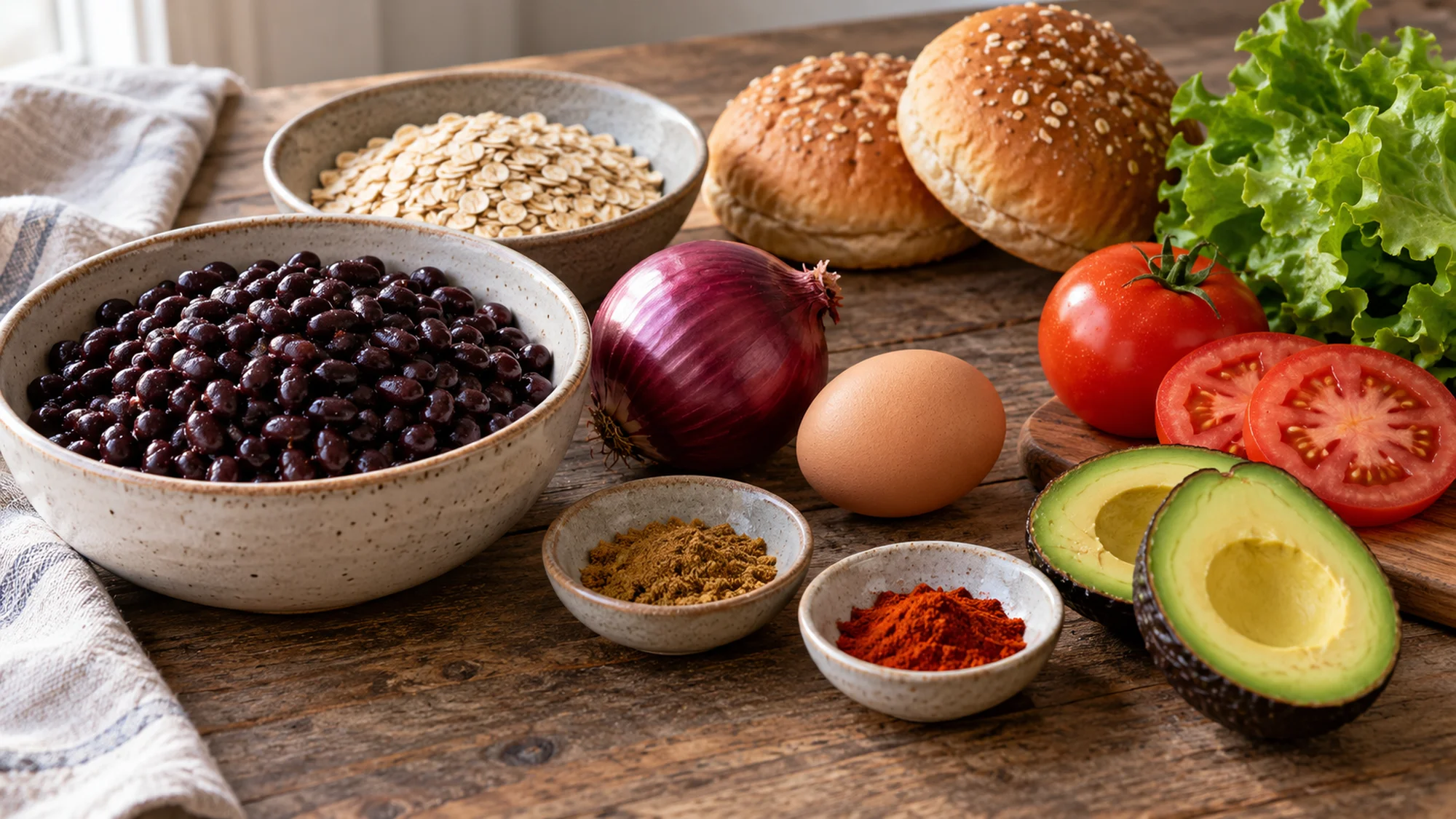
- 2 15-ounce cans black beans rinsed, well drained and blotted dry; about 480 g drained
- 60 g rolled oats
- 60 g red onion very finely chopped
- 1 large egg
- 1 tsp ground cumin
- 1 tsp smoked paprika
- 1/4 tsp fine salt
- 1/4 tsp black pepper
- 1 tbsp olive oil for the skillet
- 4 whole-wheat burger buns
- 1 avocado about 140 g flesh, mashed
- 1 tomato sliced
- 4 lettuce leaves
Equipment
- Colander
- Mixing bowl
- Fork or potato masher
- Large nonstick skillet
- Wide spatula
- Food thermometer
Instructions
- Rinse, drain and blot the beans dry. Mash about three-quarters in a bowl, leaving the remainder roughly broken for texture.
- Stir in oats, finely chopped onion, egg, cumin, paprika, salt and pepper. Rest for 10 minutes so the oats hydrate. The mixture should hold together when pressed; if unusually wet, add 1 tablespoon extra oats and rest again.
- Shape into four patties about 3/4 inch thick, pressing the edges together. Chill on a plate for 10 minutes.
- Warm the olive oil in a large nonstick skillet over medium heat. Add the patties without crowding, working in batches if needed. Cook 5–6 minutes per side, turning once with a wide spatula after a crust forms. Lower the heat if the surface browns too fast. Verify 160°F (71°C) in the center because the mixture contains egg.
- Toast the buns if desired. Spread with mashed avocado, then add lettuce, a cooked patty and tomato. Serve immediately. Refrigerate leftover patties separately within 2 hours and use within 3–4 days.
Nutrition
Video
Notes
Tried this recipe?
Let us know how it turned out!Hi, I’m Emily Pocker! I share recipes and food guides here at Recipes360 to help you find everyday meal inspiration and feel more confident in the kitchen. My goal is to make cooking approachable, enjoyable, and full of flavor.