
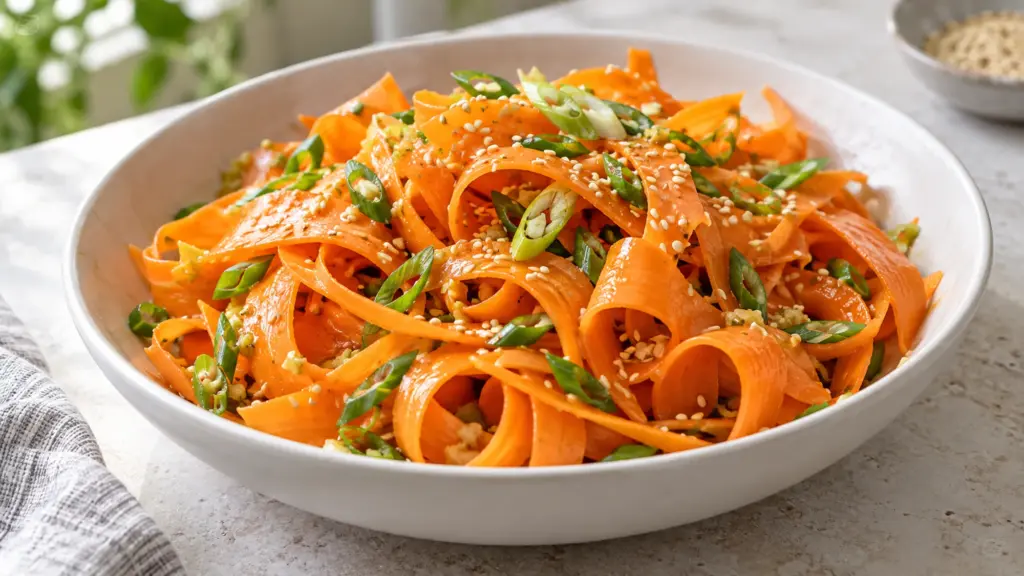
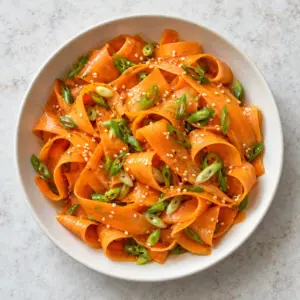
A carrot can be crunchy without being difficult to chew. This carrot ribbon salad takes advantage of that difference: a vegetable peeler makes broad, thin curls that catch a ginger-sesame dressing. The result is a bright side with plenty of texture and no stove required.
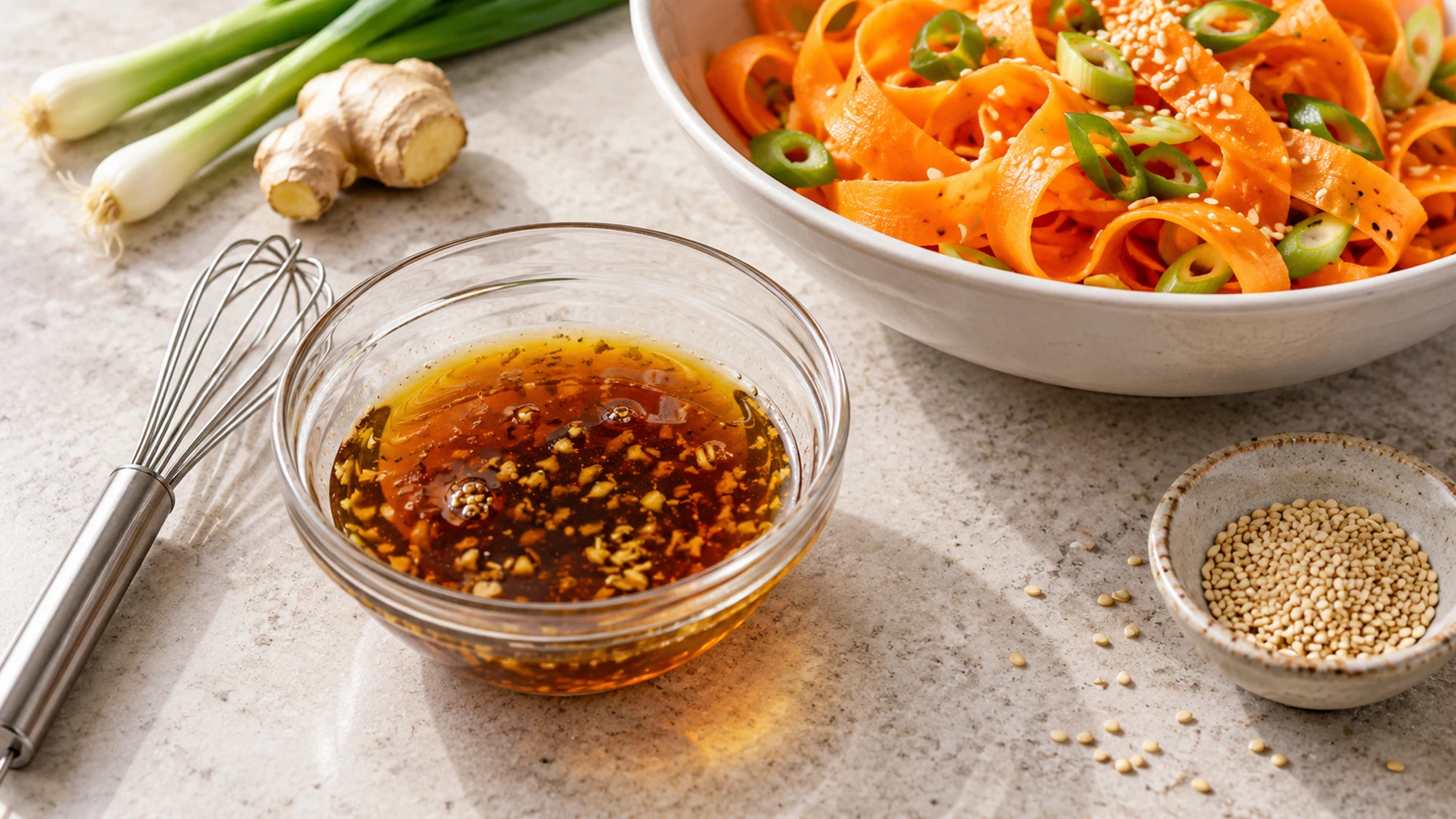
Choose firm, wide carrots, shave them into thin ribbons and dress shortly before serving. Ginger, rice vinegar and toasted sesame oil bring the flavor; a brief toss softens the ribbons without making them limp.
This version serves four as a side and uses measured dressing quantities, so you can adjust with a clear starting point. I’d reach for a sturdy Y-peeler before a mandoline here. The broad ribbons look generous in the bowl, and you can stop before the remaining carrot becomes awkward to hold.

Serving suggestions for carrot ribbon salad
Think of this as the fresh, crunchy part of a meal. The dressing is tangy and savory, with a little sweetness from honey. It works alongside relatively simple food, where the sesame aroma and ginger do not have to compete with another strong sauce.
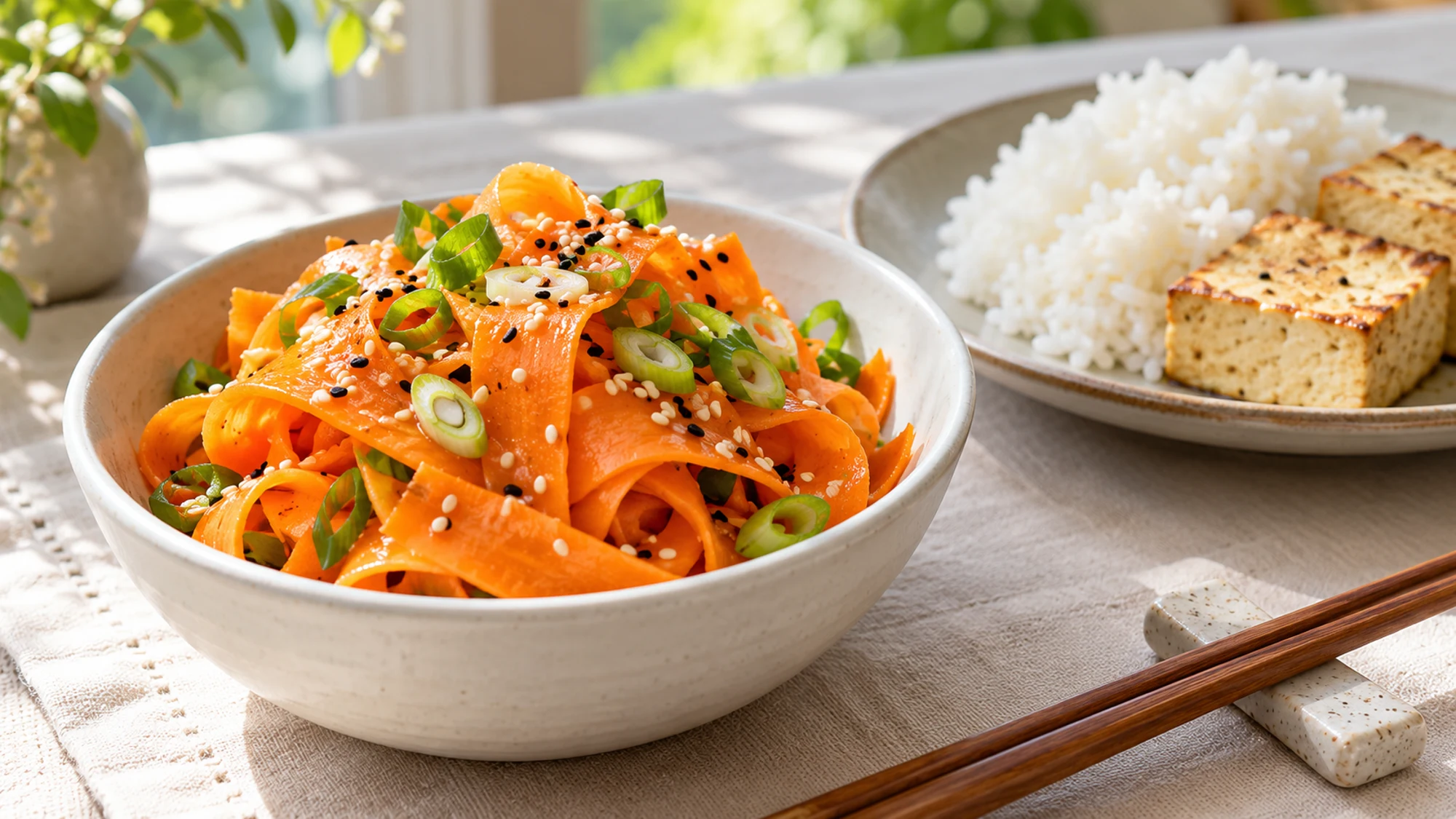
- With a rice bowl: add baked tofu, cooked chicken or edamame and keep the salad alongside the warm rice. Spoon on extra bowl sauce separately.
- With a potato lunch: serve a small mound beside a jacket potato with crisp air-fryer skin. The contrast is useful when the potato filling is creamy.
- For a shared table: put the salad in a shallow bowl with serving tongs. Separate long ribbons gently so one serving does not lift half the bowl.
The best moment to serve is after a short rest, while the ribbons still have some spring. If you need to prepare ahead, refrigerate the dry ribbons and dressing separately, then toss near mealtime. The carrots will release moisture once seasoned, so yesterday’s salad has a softer character.
Serve the salad cool, with a simple main and a utensil that can lift the ribbons neatly.
Variations without losing the crunch
I prefer one small adjustment to a crowded bowl of add-ins. Taste a dressed ribbon, rather than the dressing alone, before changing anything. The carrot’s natural sweetness and the water on its surface affect how sharp or salty that first bite seems.
| Change | Use it this way | Keep in mind |
|---|---|---|
| Maple syrup | Replace the honey with the same amount | Keeps the dressing plant-based |
| Tamari | Use in place of soy sauce | Check the label if avoiding gluten |
| Lime juice | Replace the rice vinegar | Adds a distinct citrus flavor |
| Chili flakes | Add a small pinch to the dressing | Heat builds as the salad stands |
- Ribbons breaking? Use long, gentle strokes and rotate the carrot to find a flatter surface. Thin curls are more flexible than thick strips.
- Narrow center left over? Slice it finely for another meal or chop it into soup. Fingers are worth more than the last ribbon.
- Too much liquid? Lift the salad with tongs instead of pouring every drop from the mixing bowl onto the plate.
Skip the urge to salt the carrots heavily first. This recipe already gets saltiness from soy sauce, and an extra salting step changes the balance. If your soy sauce is particularly strong, begin with less and adjust after the ribbons are coated.
Keep the ribbons thin and make deliberate changes to the dressing, one taste at a time.
Health benefits and ingredient choices
Carrots contribute fiber and provitamin A carotenoids. The NIH explains how the body uses vitamin A for normal vision and other functions. A serving of salad can contribute to a varied diet; it does not establish claims about hormone balance or detoxification.
- Sesame: contributes flavor and fat, but is also an allergen. Both the seeds and oil need attention when serving guests.
- Soy sauce: contributes sodium and commonly contains wheat. Reduced-sodium versions still contain sodium.
- A complete meal: needs more than this vegetable side. Add protein and other foods to fit your appetite.
Follow FDA advice for preparing raw produce: wash the carrots under running water before peeling, use clean equipment and keep them separate from raw meat. Washing reduces contamination but does not remove every risk.
Enjoy the vegetables and flavor while treating the dressing, allergens and the rest of the meal as part of the same decision.
Bottom Line
A good carrot ribbon salad starts with thin, flexible ribbons and a balanced dressing. Dress close to serving, taste a ribbon before adjusting, and let the carrots keep their crunch.
Carrot Ribbon Salad Recipe

Ingredients
- 400 g carrots about 4 large carrots; washed, trimmed and peeled
- 2 scallions about 30 g, thinly sliced
- 1 tablespoon toasted sesame seeds 9 g
- 2 tablespoons unseasoned rice vinegar 30 ml
- 2 teaspoons toasted sesame oil 10 ml
- 1 tablespoon reduced-sodium soy sauce 15 ml
- 1 teaspoon honey 7 g; or maple syrup
- 1 teaspoon finely grated fresh ginger 5 g
Equipment
- Vegetable peeler
- Knife and cutting board
- Large mixing bowl
- Small bowl and whisk
- Serving tongs
Instructions
- Wash the carrots under running water, then trim and peel. Lay each carrot on a cutting board and shave long, thin ribbons with a vegetable peeler, rotating as needed. Stop before the narrow core becomes difficult to hold safely; save that piece for another use.
- Whisk the rice vinegar, sesame oil, soy sauce, honey and ginger together in a small bowl until the honey dissolves.
- Put the carrot ribbons and sliced scallions in a large bowl. Add the dressing and toss gently with tongs until the ribbons are evenly coated.
- Let stand for 5 minutes, toss again, and sprinkle with the toasted sesame seeds. Taste a ribbon and adjust the vinegar or soy sauce if needed. Serve promptly for the firmest texture.
Nutrition
Video
Notes
Tried this recipe?
Let us know how it turned out!Hi, I’m Emily Pocker! I share recipes and food guides here at Recipes360 to help you find everyday meal inspiration and feel more confident in the kitchen. My goal is to make cooking approachable, enjoyable, and full of flavor.