
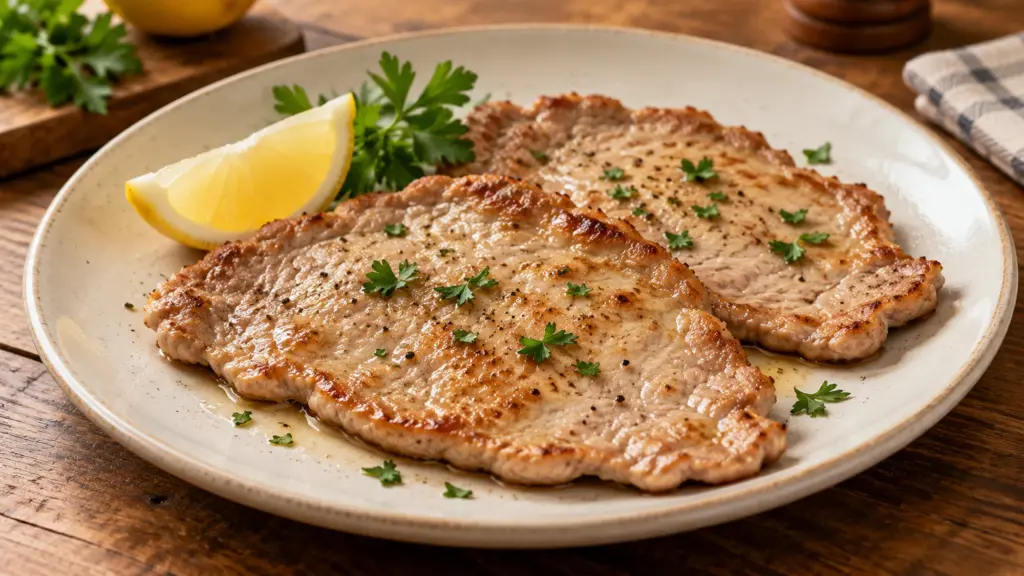
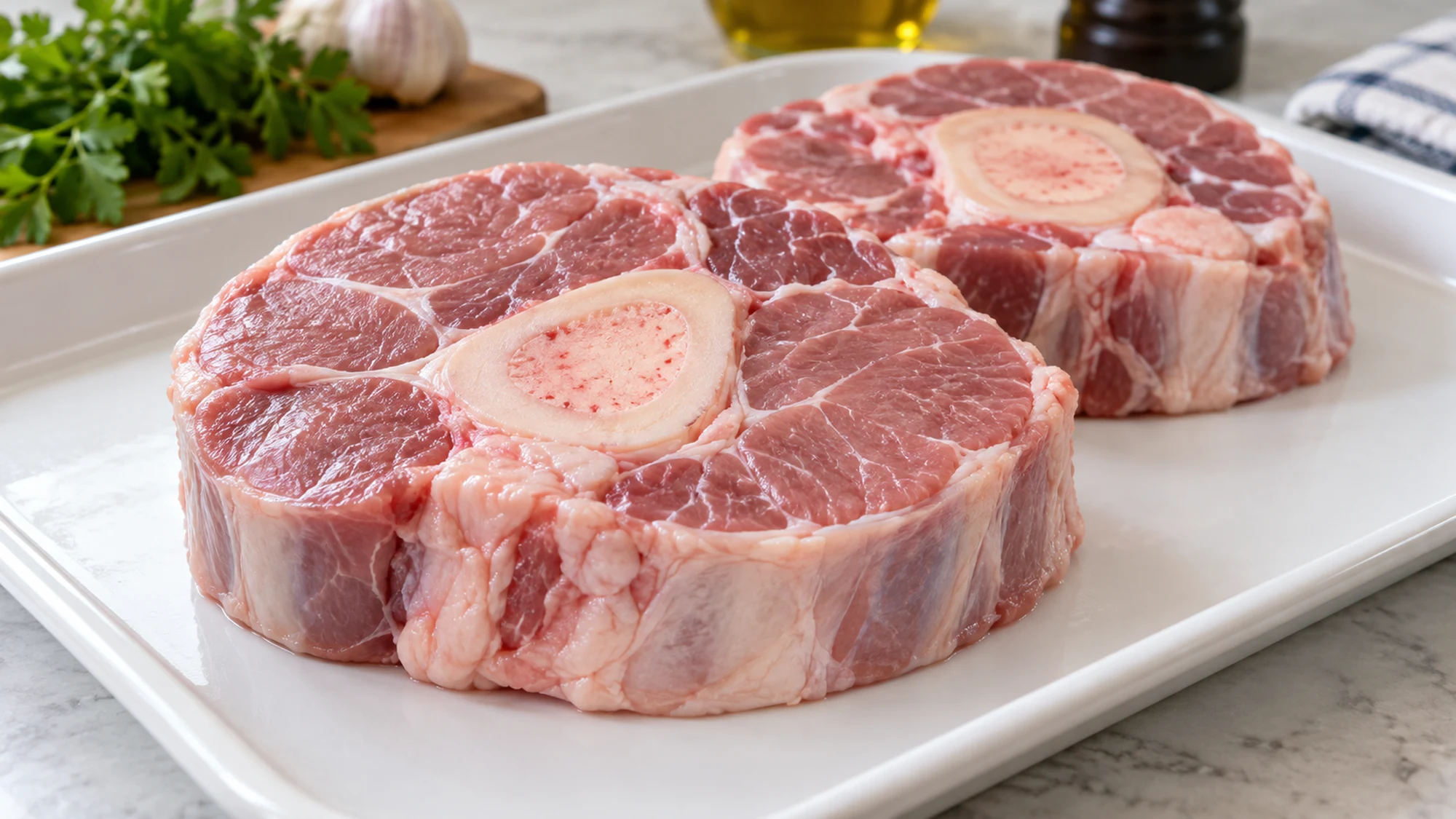
A tray of thin cutlets and a thick bone-in shank may both be labeled veal, but they need different plans. Veal is meat from a calf or young bovine. Start with the named cut, choose a suitable method, and use a thermometer to check the appropriate safe temperature.
Choose veal cutlets for a quick pan preparation, shanks for a slow braise, and ground veal for recipes designed for minced meat. USDA’s minimum is 145°F (63°C) plus a three-minute rest for whole-cut steaks, chops and roasts; ground veal requires 160°F (71°C).
What is veal, and what should the label tell you?
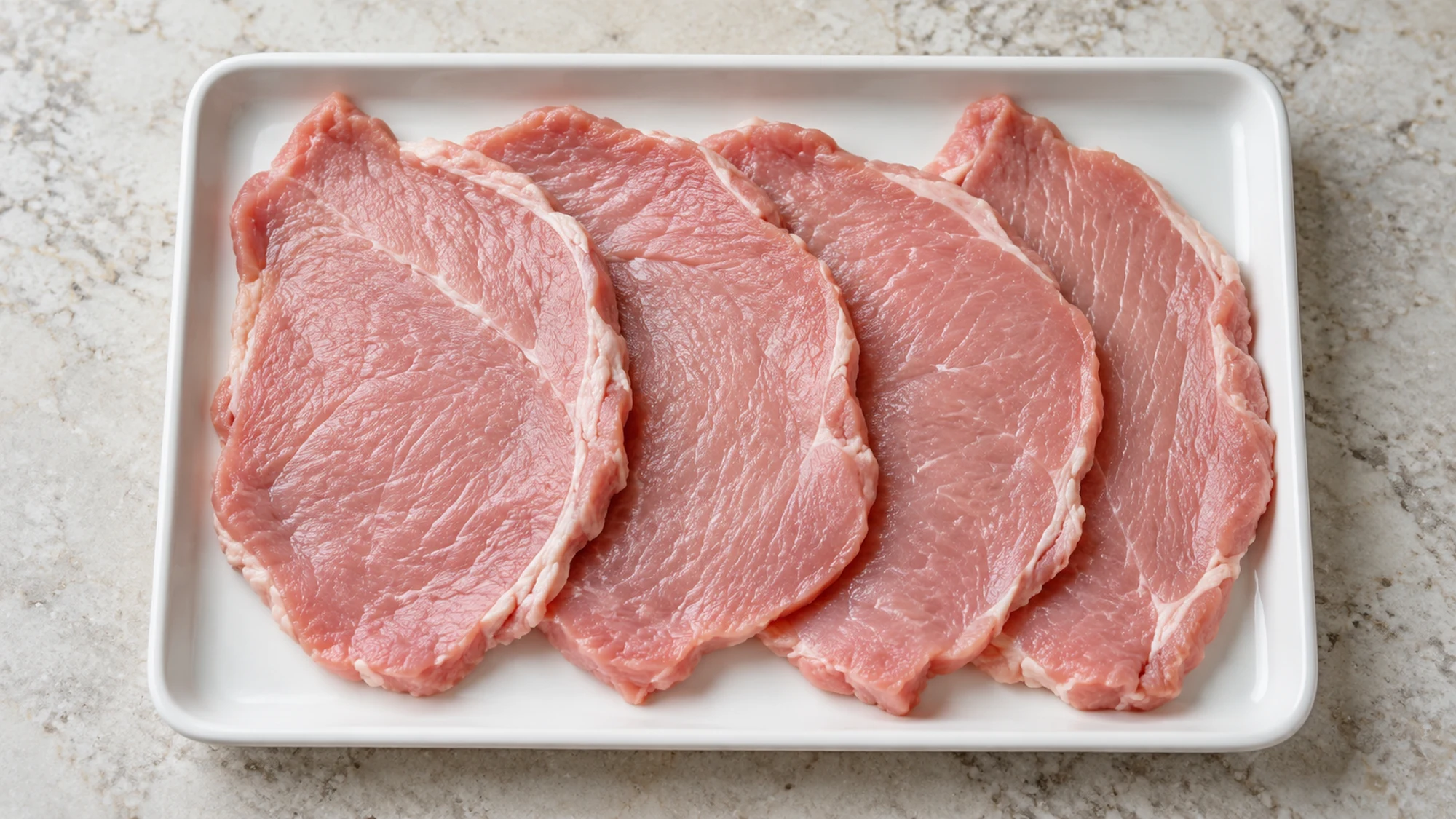
USDA defines veal as meat from a calf or young beef animal. It is not lamb, and the word does not identify one particular cut. Look for a second description such as cutlet, loin chop, shank or ground veal.
I’d choose the recipe before choosing the package. A familiar name on the label is helpful, but thickness, bone and preparation matter too. Ask the butcher what cut you are buying and whether it suits your intended method; that small conversation is more useful than hoping every piece will cook like a steak.
- Buy cold packages with intact wrapping and take them home promptly.
- Keep raw meat separate from ready-to-eat foods and contain any leaking juices.
- Read ingredients on breaded, seasoned, stuffed or otherwise prepared products.
- Treat any production or certification claim as a specific label claim; the word veal alone does not establish a particular farming standard.
Match veal cuts to the method
The industry’s Veal Discover Delicious cooking-method guide distinguishes quick sauteing from slower covered cooking. Thin cutlets suit the pan; osso buco, made with cross-cut shanks, is commonly braised. Choosing the right method helps you avoid asking a tougher cut to behave like a thin slice.
| Cut or form | Useful method | What to plan for |
|---|---|---|
| Thin cutlets | Sauteing or pan-frying | Even thickness and close attention |
| Loin or rib chops | Grilling, broiling or pan cooking | Check the thickest meat |
| Cross-cut shanks | Covered braising | Gentle cooking until tender |
| Ground veal | Meatballs, patties or meatloaf | Use the ground-meat temperature |
For a quick meal, I’d favor cutlets of similar thickness so one is not waiting in the pan while another finishes. For a braise, tenderness is part of the goal as well as safe cooking. The minimum safe temperature is not a promise that every connective-tissue-rich piece is ready to enjoy.
If you are comparing pan techniques, our guide to cooking steak explains browning and thermometer use. Keep veal’s particular cut and recipe in mind rather than copy a beef cooking time.
Use temperature and rest time together
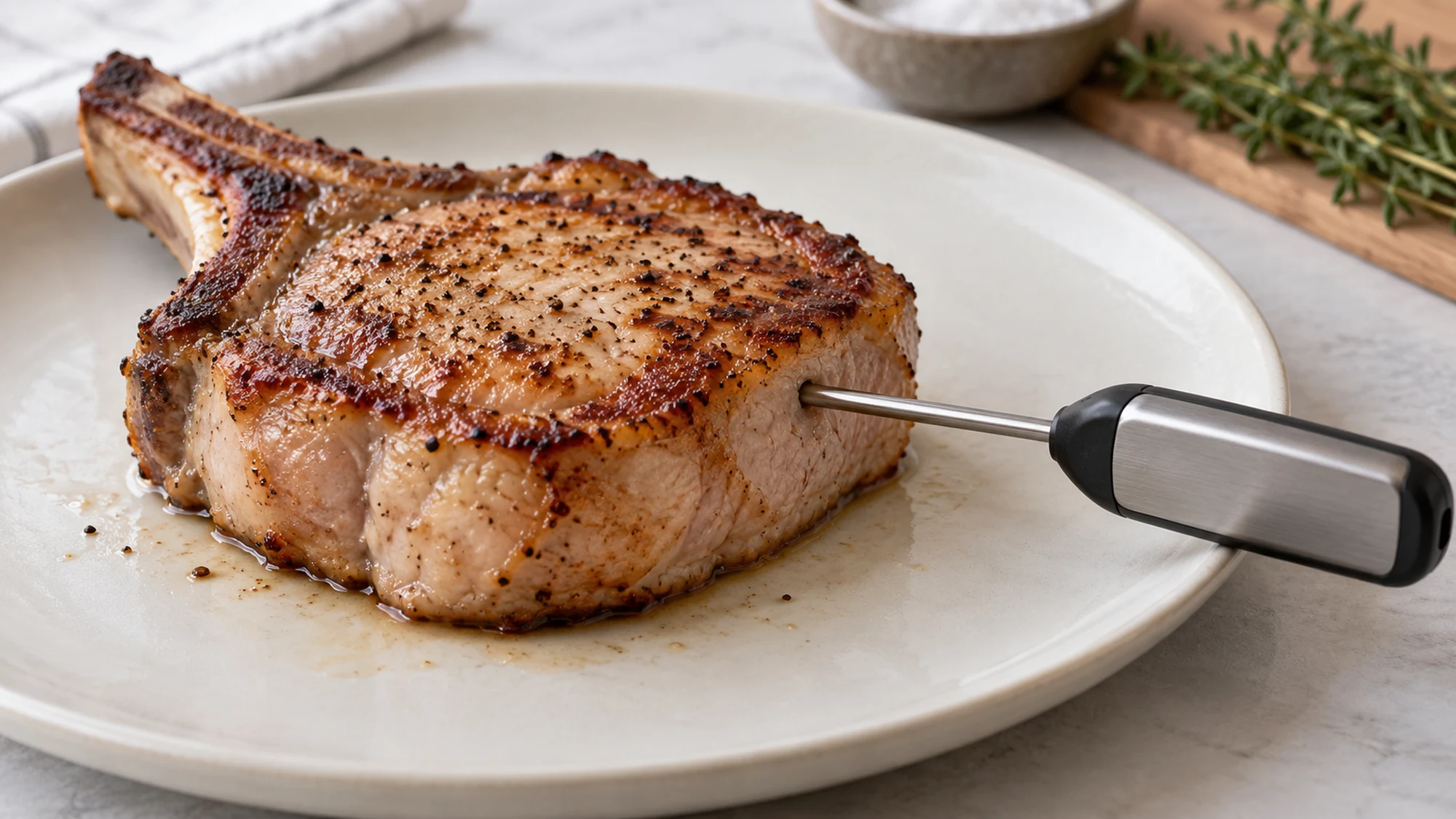
The federal safe-temperature chart gives separate endpoints for whole cuts and ground meat. Cook raw veal steaks, chops and roasts to at least 145°F (63°C), measured before removing them from the heat, then rest for at least three minutes before cutting or eating. Cook ground veal to 160°F (71°C).
The three-minute rest belongs to the whole-cut recommendation; it does not replace the higher ground-meat temperature. Use the product’s directions for stuffed or otherwise prepared meat. Browning, a rosy center or a recipe’s estimated minutes cannot independently prove safe cooking.
- Position the probe: USDA recommends the thickest part, away from bone, fat and gristle.
- Check thin pieces carefully: Use a suitable thin-tip thermometer and follow its sensing-area instructions; side insertion can help reach the center.
- Check more than one spot: Irregular pieces can heat unevenly.
- Keep serving tools clean: Do not return cooked meat to the unwashed plate that held it raw.
Store promptly and thaw safely
USDA recommends refrigeration at 40°F (4°C) or below. Use veal chops and roasts within three to five days, and ground veal or stew meat within one to two days. Freeze what you will not use in that window.
Thaw in the refrigerator, not on the counter. The veal industry’s thawing guidance also describes cold-water and microwave methods, followed by immediate cooking. Keep the packaging leakproof for cold-water thawing and change the water every 30 minutes.
- Keep raw juices away from cooked foods, salad ingredients and utensils.
- Label freezer portions with the cut and date so they remain useful for a specific meal.
- Check flour coatings, egg washes, butter and sauces separately if allergies matter; FDA identifies wheat, egg and milk as major allergens.
- Follow the finished dish’s storage directions when it contains fillings, gravy or other perishable ingredients.
Bottom Line
Veal is easier to shop for when you start with the cut and the meal. Match quick cooking to thin cutlets and patient braising to shanks, then verify the correct temperature rather than guessing from color. Keep the whole-cut rest time and ground-meat endpoint distinct.
Sources
- USDA: What Veal Is
- Veal Discover Delicious: Cooking Methods
- FoodSafety.gov: Safe Minimum Cooking Temperatures
- USDA: Using a Food Thermometer
- USDA: Veal Storage
- Veal Discover Delicious: Safe Thawing
- FDA: Food Allergies

Hi, I’m Emily Pocker! I share recipes and food guides here at Recipes360 to help you find everyday meal inspiration and feel more confident in the kitchen. My goal is to make cooking approachable, enjoyable, and full of flavor.