
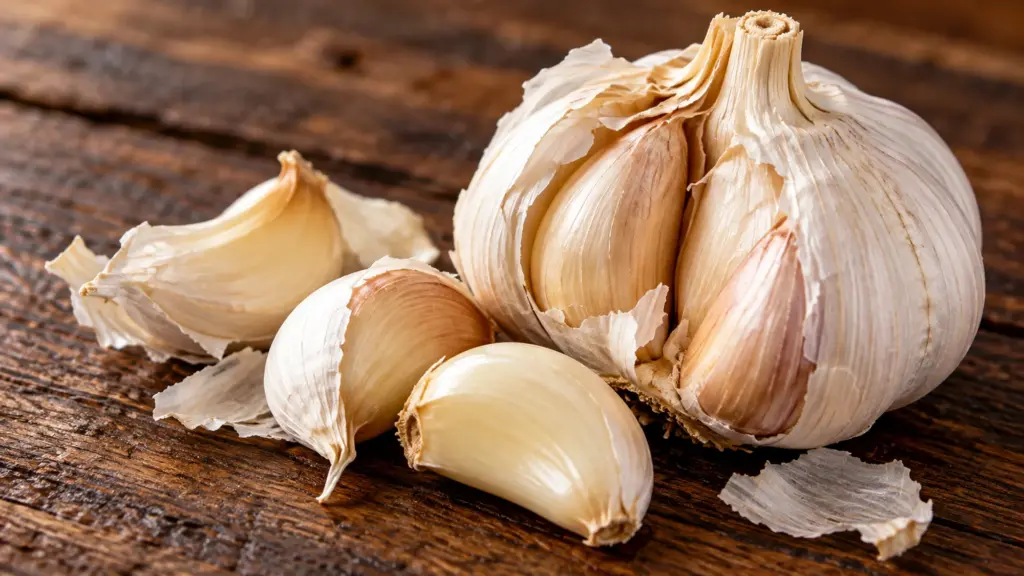
A recipe asks for three garlic cloves, and the papery bulb on the counter suddenly looks less obvious than it did in the store. The answer is simple: you need three individual segments, not three whole heads. From there, the useful question is how those cloves should be prepared.
Garlic cloves are the individual pieces inside a garlic bulb. Choose firm cloves, peel only what you need, and match the cut to the dish. Whole bulbs belong in dry, ventilated storage; homemade garlic in oil needs refrigeration or freezing.
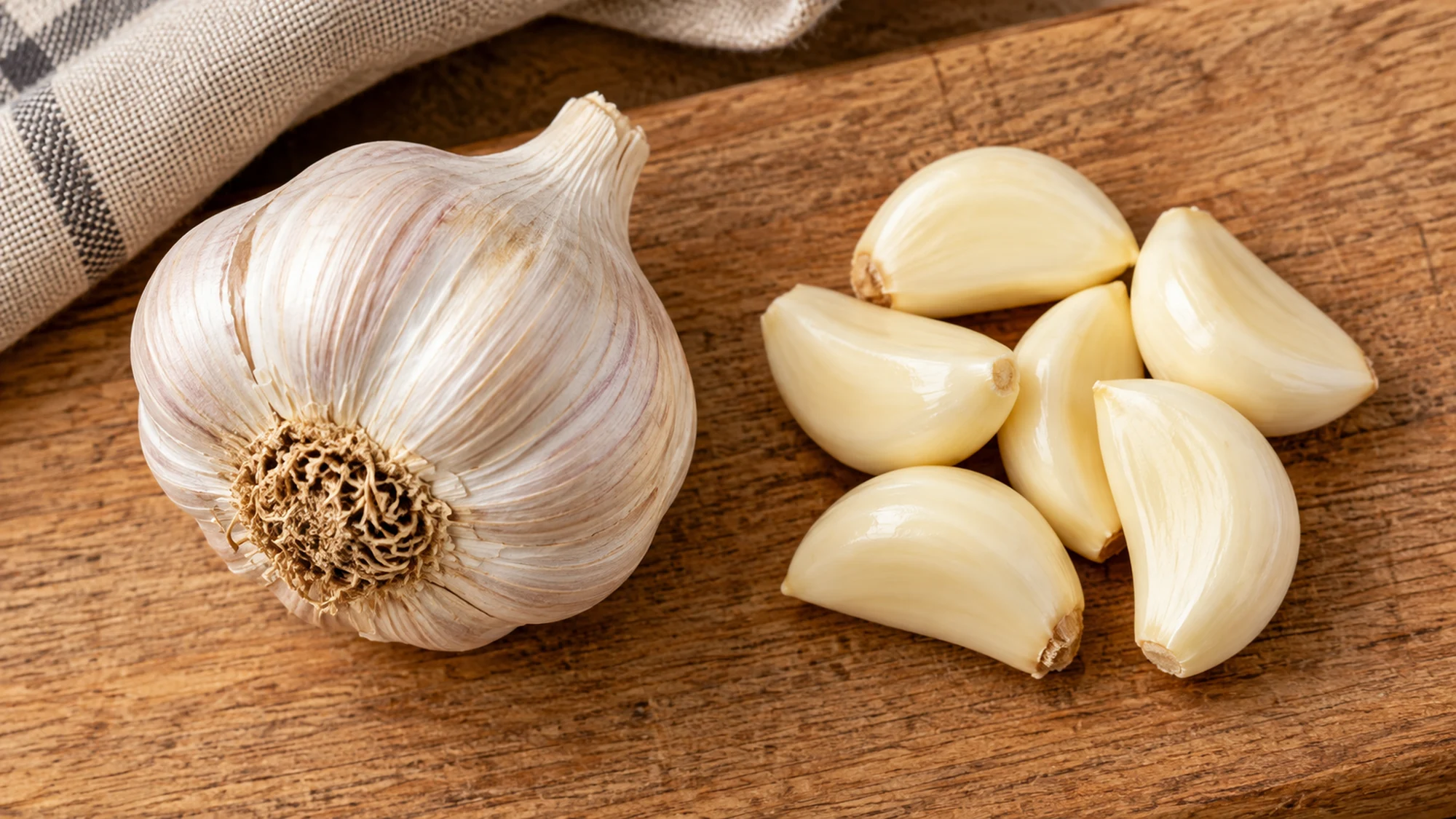
What counts as one of your garlic cloves?
A head, or bulb, contains several cloves, each wrapped in its own skin. UC Davis’s garlic guide explains that varieties differ: softneck bulbs generally have more, smaller cloves, while hardneck bulbs tend to have fewer, larger ones. One clove is therefore a count, not a precise weight.
If a recipe supplies grams, use that weight rather than trying to choose a perfectly average clove. If it gives only a clove count, use sound, ordinary-size pieces and follow its preparation directions. I’d pay more attention to that last detail than to making every clove match its neighbor.
- Bulb or head: the complete cluster under the outer wrapping.
- Clove: one separable segment inside that cluster.
- Elephant garlic: a milder relative of the leek, not simply an extra-large version of ordinary garlic.
- Powder: a dried seasoning, not a fresh clove measured in another form.
Choose firm garlic and peel it safely
Purdue Extension recommends heavy, closed, firm bulbs with dry outer skins. Avoid soft or visibly moldy garlic. Keep the remaining bulb together while removing the cloves needed for the meal; there is little benefit in peeling tomorrow’s supply without a storage plan.
- Separate a clove and place it on a stable cutting board.
- For chopped garlic, press carefully with the flat side of a chef’s knife, keeping hands away from the cutting edge.
- Remove the loosened papery skin and trim the tough end.
- If you need the clove intact, peel gently or use a silicone garlic-peeling tube instead of crushing it.
A green sprout does not automatically mean a clove is unsafe, but it can signal aging and less appealing flavor. Split a sound clove and remove the sprout if desired. That advice does not extend to mold, rot or a slippery, deteriorated surface.
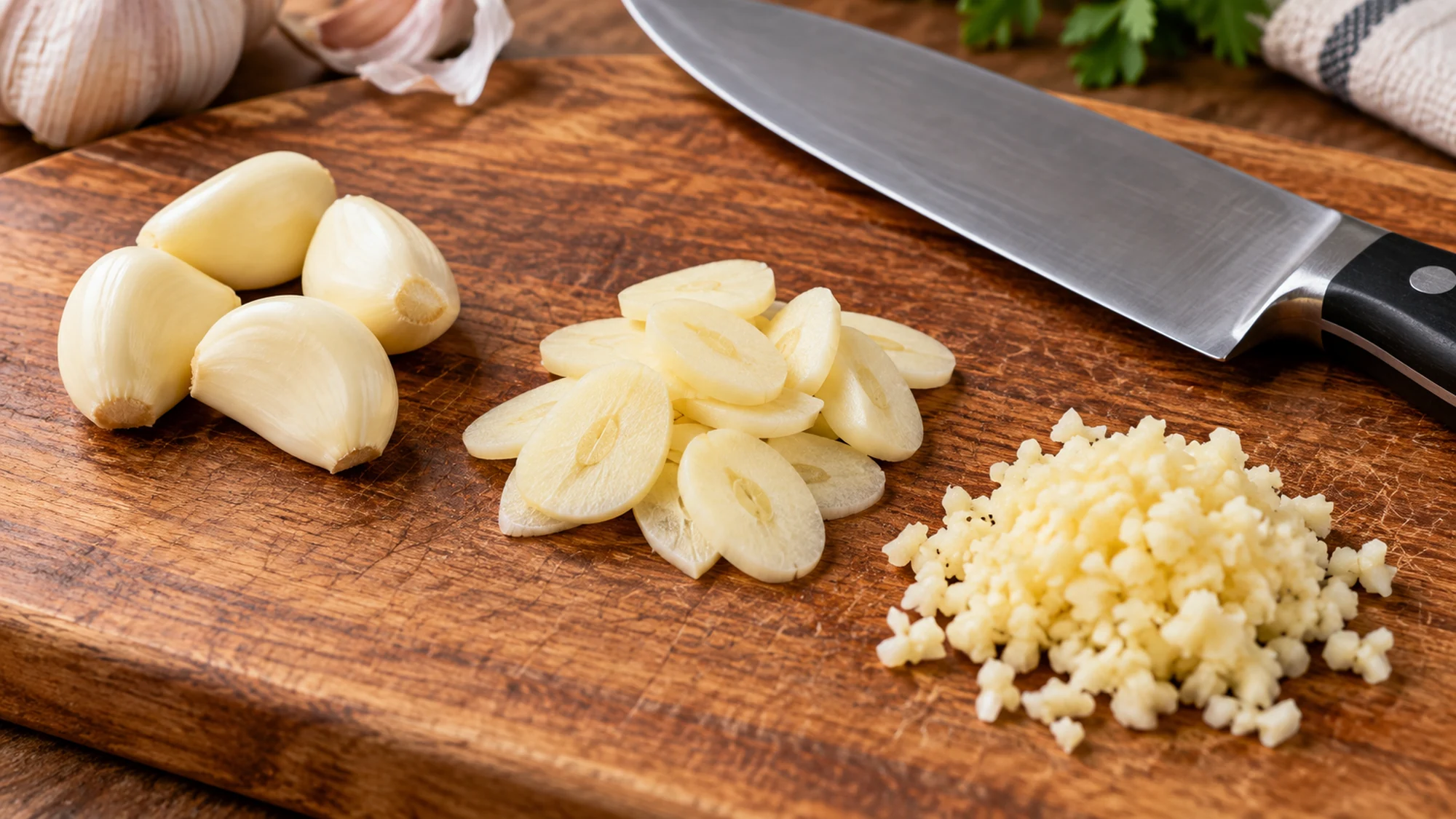
How the cut changes the flavor
Utah State Extension describes grated garlic as especially assertive and sliced garlic as milder. Breaking garlic’s cells starts the reaction responsible for its pungency; cooking changes that flavor. This helps explain why a whole roasted clove and a spoonful of raw minced garlic are very different additions.
| Preparation | Useful role | What to consider |
|---|---|---|
| Whole | Roasting or a recipe calling for intact cloves | Needs the recipe’s full cooking time |
| Sliced | Visible pieces in sauces or vegetables | Keep slices reasonably even |
| Minced | Small pieces distributed through a dish | Watch closely in hot fat |
| Grated or pressed | Fine texture for dressings and dips | Raw flavor can be assertive |
I’d start cautiously with raw garlic in a dip: you can add more, but removing it is rather less convenient. In a cooked dish, have the next ingredients ready before garlic reaches the pan. Tiny pieces leave less room for distraction than whole cloves.
Fresh garlic and dried seasoning are not identical swaps. Our garlic powder guide explains the differences between powder, granules and garlic salt. Use a recipe’s specific substitution when available rather than assuming a universal spoon-to-clove conversion.
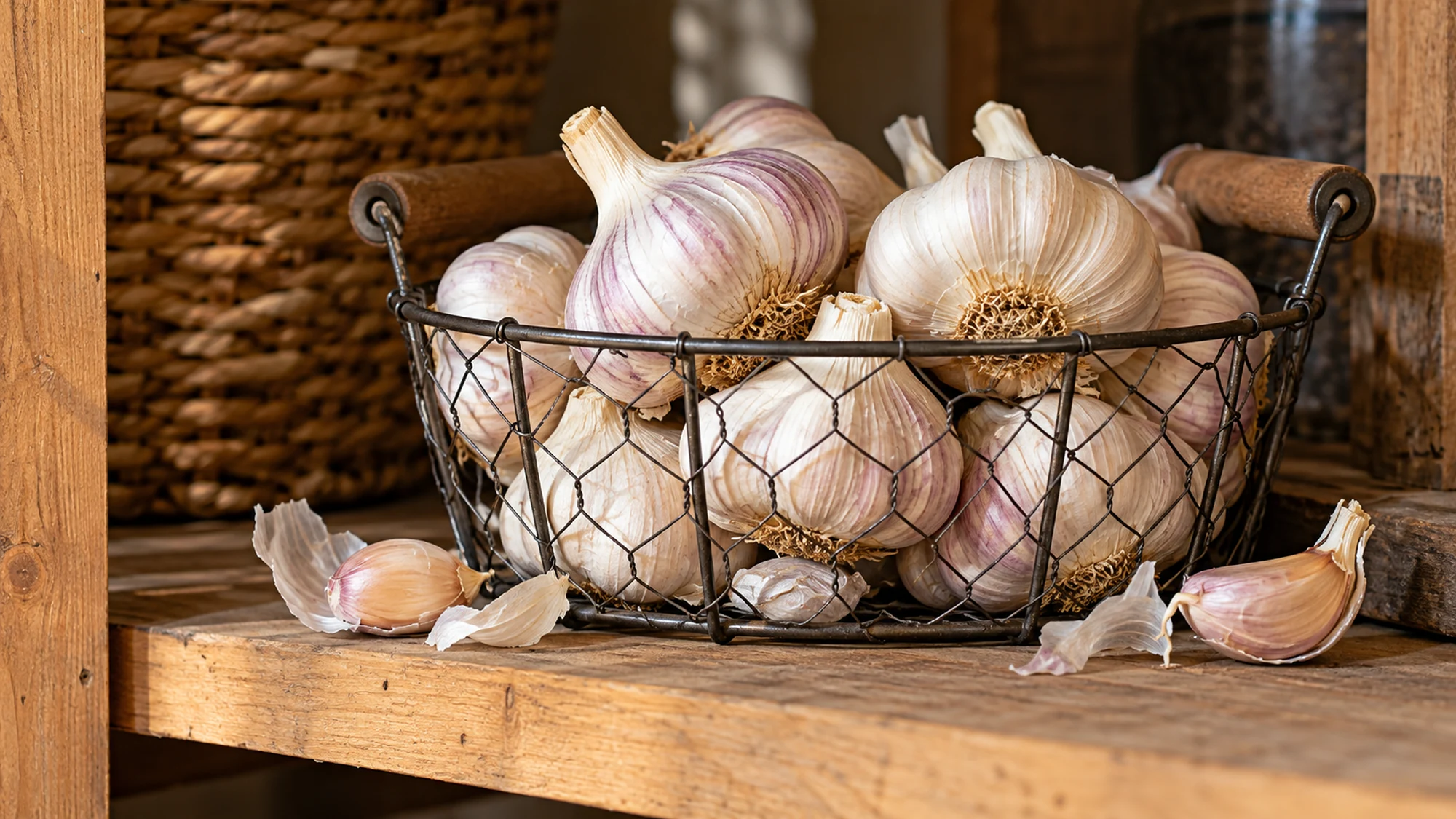
Store garlic cloves according to their form
For whole, cured bulbs, choose a cool, dry, dark place with airflow, such as a mesh bag or open basket. An airtight jar is not the right home for intact pantry garlic. Once peeled or chopped, refrigerate promptly and use soon; follow the label on commercially prepared garlic.
- Freezing: UC Davis describes freezing peeled or unpeeled cloves in a freezer-safe container. Portion them so you can remove only what you need.
- Garlic in oil: the National Center for Home Food Preservation says to refrigerate fresh homemade mixtures at 40°F (4°C) or below for no more than four days, or freeze for longer storage.
- No countertop storage: homemade garlic-in-oil mixtures can support botulism. Oil does not make fresh garlic shelf-stable.
- Keep labels: date prepared portions and distinguish frozen plain garlic from any garlic-and-oil mixture.
Bottom Line
Treat a clove as one piece, then let the dish determine whether it stays whole, gets sliced or becomes a fine mince. Choose firm garlic, prepare it thoughtfully and keep storage rules separate for whole bulbs, cut cloves and garlic in oil.
Jamie Oliver’s demonstration below shows practical garlic preparation. It is a technique reference, not guidance for preserving garlic in oil.
Sources
- UC Davis: Garlic—safe storage, preparation and freezing
- Purdue Extension: selecting and preparing garlic
- Utah State Extension: garlic cuts and culinary uses
- National Center for Home Food Preservation: garlic-in-oil safety

Hi, I’m Emily Pocker! I share recipes and food guides here at Recipes360 to help you find everyday meal inspiration and feel more confident in the kitchen. My goal is to make cooking approachable, enjoyable, and full of flavor.