

The protein-bar shelf can make a small snack feel like a complicated purchase. Plant based protein bars are convenient, but the phrase on the wrapper does not tell you how much protein, fiber, or sugar you will actually eat.
Choose plant based protein bars by the individual label: check the serving size, protein source, allergens, and the balance of protein, fiber, and added sugar. A plant-based badge is a starting point, not a nutritional verdict.
I’d decide what the bar needs to do first: bridge the gap to dinner, travel in a bag, or offer a food you can comfortably eat. That is more useful than choosing the biggest protein number.
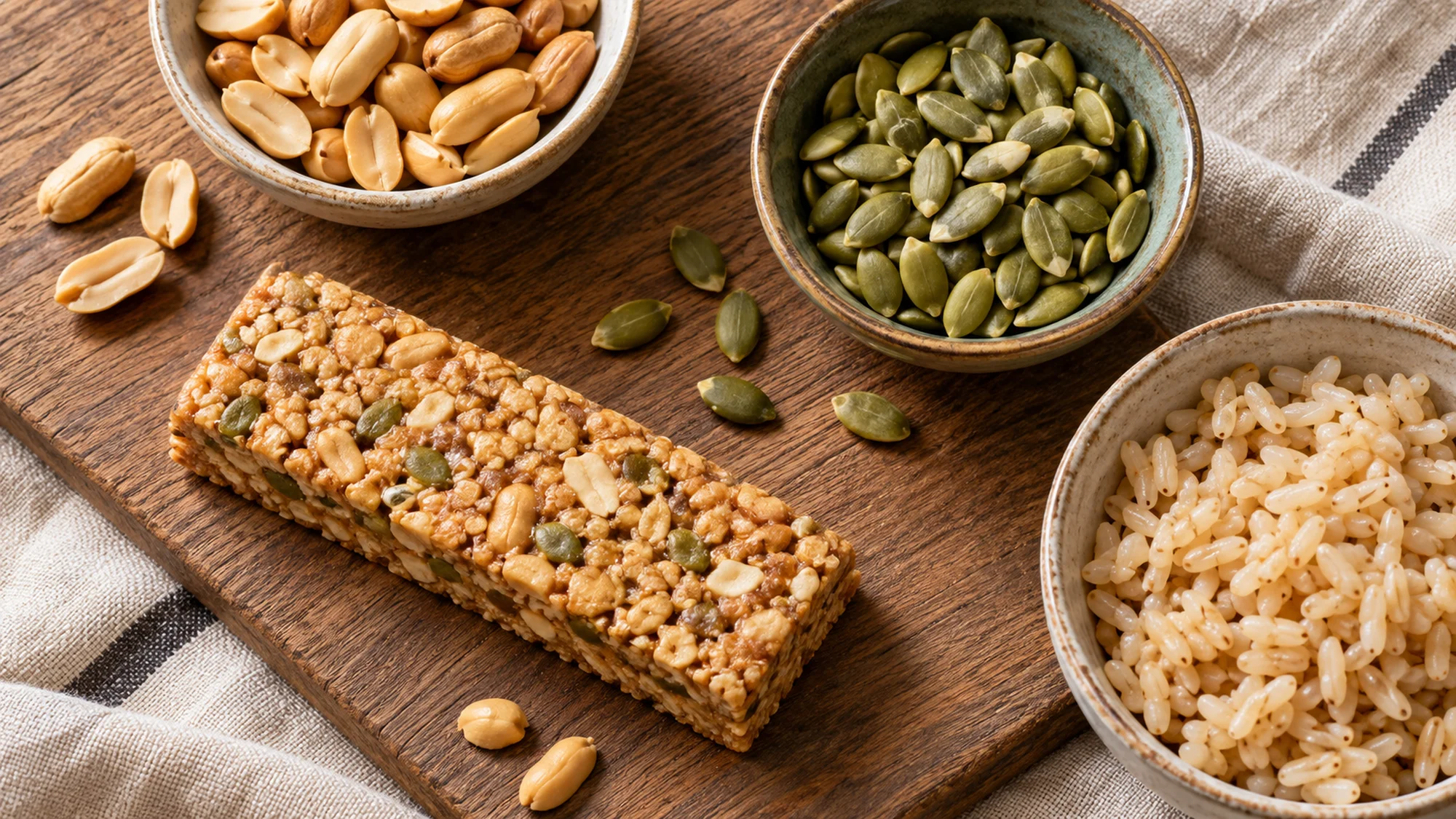
What plant based protein bars actually contain
These bars can get protein from ingredients such as soy, brown rice, pumpkin seeds, and peanuts. A familiar nut on the front does not tell the whole story: the concentrated protein ingredient may be different from the ingredient providing most of the flavor.
For example, ALOHA’s Peanut Butter Chocolate Chip ingredient list names brown rice and pumpkin seed protein, while NuGo Dark Chocolate Pretzel lists soy protein in its pretzel blend. Those are two different formulations, not interchangeable allergy choices.
- Read the full ingredient list. Check coatings and chips as well as the central bar.
- Separate diet preferences from allergies. A vegan claim does not establish that a product meets your individual allergy precautions.
- Check the exact flavor and size. A mini bar, another flavor, or a reformulated wrapper may have different numbers.
The useful question is not simply whether a bar contains plants, but which ingredients and serving size are inside this particular wrapper.
Compare two labels, not two marketing claims
The examples below use each manufacturer’s listed full-size serving. They are a label comparison, not a taste test or a ranking, and the bar weights differ; compare your actual package before buying.
| Per labeled bar | ALOHA Peanut Butter Chocolate Chip | NuGo Dark Chocolate Pretzel |
|---|---|---|
| Bar weight | 56 g | 50 g |
| Calories | 240 | 200 |
| Protein | 14 g | 12 g |
| Fiber | 10 g | 2 g |
| Total sugar | 5 g | 14 g |
| Declared allergen | Peanuts | Soy |
Neither column wins automatically. The higher fiber figure may matter to one reader, while another wants a smaller bar or a different ingredient profile; total sugar also is not the same field as added sugar.
- ALOHA lists shared-facility precautions; NuGo lists shared-equipment precautions. Read those notices if you have food allergies.
- NuGo lists 14 g added sugar for this flavor. Do not assume another bar’s total sugar number is its added sugar number.
- Prices and package counts change. Compare cost per bar you will actually eat, rather than the size of the box.
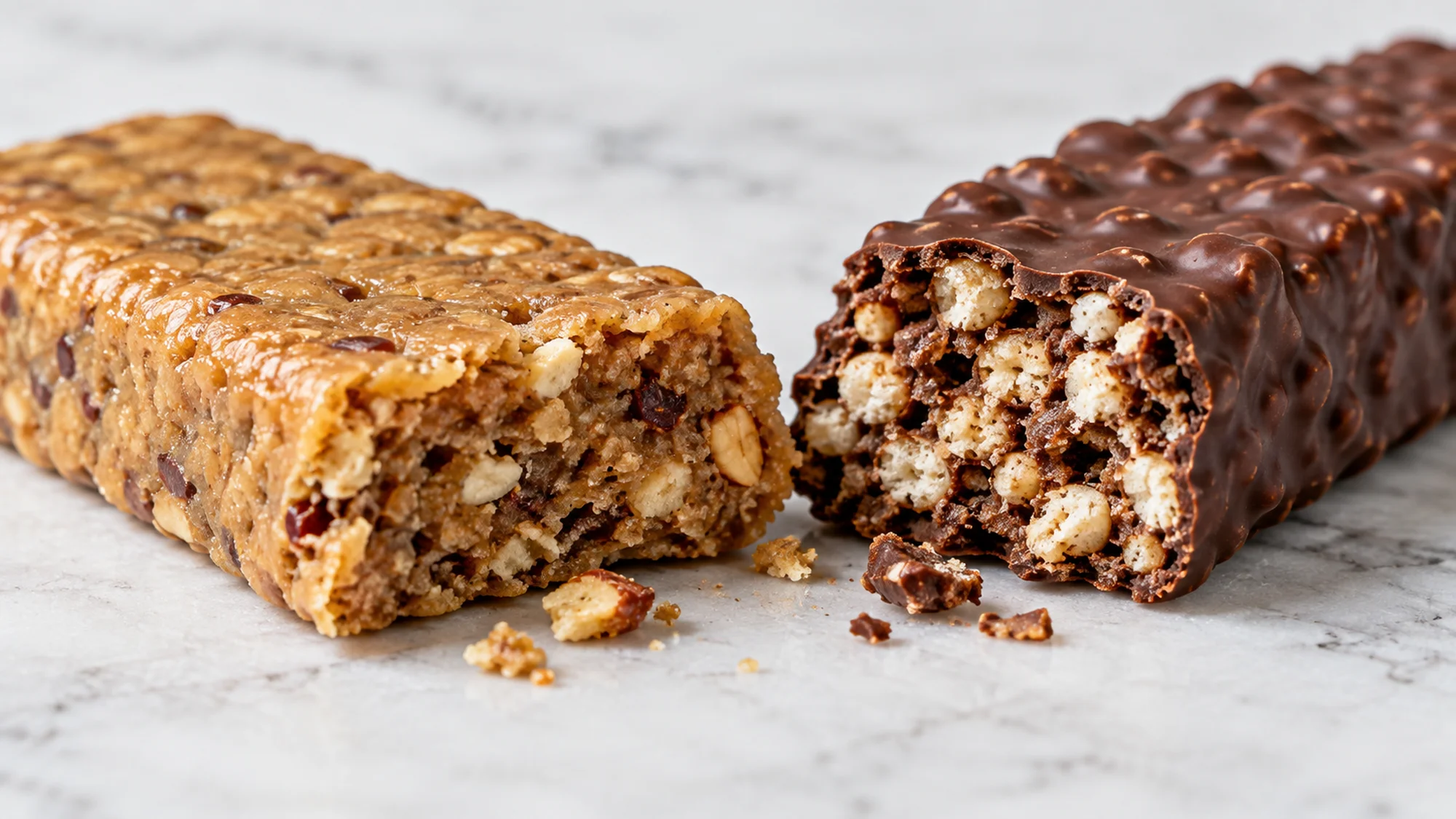
Use the back of the wrapper in a sensible order
The FDA’s Nutrition Facts guide explains that nutrient amounts refer to the stated serving, and serving size is not a recommendation. That distinction matters when a box contains minis or a package has more than one serving.
- Start with the amount you will eat. Compare equivalent portions before drawing conclusions.
- Read protein alongside the rest. Fiber, saturated fat, sodium, and added sugar deserve attention too.
- Keep added sugar separate. It is included within total sugar, not something to add to that total.
- Check the purpose. A convenient snack is not automatically a complete lunch or an individual nutrition plan.
Our guide to understanding daily protein recommendations puts that single bar into a wider context. I prefer that approach to asking one snack to do the work of every meal.
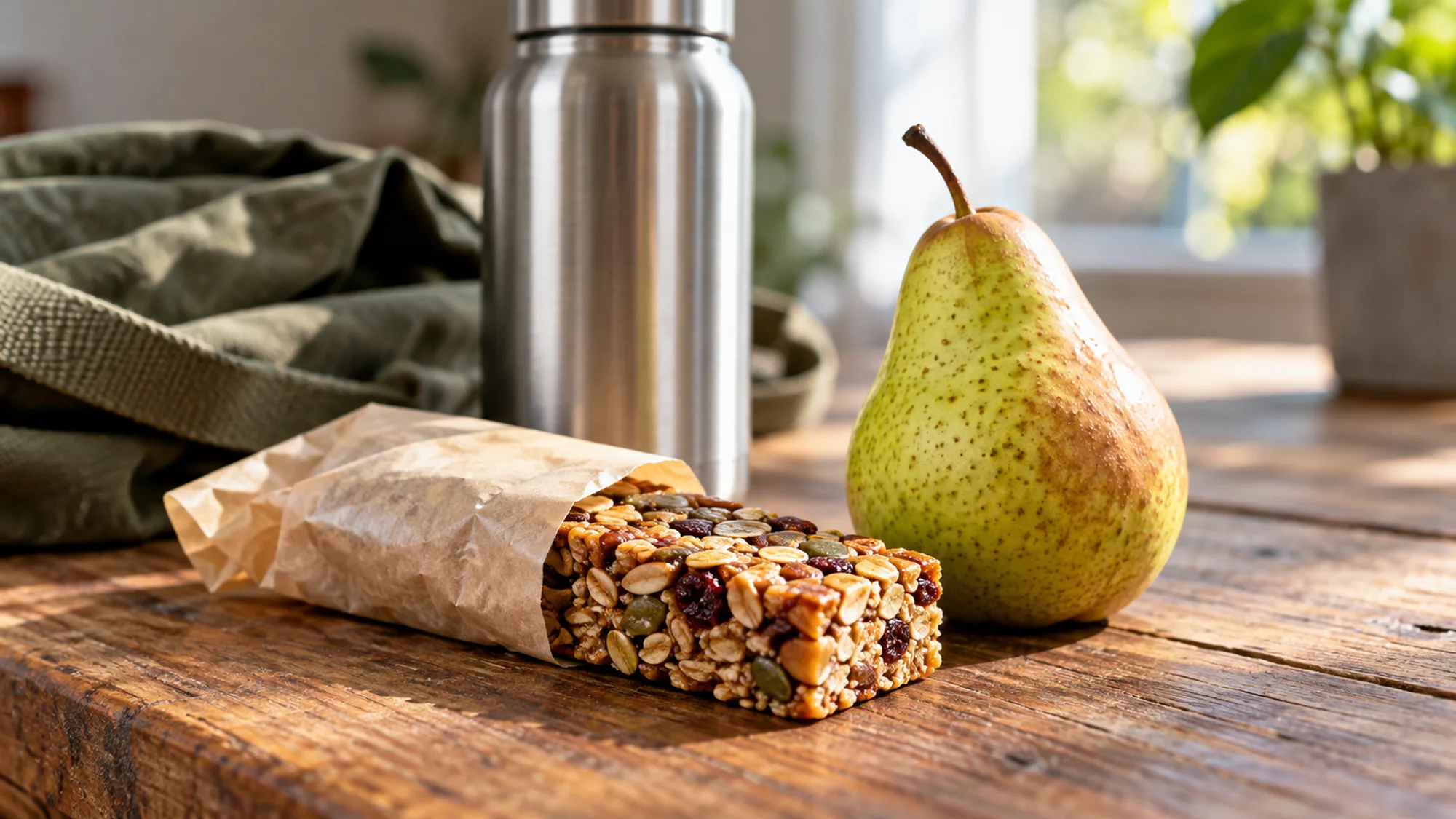
Choose a texture and portion you enjoy
A soft nut-butter bar and a chocolate-coated crisp bar offer very different eating experiences. I’d buy one before committing to a case: a label can describe ingredients, but it cannot decide whether you enjoy a dense chew or a crunchy bite.
Comfort matters too. NIDDK notes that certain carbohydrates, sugar-alcohol sweeteners, and too much fiber can increase gas symptoms in some people; this does not mean every high-fiber bar causes a problem.
- Try an unfamiliar bar on an ordinary day rather than making it your only food on a long outing.
- Follow the package’s storage directions; a chocolate coating is not always a friend to a hot car.
- Keep varied foods in the routine. A bar can sit beside fruit or another suitable snack without becoming your entire eating strategy.
- If symptoms persist, discuss them with a clinician rather than repeatedly removing whole food groups.
Bottom Line
A useful plant-based bar fits your tastes, dietary needs, and the moment you need it. Compare the actual serving, read the ingredients and allergy notices, and let convenience be the benefit—without expecting a wrapper to promise perfect nutrition.
Nicole Hoskens’ longer protein-bar review below illustrates how a dietitian weighs labels and taste. It includes non-vegan products and older formulations, so use it for the comparison process rather than as a current plant-based shopping list.
Sources
- ALOHA: Peanut Butter Chocolate Chip product label
- NuGo: Dark Chocolate Pretzel ingredients and nutrition
- FDA: Understanding Nutrition Facts
- NIDDK: Foods and gas symptoms

Hi, I’m Emily Pocker! I share recipes and food guides here at Recipes360 to help you find everyday meal inspiration and feel more confident in the kitchen. My goal is to make cooking approachable, enjoyable, and full of flavor.