
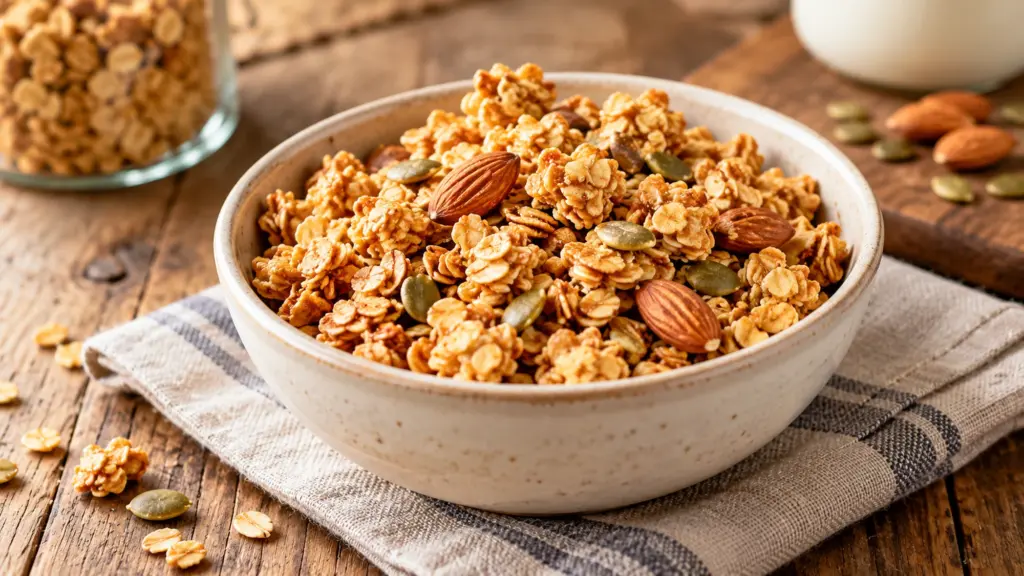
The big crunchy clusters are often the first thing you notice in a bag of granola. Granola is usually a baked mixture of oats, a sweetener and fat, often with nuts, seeds or dried fruit. It can be breakfast cereal, a snack or a topping; its ingredients and portion tell you more than a healthy-looking package.
Choose granola for the flavor and crunch you want, then check serving weight, added sugars and allergens. Oats do not make every granola gluten-free, and honey or maple syrup still counts as added sugar when used to sweeten it.
What gives granola its crunch
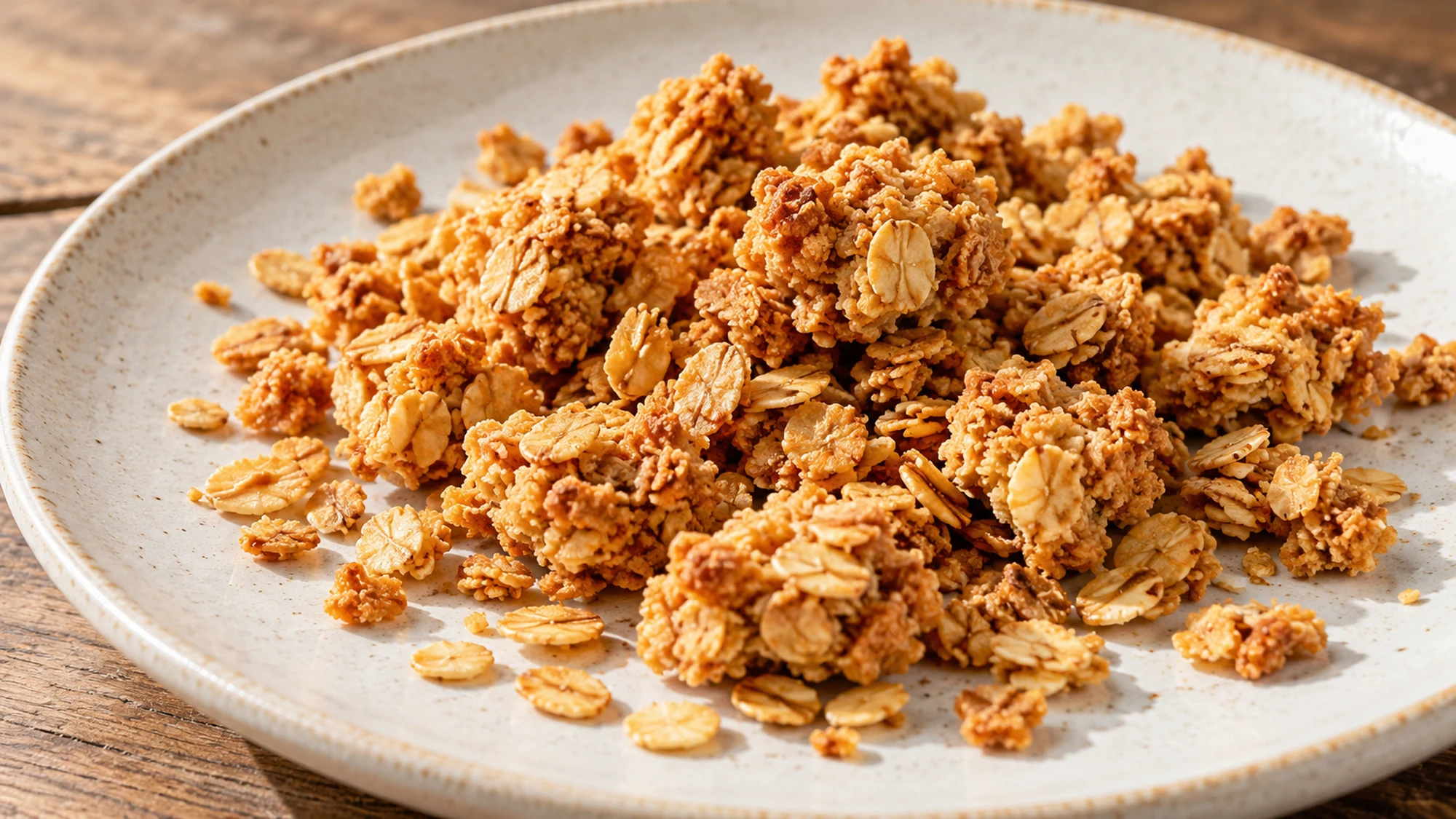
Food Wishes’ maple nut granola shows a familiar combination of rolled oats, sweeteners, oil, nuts, seeds and dried fruit. Recipes vary widely: some are loose and crumbly, others form substantial clusters. The mix can be mild or sweet, fruit-heavy or mostly oats, so there is no single nutrition profile for the entire category.
King Arthur Baking’s cluster comparison found that binders and handling changed the size and amount of clusters in its tested recipe. That is useful culinary context, not a reason to assume a larger cluster is better for you. I’d choose the texture for how I plan to eat it: loose flakes scatter easily over yogurt, while chunks are convenient for a small snack.
- Look for a flavor you want to use alongside the rest of breakfast rather than one that needs several extra sweet toppings.
- Read the complete ingredients even when the front of the bag emphasizes oats, fruit or nuts.
- For homemade granola, follow a complete recipe; changing binders or sweeteners can alter how it browns and holds together.
Read granola labels on the same basis
FDA’s label guide explains that serving size reflects an amount people typically consume, not a recommended amount for everyone. Check the serving weight before comparing two bags. A smaller stated serving can make the numbers look lower without telling you how equal amounts of the products compare.
| Label detail | Question to ask | Useful comparison |
|---|---|---|
| Serving weight | Are the listed amounts based on equal grams? | Match weights before comparing nutrients |
| Added sugars | How much is in the portion I will use? | Read the added-sugars line |
| Fiber and protein | What does this specific product provide? | Use the figures on each label |
| Ingredients and allergens | Does it fit the people eating it? | Check every flavor separately |
FDA includes honey and syrups among added sugars. A granola sweetened with maple syrup can have a flavor you prefer, but the name of the sweetener does not erase that line on the label. Total sugars also includes naturally occurring sugars; added sugars is one part of that total, not an extra amount to add on top.
Use granola as part of the bowl
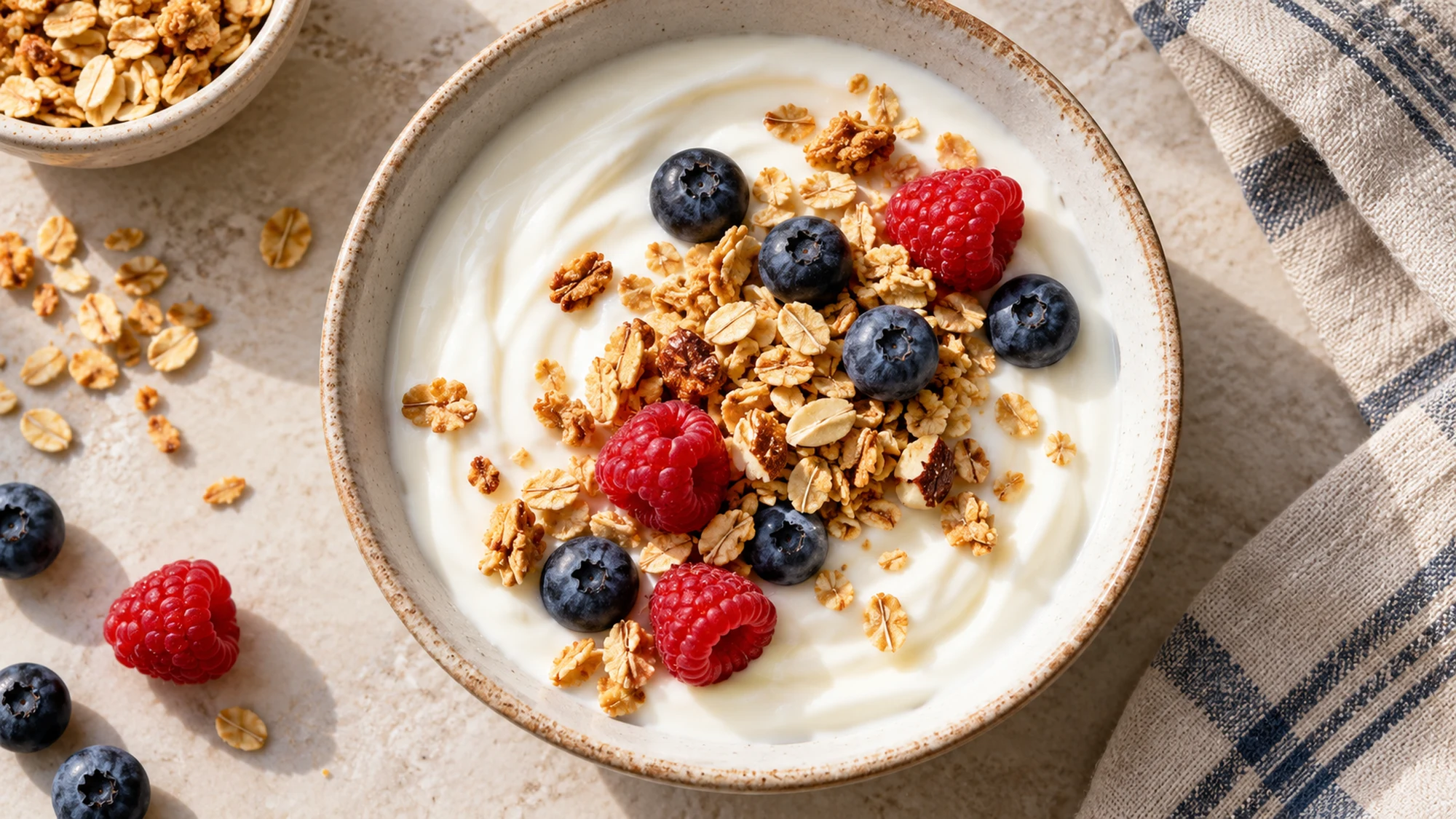
For a yogurt bowl, begin with the yogurt and fruit, then add granola for crunch. This makes its role clear and gives you a chance to decide whether more is useful. I’d serve the extra granola separately; it stays crisp, and everyone can choose the texture they want.
- As cereal: Pour a portion into a bowl before adding milk so you can see how much you are using.
- As a topping: Scatter it over yogurt or fruit close to serving time.
- As a snack: Portion it into a small dish rather than repeatedly eating from a large bag.
- In a packed breakfast: Carry the dry granola separately from moist ingredients, then combine when ready.
Choose the amount for your appetite and the other food in the meal; there is no universally correct bowl size. Plain oats and granola are different preparations, so their texture and labels should not be treated as identical. Our old fashioned oats guide helps explain the oat flakes themselves.
Check allergens and keep the dry mix dry
FDA’s allergen-labeling guidance requires clear identification of major allergen sources used in packaged foods it regulates. Depending on the formula, granola may contain nuts, peanuts, milk, wheat, soy, sesame or egg. Check the specific flavor and any advisory wording; “grain-free” or a short ingredient list is not an allergy guarantee.
For gluten avoidance, do not rely on visible oats. Other ingredients or cross-contact can matter. FDA’s gluten-free labeling standard gives a defined meaning to a gluten-free claim. Choose an appropriately labeled product, and assess suitability for your own needs rather than assume every oat-based granola qualifies.
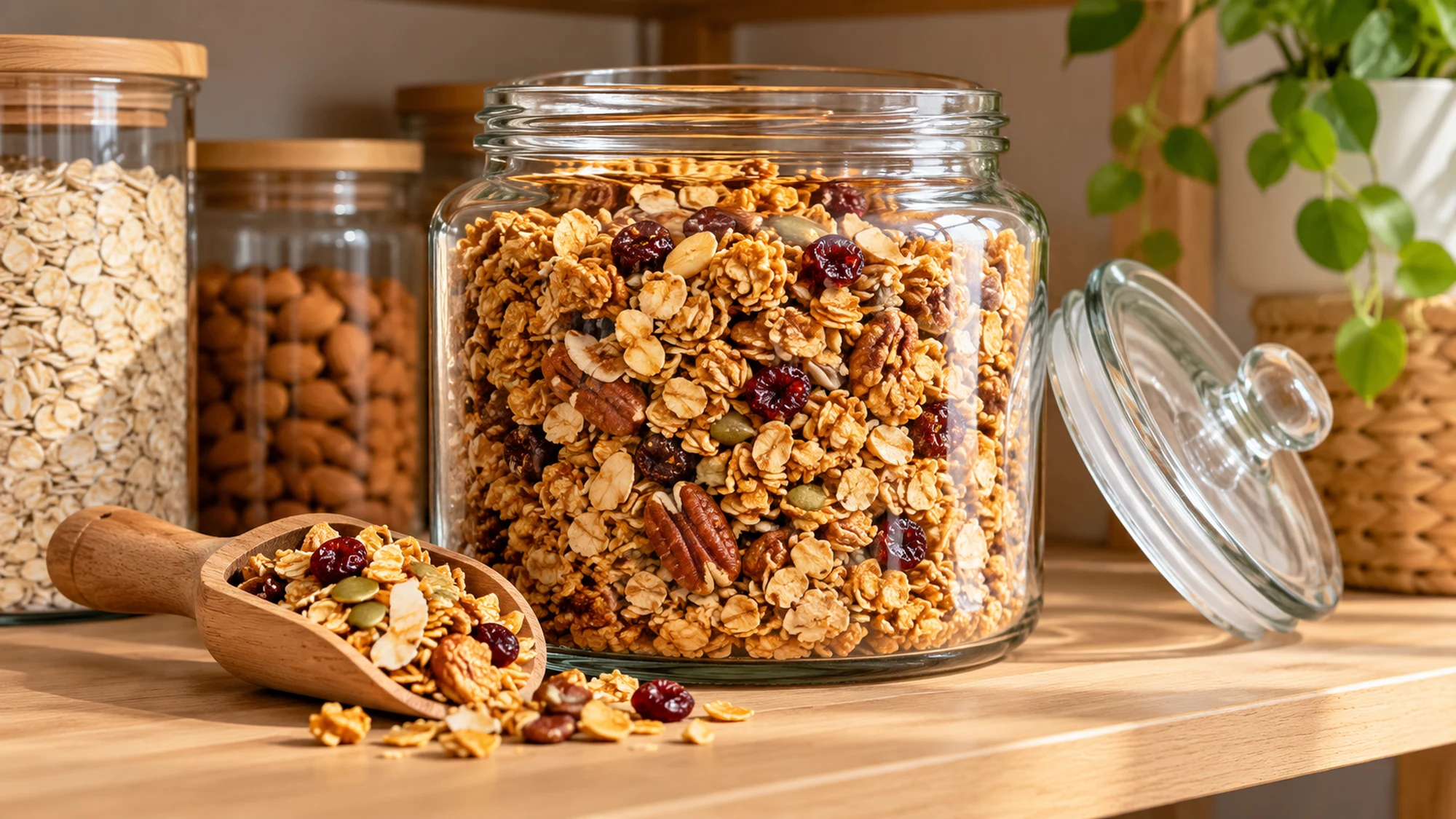
- For homemade granola, King Arthur’s recipe cools the mixture completely before transferring it to a tightly closed container.
- Keep a dry scoop and close the bag or jar after portioning. Follow the product or recipe’s storage directions instead of applying one shelf life to every mix.
- Store the dry mix separately from yogurt and milk; once combined, follow the handling requirements of those perishable ingredients.
Bottom Line
Granola can bring satisfying crunch without needing a health promise. Choose a useful texture, compare equal amounts on the label, check added sugars and allergens, and decide whether it is the cereal or an accent in your bowl. Store the dry mix separately until serving.
Sources
- Food Wishes: Maple nut granola
- King Arthur Baking: What creates granola clusters
- FDA: Using the Nutrition Facts label
- FDA: Added sugars
- FDA: Allergen labeling guidance
- FDA: Gluten-free labeling
- King Arthur Baking: Cooling and storing granola

Hi, I’m Emily Pocker! I share recipes and food guides here at Recipes360 to help you find everyday meal inspiration and feel more confident in the kitchen. My goal is to make cooking approachable, enjoyable, and full of flavor.