
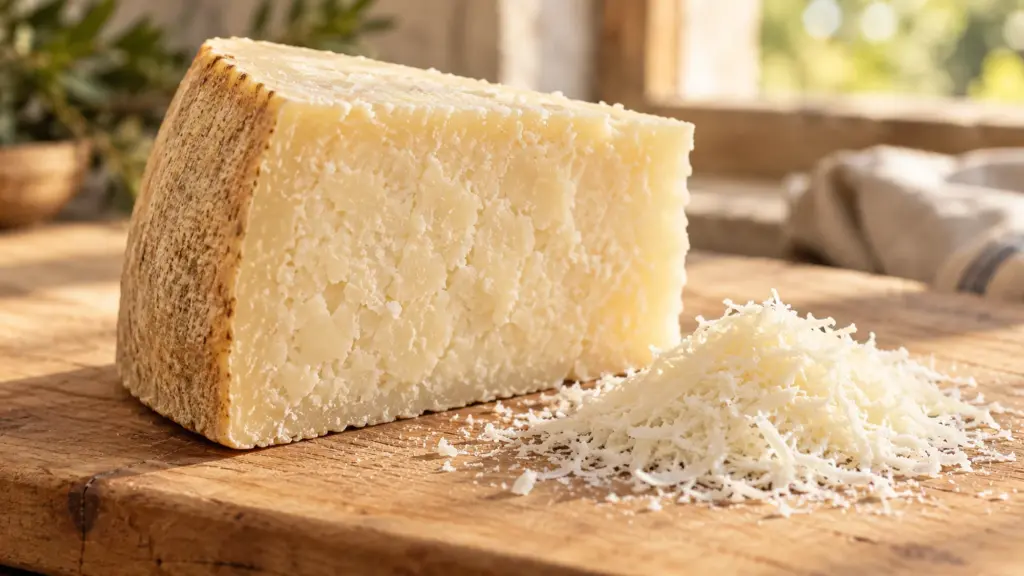
A recipe that says pecorino may send you toward a hard wedge for grating, while the cheese counter offers something soft enough to slice for lunch. Both can make sense. Pecorino is a family of sheep’s-milk cheeses, and the full name and maturity tell you much more than that single word.
Choose pecorino by type and age. Pecorino Romano is a hard cheese with a strong, tangy character, while younger Pecorino Toscano is softer and milder. Read the full label before deciding how to serve, grate or store it.
What Pecorino Means on the Label
The Pecorino Romano consortium specifies whole sheep’s milk for its cheese. A different name, Pecorino Toscano, identifies another protected cheese with its own characteristics. These are related cheeses, not interchangeable names for the same wedge.
For a concrete label example, Allevatori di Mores lists sheep’s milk, Sardinian lamb rennet, salt and bacterial culture for Tenores Pecorino Romano. The Romano production description also specifies lamb rennet. If vegetarian suitability matters, verify the actual rennet information instead of assuming that all cheese fits the same diet.
- Read the complete name: Romano, Toscano and other regional names are useful distinctions.
- Check maturity: A young table cheese and a mature grating cheese serve different purposes.
- Check additions and rind instructions: Coatings and surface treatments are not the same as edible cheese.
- Remember the milk: Sheep’s-milk cheese is dairy; aging does not make the milk disappear.
How Age Changes Your Pecorino Choice
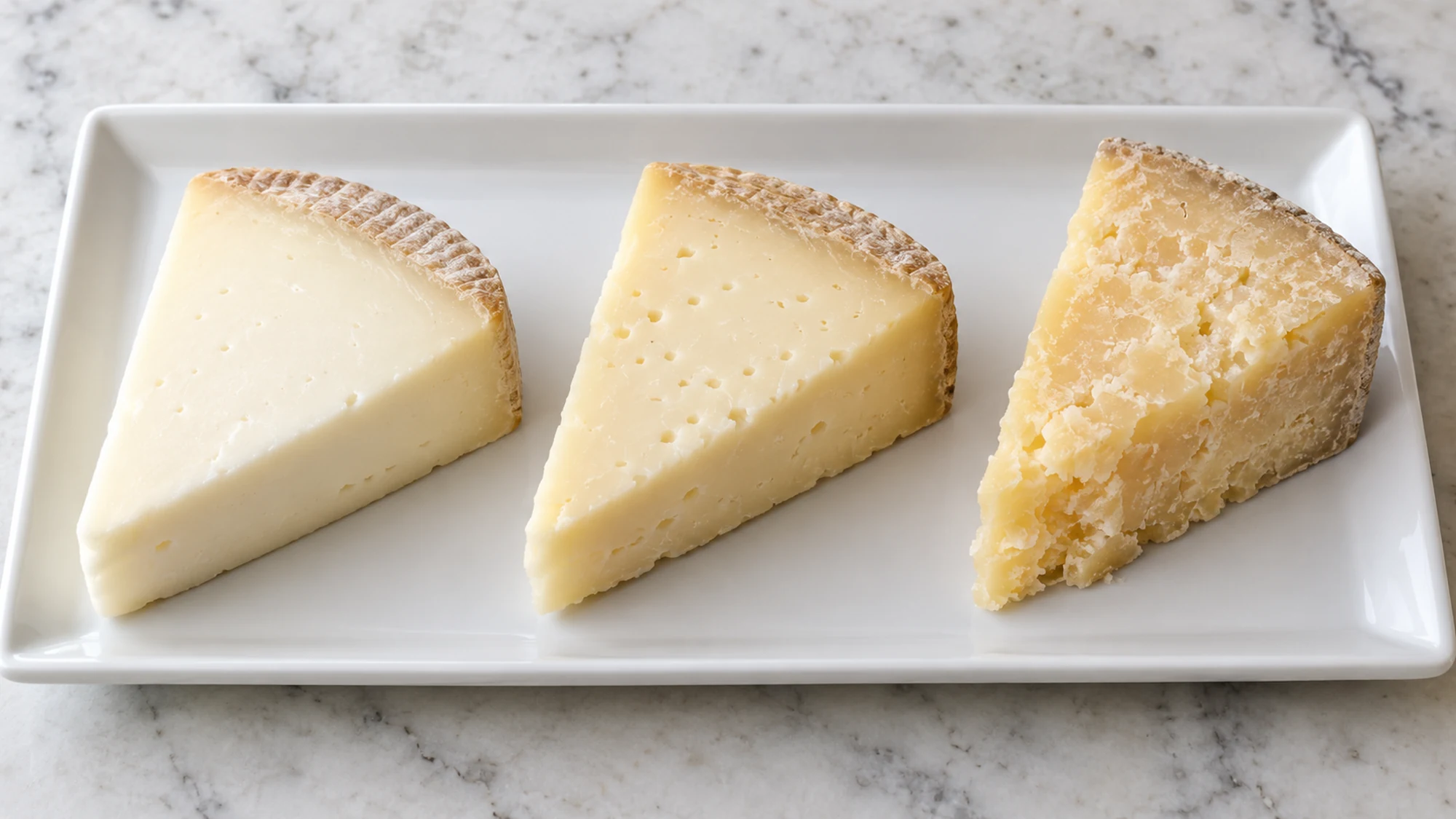
Maturation gives a useful clue to texture and intensity, but the name still matters. I’d choose the cheese for what it needs to do: a gentle slice beside bread, a shaving over vegetables or a fine grating that seasons a whole bowl.
| Cheese style | Minimum maturation | Useful distinction |
|---|---|---|
| Pecorino Romano, table type | 5 months | Hard cheese, aromatic and tangy |
| Pecorino Romano, grating type | 8 months | More intense flavor for grating |
| Pecorino Toscano, fresh | 20 days | Softer, milder table cheese |
| Pecorino Toscano, mature | 120 days | Firmer, more intense; table or grating uses |
The Manciano producer’s descriptions distinguish fresh Toscano made with pasteurized sheep’s milk from its mature version. “Fresh” here still includes a maturation period; it does not mean a newly made cream cheese. Age is a starting point, so ask about the specific wedge if its texture is unclear.
Using Pecorino Without Overdoing It
Start with a modest amount when the cheese is new to you. A bold grated cheese can season more of a dish than a mild sliced one. My preference would be to add cheese before the final salt adjustment, especially when the other ingredients already include olives, cured meat or salted stock.
- For a cheese plate: Cut a younger cheese into manageable pieces and keep the accompaniment simple.
- For salads: Try thin shavings so you get small pockets of flavor rather than a heavy layer.
- For pasta: Use the type and amount the recipe specifies; a wetter young cheese behaves differently from a hard grating wedge.
- For vegetables or beans: Add a little grated mature cheese, then decide whether the dish needs more.
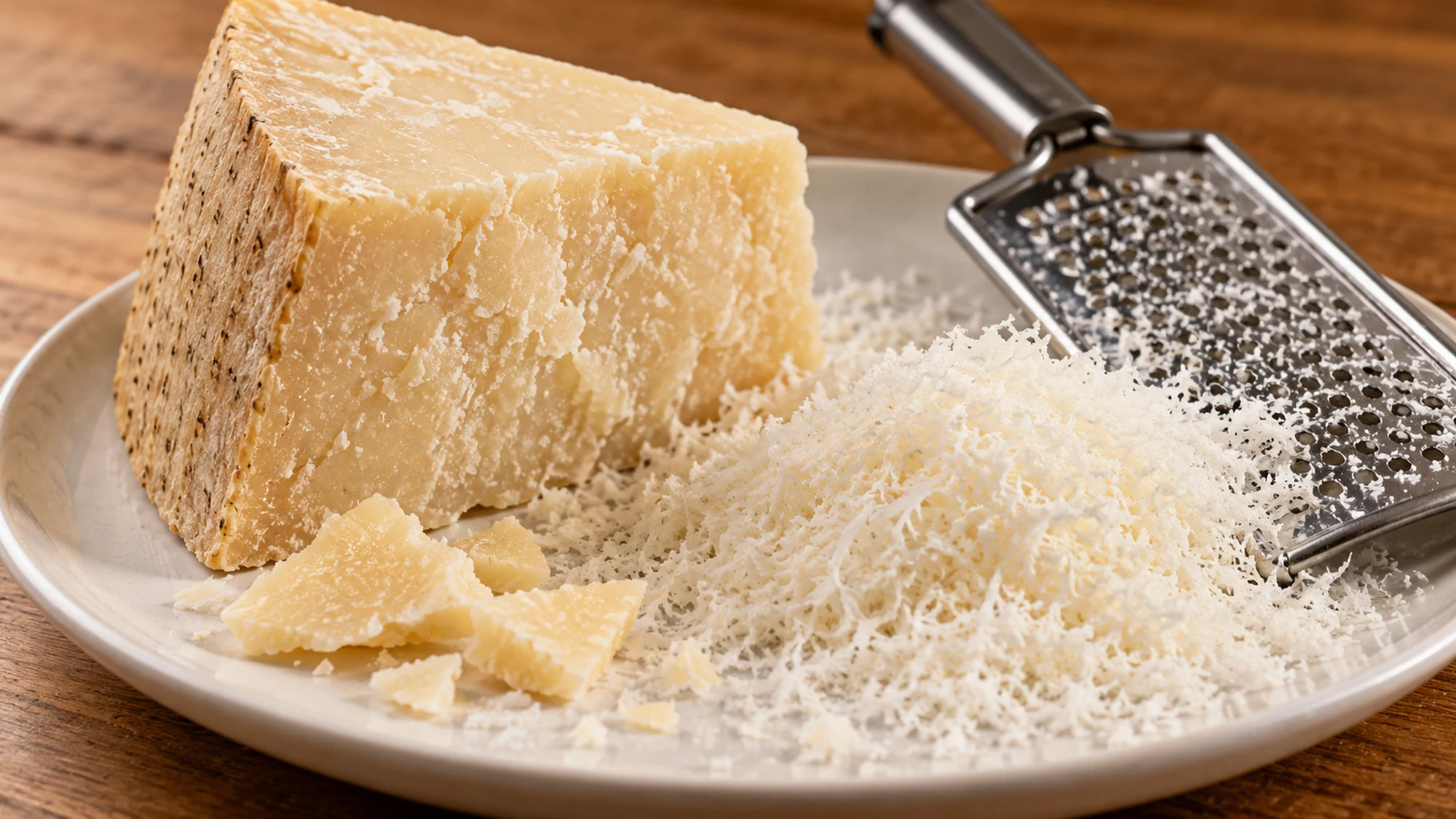
Use a stable grater and keep fingertips clear as the wedge gets smaller. Fine grating distributes cheese differently from broad shavings, so choose the texture deliberately. If a sauce recipe calls for a particular cheese, do not assume a different maturity will melt or thicken in exactly the same way.
Milk, Storage and Food-Safety Checks
Pecorino contains milk; it is not a dairy-free substitute for someone avoiding milk because of allergy. Also check pasteurization rather than guessing: Romano’s consortium describes raw or heat-treated milk, while Manciano explicitly describes pasteurized sheep’s milk for its fresh Toscano.
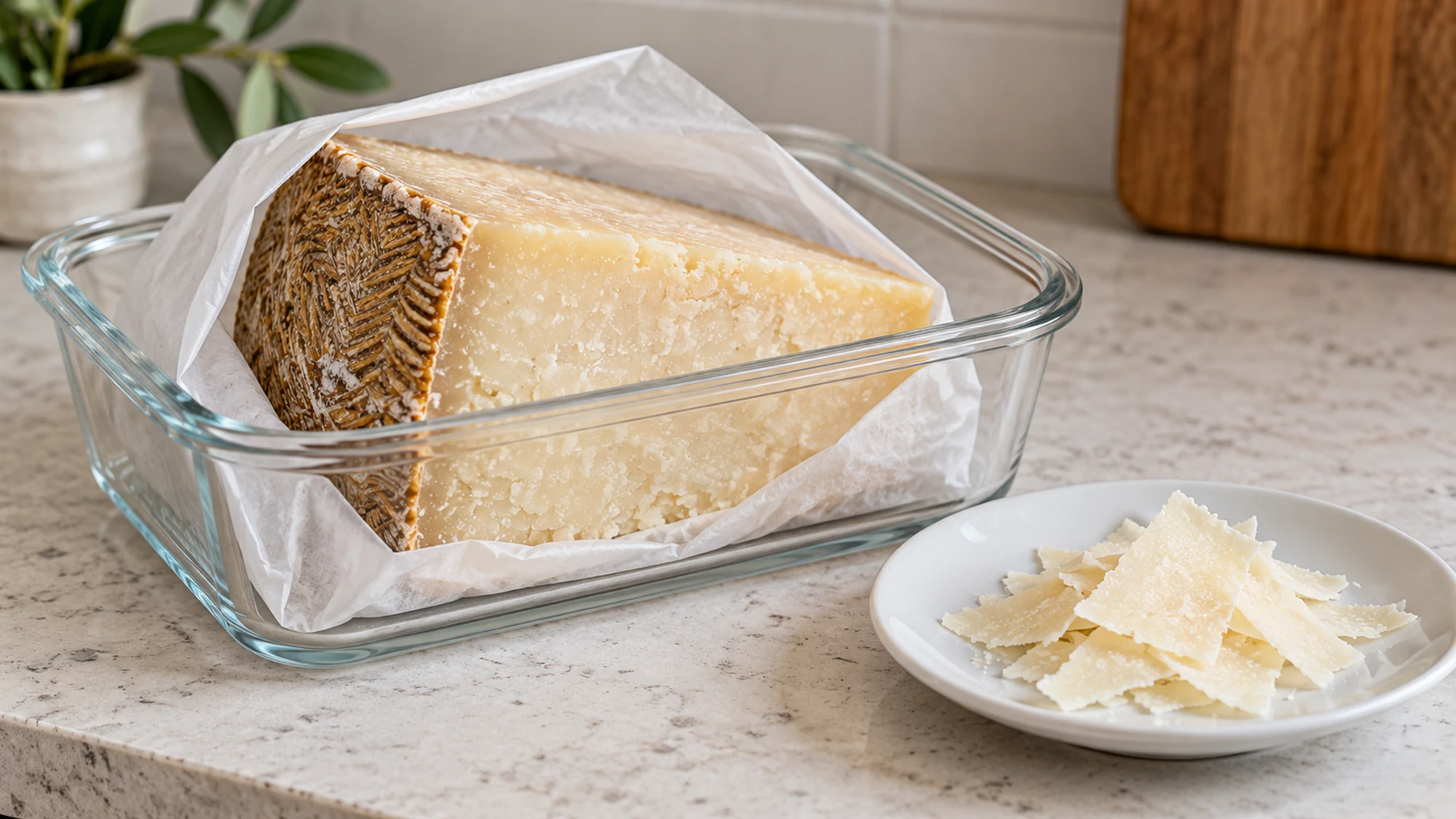
Follow the package’s storage temperature, opening instructions and use-by date. The Pecorino Toscano consortium advises refrigerating the cheese once cut and protecting the cut surface. It recommends a cool bag for a long, hot journey home. Keep the original instructions if you rewrap a wedge; there is no single after-opening lifespan for every pecorino.
- Use clean wrapping or a suitable container and clean utensils.
- Keep cheese away from raw meat and its juices.
- Do not assume a treated rind or protective covering is edible.
- Buy a portion you can use within the product’s instructions.
If you are pregnant, the CDC’s safer-food guidance distinguishes cheese types and pasteurization, recommending hard cheeses made with pasteurized milk among safer choices. A soft young pecorino and a hard aged wedge should not receive identical advice solely because they share a family name.
Bottom Line
Let the full name, maturity and label guide your pecorino purchase. Choose softer cheese for slicing and an appropriate mature wedge for grating, add it thoughtfully, and follow the storage instructions for the product you actually bought.
Sources
- Pecorino Romano consortium: Characteristics
- Pecorino Romano consortium: Processing
- Caseificio Sociale di Manciano: Pecorino Toscano
- Allevatori di Mores: Tenores ingredients
- Pecorino Toscano consortium: Storage guidance
- CDC: Safer food choices during pregnancy

Hi, I’m Emily Pocker! I share recipes and food guides here at Recipes360 to help you find everyday meal inspiration and feel more confident in the kitchen. My goal is to make cooking approachable, enjoyable, and full of flavor.