
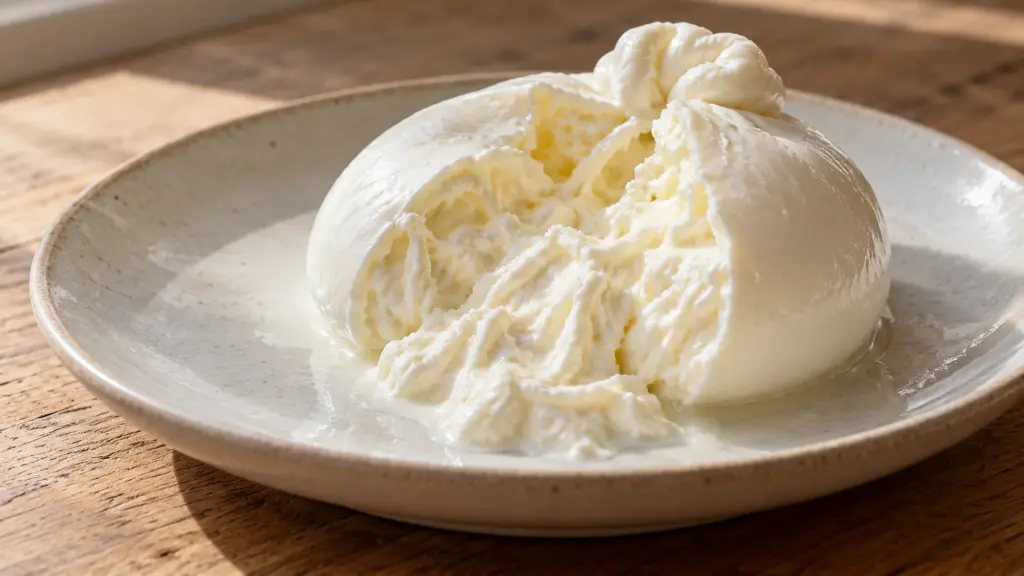
A knife opens a white burrata pouch and the center loosens across the plate. That creamy middle is the point: burrata combines a mozzarella shell with a filling of mozzarella pieces and cream, giving you two textures in one fresh cheese.
Burrata is fresh mozzarella formed around a creamy filling. Choose it when you want a soft, spoonable center, check that the milk is pasteurized, and plan to serve it promptly while following the package’s refrigeration directions.
What is inside burrata?
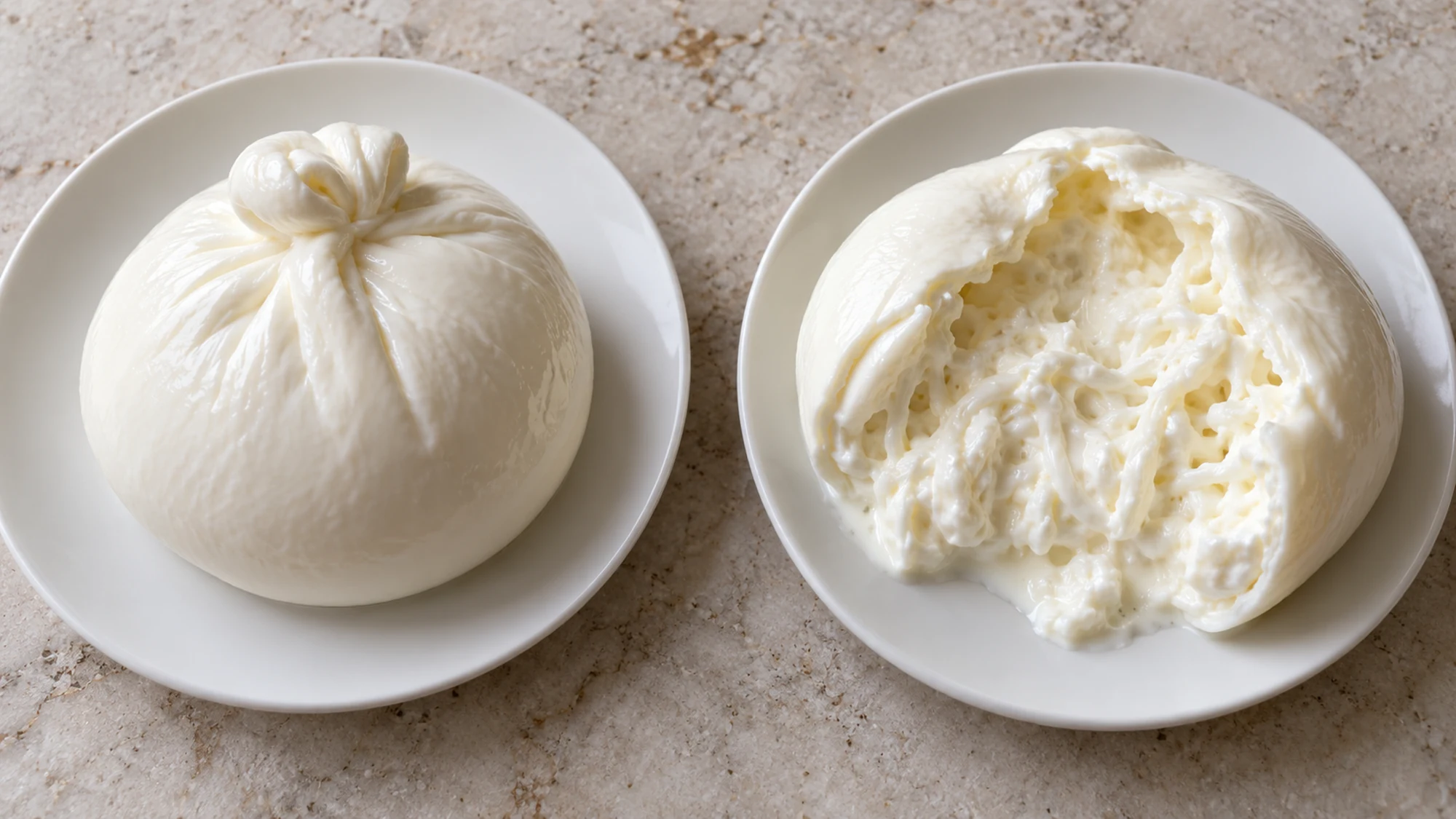
BelGioioso describes its burrata as fresh mozzarella filled with mozzarella pieces soaked in heavy cream. The filling is called stracciatella. You get an outer layer that holds its shape and a loose center that spreads when opened, rather than a solid mozzarella ball from edge to edge.
Galbani traces burrata to Apulia in southern Italy and likewise describes a mozzarella pouch filled with cream and mozzarella ribbons. I’d choose it for a meal where that contrast will be noticed, rather than hiding the whole ball beneath several other rich ingredients.
- Burrata: shell and creamy filling together.
- Stracciatella: the soft mozzarella-and-cream mixture associated with the center.
- Fresh mozzarella: a separate cheese choice when you want a more consistent texture throughout.
Choose burrata for the texture you want
The useful choice is about how the cheese behaves on your plate. BelGioioso’s fresh mozzarella information describes a milky, delicate cheese used in salads and warm dishes. Burrata brings an additional cream-filled center, so a swap changes the eating experience even when both options suit tomatoes.
| Your plan | Useful choice | What changes |
|---|---|---|
| Open a cheese over vegetables | Burrata | Creamy center becomes part of the plate |
| Neat fresh-cheese slices | Fresh mozzarella | More consistent texture throughout |
| A spoonable creamy topping | Stracciatella or opened burrata | Loose filling rather than tidy slices |
| Recipe requests a specific cheese | Follow that recipe | Moisture and texture matter |
I’d use a plate with enough room for the filling to spread and bring bread or vegetables alongside it. You do not need a complicated presentation. A very crowded board can make the best part of the cheese harder to reach.
Serve simply, with clean utensils
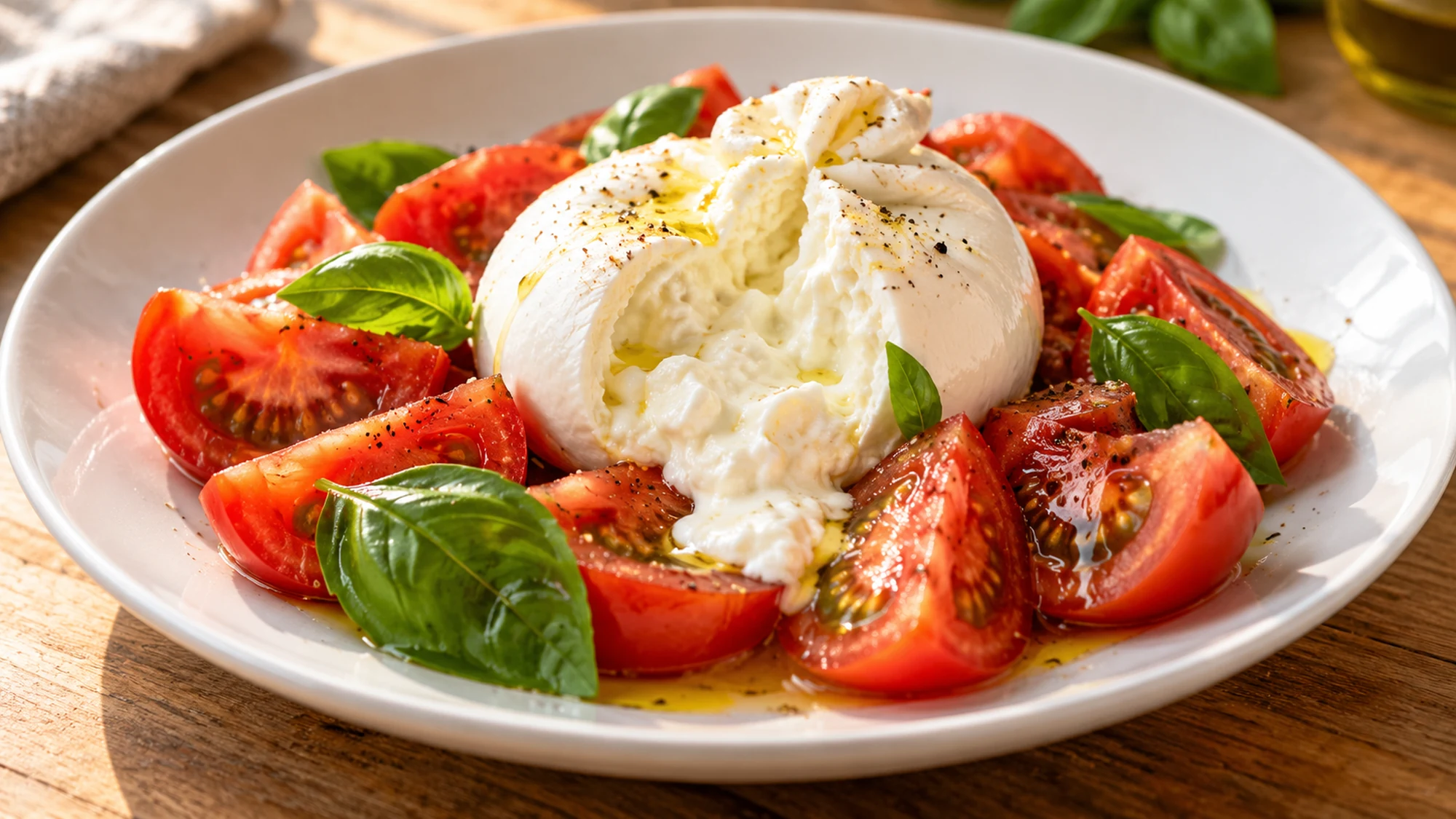
Galbani suggests tomatoes, basil, bread and olive oil, as well as serving burrata with pasta or pizza. These are useful starting points because the accompaniments offer contrast without requiring you to turn the cheese into a sauce. Decide whether you want a fresh topping or a cooked component before making a substitution.
- With tomatoes: leave room for the cream to mingle with the tomato juices.
- With bread: offer a spoon so both shell and filling make it onto each portion.
- Over a warm dish: plate the food first when you want the fresh-cheese contrast.
- For sharing: serve a manageable amount and keep the remaining cheese refrigerated.
My preference would be to taste a little before adding more salt or a strong dressing. The mild dairy flavor is easy to cover. Use clean serving utensils throughout, particularly if only part of the package is being eaten.
Keep burrata cold and check the milk label
BelGioioso’s ingredient listing specifies pasteurized milk and cream, vinegar, enzymes and salt. That product contains milk; it is not suitable for someone avoiding milk because of allergy. Check the actual package you buy rather than assuming that every producer uses the same milk treatment or ingredients.
FDA’s pregnancy food-safety guidance lists soft cheeses clearly labeled as made from pasteurized milk as a lower-risk choice than soft cheeses made from raw milk. During pregnancy, check the label and avoid raw-milk burrata; ask the seller when the milk treatment is unclear. Pasteurization does not replace clean handling and correct refrigeration.
- Keep refrigerated at 40°F (4°C) or below, following any stricter package instructions.
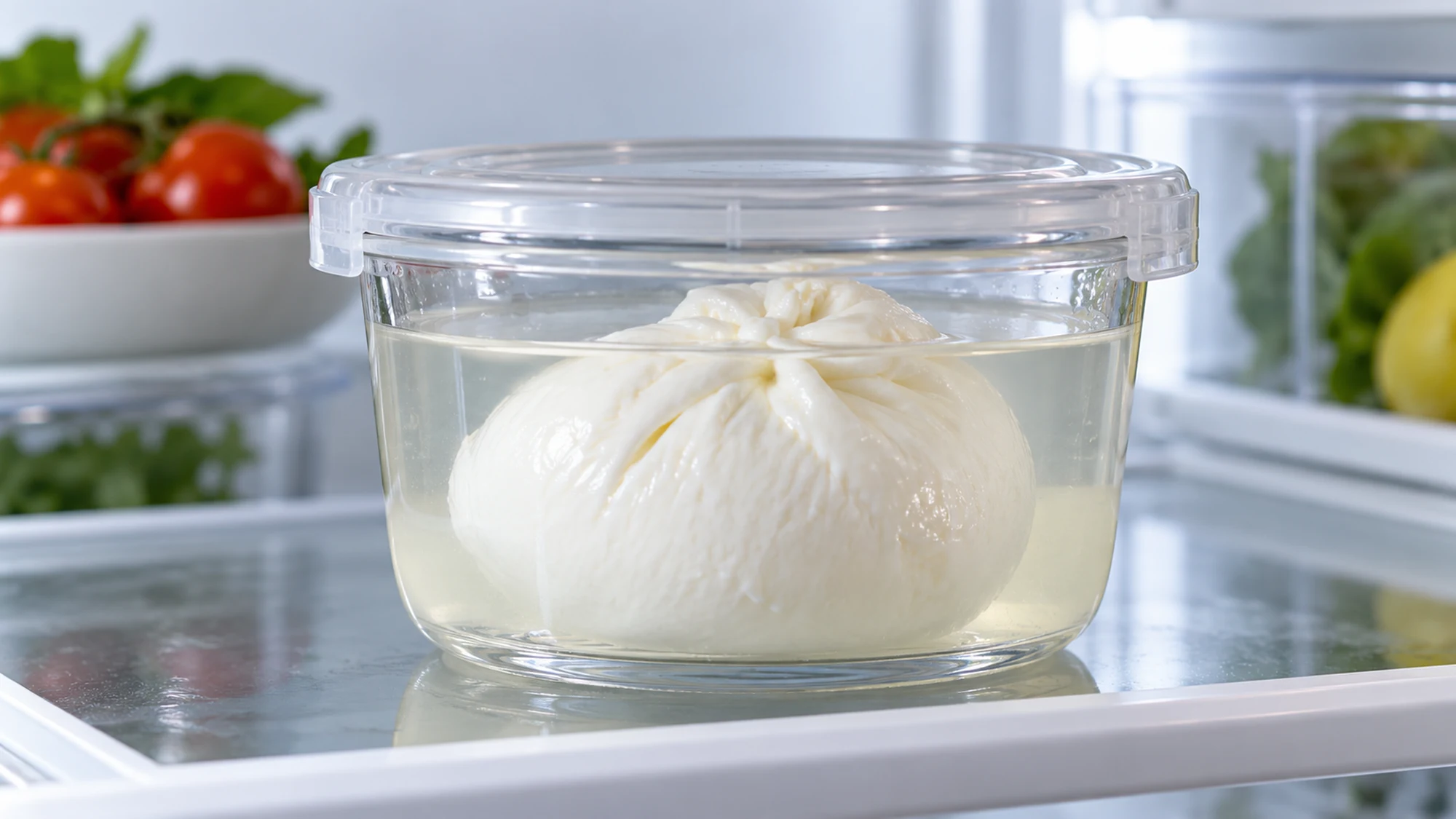
- BelGioioso advises leaving remaining burrata in its cup water, replacing the lid and refrigerating immediately.
- For that brand, the recommended after-opening enjoyment window is one to two days; use another product’s own directions for its timing.
- BelGioioso does not recommend freezing its burrata. Buy a smaller amount if you cannot use it promptly.
The after-opening advice comes from BelGioioso’s handling guide. For serving, FoodSafety.gov limits perishable food outside refrigeration to two hours, or one hour above 90°F (32°C). A recommendation to enjoy cheese less cold is not permission to leave it on the table all afternoon.
Bottom Line
Burrata earns its place through the contrast between a mozzarella shell and a creamy center. Keep the accompaniments simple, buy pasteurized cheese, and treat the package’s after-opening and refrigeration instructions as part of the plan.
Sources
- BelGioioso: Burrata ingredients and description
- BelGioioso: cheese handling and after-opening guidance
- BelGioioso: fresh mozzarella
- Galbani: burrata structure and serving ideas
- FDA: food safety during pregnancy
- FoodSafety.gov: clean handling and chilling

Hi, I’m Emily Pocker! I share recipes and food guides here at Recipes360 to help you find everyday meal inspiration and feel more confident in the kitchen. My goal is to make cooking approachable, enjoyable, and full of flavor.