
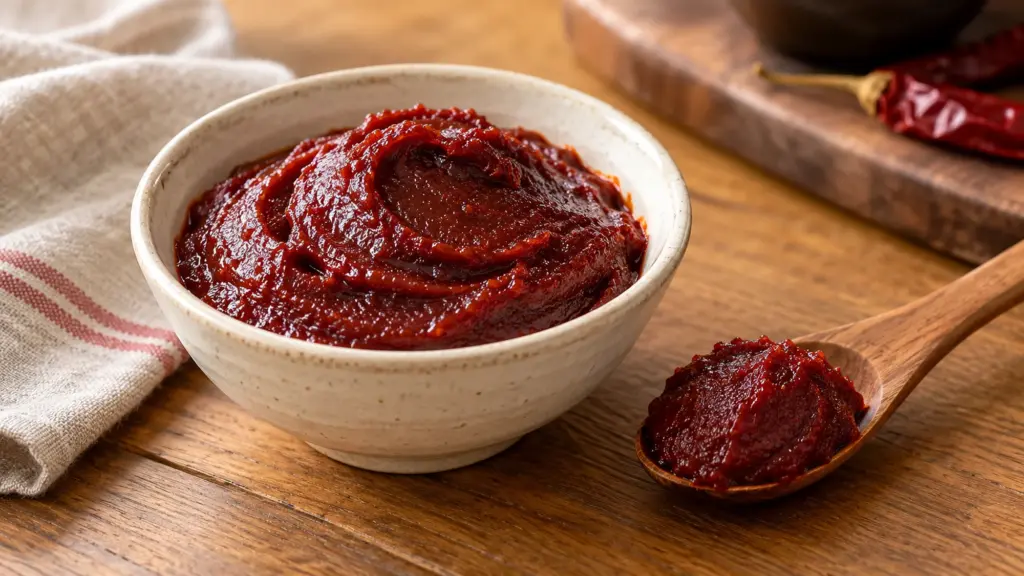
A red tub on the grocery shelf can hold more than simple chili heat. Gochujang is a thick Korean fermented red pepper paste with sweetness, saltiness and savory depth. It is a concentrated ingredient for building sauces and seasoning dishes, so a small spoonful is a more useful starting point than a generous pour.
Choose gochujang paste when you want a concentrated, sweet-savory chili seasoning. Check the ingredients and heat level, loosen it for sauces, and follow your tub’s refrigeration instructions after opening.
What is gochujang?
The ingredient belongs to the Korean family of fermented seasonings called jang. Traditional versions combine chili with a grain base, salt and fermented ingredients. Maangchi’s firsthand preparation guide uses sweet rice flour, barley malt, fermented soybean powder and rice syrup; commercial formulas can differ.
That combination explains why replacing it with plain chili flakes changes more than the heat. You also lose body, sweetness and fermented flavor. I’d treat it as a seasoning with several jobs, rather than expect a bottle of hot sauce to behave exactly the same way.
- Texture: A dense, spoonable paste that holds its shape.
- Flavor: Chili warmth with sweet, salty and savory notes; intensity varies by product.
- Shopping cue: Look for the ingredient name and read the back label, rather than identifying it only by red packaging.
Paste, flakes and prepared sauces are different
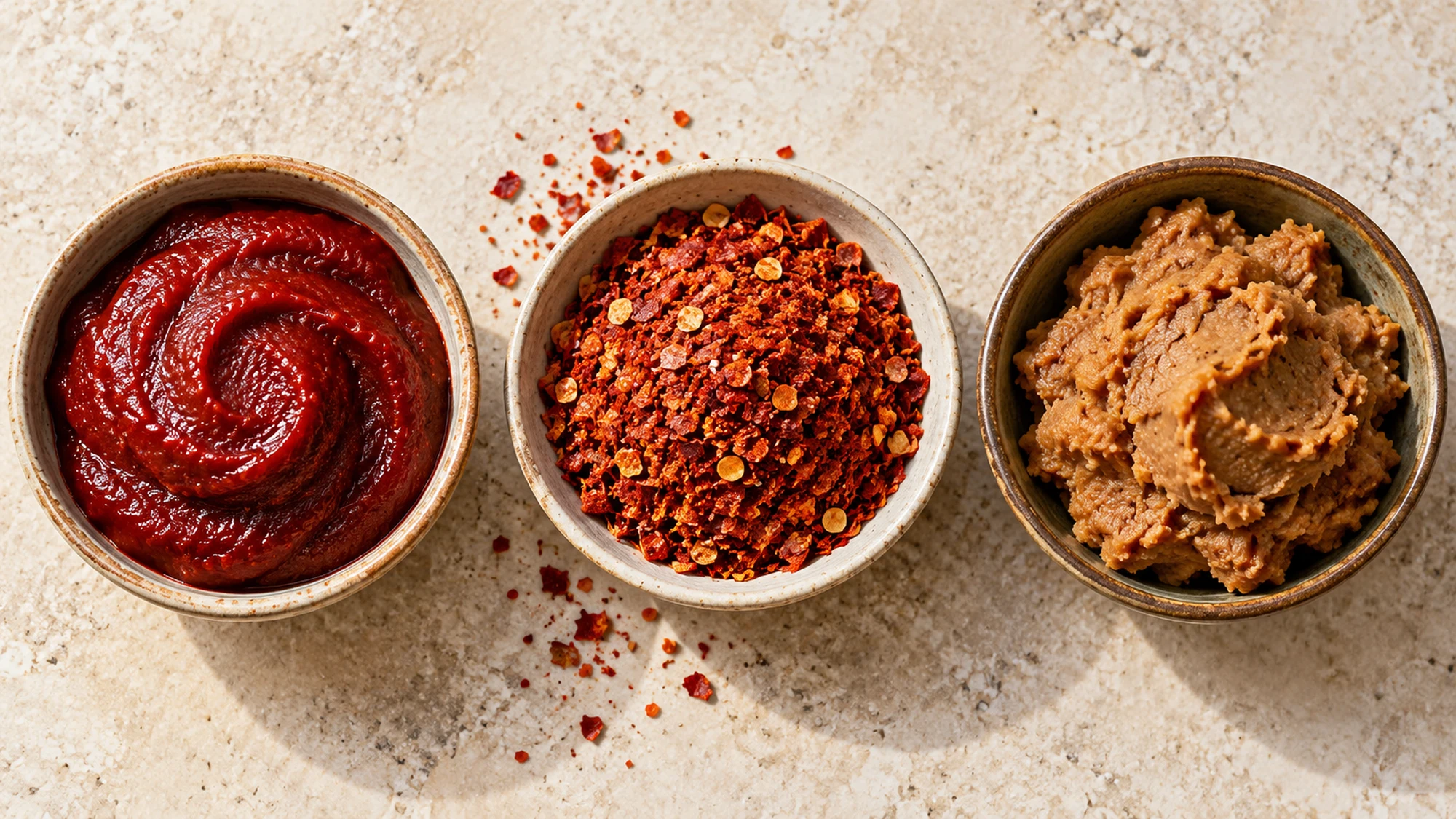
A recipe naming gochujang usually means the concentrated paste unless it specifies a sauce. Gochugaru is a dry chili ingredient, while doenjang is a soybean paste with a different role. Maangchi’s ingredient directory lists these separately, which is a helpful reminder at the store.
A prepared gochujang sauce may already include vinegar, oil, sweeteners or other seasonings. Read what is inside before adding more of the same. For a first purchase, I’d choose a smaller tub of plain paste: it leaves more room to adjust a dish yourself.
| Product | What it brings | Buying decision |
|---|---|---|
| Gochujang paste | Concentrated chili flavor and body | Choose for recipes naming the paste |
| Gochugaru | Dry chili flakes or powder | Not a direct paste replacement |
| Doenjang | Fermented soybean seasoning | Not the same chili ingredient |
| Prepared gochujang sauce | A diluted or seasoned mixture | Check added ingredients and intended use |
Using gochujang without overpowering dinner
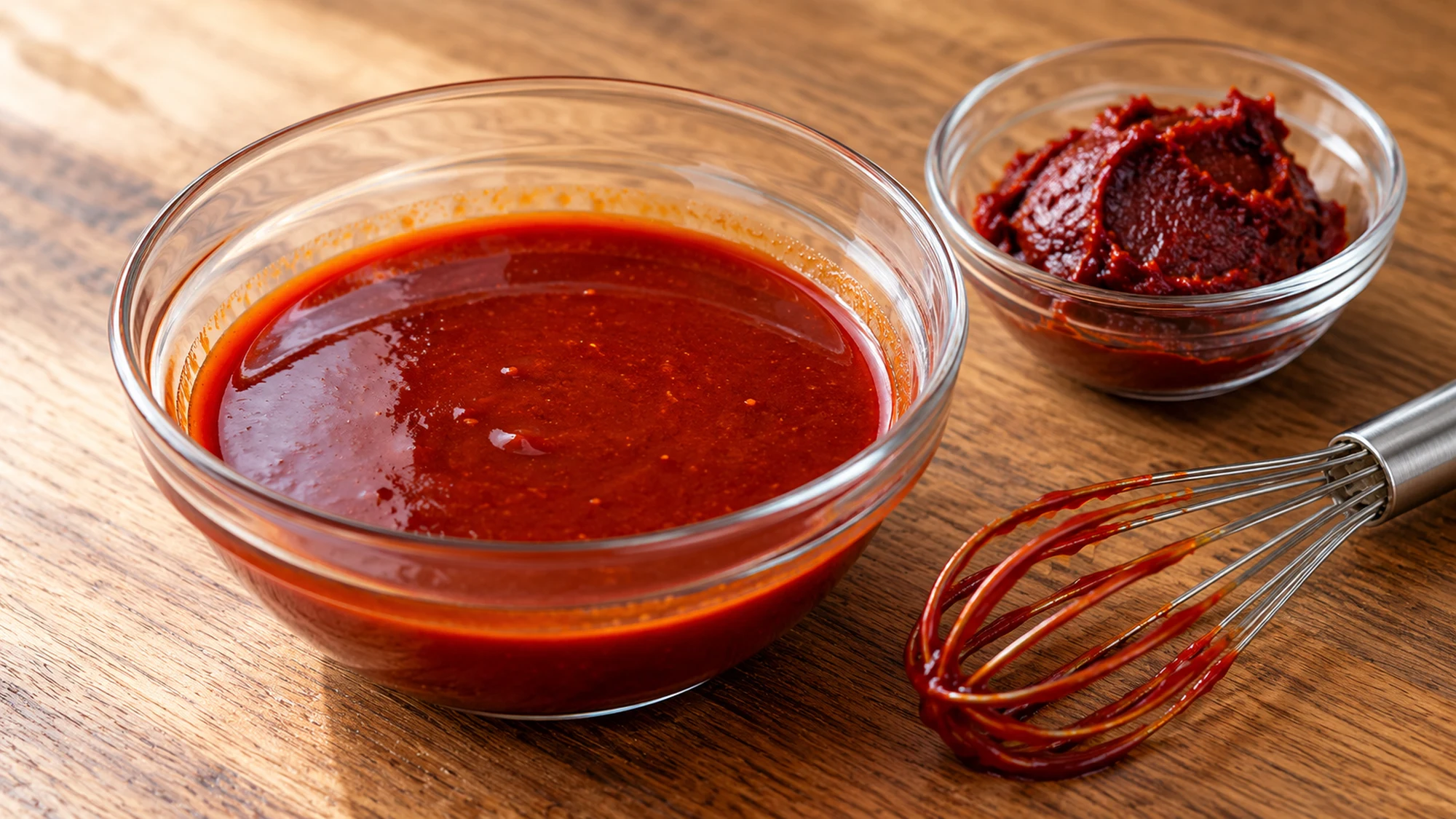
Start by working a little paste into a separate bowl with some of the dish’s liquid. This makes it easier to distribute evenly than dropping a stiff lump into a finished bowl. Roland Foods recommends thinning its paste and warns that its sugars can burn during searing or grilling.
Think about the whole seasoning balance before adding soy sauce, salt or sugar. The paste already contributes flavor in those directions. If you want an example of it used in a complete dish, our gochujang butter beans show one way to build a saucy meal around it.
- Rice bowls: Offer a little alongside the other ingredients so diners can mix to taste.
- Soups and stews: Dissolve it into liquid and check the seasoning before adding more salt.
- Sauces: Add liquid gradually, then decide whether acidity or sweetness is actually missing.
- Glazes: Follow a reliable recipe’s timing rather than exposing a sugary coating to prolonged fierce heat.
Labels, allergens and storage
Soy and grain ingredients deserve attention. Maangchi’s traditional recipe contains soybean powder and barley malt; other products can contain wheat. A rice-based description alone does not establish gluten-free suitability. Read the exact ingredient list and any gluten-free claim rather than assuming that every red tub shares one formula.
FDA allergen guidance explains that major allergens must be identified in ingredient labeling or a nearby contains statement. Check accompaniments too: sesame oil, soy sauce and toppings can introduce allergens beyond those in the paste.
- Before opening: Follow the package. Monggo’s product directions, for example, call for a cool, dry place.
- After opening: Monggo and Roland direct refrigeration. Close the container and follow any product-specific use-by instructions.
- After mixing: A sauce containing additional ingredients needs its own storage instructions; the tub’s date does not become the sauce’s date.
- Practical habit: Use a clean spoon and avoid returning a utensil that has touched raw food to the tub.
Bottom Line
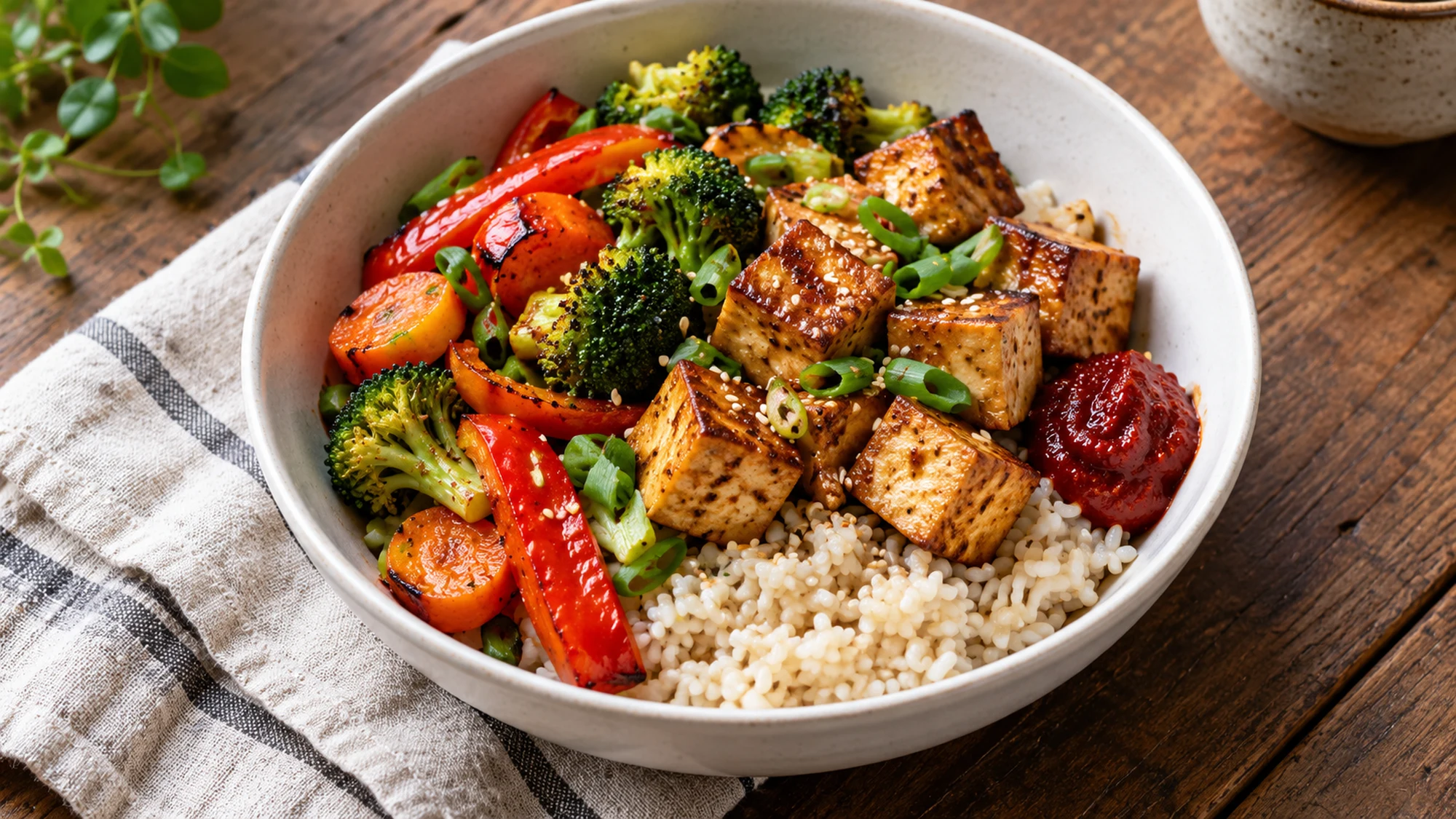
Buy the product your dish actually needs, then let the label guide allergens and storage. With concentrated gochujang paste, begin modestly, distribute it well and adjust the rest of the seasoning around it.
Sources
- Maangchi: Traditional gochujang preparation
- Maangchi: Korean ingredient directory
- Roland Foods: Gochujang preparation and storage
- Monggo Foods: Gochujang product directions
- FDA: Food allergies and labels

Hi, I’m Emily Pocker! I share recipes and food guides here at Recipes360 to help you find everyday meal inspiration and feel more confident in the kitchen. My goal is to make cooking approachable, enjoyable, and full of flavor.