
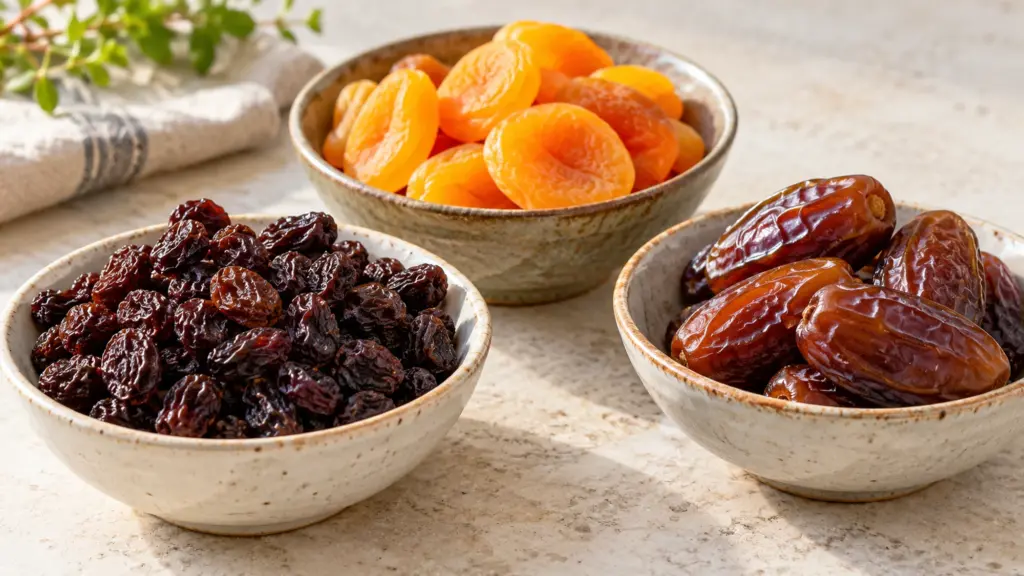
A handful of raisins and a bag of sweetened cranberries both count as dried fruit, but they are not interchangeable shopping choices. Dried fruit is fruit with much of its water removed. The useful questions are what else was added, how much you want to eat, and whether its texture suits the dish.
Choose dried fruit by reading the ingredient list and comparing equal portions. Natural fruit sugars remain after drying, added sugars vary by product, and storage instructions matter even when the fruit looks dry.
What Drying Changes in Fruit
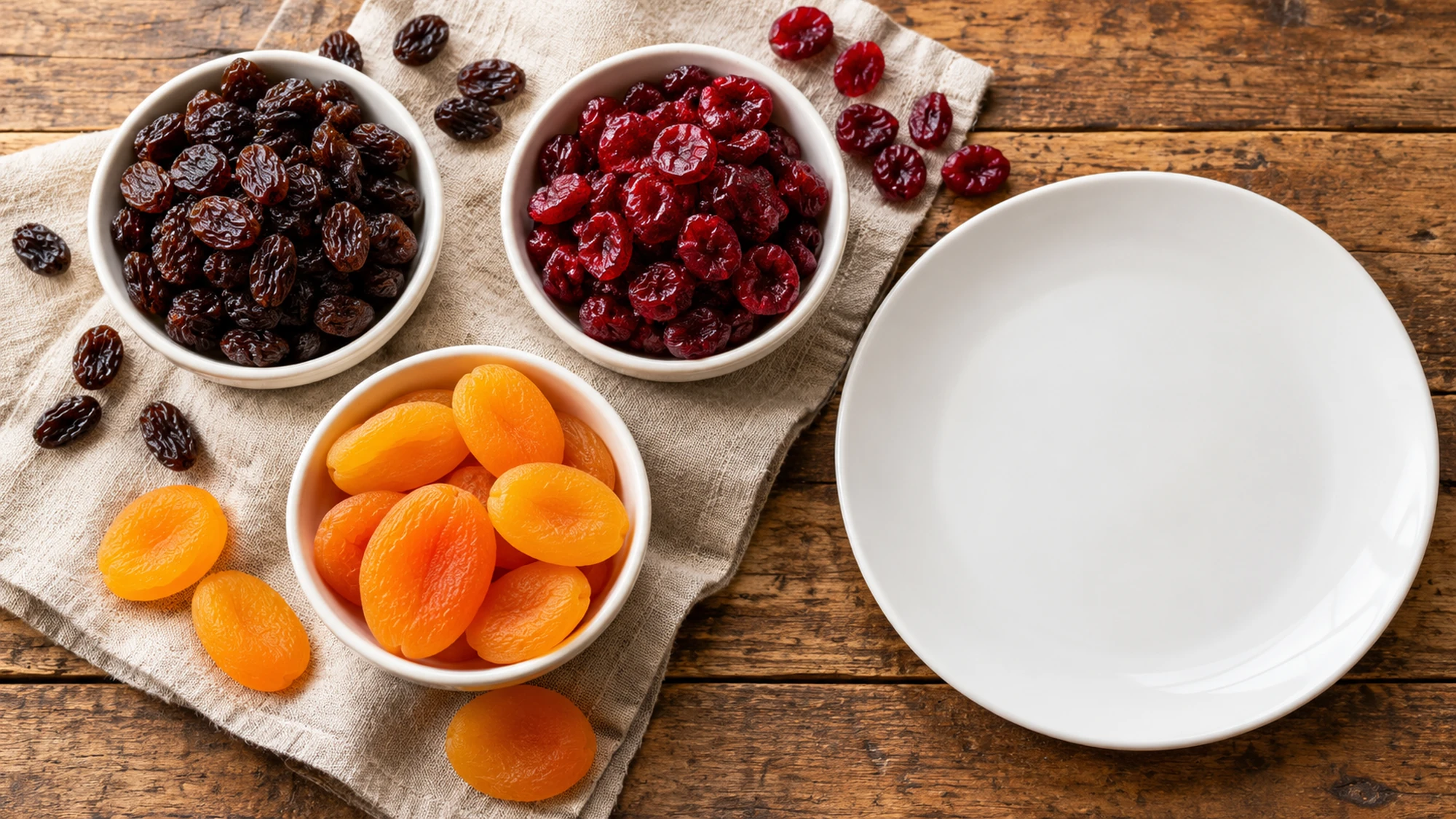
Colorado State University Extension explains that removing water concentrates calories into a smaller mass. Fiber remains, while some nutrients, including vitamin C, can be lost during drying. Dried fruit is convenient and compact, but a bowlful is a different amount of fruit from a few spoonfuls.
I’d start by putting the amount I want on a plate instead of eating directly from a large bag. That is a practical way to notice the portion, not a rule that every person needs the same amount. The nutrition panel’s serving size gives you a reference for understanding the numbers.
- Check the form: Whole dates, chewy apricots and finely chopped fruit behave differently.
- Compare like with like: Use the same weight when comparing calories, fiber or sugars across packages.
- Keep the purpose in mind: A topping, baking ingredient and standalone snack call for different amounts.
Read Dried Fruit Labels Before Choosing
A short ingredient list can still contain naturally occurring sugar. Sun-Maid’s California Sun-Dried Raisins list California seedless raisins, while an Ocean Spray Craisins product sheet lists cranberries and sugar, with sunflower oil used as a processing aid. Those are specific product examples; check the package you buy.
The FDA distinguishes total sugars from added sugars: total sugars include naturally present sugars plus any added sugars. The “includes added sugars” line is part of the total, so do not add the two numbers together. “No added sugar” does not mean sugar-free.
- Read the fruit name and any sweeteners, coatings or additional ingredients.
- Use the added-sugars line when comparing sweetened and unsweetened versions.
- Check the serving weight before deciding one product has more of a nutrient.
- Keep the full package information when decanting fruit into a storage jar.
Sulfites deserve a separate check if you are sensitive to them. Health Canada explains that they can cause allergy-like reactions in sensitive people, particularly some people with asthma, although this is not a true food allergy. Sulfur dioxide and other sulfites may appear in dried-fruit ingredients; ask the manufacturer when information is unclear.
Match the Fruit to the Texture You Want
I’d choose a familiar fruit first, then decide whether to leave it whole, chop it or soften it. Dried fruit can supply chewy contrast in a salad or distribute sweetness through a bowl of cereal. It does not need to become the main ingredient every time.
| Use | Useful form | What to consider |
|---|---|---|
| Oatmeal or yogurt | Raisins or chopped fruit | Small pieces spread through the bowl |
| Salad | Chopped apricots or cranberries | Balance sweetness with the dressing |
| Baking | The form specified by the recipe | Moisture and piece size affect the result |
| Cooked fruit topping | Fruit softened in liquid | Do not assume dried storage rules still apply |
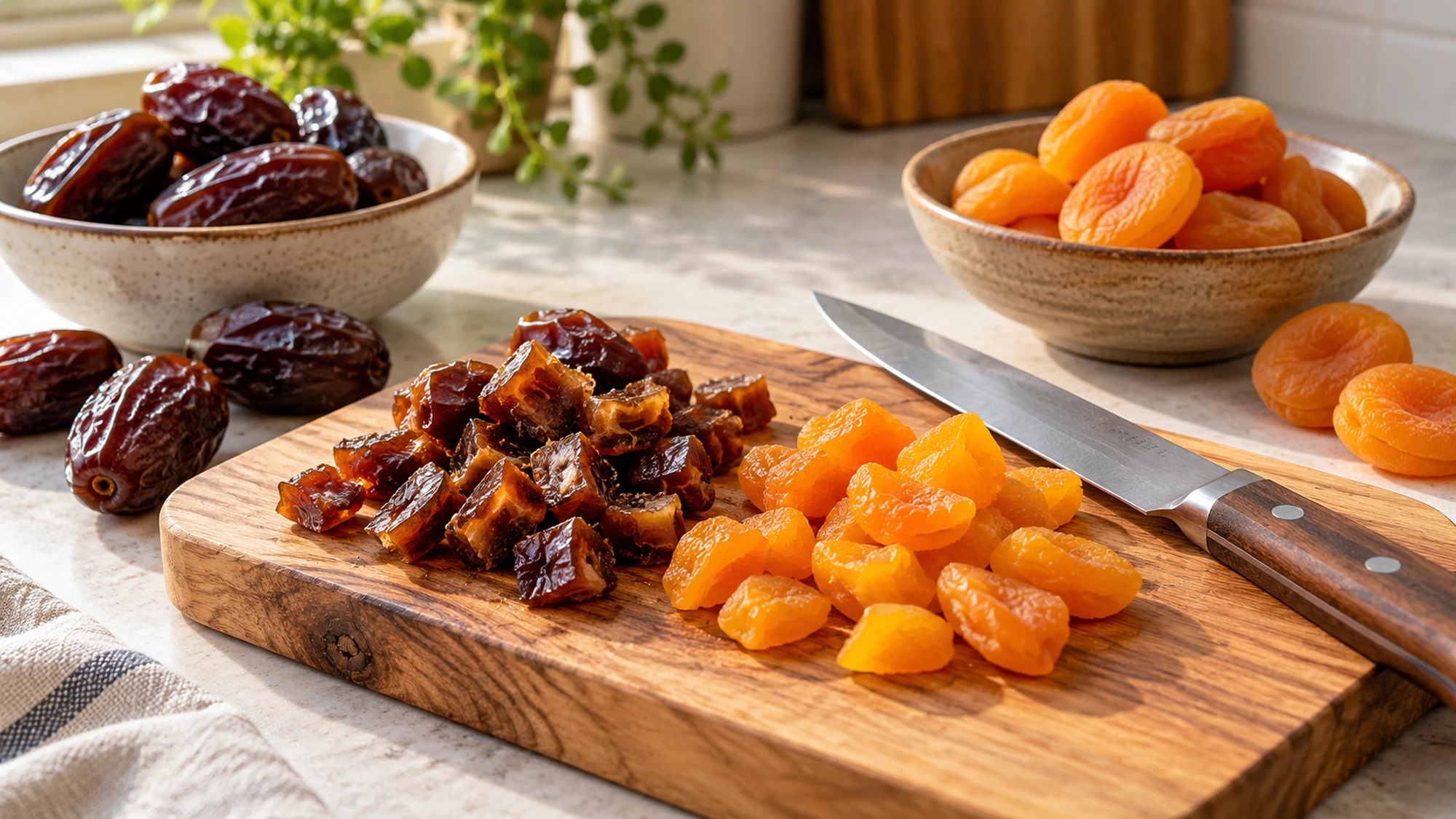
Remove date pits before chopping, including checking fruit sold as pitted. Cut sticky fruit on a stable board and keep fingers clear of the knife. For a baked dish, follow its directions about soaking rather than adding an unmeasured splash that changes the mixture.
Store Dried Fruit Away From Moisture
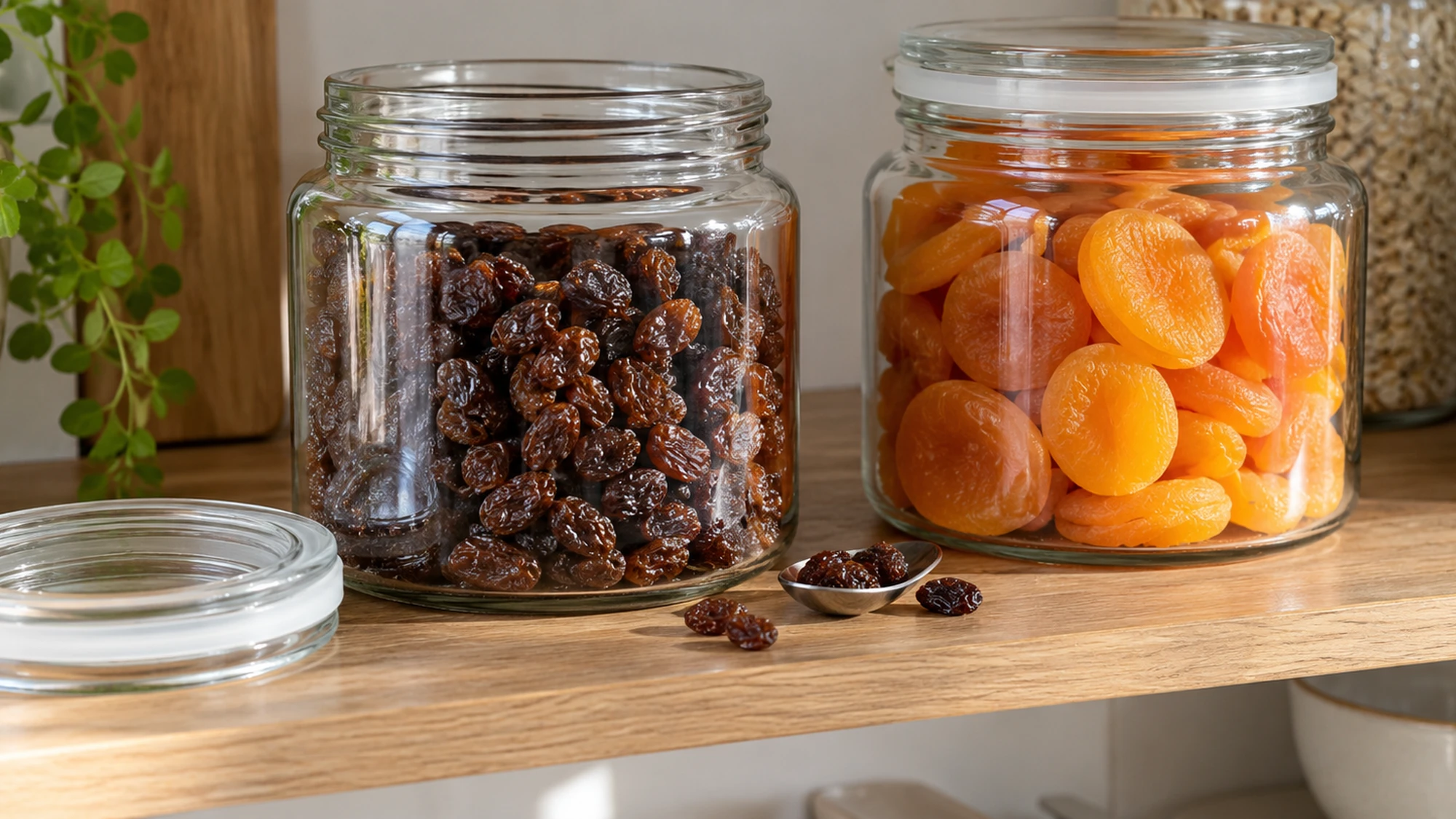
The National Center for Home Food Preservation recommends clean, dry containers with tight closures and cool, dry, dark storage for properly dried foods. Reopening exposes fruit to air and moisture, so a smaller working container can be more practical than repeatedly opening a large supply.
For commercially packaged fruit, follow its own refrigeration and after-opening directions. Soft, higher-moisture products can have different requirements. Keep the original date and instructions, use a clean dry utensil, and check the container rather than assuming a closed lid makes the contents last indefinitely.
- Discard moldy fruit rather than picking out visible patches.
- Check for moisture collecting inside the container.
- Once fruit is soaked or mixed into another food, follow the storage guidance for that prepared food.
- For home drying, use tested preservation instructions, including any required conditioning step.
Bottom Line
Dried fruit is a useful pantry ingredient when its flavor, portion and texture fit the job. Read past the front label, check sulfites if relevant to you, and protect the fruit from moisture after opening.
Sources
- Colorado State University Extension: Drying fruits
- Sun-Maid: California Sun-Dried Raisins ingredients
- Ocean Spray: Craisins product information
- FDA: Added sugars on the Nutrition Facts label
- Health Canada: Sulfite sensitivity
- National Center for Home Food Preservation: Packaging and storing dried foods

Hi, I’m Emily Pocker! I share recipes and food guides here at Recipes360 to help you find everyday meal inspiration and feel more confident in the kitchen. My goal is to make cooking approachable, enjoyable, and full of flavor.