
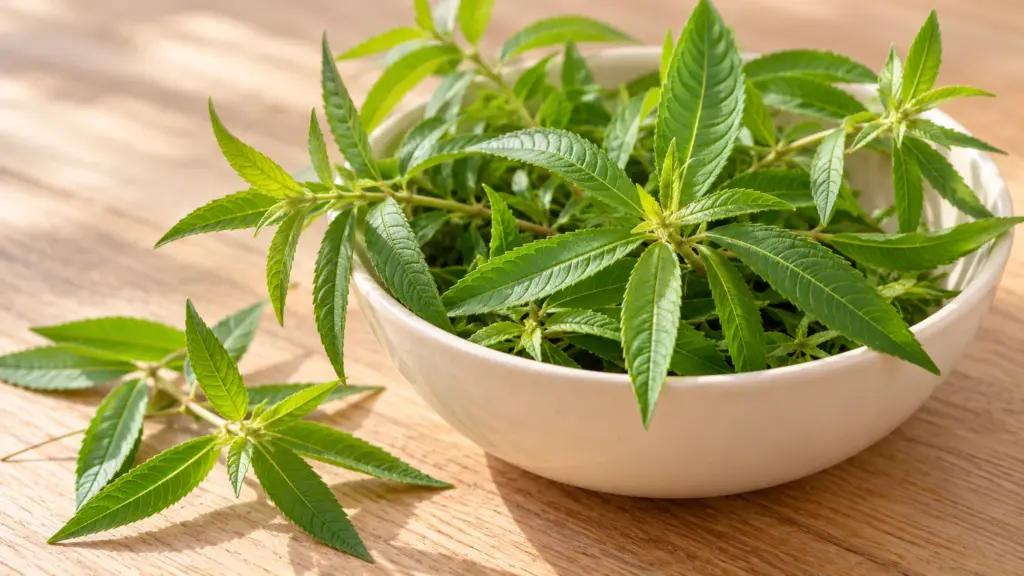
A bunch of lemon verbena can smell unmistakably citrusy before a lemon comes anywhere near the cutting board. This fragrant culinary herb brings a bright lemon character to drinks and desserts, with leaves that work especially well when their flavor is infused and then strained out.
Lemon verbena is a lemon-scented herb used fresh or dried in drinks and food. Start with a clearly identified culinary plant, choose a use that suits its leaves, and handle it as carefully as other fresh herbs.
What is lemon verbena?
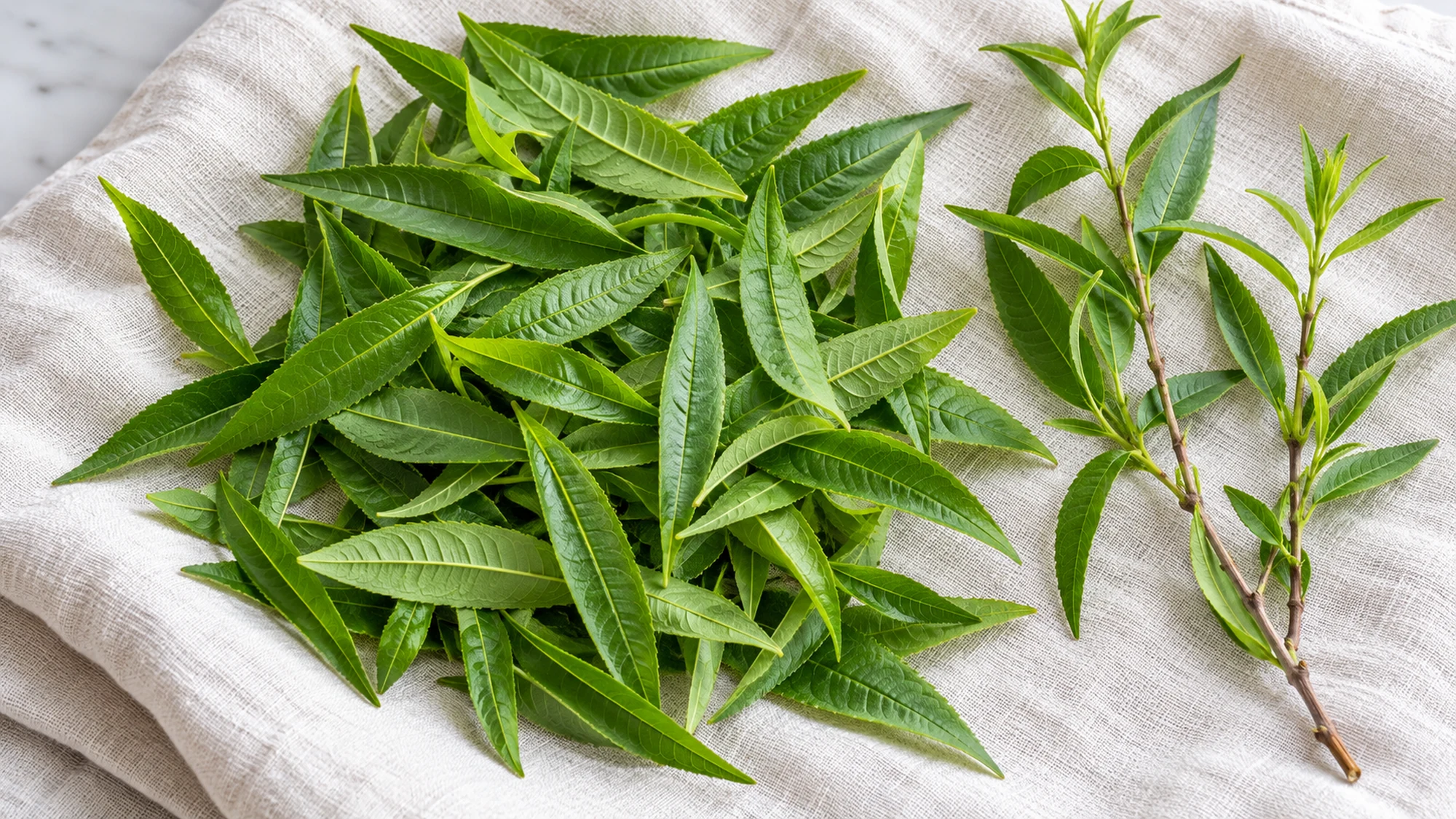
NC State Extension identifies lemon verbena as Aloysia citriodora, a woody shrub with long, pointed leaves and a strong lemon scent. You may also see the name Aloysia triphylla on herb references, including Illinois Extension’s growing guide. Its leaves and flowers have culinary uses, including teas, desserts and fruit salads.
I’d buy a labeled culinary plant or a clearly identified food product, rather than trying to identify an unfamiliar garden clipping by fragrance alone. “Lemon-scented” describes an aroma, not a guarantee that a plant belongs in a cup.
- Look for the full name: lemon verbena, with the botanical identity supplied by a reliable grower or seller.
- Do not substitute ornamental verbena: a similar common name is not enough to establish culinary suitability.
- Check the form: fresh leaves, dried leaves and a blended tea are different purchases.
- Read a blend’s ingredients: other herbs and flavorings change what you are buying.
Choose a use before picking the leaves
Illinois Extension lists beverages, salads, sauces, soups, fish and meat dishes among lemon verbena’s uses. For a first introduction, I’d choose a simple infusion: it makes the herb’s aroma easy to appreciate without having to decide how finely to chop a leaf.
| Use | Approach | Remember |
|---|---|---|
| Hot drink | Infuse fresh or dried leaves, then strain | Adjust strength to taste |
| Cold drink | Prepare an infusion and chill | Refrigerate promptly |
| Fruit dessert | Choose a recipe written for the herb | Keep other flavors simple |
| Savory dish | Use a supported herb preparation | Lemon aroma is not lemon juice |
That last distinction is useful: choosing the herb for its fragrance does not supply the measured liquid or acidity a recipe expects from lemon juice. If a recipe depends on juice for its balance, keep that ingredient unless the recipe offers a tested alternative. A citrusy aroma cannot tell you how an altered batter or preserve will behave.
Infuse for flavor, then strain
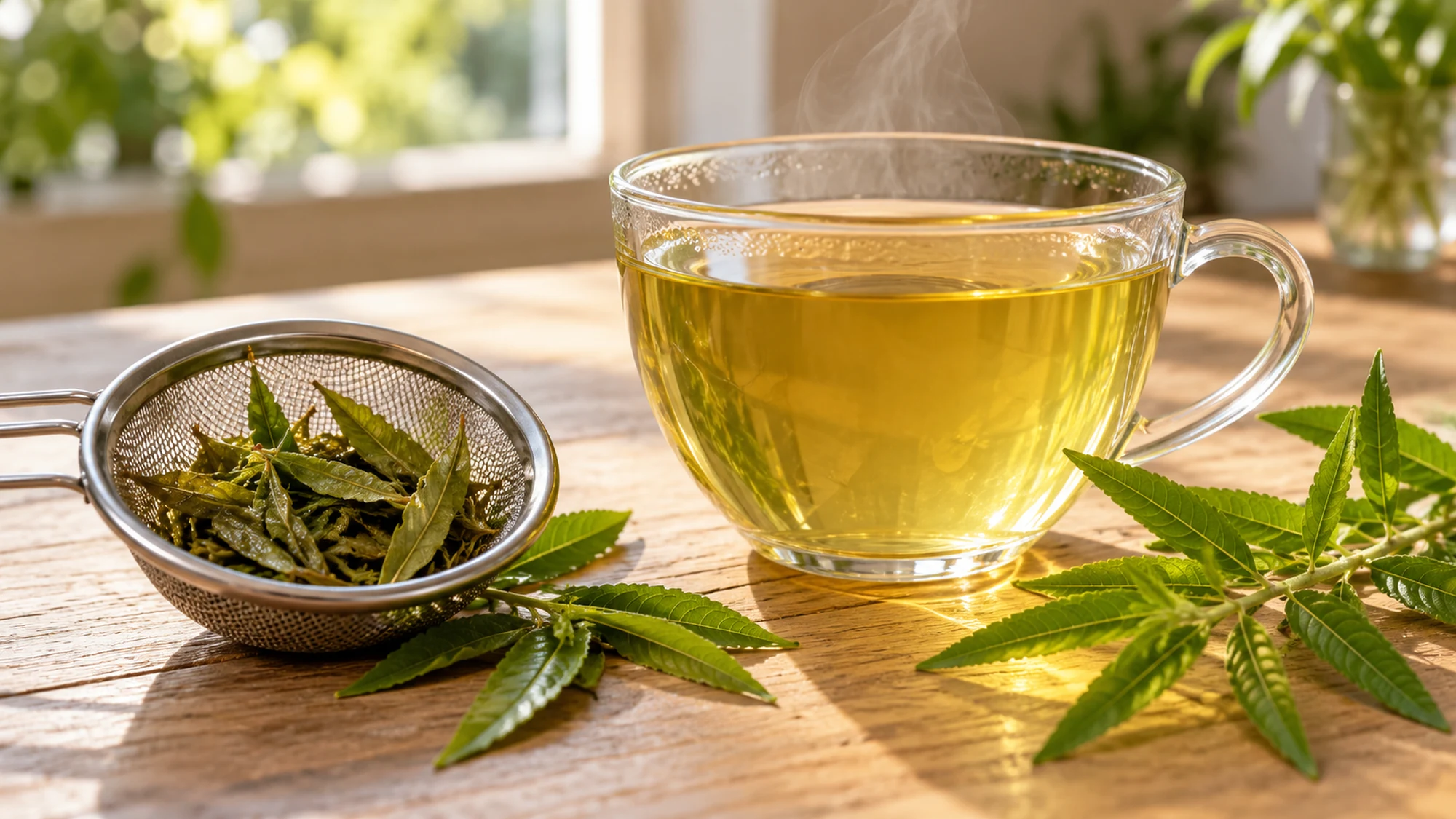
Oregon State Extension’s garden-tea guidance includes lemon verbena among suitable culinary leaves and recommends rinsing fresh herbs, steeping in hot water and straining. Its advice allows adjustments in the amount of herb and steeping time for a lighter or stronger drink. Follow a purchased tea’s own brewing directions when provided.
- Use a clean cup, pot and strainer.
- Rinse fresh leaves under running water before preparing them.
- Give the leaves room in the infuser rather than packing it tightly.
- Strain into a clean cup and judge the flavor before adding sweetener.
- For a cold drink, refrigerate leftovers within two hours, as Oregon State advises.
I’d keep the first cup plain so the lemon fragrance stays clear. After that, choosing a sweeter drink or a different blend is a matter of preference. Enjoying a fragrant herbal drink does not require turning it into a treatment or attaching a health promise to the mug.
Store fresh and dried lemon verbena differently
FDA recommends refrigerating perishable fresh herbs at 40°F (4°C) or below. Health Canada advises storing fresh herbs unwashed, then rinsing them under cool running water before use; soap and produce cleaners are unnecessary. Keep herbs away from raw meat and use clean utensils to avoid cross-contamination.
- Fresh: choose sound leaves and follow the seller’s storage directions; use promptly.
- Before preparing: discard spoiled leaves and rinse the usable herbs under running water.
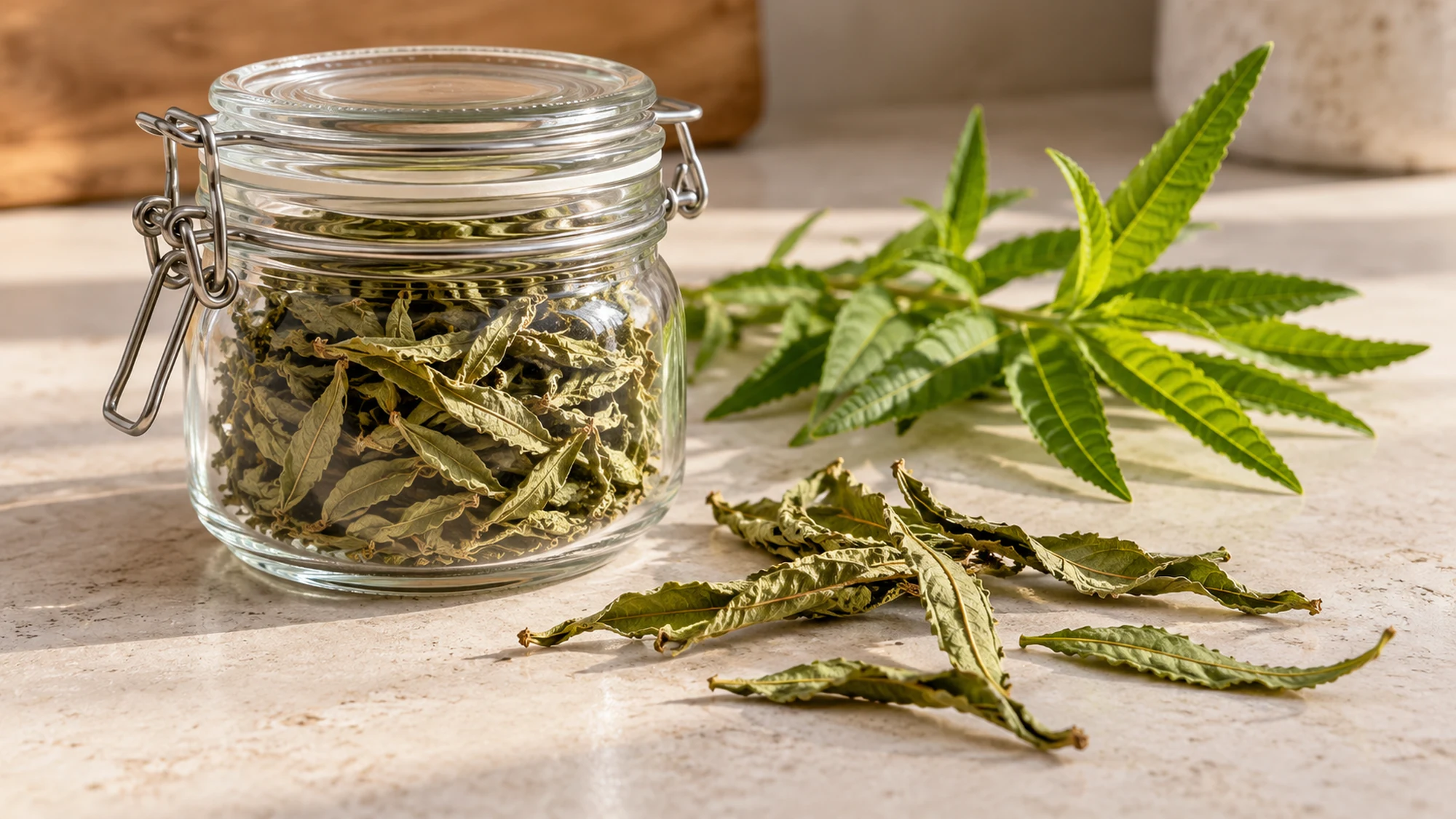
- Dried: store thoroughly dry leaves in an airtight container in a dark cupboard.
- Label the container: retain the herb name and packing date instead of relying on memory.
ABC Gardening Australia demonstrates air-drying lemon verbena in a dry, ventilated place before storing it airtight. Drying is a separate step from simply putting fresh leaves in a sealed jar. Illinois Extension also notes that the plant is frost sensitive, so a container can be useful where it needs winter protection.
Bottom Line
Choose lemon verbena for its clear citrus fragrance. Use a reliably identified culinary herb, let the dish guide whether to infuse or otherwise prepare it, and keep fresh-herb handling separate from dry-herb storage.
Sources
- NC State Extension: lemon verbena identification and edible uses
- Illinois Extension: growing, harvesting and culinary uses
- Oregon State Extension: garden herbal tea and handling
- Health Canada: food safety for fresh herbs
- ABC Gardening Australia: lemon verbena tea and drying
- FDA: safe produce storage and preparation

Hi, I’m Emily Pocker! I share recipes and food guides here at Recipes360 to help you find everyday meal inspiration and feel more confident in the kitchen. My goal is to make cooking approachable, enjoyable, and full of flavor.