
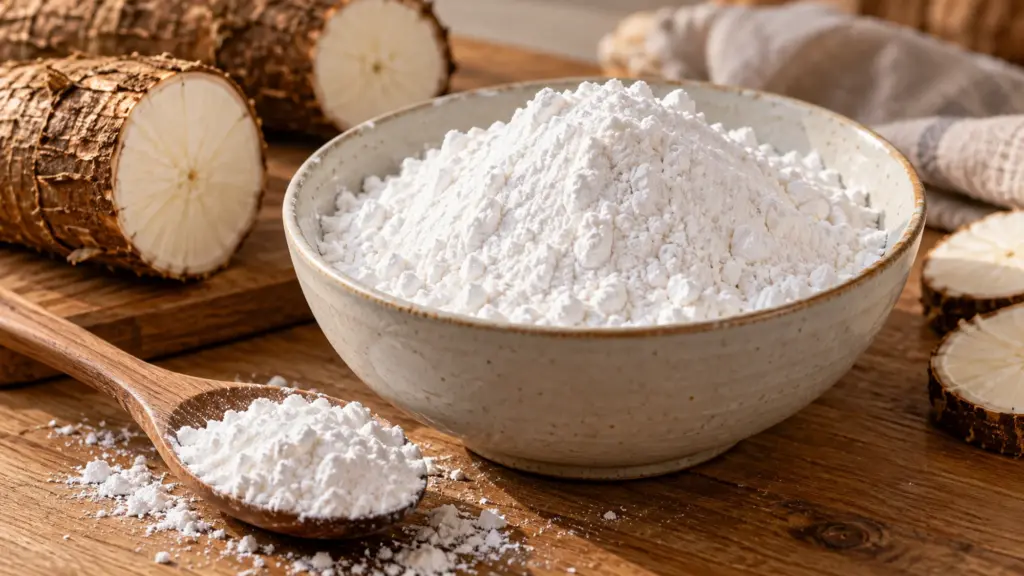
A sauce needs a little body, the recipe says tapioca starch, and the bag on the shelf says tapioca flour. Before buying a second bag, check the ingredients: those two names often describe the same fine white powder, but cassava flour is a different purchase.
Tapioca starch is the extracted starch of cassava root. In ordinary U.S. baking labels, tapioca flour commonly means the same ingredient. Whole-root cassava flour, tapioca pearls and instant tapioca are different forms, so follow the form specified in your recipe.
I would treat it as a texture tool rather than an all-purpose replacement. A little planning matters more than the impressive collection of white powders that can accumulate in a pantry.
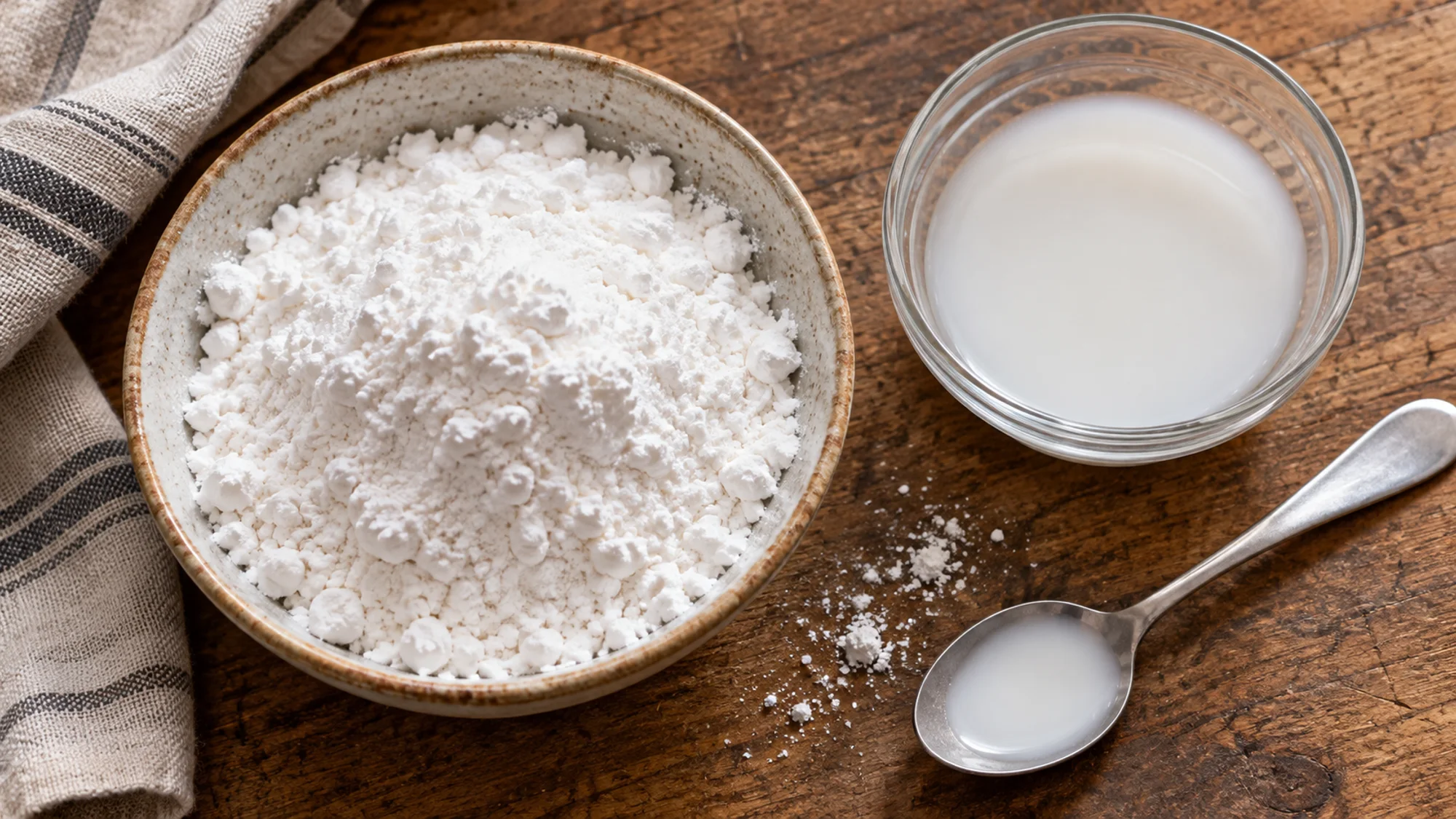
Tapioca starch versus tapioca flour
Bob’s Red Mill confirms that its tapioca flour and tapioca starch are the same product. Its starch compendium distinguishes that extracted starch from cassava flour, made from the peeled whole root. The names are related because they begin with the same plant, not because every resulting powder behaves alike.
| Package name | What it is | What to do |
|---|---|---|
| Tapioca starch / tapioca flour | Fine extracted cassava starch | Check that the ingredients match your recipe |
| Cassava flour | Flour made from the peeled whole root | Do not assume it replaces isolated starch |
| Tapioca pearls | Starch shaped into pearls | Use a pearl-specific cooking method |
| Quick-cooking tapioca | A processed form with its own directions | Follow the recipe’s preparation and quantity |
| Gluten-free baking blend | A mixture that may contain several flours and starches | Use the blend specified, not starch alone |
Where tapioca starch earns its place
Tapioca can thicken soups, sauces and fillings, and it appears in gluten-free baking blends. Bob’s ingredient guide describes a glossy finish in liquids and contributions to chew and elasticity in baking. Those are useful qualities, but a glossy sauce and a tender cake ask for different ingredient balances.
- For sauces, use a recipe that specifies tapioca and its quantity, particularly on a first attempt.
- For baking, retain the other flours, binders and liquids in the formula; starch alone is not a complete flour blend.
- For fruit filling, check the fruit as well as the thickener. A juicy berry filling and an apple filling need not use the same amount.
I would choose the result I want before reaching for a substitute: a clear-looking fruit sauce is a different job from a creamy, opaque gravy. King Arthur’s pie-thickener guide also separates quick-cooking tapioca from other thickeners and emphasizes following the quantities in the specific recipe.
Match the product form and the job. “A thickener” is a function, not a promise that every starch can be exchanged by the same spoonful.
Avoid clumps and guesswork
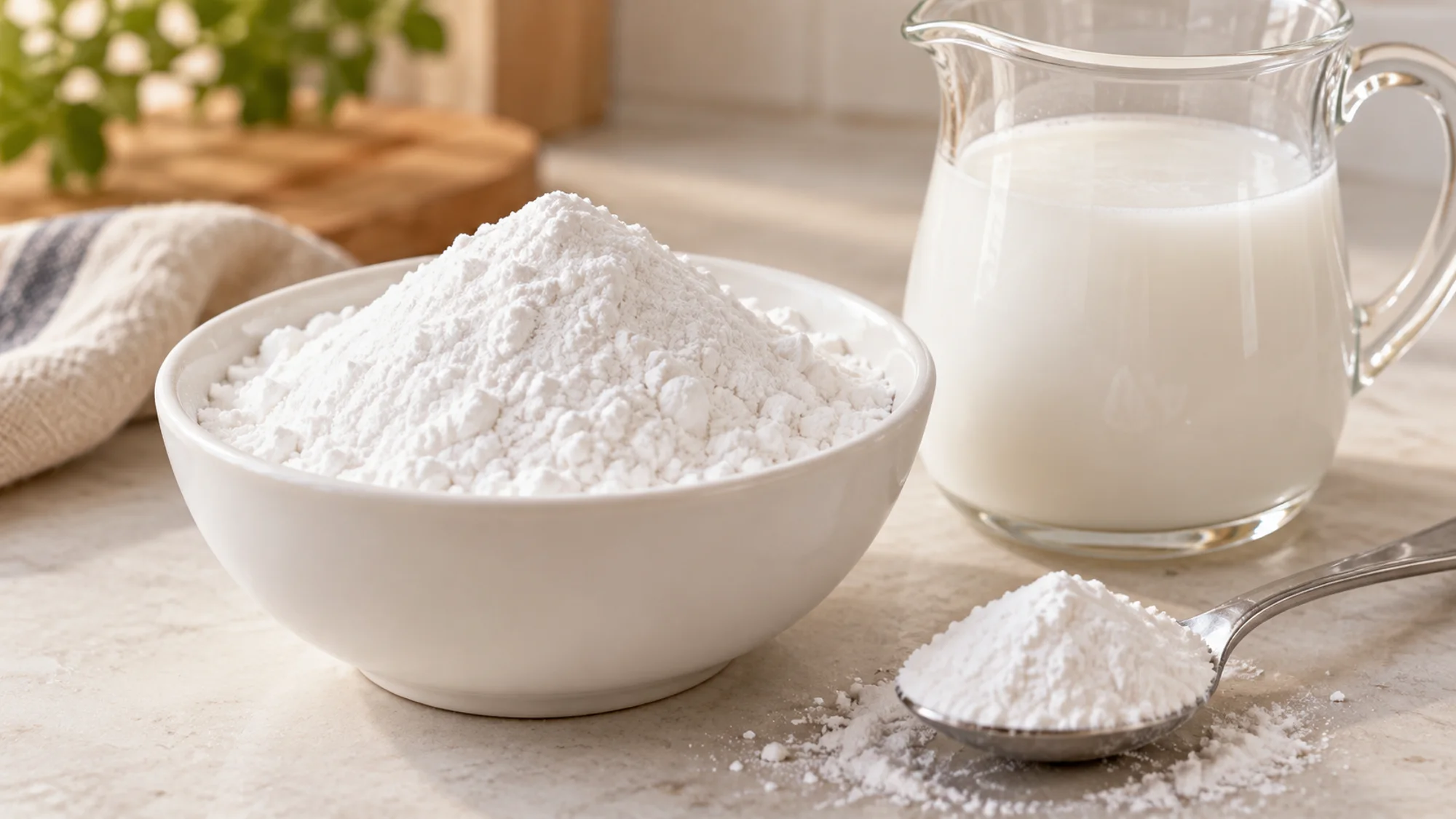
For a sauce, Bob’s Red Mill recommends mixing tapioca flour with a little cooking liquid into a slurry before adding it to the larger mixture. Follow the recipe’s temperature and timing rather than dropping a dry mound into the pot and hoping a whisk will rescue it.
- Measure before cooking. A sauce that looks thin initially is not an invitation to add several extra spoonfuls at once.
- Stir the slurry again before adding it if it has settled, then incorporate it evenly.
- Follow the intended cooking step; thickness and texture can change as the mixture heats and cools.
- For pies, do not transfer directions for quick-cooking granules to fine starch without a tested conversion.
King Arthur advises allowing quick-cooking tapioca filling to stand before baking so that form softens. That instruction belongs to quick-cooking tapioca, not automatically every bag labeled starch. My preference is to keep a successful recipe’s thickener unchanged until the rest of the process feels familiar.
Nutrition, gluten checks and storage
This is mainly a starch ingredient, not a protein or fiber booster. The Bob’s Red Mill product label lists 35 calories and 9 grams of carbohydrate per 10-gram serving, with zero grams of fiber and protein. Those figures describe that product and portion, not an entire finished dish.
Buy food-grade starch rather than trying to substitute raw cassava root; the manufacturer explains why cassava requires appropriate processing. Do not eat raw dough or batter. For gluten avoidance, check the exact package and preparation environment; our gluten-free foods and snacks guide explains label checks and cross-contact.
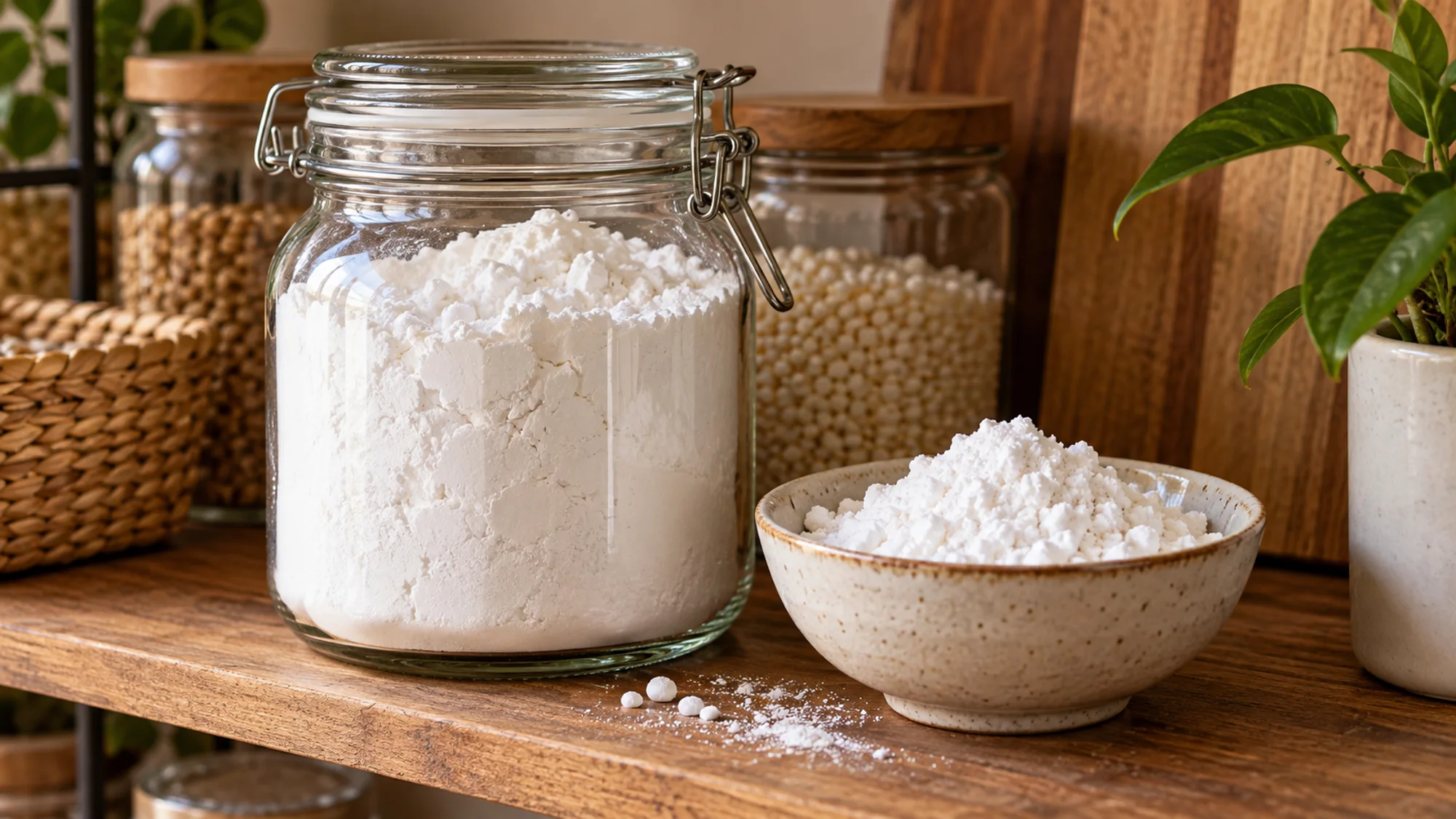
- Keep the starch closed, dry and away from steam or wet measuring spoons.
- Retain the product label and its date and storage directions if transferring it to a jar.
- Use a clean scoop, and do not return starch that has contacted other ingredients to the container.
Bottom Line
Tapioca starch and tapioca flour commonly name the same extracted starch, but cassava flour and tapioca pearls are not automatic substitutes. Choose the exact form, use a recipe suited to the job, and let texture—not a health halo—guide the decision.
Plants Per Serving introduces tapioca starch and its naming in the video below. Follow the recipe and package for specific quantities and cooking directions.
Sources
- Bob’s Red Mill: tapioca flour and starch naming
- Bob’s Red Mill: starch compendium
- Bob’s Red Mill: processing and culinary uses
- Bob’s Red Mill: product ingredients and nutrition
- King Arthur Baking: pie thickeners and product forms

Hi, I’m Emily Pocker! I share recipes and food guides here at Recipes360 to help you find everyday meal inspiration and feel more confident in the kitchen. My goal is to make cooking approachable, enjoyable, and full of flavor.