
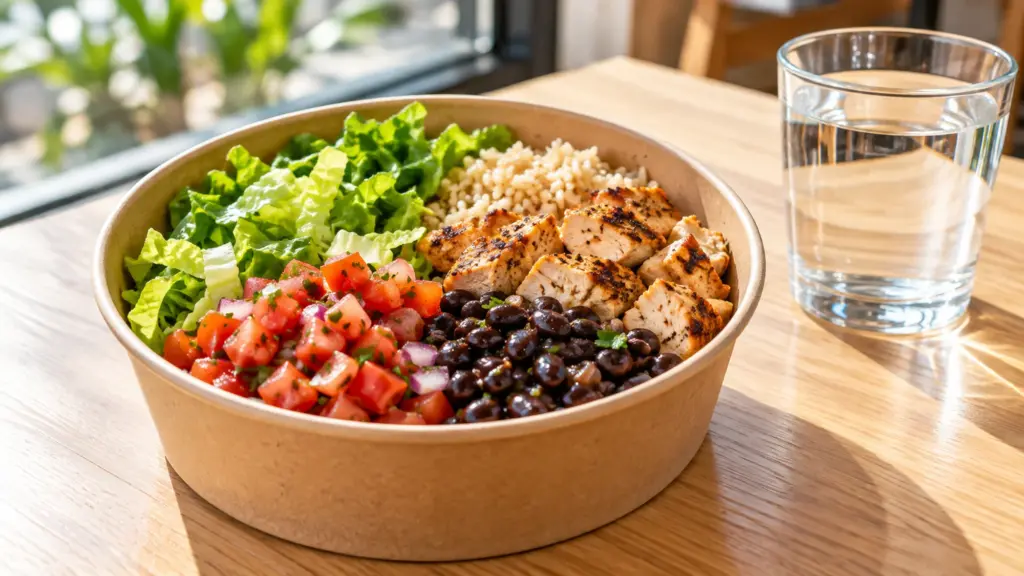
The drive-through menu is glowing, the line is moving, and a salad suddenly seems like the only sensible answer. Not necessarily. Finding the healthiest fast food means looking at the complete order, including its size, toppings and drink, rather than trusting a single healthy-sounding word.
There is no one healthiest fast food order for everyone. Start with a satisfying protein source, add vegetables or fruit, consider beans or whole grains, and compare sodium and saturated fat alongside calories.
I would rather choose an enjoyable meal with a few useful adjustments than an undersized order that leaves you searching for another lunch. These are decision tools, not a ranking of people’s food choices.
What Does Healthiest Fast Food Actually Mean?
The most useful comparison is between meals you would realistically eat. A small side salad and a full sandwich do different jobs; placing them on one calorie leaderboard tells you very little. Your appetite, budget, allergies and any clinician-recommended limits also matter.
The FDA’s menu-labeling guidance explains that covered chains provide additional nutrition information beyond the calorie display. Look for the exact size and customization, then consider the meal as a whole.
- Protein: Check whether the meal includes chicken, fish, eggs, beans or another protein source rather than assuming vegetables alone will make a substantial lunch.
- Fiber: Look for beans, whole grains, vegetables or fruit, while checking the actual listing rather than judging bread by its brown color.
- Sodium and saturated fat: Compare similar portions. A grilled label does not guarantee a low-sodium meal.
- Enough food: Choose a portion suited to your needs; the smallest calorie number is not automatically the best choice.
Order Patterns That Make Comparison Easier
The American Heart Association’s dining-out advice favors useful changes such as adding produce, choosing appropriate portions and requesting sauces separately. Think of the following patterns as starting points to compare in the restaurant’s calculator, not guaranteed nutrition claims.
I like a bowl when its components are easy to see and adjust. But a sandwich can be just as practical, and a meal you actually enjoy is easier to choose again.
| Order style | Useful starting point | What to check |
|---|---|---|
| Chicken meal | Grilled chicken with a produce side | Marinade sodium, side size and dipping sauces |
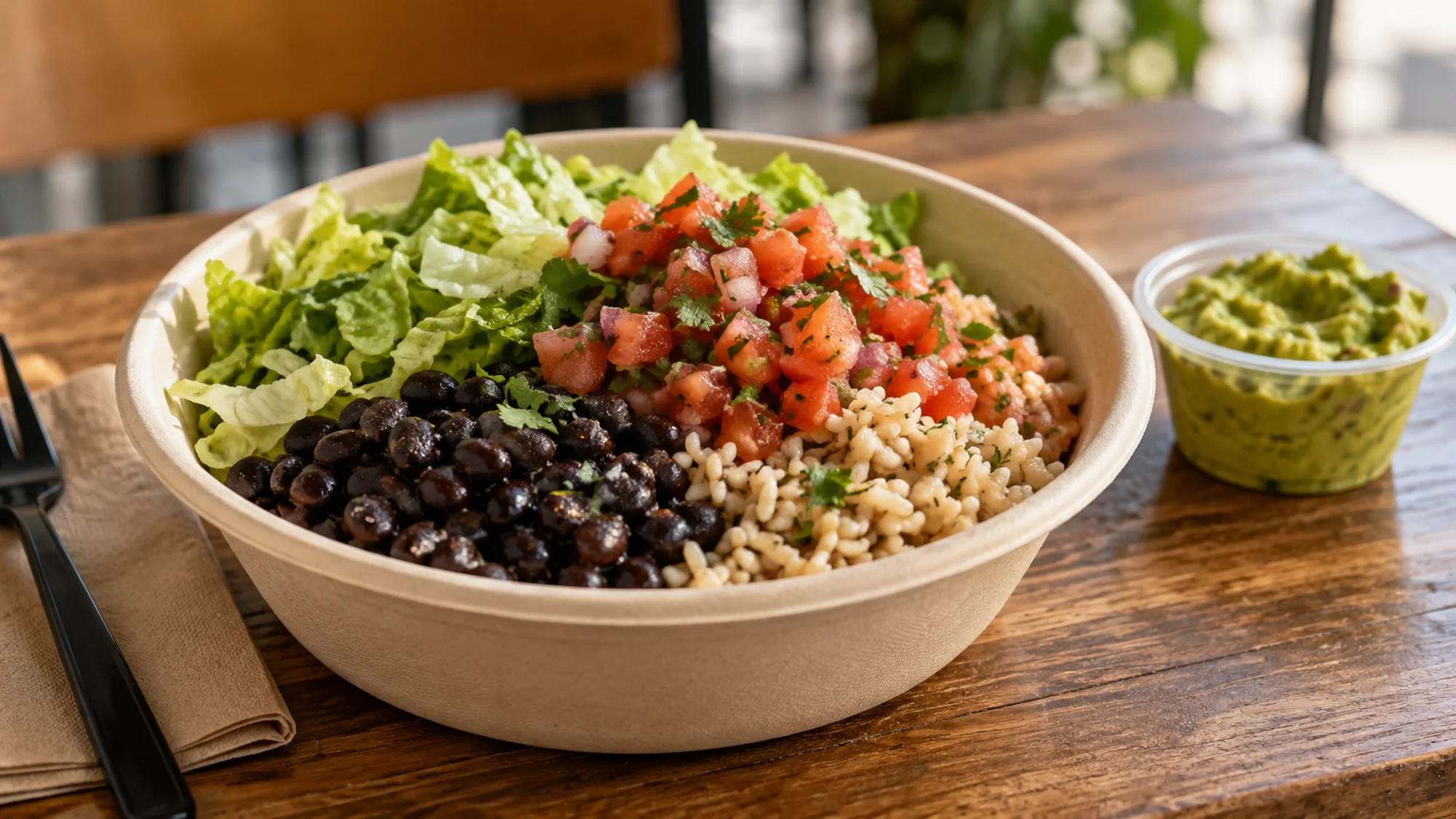
| Bean or grain bowl | Beans, vegetables and a suitable rice portion | Total toppings, queso, dressing and sodium |
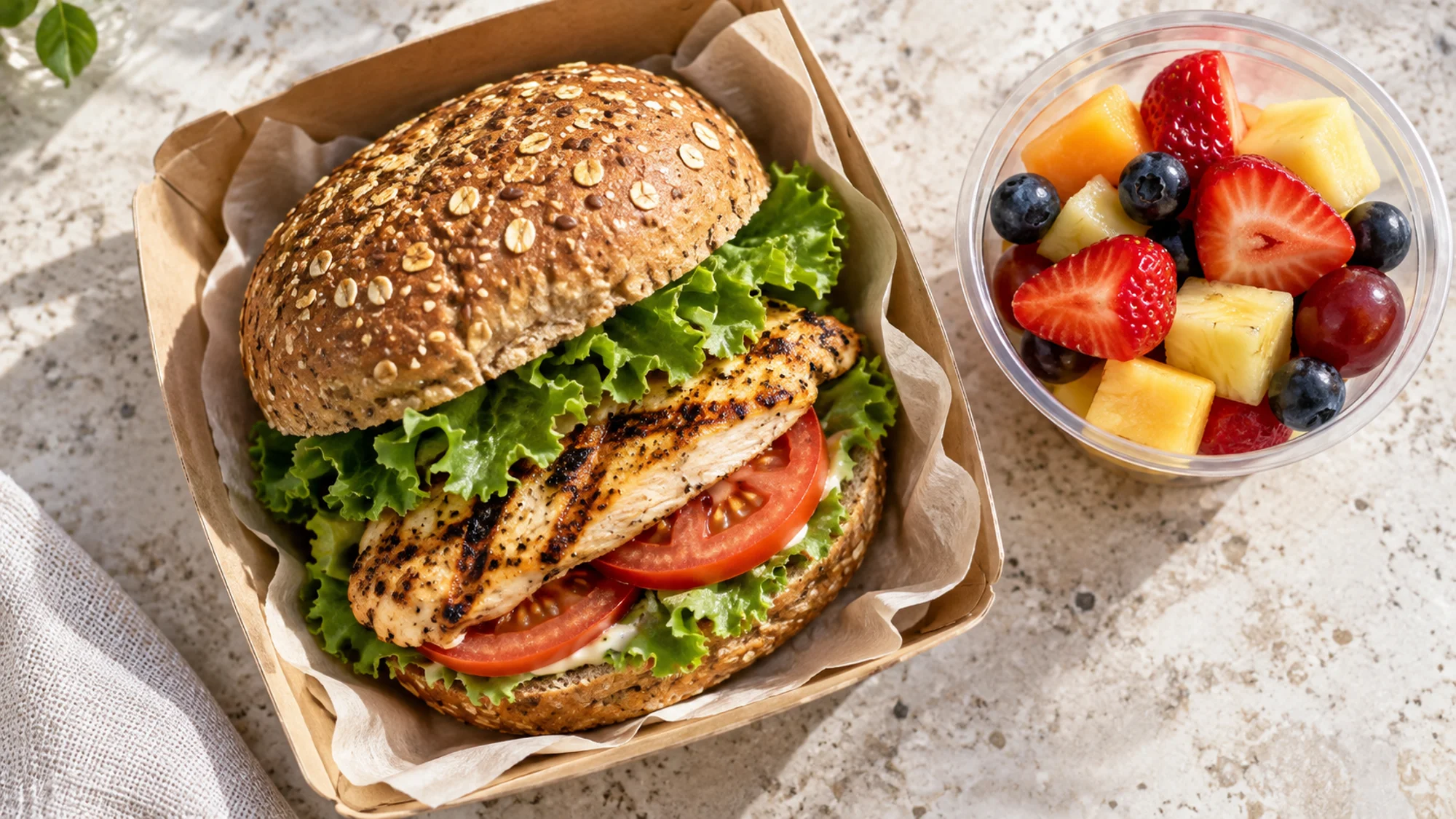
| Sandwich | Protein plus vegetables; whole grain when available | Bread size, cured meat, cheese and condiments |
| Salad | Vegetables with beans or another protein | Dressing, crispy toppings and whether it is enough food |
Read the Whole Order, Not Just the Headline
For a concrete example, Chick-fil-A’s U.S. nutrition guide lists eight Grilled Nuggets (95 grams) at 130 calories, 25 grams of protein and 440 milligrams of sodium, with no fiber. Those figures describe the nuggets alone, not a complete meal with sides, sauces and a drink; confirm the selected count in the restaurant’s current nutrition details.
That makes the nuggets a protein component, not a complete nutritional verdict. Adding fruit or another suitable side changes the meal, and each sauce packet contributes its own values. Restaurant formulations and local availability can change, so use the current listing when you order.
- Compare the same item size before and after a customization rather than combining numbers from different menu versions.
- Check whether the calculator already includes dressing or sauce; avoid counting it twice or missing it entirely.
- Treat a combo as several choices. The default drink and side are not compulsory instructions.
Small Changes Worth Making
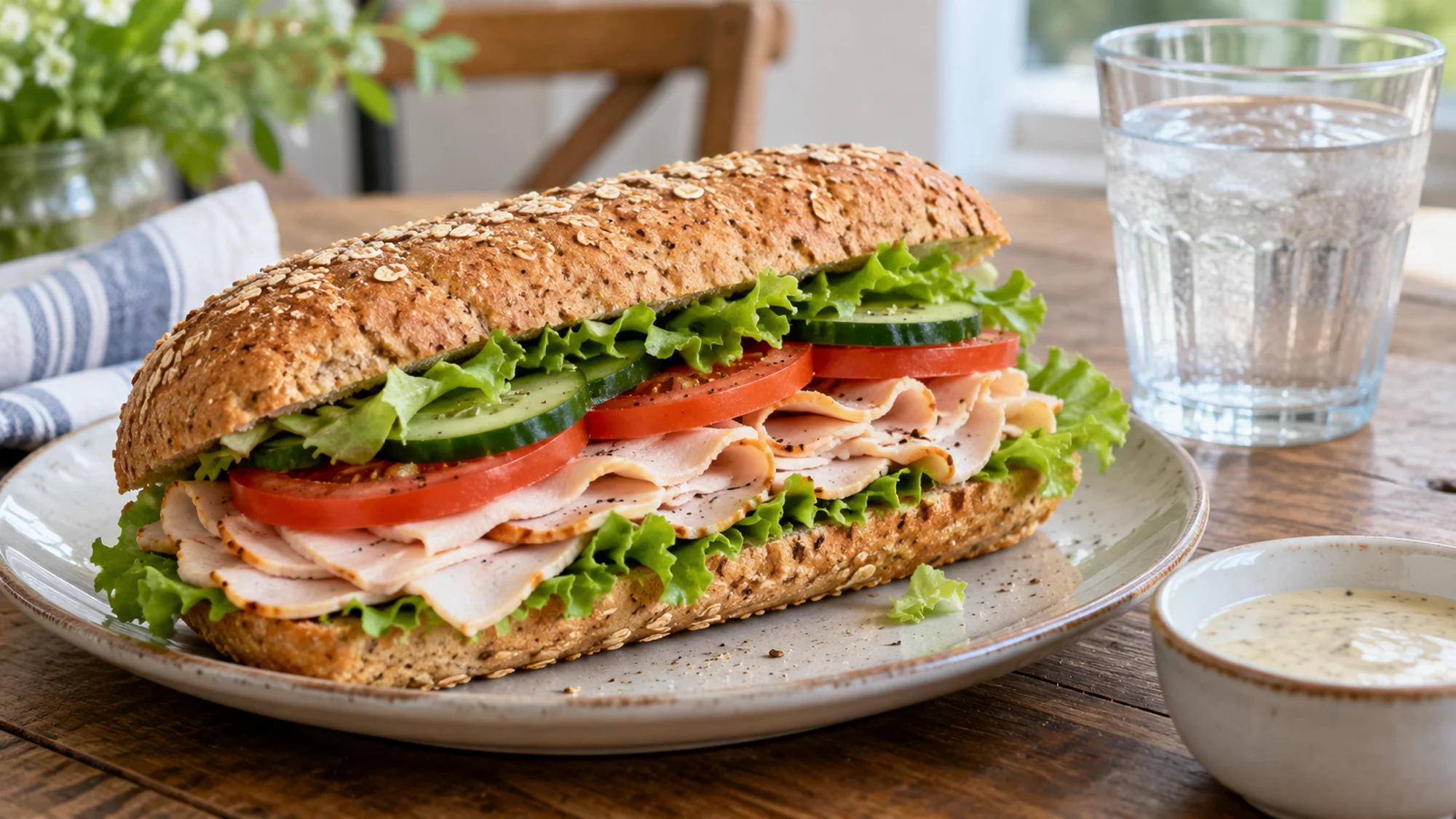
Start with the change that fits the meal. Water or unsweetened tea avoids adding sugar through a drink; asking for dressing separately lets you choose how much you use. Neither requires turning lunch into a spreadsheet.
Keep the advice flexible. A plain baked potato might suit one meal, while beans or a vegetable side works better with another. Availability and cost vary, and there is no need to buy extra items merely to make an order look virtuous. At home, our air-fryer jacket potato guide offers a simple base for choosing your own toppings.
- Keep flavor: Choose a condiment you enjoy instead of stacking several by default.
- Check substitutions: A plant-based or gluten-free label does not by itself describe sodium, saturated fat or overall balance.
- Respect individual needs: Ask the restaurant about allergens and cross-contact. Follow your own medical guidance rather than a generic online ranking.
Bottom Line
The healthiest fast food choice is a workable meal, not a universal winner. Compare a realistic portion, include foods that make it satisfying, and check the extras that travel with it. One practical adjustment is more useful than a perfect-sounding order you do not want to eat.
Isabella Mahboob’s Fast Food, Mindful Choices video, shared by the University of Florida’s Food Science and Human Nutrition department, discusses practical ordering decisions and access to food.
Sources
- FDA: Menu labeling requirements
- American Heart Association: Dining out
- Chick-fil-A: Grilled Nuggets nutrition
- University of Florida: Practical strategies for healthier fast food choices

Hi, I’m Emily Pocker! I share recipes and food guides here at Recipes360 to help you find everyday meal inspiration and feel more confident in the kitchen. My goal is to make cooking approachable, enjoyable, and full of flavor.