
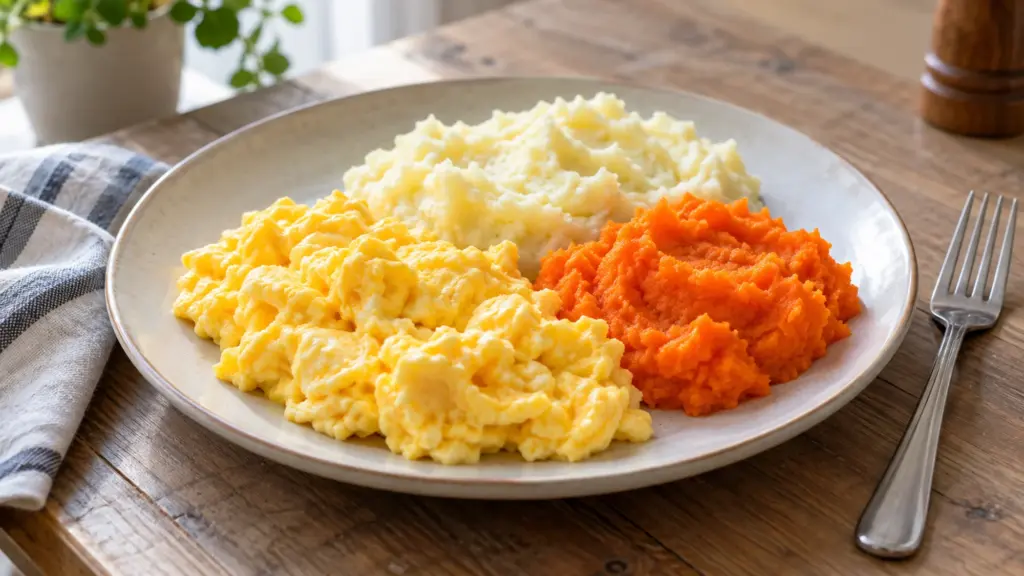
When crunchy toast or a tough piece of meat feels like too much work, a gentler meal does not have to mean a bowl of dessert. Soft foods can still offer different flavors, colors and food groups. The useful starting point is why the food needs to be soft.
Soft foods include options such as yogurt, scrambled eggs, mashed potatoes and tender cooked vegetables. This general meal guide is for easier chewing; a prescribed swallowing diet needs its own texture and drink instructions.
Choose Soft Foods for the Right Reason
An everyday preference for tender food is different from a clinical texture prescription. Kent Community Health describes easy-to-chew foods as normal foods with a soft, tender texture, for people able to bite and chew them. The goal is not automatically to blend everything into a smooth puree.
I’d begin by asking what makes the meal difficult: a hard crust, dry texture, tough fibers or the effort of chewing. That answer helps you adjust the actual problem. If the issue is swallowing, do not experiment with a general soft-food list as a substitute for assessment.
- Personal preference: choose tender dishes you enjoy and adjust the texture as needed.
- Dental treatment: follow the dentist’s restrictions and timing, which may go beyond softness.
- Swallowing difficulty: follow the texture and fluid plan from a speech-language professional.
Build a Meal Around More Than One Food Group
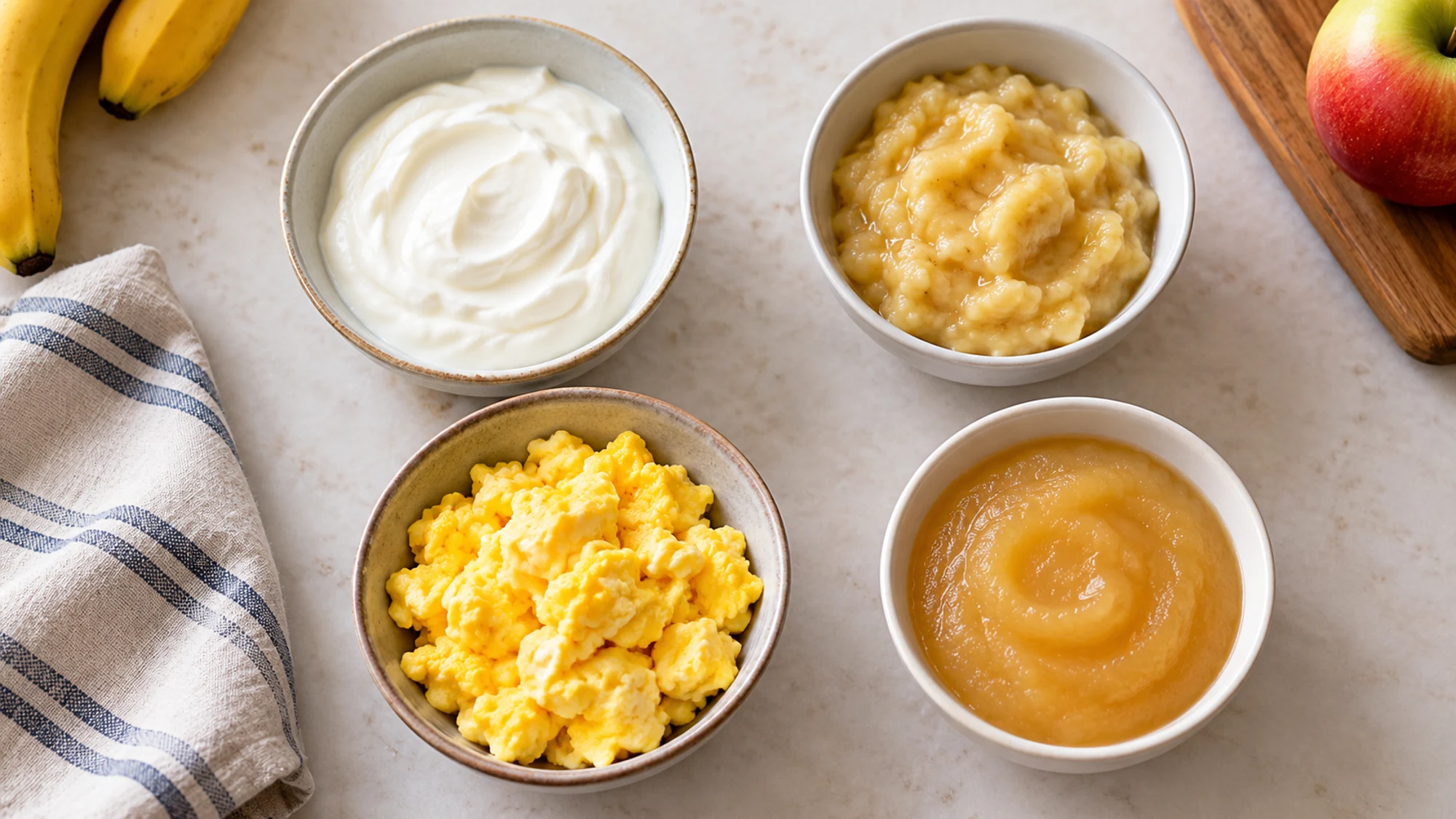
A useful soft meal has the same planning question as any other meal: what will make it satisfying and varied? Leeds Teaching Hospitals lists soft options across food groups, including eggs, soft pulses, mashed vegetables and dairy foods. These examples are starting points for chewing comfort, not a personalized diet prescription.
| Meal role | Soft-food idea | Practical check |
|---|---|---|
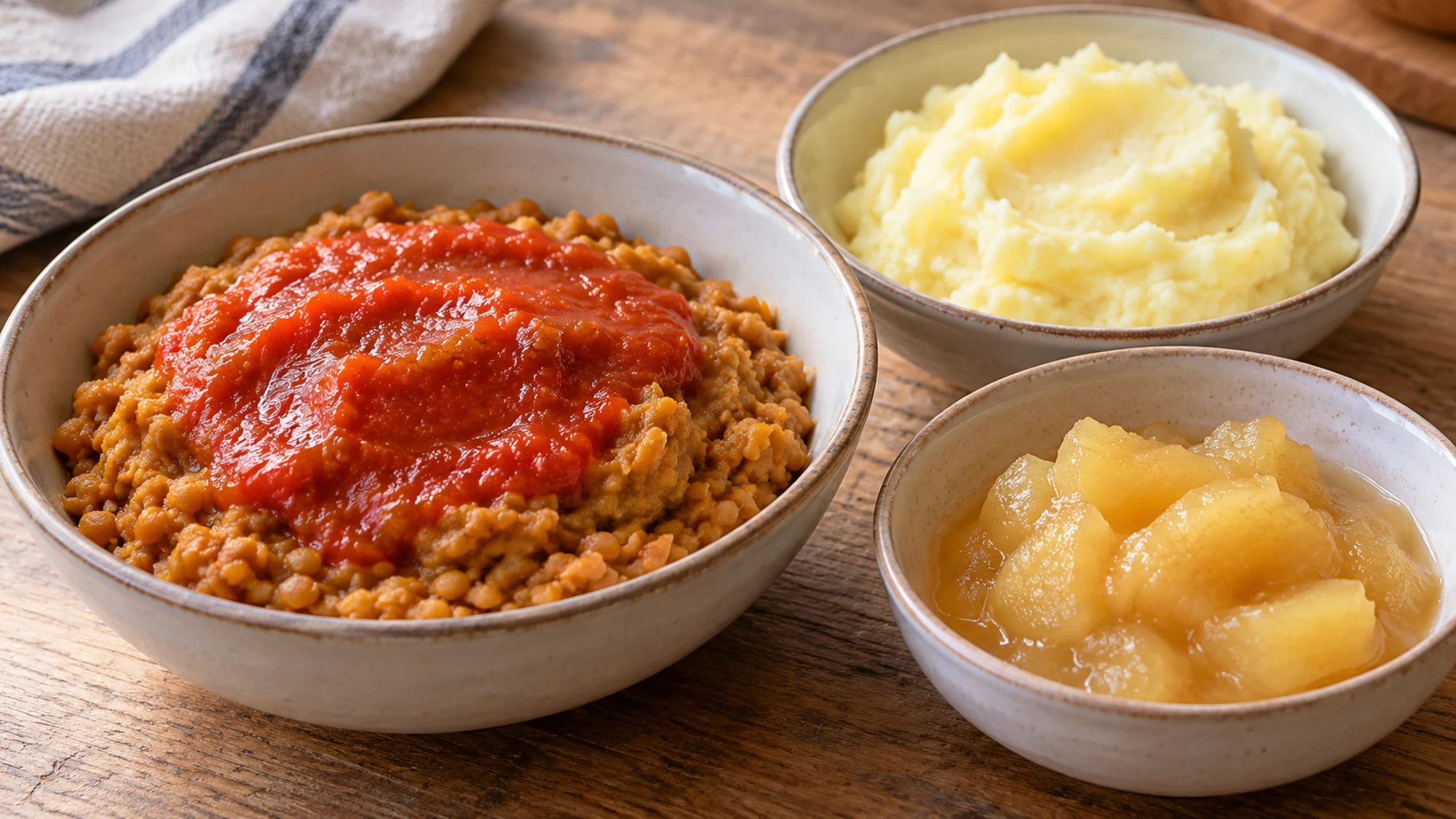
| Protein food | Scrambled eggs or soft mashed lentils | Keep the texture moist |
| Starchy food | Mashed potato or soft porridge | Avoid dry or sticky texture |
| Vegetable | Well-cooked mashed carrot | Remove tough parts |
| Fruit or snack | Applesauce, mashed banana or yogurt | Check skins, seeds and additions |
I’d keep components separate on the plate when possible: orange carrot beside pale potato is more inviting than one anonymous beige mash. You can vary the seasoning without adding a crunchy garnish that defeats the reason for choosing a soft meal.
Change the Texture Without Losing the Meal
Moisture and tenderness do different jobs. A splash of sauce may improve a dry dish, but it will not remove a bone, soften a seed or make tough meat tender. Start with a suitable food, cook it appropriately, and check the finished texture before serving.
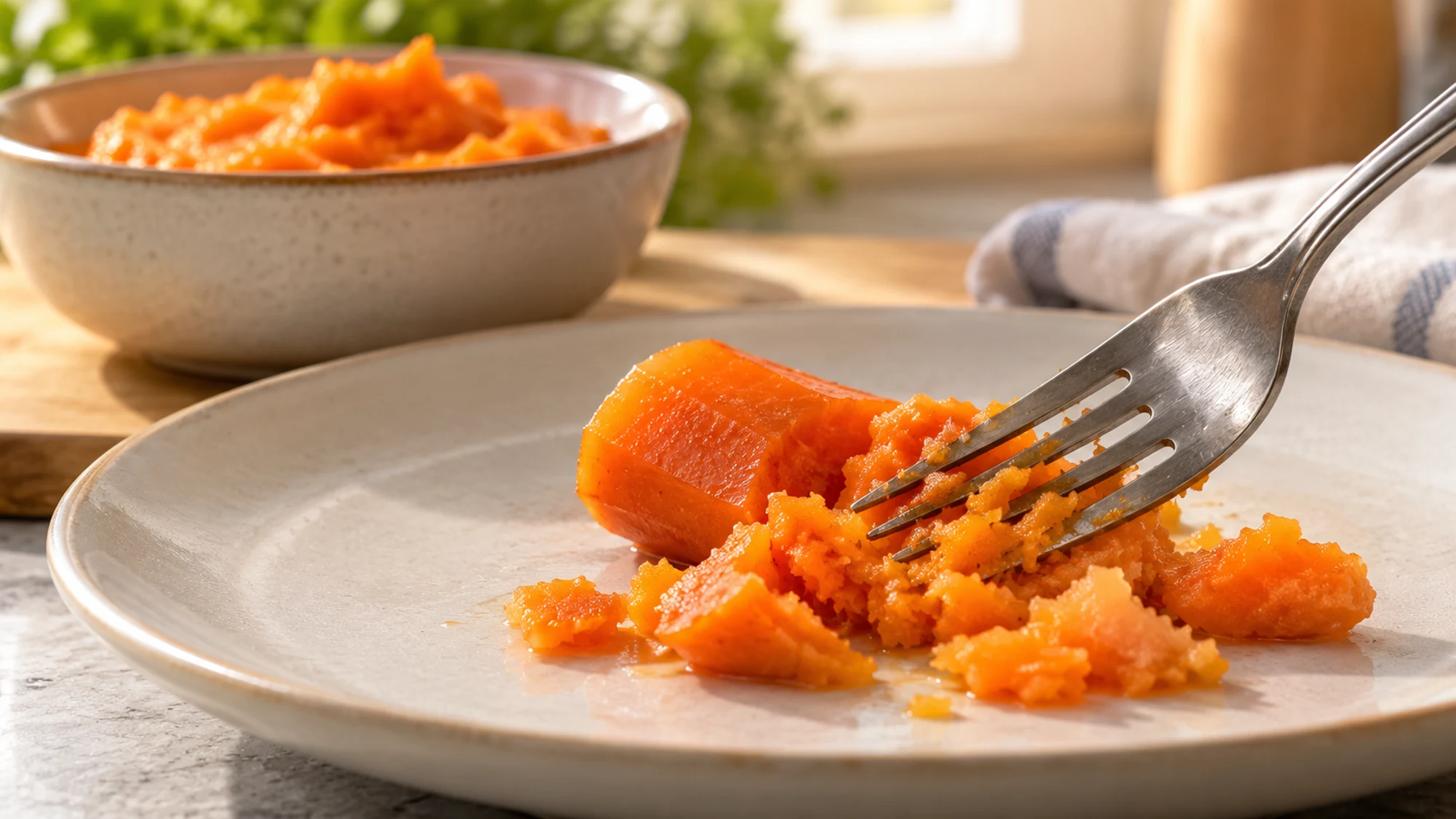
- Cook firm vegetables until tender: a fork should break them apart easily; remove skins or stringy pieces when they cause difficulty.
- Mash or finely chop: adjust the preparation to the person’s chewing ability instead of assuming one piece size suits everyone.
- Add a suitable sauce: gravy, yogurt-based sauce or a smooth vegetable sauce can make food more moist.
- Reconsider additions: nuts, dry crumbs, crisp bacon and tough crusts can turn an otherwise soft dish into a difficult one.
The National Cancer Institute’s food ideas include eggs, cooked cereals and mashed potatoes for people whose care team recommends easier-to-eat foods. Those suggestions do not mean each food is safe for every swallowing disorder. Even a familiar food can need a different preparation.
Know When General Soft-Food Advice Is Not Enough
Coughing or choking with meals, a wet-sounding voice, or food feeling stuck are reasons to seek prompt medical advice. NHS guidance on swallowing problems explains these warning signs. Someone who cannot breathe because of choking needs emergency help, not another food substitution.
- A prescribed IDDSI texture has specific requirements; the word “soft” alone does not establish compliance.
- Do not thin or thicken drinks on your own if a professional has given instructions.
- If eating is becoming exhausting, intake is falling or weight is dropping unintentionally, ask for individualized nutrition support.
For dental recovery specifically, see the site’s guide to eating after wisdom teeth removal. It covers a different situation from a general preference for gentler chewing. Keep treatment instructions close to the meal plan, especially when several people help with shopping or cooking.
Bottom Line
Choose tender foods from several food groups, adjust dry or tough textures thoughtfully, and keep meals appealing. If swallowing is difficult or a texture level has been prescribed, follow professional instructions rather than a generic soft-food list.
For a visual explanation of the distinction, “IDDSI Level 6 – Soft and Bite Sized,” uploaded by bianca avila and linked in Newcastle Hospitals’ dysphagia resource pack, demonstrates a specific prescribed texture. It is not a recommendation to select that level yourself.
Sources
- Kent Community Health: Easy to Chew Diet
- Leeds Teaching Hospitals: Soft, Moist Diet
- National Cancer Institute: Easy-to-Chew Food Ideas
- NHS: Swallowing Problems
- Newcastle Hospitals: Dysphagia Resource Pack

Hi, I’m Emily Pocker! I share recipes and food guides here at Recipes360 to help you find everyday meal inspiration and feel more confident in the kitchen. My goal is to make cooking approachable, enjoyable, and full of flavor.