
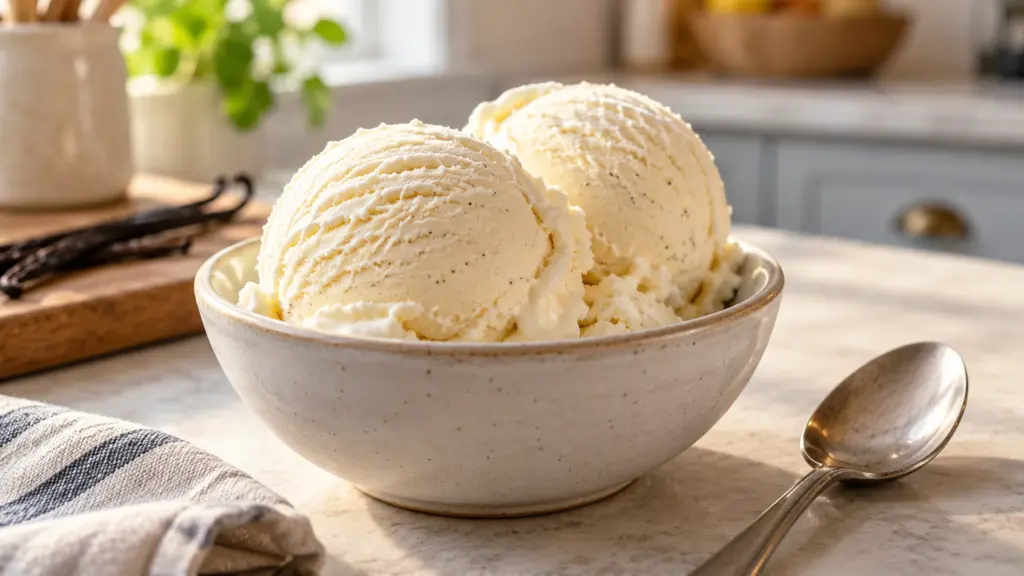
The freezer aisle can make a simple vanilla scoop feel like a vocabulary test: lactose-free, dairy-free, light, plant-based. If your goal is avoiding lactose while keeping the familiar milk-and-cream texture, the important distinction comes before the flavor. “Lactose-free” tells you something about milk sugar, not whether the dessert contains milk.
Lactose free ice cream can be real dairy ice cream treated with lactase to break down lactose. It is not necessarily dairy-free, suitable for a milk allergy, low in sugar or low in calories. Read the exact product’s ingredients, allergen information and Nutrition Facts before choosing.
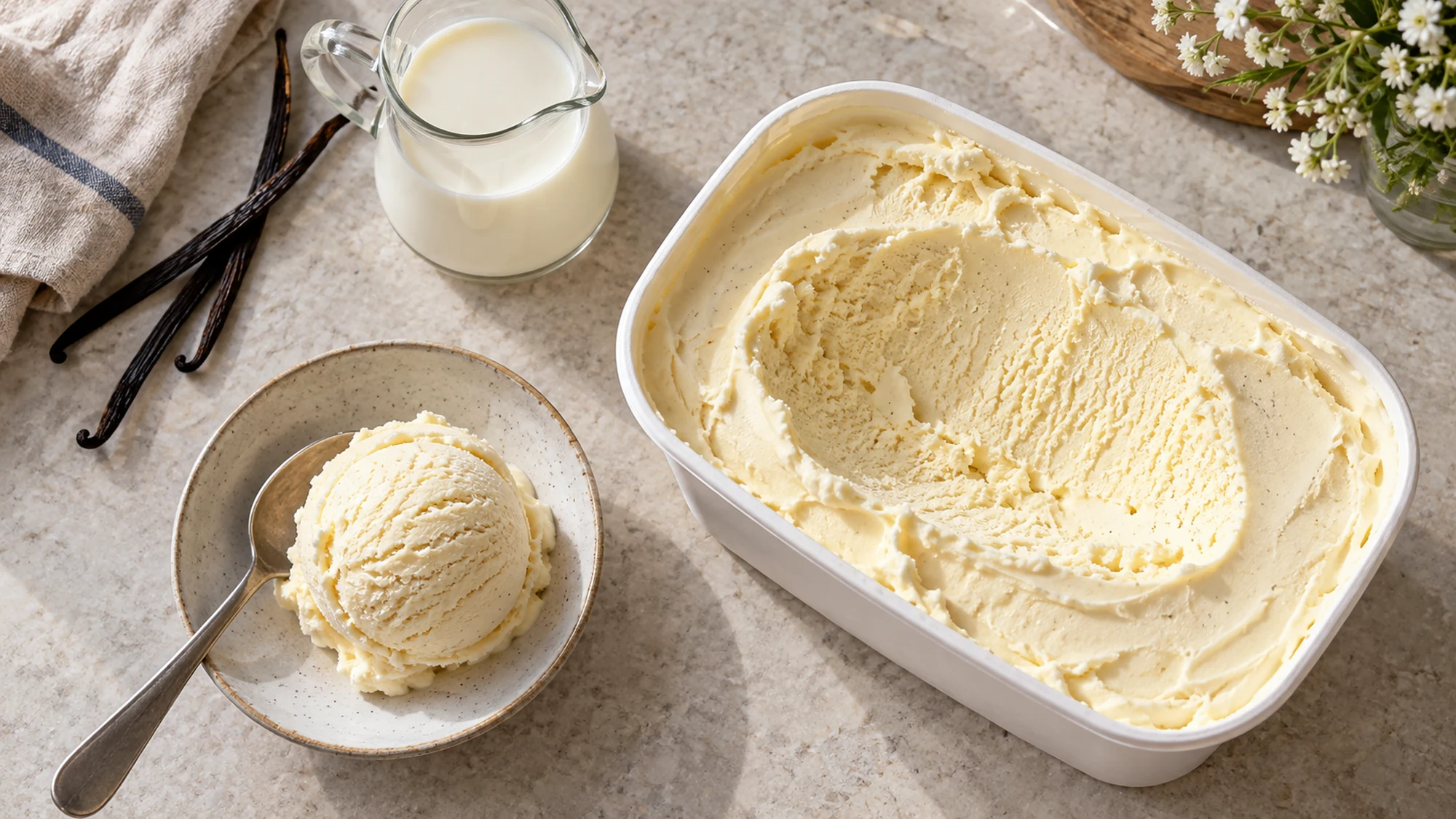
How Lactose Free Ice Cream Is Made
NIDDK explains that lactose is a sugar naturally present in milk products, including ice cream. Lactose intolerance concerns difficulty digesting that sugar. A milk allergy involves the immune system, so the two conditions need different food decisions.
One common manufacturing approach adds lactase, the enzyme that breaks lactose into glucose and galactose. LACTAID’s vanilla ice cream uses this approach and still lists milk and cream, with a “Contains: Milk” statement. Breaking down a sugar does not remove the milk proteins.
- Read the claim’s details: Breyers describes its lactose-free vanilla as 99% lactose-free. Do not assume every brand uses identical wording or specifications.
- Keep expectations specific: Addressing lactose does not promise that every ingredient in a dessert will suit every digestive condition.
- Ask about ongoing symptoms: If the cause is unclear, seek a clinical assessment rather than deciding that every reaction to ice cream must be lactose intolerance.
Dairy-Free Is a Separate Decision
I would settle the reason for the swap before comparing flavors. A person avoiding lactose may want a dairy product with lactase; someone avoiding milk proteins needs a different ingredient and cross-contact check. The labels below answer separate questions.
| Label or type | Useful meaning | Still check |
|---|---|---|
| Lactose-free dairy | Addresses lactose | Milk proteins remain |
| Plant-based dessert | Uses a plant base | Ingredients and allergens |
| Light ice cream | A nutrition comparison | Lactose claim separately |
| Regular ice cream | No lactose assurance | Exact product label |
Food Allergy Research & Education distinguishes milk-protein allergy from lactose intolerance. For an allergy, do not use lactose-free dairy as a substitute for an appropriate milk-free product. Plant bases also vary: a coconut, almond, soy or oat dessert is not a blanket assurance about every allergen.
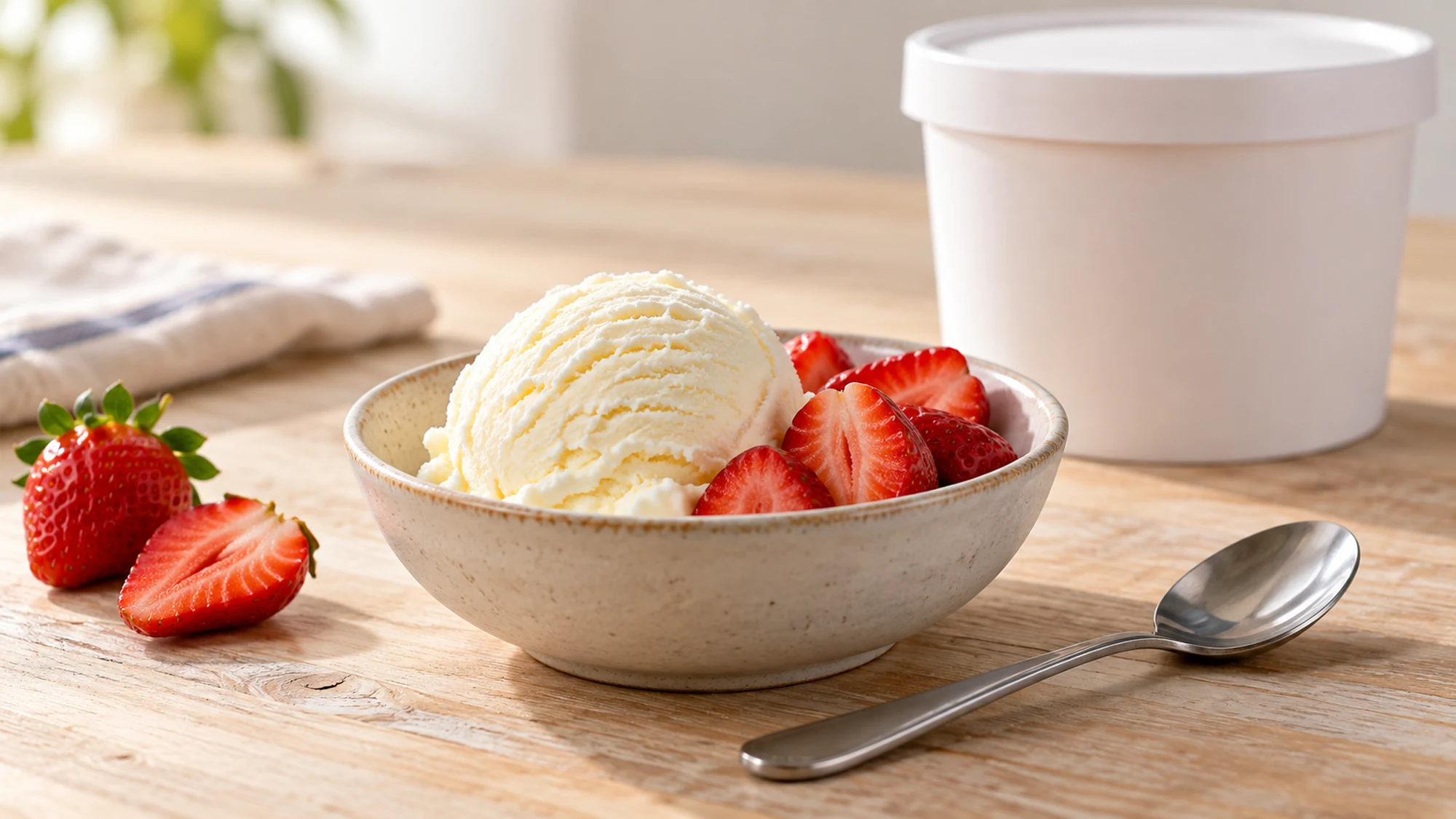
Read the Whole Label Before Choosing
Lactose-free does not mean sugar-free. The sugars produced when lactase breaks down lactose are still sugars, and manufacturers may add other sweeteners. A nutrition comparison needs the full label rather than a single phrase on the lid.
- Start with the portion: FDA guidance explains that nutrition values refer to the stated serving, which is not a recommendation for how much to eat.
- Check a real example: The LACTAID vanilla page lists 200 calories, 22 g carbohydrate, 16 g total sugars and 12 g added sugars per 2/3 cup (95 g). Those numbers describe that flavor and serving, not the whole category.
- Compare similar desserts: Vanilla against vanilla is more useful than comparing a plain scoop with a cookie-loaded flavor. Note both the volume and gram weight.
- Look beyond sugar: Check saturated fat and any nutrients relevant to your needs. A lactose claim does not determine those amounts.
I would choose the flavor you enjoy after confirming the restriction that matters. Our guide to ice cream nutrition claims looks more broadly at label comparisons; here, the first question is specifically lactose and milk. A specialty tub does not need to win every nutritional comparison to serve that purpose.
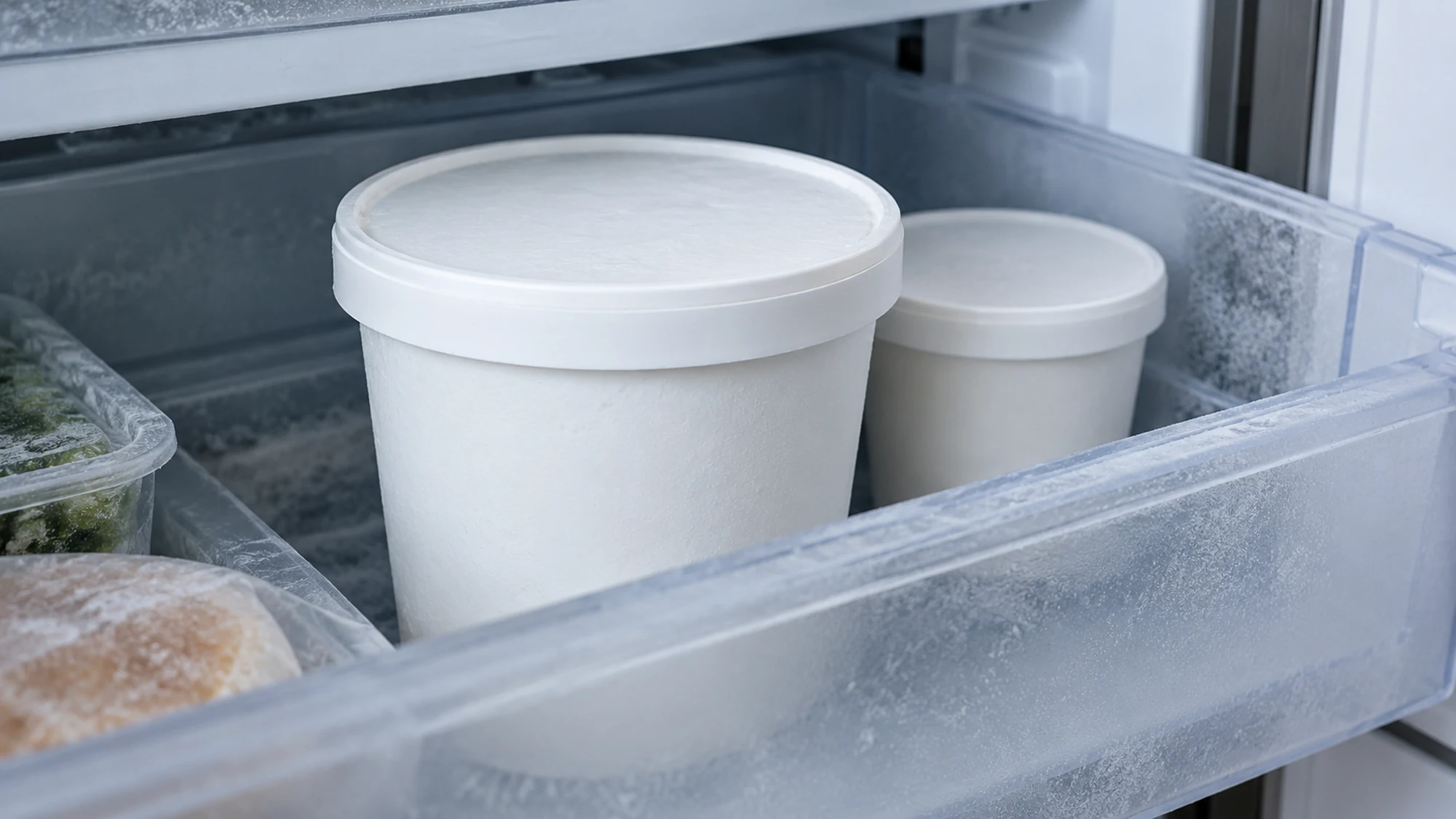
Serving and Keeping It Frozen
A lactose-free base does not automatically make the whole dessert lactose-free. Check sauces, cookie pieces, cones and whipped toppings individually. At a scoop counter, ask which exact product is served and whether the utensils and toppings fit your needs; appearance cannot establish ingredients.
- Keep it simple: I would start with a plain scoop, then add fruit or a topping whose label you have checked. That makes the choice easier to understand.
- Plan the trip home: Use an insulated bag and ice packs for frozen shopping, and put the tub into the freezer promptly.
- Follow storage directions: Breyers specifies 0°F (-18°C) or colder and a tightly sealed lid. Return the tub promptly after serving.
- Do not rely on refreezing: The Centre for Food Safety warns that refreezing does not eliminate bacteria present after poor temperature control.
Lactose treatment changes neither the need for cold storage nor the importance of clean serving utensils. Enjoying a scoop and protecting the rest of the tub are compatible plans.
Bottom Line
Choose lactose free ice cream when its lactose claim meets your needs, then check milk allergens, toppings and the full nutrition label separately. Dairy versions can keep the milk-and-cream character; plant-based desserts answer a different question. Neither label replaces checking the actual tub.
Sources
- NIDDK: Lactose intolerance
- LACTAID: Vanilla ingredients and nutrition
- Breyers: Lactose Free Vanilla
- FARE: Milk allergy versus lactose intolerance
- FDA: Nutrition Facts label
- Centre for Food Safety: Frozen confections

Hi, I’m Emily Pocker! I share recipes and food guides here at Recipes360 to help you find everyday meal inspiration and feel more confident in the kitchen. My goal is to make cooking approachable, enjoyable, and full of flavor.