
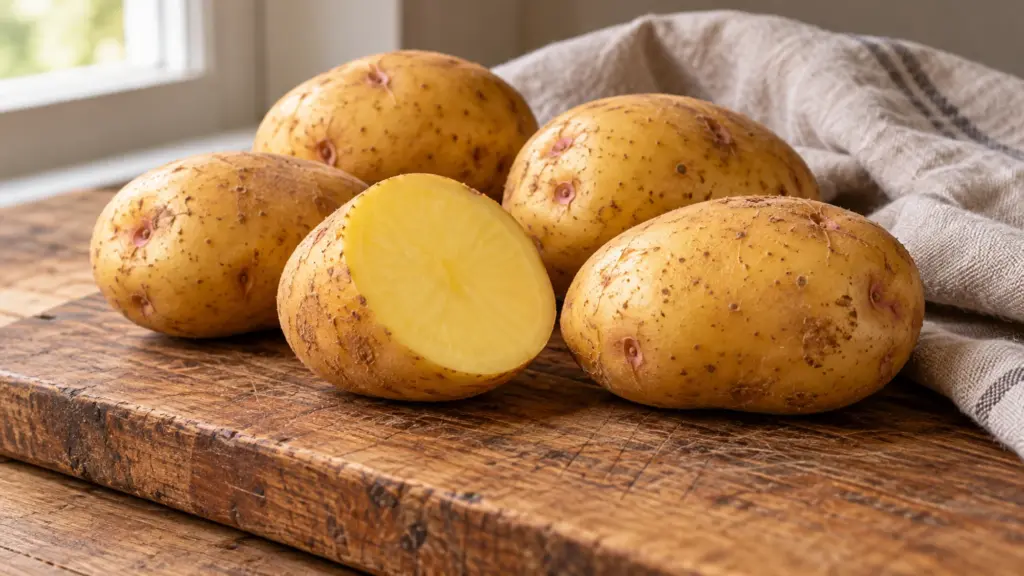
A bag of yellow potatoes can solve several dinner decisions at once: creamy mash tonight, tender salad pieces tomorrow, or a tray of roasted wedges. Yukon Gold potatoes are a useful choice when you want moist, yellow flesh rather than the dry, fluffy center of a classic baking potato.
Yukon Gold potatoes are a named yellow-fleshed variety suited to mashing, boiling, roasting, and potato salad. Their creamy texture makes them versatile, but a bag marked simply “yellow potatoes” may contain a different variety.
What makes Yukon Gold potatoes different
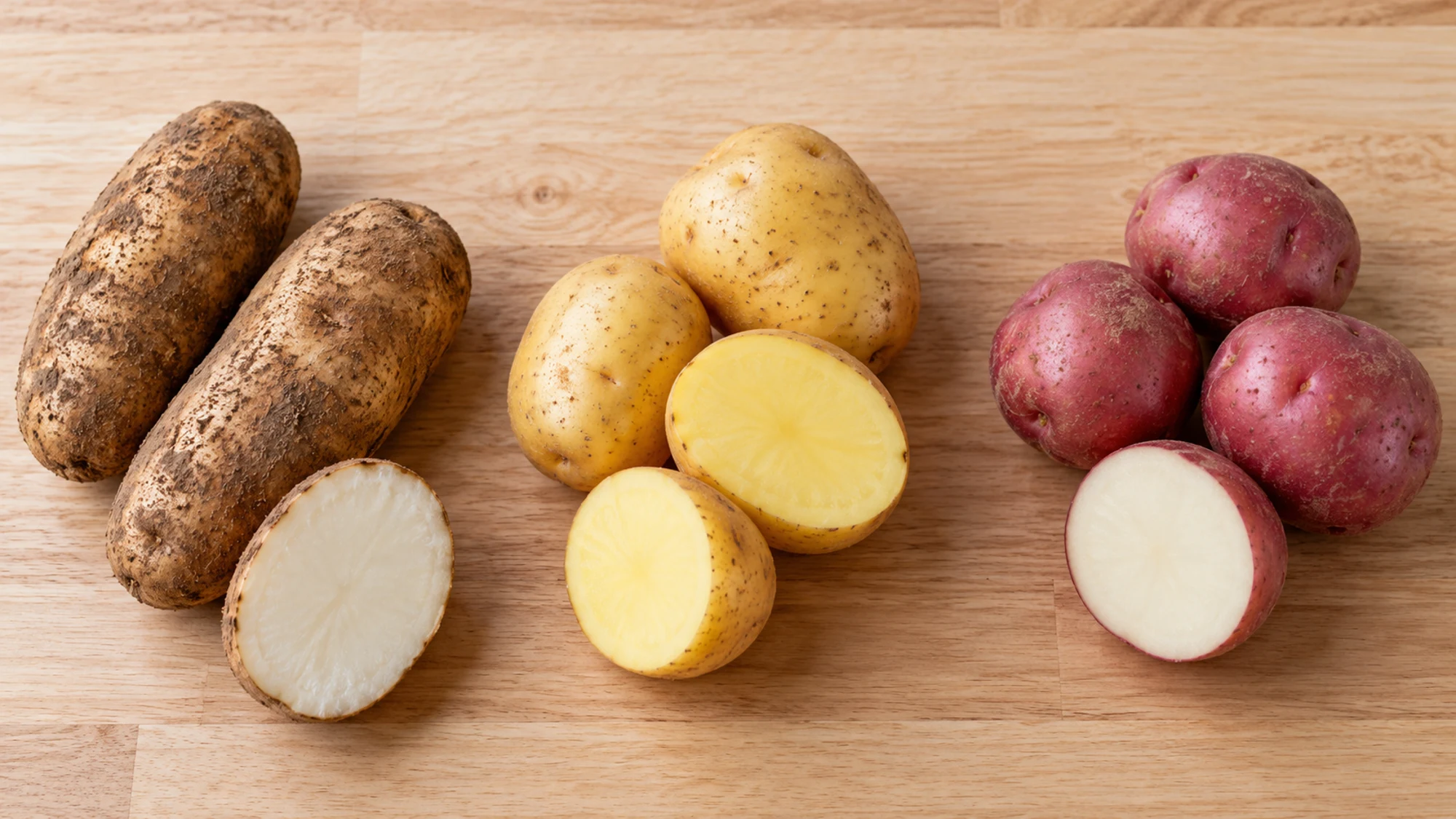
The Canadian Food Inspection Agency’s variety description identifies oval, slightly flattened tubers, pale yellow flesh, and shallow pink eyes. Yukon Gold was registered in Canada in 1980; it is a particular cultivar, not a blanket name for every golden potato.
The Idaho Potato Commission describes its moist flesh and notes that its buttery impression comes from color and texture. That description does not mean butter has been added. I’d choose it for a naturally warm-looking mash, then decide separately how much dairy or seasoning the meal needs.
- Read the bag: “Yukon Gold” names the variety; “yellow” describes a broader group.
- Check the cut surface: expect light yellow flesh rather than orange sweet-potato flesh.
- Match the outcome: creamy and moist is a different goal from very dry and fluffy.
Choose the potato for the job
Yellow potatoes are useful across several cooking methods. University of Alaska Fairbanks Extension includes Yukon Gold among yellow-fleshed varieties suitable for baking, boiling, roasting, and steaming. A different variety can still work, but treat a substitution as a texture change rather than a perfect match.
| Goal | Yukon Gold fit | What to watch |
|---|---|---|
| Creamy mash | A moist, yellow result | Cook evenly before mashing |
| Potato salad | Tender pieces with body | Avoid cooking until crumbling |
| Roasted pieces | Golden surfaces and tender centers | Use similar-sized pieces |
| Fluffy baked potato | Works, with a moist center | Choose russet for a fluffier style |
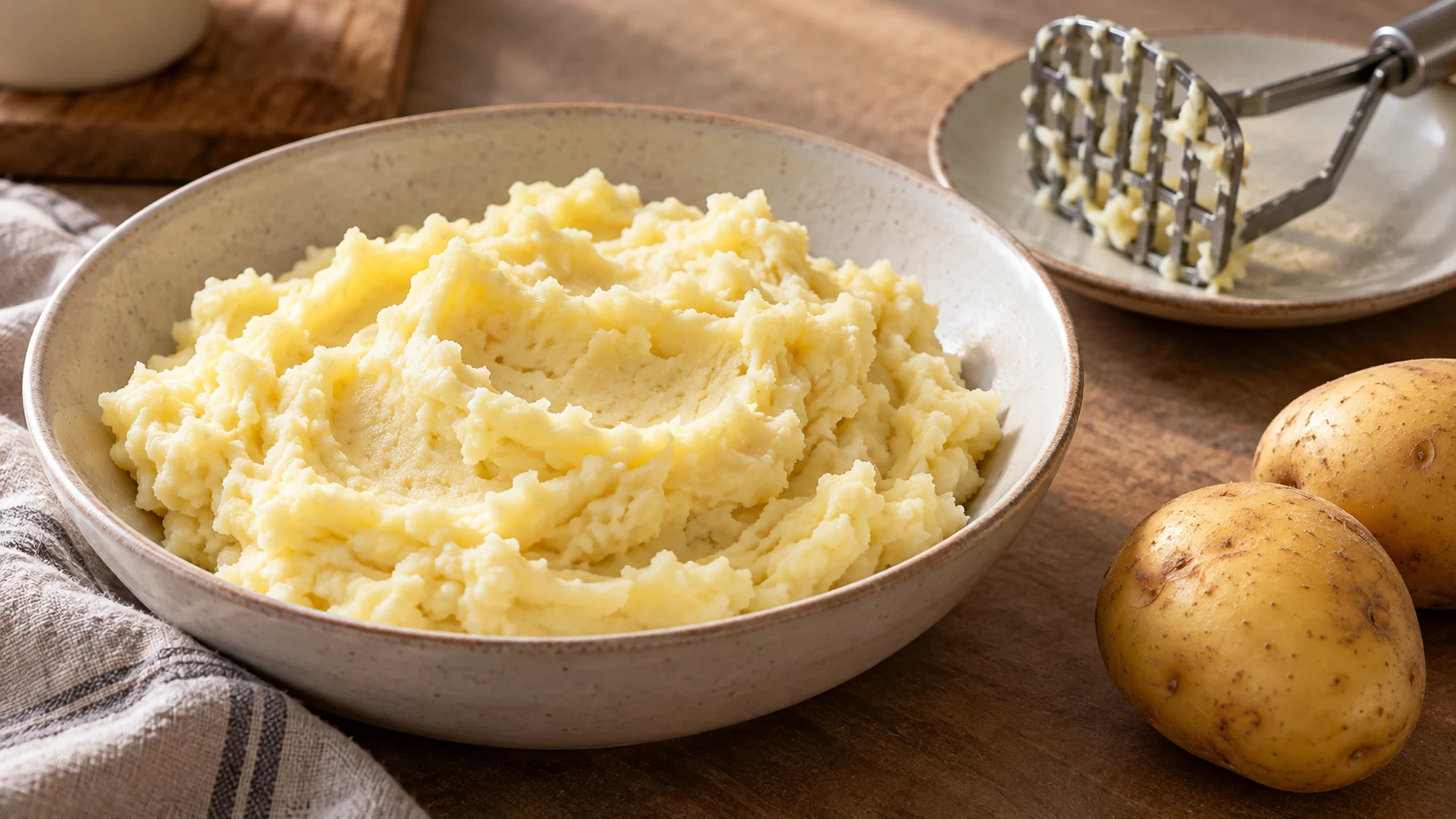
For a complete mash method, see our guide to making mashed potatoes. Here, the key shopping decision is whether you want a moist, cohesive result or a more airy one. I’d make that choice before reaching for the largest bag on the shelf.
Prepare for the texture you want
Think about how the potatoes will appear on the plate before cutting them. Small whole potatoes and large chunks will not finish at the same moment. Similar-sized pieces make it easier to judge doneness without leaving some firm while others fall apart.
- For mash: cut evenly and cook until the centers yield easily; hard bits will not disappear just because you mash harder.
- For salad: keep checking tenderness so the pieces remain useful pieces, rather than turning into an accidental mash.
- For roasting: keep the pieces similar in size and avoid a tightly packed, overlapping pile.
- For the skin: wash before preparation. Leave sound skin on when its texture suits the dish, or peel for a smoother finish.
Those are practical cooking choices, not a single universal recipe. Pot size, piece size, and the dish all matter, so a reliable method and a tenderness check are more useful than assuming every Yukon Gold needs the same cooking time.
If a recipe specifies a different potato, keep its intended result in mind. A smooth soup is forgiving about pieces losing their shape; a composed salad is less so. The variety name helps you choose, but it cannot replace checking the potatoes as they cook.
Store them away from light and check before cooking
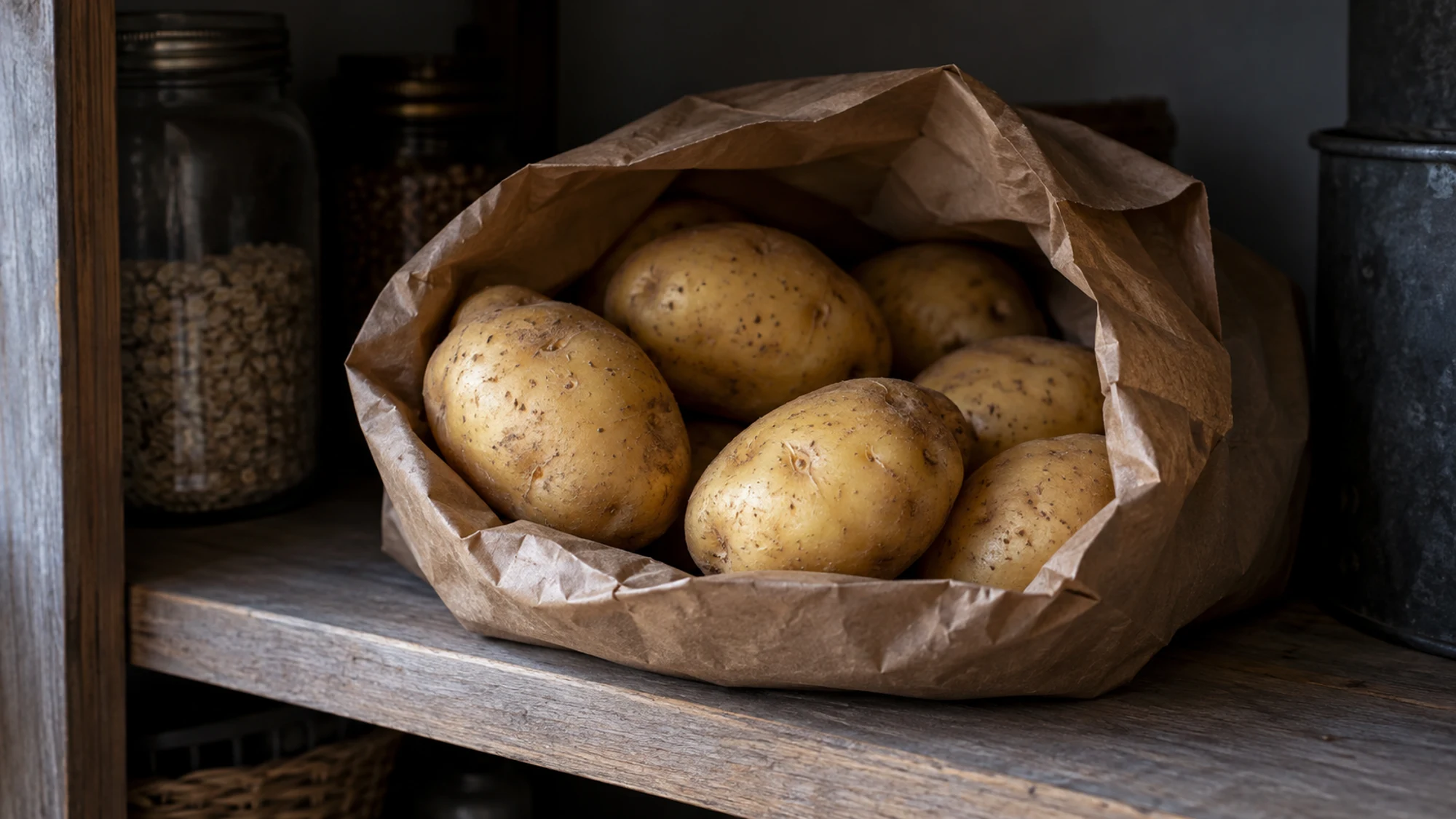
Health Canada advises cool, dry, dark storage. Greening, sprouting, and damage can accompany higher levels of natural glycoalkaloids. Ordinary cooking does not significantly reduce these compounds, so roasting is not a way to rescue a badly deteriorated potato.
- Check the potatoes before putting the bag away and again before preparation.
- Cut away small green, damaged, rotten, or sprouting areas; discard the whole potato when damage or greening is extensive.
- Do not eat sprouts or potatoes that taste bitter or cause a burning sensation.
- Buy an amount you can use while it remains in good condition; a bargain bag is less useful if half is lost.
Bottom Line
Choose Yukon Gold potatoes for their moist texture, yellow flesh, and flexibility across familiar dishes. Check the variety name, buy sound potatoes, and choose your cooking method around the texture you actually want.
Epicurious’s potato guide compares varieties and discusses Yukon Gold at 19:04, offering a useful visual companion to the shopping and texture choices above.
Sources
- Canadian Food Inspection Agency: Yukon Gold variety
- Idaho Potato Commission: Yukon Gold appearance and uses
- University of Alaska Fairbanks: potato varieties and selection
- Health Canada: glycoalkaloids and safe potato handling

Hi, I’m Emily Pocker! I share recipes and food guides here at Recipes360 to help you find everyday meal inspiration and feel more confident in the kitchen. My goal is to make cooking approachable, enjoyable, and full of flavor.